Classical
The Last Message
The Last Message It happened on an ordinary Tuesday. Ethan was halfway through his morning coffee when his phone buzzed. The screen lit up with a name that stopped his breath — Lily. For a moment, he just stared. It couldn’t be. His sister had been gone for nearly two years. --- He told himself it was a mistake — maybe an old backup, maybe someone reusing her number. Still, his heart trembled as he opened the message. > Lily: “Hey, you awake?” The world fell quiet. The hum of the refrigerator, the tapping rain outside — all faded. His fingers hovered over the keyboard. > Ethan: “Who is this?” A few seconds passed. Then came another message. > Lily: “You promised you’d fix my record player. Did you ever?” Ethan’s coffee slipped from his hand, spilling across the table. His breath came sharp, uneven. He hadn’t told anyone about the record player. It was still in the corner of his apartment, covered with a thin layer of dust — her old vinyl still inside. --- That night, he couldn’t sleep. He kept checking his phone, half hoping it had been a dream. But the messages were still there. Real. Solid. He clicked on her contact. The photo remained the same — Lily in her yellow sweater, grinning in the autumn sunlight. They had been close. Too close, maybe. She was the kind of sister who made every dull moment electric. She’d sing along to the wrong lyrics, leave notes on the fridge like “Don’t forget to smile today, you grump.” Then one night, a car didn’t stop at the red light. And she was gone before he could say goodbye. --- The next morning, another message appeared. > Lily: “You’re still not sleeping, are you?” Ethan froze. He typed, deleted, typed again. > Ethan: “If this is someone’s joke, stop. Please.” No reply. Hours passed. He tried to convince himself that grief could play tricks. Maybe some weird cloud sync glitch had resurrected old texts. Maybe he’d imagined it. But that night, as he sat on his couch staring at the rain, his phone buzzed again. > Lily: “I miss our late-night talks.” He dropped the phone, heart pounding. How could data — or fate — know the exact words she’d said to him the night before she died? > Ethan: “Who are you?” he typed again, his hands trembling. “Please stop pretending to be her.” There was no answer. --- Days went by. The texts stopped. He tried to move on. Work, sleep, repeat. But every time he passed that old record player, the guilt returned. He’d promised to fix it for her birthday. He never did. One Friday evening, when the city outside was wrapped in fog, Ethan finally pulled the record player onto the table. He found the same vinyl — her favorite: The Beatles — Let It Be. He replaced the belt, cleaned the needle, and turned it on. The crackle of static filled the room. Then the music began. He closed his eyes — and then, his phone buzzed again. > Lily: “There it is. You fixed it.” Ethan stared at the message, the song playing softly behind him. “Okay,” he whispered into the quiet. “If this is real… what do you want?” His hands shook as he typed: > Ethan: “Lily?” > Lily: “You still blame yourself.” Tears blurred his vision. > Ethan: “I should’ve been there that night. You called. I didn’t pick up.” > Lily: “You were tired. I understand.” > Ethan: “No. If I had answered, maybe—” > Lily: “Ethan. You can’t fix what wasn’t yours to fix.” He pressed his palms to his eyes. His chest ached, but not from fear. It was the ache of recognition — the words sounded like her. The tone, the warmth, the forgiveness he’d never found. > Ethan: “Why now?” > Lily: “Because you’re finally listening.” --- For the first time since her funeral, Ethan cried — not quietly, but deeply, the kind of grief that cleanses instead of crushes. He spent hours sitting there, the phone glowing beside him, as the song looped softly in the background. Eventually, another message appeared. > Lily: “Remember the box in Mom’s attic?” Ethan frowned. “What box?” > Lily: “Find it. You’ll know.” The next morning, he drove to their old house, still locked and quiet. His mother had moved away after Lily’s death; the attic had been untouched for years. He climbed the stairs, coughing through the dust. And then he saw it — a small wooden box under a pile of photo albums. Inside was a letter addressed to him, in Lily’s handwriting. > Hey big brother, If you’re reading this, I guess I didn’t get to say goodbye the right way. Don’t be mad, okay? You were always the careful one. I just didn’t want you to carry my mistakes. You saved me more times than you know. Please stop saving me now. Live something big, something happy. Fix that record player — and when you play our song, know that I’ll be there too. Always, Lily. Ethan sat there, shaking, as everything clicked into place. The texts weren’t random. They were reminders — echoes of love she’d left behind, finally finding their way to him. He took the letter home and placed it beside his phone. The messages had stopped. The silence felt complete — not empty, but peaceful. --- That evening, as the sun dipped low, he turned the record player on again. “Let it be, let it be…” The melody filled the apartment like a memory that no longer hurt. He looked out the window and whispered, “I got your message, sis.” And for the briefest moment, the phone lit up once more. > Lily: “Good.” 💛 Then the screen went dark. --- Ethan didn’t try to trace it. He didn’t need proof. Grief had no logic, no rules — only love finding its own strange ways to reach across the divide. He poured himself a cup of tea, leaned back, and let the record spin. Sometimes, the last message isn’t about goodbye. It’s about reminding you that love — real love — never loses signal.
By Abdul Muhammad about a year ago in Fiction
Beyond the Door
In a quiet village in Norfolk, an old cottage stood near the edge of the fields. The sea breeze often reached it, carrying the smell of salt and damp wood. In the southern room of the house, there was a door that was never fully closed. It always stayed half open, as if someone had left it like that on purpose, or simply forgotten to shut it.
By Mansoor Afaqabout a year ago in Fiction
Overcoat of Ghulam Abbas
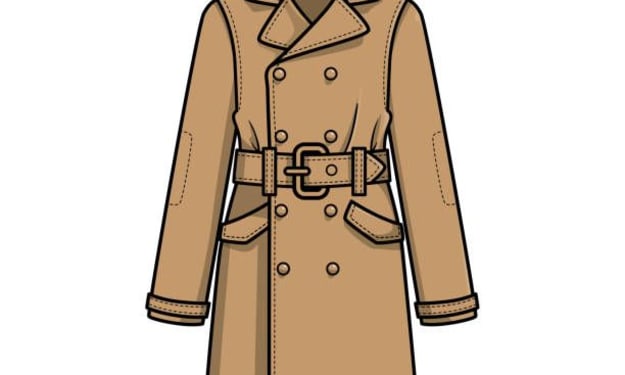
On a January evening, a well-dressed young man walked down Davis Road, turned onto Mall Road, and began strolling leisurely along the tramline toward Charing Cross. From his appearance, he looked quite fashionable: neatly trimmed long sideburns, shiny hair, and thin mustaches so fine they seemed drawn with a kohl stick. He wore a light brown overcoat with a pale rose tucked into the buttonhole, a green flat hat tilted stylishly on his head, and a white silk scarf wrapped neatly around his neck. One hand rested in his coat pocket, the other held a small cane which he twirled playfully from time to time.
By Mansoor Afaqabout a year ago in Fiction
The Coffee Cup. AI-Generated.
Every morning at exactly 7:10, Elias Mwangi opened the doors to his tiny café on River Street in Nairobi. The brass bell above the door jingled softly, echoing through the narrow shop that smelled of roasted beans, cinnamon, and rain-soaked wood.
By shakir hamidabout a year ago in Fiction
The Sound of Rain. AI-Generated.
It had been raining for three days straight in Lusaka, and the sound had become a kind of background music to Naomi’s thoughts. She sat by the window of her late father’s house, watching water run down the glass, tracing the same paths over and over again — like memories replaying themselves.
By shakir hamidabout a year ago in Fiction
The Last Train to Miray. AI-Generated.
The train station of Miray hadn’t seen a real crowd in years. The walls were cracked, the benches splintered, and the ticket window covered in dust. Once, this place had been the heart of a small but thriving mining town. Now, it was only the heart of one old man who refused to let it die.
By shakir hamidabout a year ago in Fiction
The Lighthouse Keeper’s Letter. AI-Generated.
The wind howled along the cliffs of Cape Town, tearing at the edges of the lighthouse like it wanted to knock it into the ocean. Inside, an old man sat hunched over a wooden desk, pen in hand, paper worn and yellowed.
By shakir hamidabout a year ago in Fiction
The Girl in the Red Umbrella
The Girl in the Red Umbrella The rain had been falling for seven straight mornings, soft and unrelenting, like the world was trying to wash itself clean. The city streets shimmered with reflections — puddles catching headlights and broken clouds. Daniel stood under the crooked metal awning of the bus stop, coffee in one hand, his tie damp at the edges. He wasn’t a man who liked change. Every morning, he took the same route, boarded the same bus, and sat in the same seat. But seven days ago, something — or rather, someone — interrupted his quiet routine. She appeared just as the rain began to fall: a woman in a long beige coat, holding a bright red umbrella. The color stood out against the gray world, a stubborn, cheerful defiance against the storm. She never looked up from her book, not once, but the corners of her lips lifted slightly, as if she knew the world around her was watching her glow. That first morning, Daniel only noticed her because she was humming. A faint tune, something half-forgotten — maybe an old love song. He didn’t say anything. Neither did she. But the next morning, she was there again. Same coat. Same red umbrella. Same faint smile. --- On the third day, Daniel found himself leaving home five minutes earlier, just in case she arrived before him. He didn’t know her name. Didn’t even know her destination. But her presence felt like something steady — a quiet comfort between two strangers who never spoke. He started paying attention to details. The way her fingers brushed over the edge of the pages when she turned them. The way she leaned slightly to her right foot, as if the left leg tired easily. And that she always paused reading for a few seconds when the bus pulled up, as though deciding whether to board or wait for another. He tried to catch her eyes once. She didn’t notice. Or maybe she pretended not to. --- By the fifth day, it became a ritual — the rain, the bus stop, the unspoken companionship. He brought an extra coffee that morning. Just in case. He even practiced a line in his head: “Rain’s always better with company, isn’t it?” But when he got there, she was already standing beneath her red umbrella, smiling faintly as she looked out toward the wet street. He hesitated. Words caught in his throat. He never gave her the coffee. That night, he couldn’t stop thinking about her — the woman who read while the world rushed around her. He wondered what kind of stories she liked. Romance? Mystery? Maybe poetry? Did she believe in fate? --- The sixth morning came, and the rain felt heavier, angrier. The sky was the color of steel. Daniel’s umbrella flipped twice in the wind before he made it to the bus stop. She was there, as always, her red umbrella trembling slightly under the gusts. This time, when their eyes finally met, she smiled — small, polite, but real. He smiled back, and something in him shifted. A connection, fragile and wordless, but it was enough. When the bus came, she stepped forward, hesitated, then turned slightly toward him. “You should take this one,” she said softly. Her voice was exactly as he’d imagined — warm, like sunlight through clouds. He blinked, surprised she had spoken first. “What about you?” “I’ll catch the next,” she said. And just like that, he was on the bus, looking out the window as her red umbrella faded into the blur of rain. --- The next morning, Daniel woke before his alarm. The world was quieter. No thunder. No heavy rain — just a gentle drizzle. He smiled to himself, grabbed his umbrella, and hurried out the door. But when he reached the bus stop, she wasn’t there. He checked his watch. Early, maybe? He waited. One bus came, then another. Still no red umbrella. He told himself she was probably running late. Maybe the rain had stopped her. Maybe she’d caught a different route. But the longer he stood there, the more the gray pressed down on him. The city felt dull again. Lifeless. The next day — no sign of her. The third day — nothing. By the fourth day, he wasn’t even pretending anymore. He stood at the bus stop in silence, holding his coffee like a fool, staring at the spot where her umbrella used to glimmer red against the gray. --- Two weeks passed before he saw it again — that flash of red, glinting across the street. His heart stumbled. He turned quickly. But it wasn’t her. Just another woman, another umbrella. Still, the sight tugged at something deep inside him — that ache of something unfinished. He started walking instead of taking the bus. Every now and then, he’d glance down side streets, searching for that familiar color. He never found her. --- One morning, he arrived at the bus stop out of habit. The sky was pale, the air still. And there, taped to the bus stop’s glass wall, was a small, damp note. The handwriting was elegant but faded, written in blue ink: > “To the man with the quiet eyes — thank you for sharing the rain with me. I’m moving away. But those mornings made me believe the world can still be kind. — The girl in the red umbrella.” Daniel stood there for a long moment, the note trembling in his hands. He smiled, though his chest ached. He folded the paper carefully and slipped it into his wallet. Then, for the first time in months, he boarded the bus without waiting. --- That evening, the rain returned — soft and slow. And as the city blurred outside the window, Daniel found himself smiling again. He looked at the empty seat beside him and whispered, “Safe travels, red umbrella.” And maybe it was just a trick of the light, or maybe not — but in the reflection of the window, he swore he saw a faint glimmer of red.
By Abdul Muhammad about a year ago in Fiction
December
It was December, and the cold was strong. Wahid often complained to me that I didn’t come to visit my friends. But today was Sunday, and I had decided to spend the whole day with Wahid. I had been in touch with him since the evening before. I planned to leave the house at ten in the morning and meet him at his shop.
By Syed Shahkar jalal about a year ago in Fiction