Adventure
The Power of Preparedness and Kindness: Arjun's Adventure
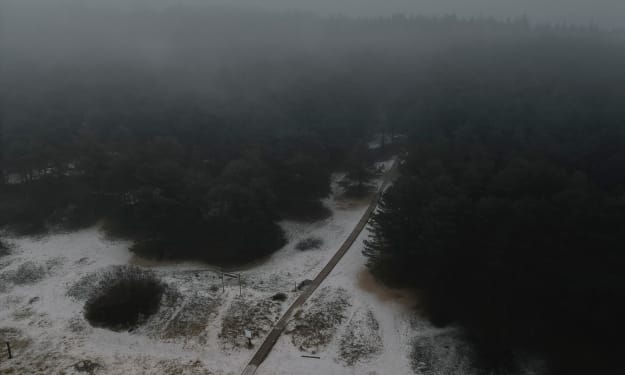
Arjun, a young boy, loved to go for walks with Rocky, his faithful dog, in the great outdoors. They were hiking through the jungle one day when they came across a secret trail that took them deep into the thick forest.
By Harish_Multiverse3 years ago in Fiction
Riptide; Chapter 2
I lounge in the hammock, gently swaying with the bobbing of the ship. The sailors down here also assigned to patching sails chat and laugh. I'd normally join them, but I'm not really in the mood. I know Admiral Coswik means well, but it doesn't change the fact that I'd been a captain for nearly five years now. Most captains were sailing without admirals within two years. And it wasn't just my 'temper' that was keeping that from happening, as much as all the admirals I had ever been under wanted to cite it. If it wasn't for the war starting before my final review, I'd have the right to sail alone.
By Katarzyna Crevan3 years ago in Fiction
Some love won't just last but it does evolve overtime into the past.
He took me on his motorcycle on a beautiful journey around the seaside I told him to slow down I wanted to have a peaceful moment at the beach the wind the sun, the waves, and the freely running white horse were something I don't see quite often where I do live.
By Antea Lumina Kala Matylda 3 years ago in Fiction
Countdown to New Beginnings
Nine in all, crew members all sharing the same goal, to successfully break orbit from their home planet, travel to another planet, to colonize and model a second Earth, but without the troubles that home had long ago created for themselves. It represented humanity's chance to start over.
By Jonathan Townend3 years ago in Fiction
Mirrors of Reality: A Fractured Parallel
Chapter 1: The Discovery In the year 2030, Dr. Amelia Collins, a brilliant physicist, stumbled upon an extraordinary phenomenon—a rift in the fabric of reality. Dubbed the "Fractured Parallel," this extraordinary discovery would forever alter the course of human history. The Fractured Parallel revealed the existence of parallel universes, each running alongside our own, yet distinctly separate.
By Alishba Jutt3 years ago in Fiction
Shattered Realms: A Collision of Dimensions
Once upon a time, in a parallel universe known as Veridora, a cosmic anomaly occurred, threatening the very fabric of existence. The inhabitants of Veridora were oblivious to the impending catastrophe, as their world thrived in harmony. Meanwhile, in a neighboring realm called Celestia, a civilization of advanced beings known as the Lumarians detected the growing instability in the cosmos.
By Alishba Jutt3 years ago in Fiction
"Lost Worlds Unveiled: Dare to Explore the Forbidden Top 10 Abandoned Places"
Exploring abandoned places has always held a certain allure. The idea of stepping into forgotten spaces, with their mysterious histories and eerie atmospheres, has fascinated adventurers and thrill-seekers alike. However, not all abandoned places are safe to explore. Some are shrouded in legends of paranormal activities, while others pose serious physical risks. In this article, we present the top 10 abandoned places that you were warned never to visit. 1-Pripyat, Ukraine: Pripyat, a ghost town in northern Ukraine, is infamous for being the closest settlement to the Chernobyl Nuclear Power Plant. Following the catastrophic nuclear disaster in 1986, Pripyat was evacuated, leaving behind a haunting reminder of the tragedy. The area is highly radioactive and poses significant health risks. Despite its desolation, some adventurous souls dare to enter, defying the warnings. 2-Hashima Island, Japan: Located off the coast of Nagasaki, Hashima Island, also known as "Battleship Island," was once a bustling coal mining community. However, after the coal industry declined, the island was abandoned in the 1970s. The decaying buildings and empty streets create an eerie atmosphere, earning it a reputation as a forbidden place. Although the island is accessible via guided tours, certain areas are off-limits due to structural instability. 3-North Brother Island, USA: North Brother Island, situated in New York City's East River, has a haunting past. It was home to a quarantine hospital for infectious diseases in the late 19th and early 20th centuries. The most infamous event was the 1904 General Slocum steamboat disaster, which claimed the lives of over 1,000 people. The island is now abandoned and off-limits to the public due to its crumbling infrastructure and dangerous conditions. 4-Gunkanjima, Japan: Another deserted island in Japan, Gunkanjima, was once a thriving coal mining community. Its high-rise buildings and concrete walls give it the appearance of a battleship, hence its nickname "Battleship Island." Abandoned in 1974, the island is now a UNESCO World Heritage Site. While guided tours are available, visitors are restricted to specific areas due to the danger of collapsing structures and unstable ground. 5-Centralia, USA: Centralia, a small town in Pennsylvania, has a chilling history. In 1962, a fire broke out in the town's underground coal mines and has been burning ever since. The fire caused the evacuation of most residents, leaving Centralia a ghost town. The underground fire still burns, releasing toxic gases and making the area highly hazardous. Trespassing in Centralia is strictly prohibited due to the dangers posed by the unstable ground and poisonous fumes. 6-Oradour-sur-Glane, France: Oradour-sur-Glane is a village frozen in time, bearing witness to one of the darkest moments of World War II. In 1944, the village was brutally attacked by German soldiers, resulting in the massacre of 642 innocent inhabitants. The ruins of Oradour-sur-Glane were preserved as a memorial, serving as a stark reminder of the horrors of war. It is a solemn place, off-limits for visitors due to its status as a historical site. 7-Craco, Italy: Perched atop a hill in the Basilicata region, the abandoned medieval town of Craco offers a mesmerizing yet eerie experience. Due to constant landslides and earthquakes, the town was gradually abandoned, and the crumbling buildings now stand as a ghostly testament to its past. This hauntingly beautiful town has served as a backdrop for numerous films. 8-Prypiat Amusement Park, Ukraine: The amusement park in Pripyat, Ukraine, stands as a haunting reminder of a joyous past tainted by tragedy. Scheduled to open just days after the Chernobyl disaster, the Ferris wheel and other rides now sit rusted and overgrown. The radioactive contamination in the area makes it an extremely hazardous location. 9-Humberstone and Santa Laura Saltpeter Works, Chile: These abandoned saltpeter works in the heart of the Atacama Desert were once bustling mining towns. The workers lived in nearby settlements, but when synthetic nitrates were developed, the industry collapsed, leaving the towns to decay. The arid landscape, dilapidated buildings, and stories of ghosts make these places an unsettling experience for visitors. 10-Island of the Dolls, Mexico: Located in the canals of Xochimilco near Mexico City, the Island of the Dolls is a macabre sight to behold. The island is adorned with hundreds of decaying dolls hanging from trees, a bizarre tribute to a drowned girl. It is believed that the dolls are possessed by her spirit, and many claim to have experienced supernatural occurrences in this eerie place.
By NEERAJ KUMAR SHAMI3 years ago in Fiction
"Unbelievable! Discover India's 10 Most Bizarre Laws That Will Leave You Speechless!"
India, known for its rich culture, diversity, and deep-rooted traditions, is a land of intriguing customs and laws. While some laws reflect the country's progressive mindset, there are a few that may seem strange and even amusing to outsiders. In this article, we delve into the top 10 weird laws from India that you probably didn't know existed. From unconventional restrictions on wildlife to unusual regulations on personal behavior, these laws offer a glimpse into the unique legal landscape of the country. 1-No Kissing in Public: Did you know that public displays of affection, such as kissing, are banned in some parts of India? This unusual law is implemented in several cities, including Mumbai and Chennai. While it aims to maintain public decorum and preserve cultural values, it has often been criticized for infringing on personal freedom. 2-No Walking Backwards: In the southern state of Kerala, a peculiar law prohibits people from walking backward on public roads. The legislation was initially introduced as a road safety measure, but it has its roots in traditional beliefs that walking backward brings bad luck. Although rarely enforced, this law remains a curious aspect of daily life in Kerala. 3-No Marrying a Third Time: In the state of Goa, a law restricts individuals from marrying for the third time. While the intent behind this regulation was to discourage polygamy, it has inadvertently affected those seeking remarriage due to personal circumstances or tragic events. The law has faced criticism for its rigid approach and has sparked debates about personal freedoms and the role of the state in personal matters. 4-No Eating Onboard a Train: Passengers traveling on Indian Railways might be surprised to learn that it is technically illegal to consume food while onboard a train that is not a designated dining area. This rule, often disregarded, was established to maintain cleanliness and hygiene. However, in a country known for its love of street food, it can be challenging to resist the temptation to indulge in a quick snack during long journeys. 5-No Exploding Sweets: In a bid to curb accidents and ensure public safety, the Indian government enacted a law prohibiting the manufacture and sale of sweets that explode. This peculiar legislation emerged after incidents where unsuspecting individuals consumed confectioneries containing dangerous explosives. While this law aims to protect citizens, it serves as a reminder of the diverse and sometimes bizarre challenges faced by regulators. 6-No Buying or Selling of Bulls and Bullocks for Slaughter: Several Indian states have implemented a ban on the buying and selling of bulls and bullocks for slaughter. This law is rooted in the belief that cows, bulls, and bullocks are sacred in Hindu culture. While intended to protect religious sentiments, it has also affected agricultural practices and the livelihoods of some farmers. The enforcement of this law has been a subject of debate, with some arguing for a balance between religious beliefs and the economic realities of the farming community. 7-No Spitting in Public: To maintain cleanliness and hygiene, several states in India have laws prohibiting spitting in public spaces. Spitting in public can not only spread diseases but also create unsightly surroundings. However, changing deep-rooted habits and ensuring consistent enforcement of this law have proven to be challenging. Efforts to educate the public and provide designated spaces for spitting have been made, but the law remains an intriguing example of societal hygiene norms. 8-The Gambling Laws: India has complex gambling laws that vary from state to state. In some states, like Goa and Sikkim, certain forms of gambling, such as casinos, are legal and regulated. However, in most states, gambling is prohibited. This often leads to confusion and ambiguity, as online gambling platforms operate in a legal gray area, resulting in a lack of clarity for both players and operators. 9-The Section 377 Controversy: Section 377 of the Indian Penal Code criminalized homosexuality, deeming it as "unnatural" and punishable by law. This archaic law was struck down by the Supreme Court of India in 2018, decriminalizing consensual same-sex relationships. However, prior to its repeal, it was widely criticized as discriminatory and a violation of human rights. 10-The Ancient Monument Protection Act: According to this law, it is illegal to take photographs or videos inside or around ancient monuments in India without obtaining prior permission from the Archaeological Survey of India (ASI). While the objective is to preserve the historical significance of these monuments, this law can be seen as an inconvenience for tourists and photography enthusiasts.
By NEERAJ KUMAR SHAMI3 years ago in Fiction