Adventure
“Flight 261: The Plane That Vanished in 1955”. AI-Generated.
A chilling tale of time, mystery, and a vanished aircraft By [Aftab Hashmi] (This story is a fictional mystery inspired by aviation legends and historical disappearances.) --- The Routine Flight That Never Landed In the summer of 1955, Flight 261 departed from Havana, Cuba, on what should’ve been a routine trip to Miami. The aircraft—a sleek Lockheed Constellation—carried 62 souls on board: families, businessmen, vacationers, and one infant nestled in her mother’s arms. The skies were clear. Radar showed no turbulence. At exactly 10:13 a.m., air traffic control received the final, uneventful message: > “Flight 261, level at 12,000 feet. All systems normal.” One minute later, Flight 261 disappeared. No distress call No radar blip No debris Nothing. --- The Largest Air Search of the 1950s A frantic, multinational search began. The U.S. Navy, Cuban Air Force, and even private aircraft scoured over 200,000 square miles of ocean between Florida and Cuba. Aircraft carriers launched search planes. Divers explored reefs and trenches. Not a single trace was ever found. By October 1955, the flight was declared officially lost. All passengers were presumed dead. But decades later, something bizarre happened. --- 37 Years Later… A Ghost in the Sky In 1992, a private radar station in Venezuela detected an unidentified aircraft entering restricted airspace. It was slow. Silent. Unresponsive. And it looked like something out of a history book. Two fighter jets scrambled to intercept. What they saw shocked them: a faded Lockheed Constellation flying low over the jungle. Its tail number: NC16001—the same registration as the long-lost Flight 261. The windows were fogged. Silhouettes of passengers were visible inside, unmoving. Before the jets could force it to land, the plane veered sharply, banked into a fog-covered ridge—and disappeared from radar a second time. --- Theories That Refuse to Die What really happened to Flight 261? Theories range from plausible to paranormal:
By Aftab Hashmiabout a year ago in Fiction
Stillness in the ICU
The waiting room was cold—not from the air conditioning, but from the silence that clung to the walls. I remember the buzzing of fluorescent lights above and the distant, rhythmic beeping of machines through the thin walls. It was the sound of life hanging on. It was the sound of hope stretching itself thin.
By aadam khanabout a year ago in Fiction
The mirror of the second chances
A cold breeze danced through the cracks of the abandoned cottage as Maya brushed dust from the old mirror. It had been years since anyone had set foot inside. The house belonged to her grandmother, a woman known in the village for strange tales and stranger antiques. Now, after her passing, Maya had returned—not to reclaim her inheritance, but to find a part of herself that she'd lost along the way. Life in the city had hardened Maya. A decade spent chasing corporate success left her emotionally numb. Promotions, parties, paychecks—none of it filled the hollowness she carried. Worse, she had cut ties with her parents and abandoned her younger brother after a family feud. She never forgave them. Or herself. The mirror stood taller than Maya, with a bronze frame curled in vines and mythical beasts. Its glass shimmered unnaturally, even in shadow. Her grandmother once told her, “This mirror doesn’t just reflect what you are. It shows what you could be—if you dare to look deeper.” Maya scoffed then. Now, her skepticism was tinged with curiosity. She looked into the mirror… and blinked. The reflection wasn’t right. The woman staring back had the same face, same brown eyes, same tired expression—but something was different. Behind the mirrored version of Maya stood a boy. Her brother, Arman. He was twelve again, standing in the doorway of her old bedroom, holding a paper boat they made together before things fell apart. Maya gasped and stepped back. The reflection remained unchanged. She turned to check behind her. Nothing. No boy. Just silence. “Great. I’m hallucinating now,” she muttered. But something inside her stirred—a memory long buried. That paper boat was the last gift she ever gave him, before the fight, before the slamming doors and bitter silence. She stared at the mirror again. This time, she saw her younger self and her brother laughing in the backyard, making snow angels. The image faded, and a new one appeared: her mother crying in the kitchen, the day Maya left without saying goodbye. Tears welled up in her eyes. “I didn’t mean to leave forever,” she whispered to no one. A soft whisper echoed from the mirror. “Then go back.” Maya stumbled backward, her heart pounding. The room seemed to shift, the air thick with emotion. The mirror pulsed faintly like a heartbeat. Her hands trembled. “I can’t,” she said aloud. “It’s been too long. They’ve probably moved on.” But deep down, she knew that was just an excuse. The truth was simpler and scarier: she was ashamed. Ashamed of the words she said. Ashamed of the years she stayed silent. Ashamed that she waited until her grandmother died to come back. The mirror flickered again. Now it showed an older Maya, sitting in a sunny garden surrounded by children. Her brother was there too—grown up, smiling, forgiving. “Is this… possible?” she whispered. The mirror said nothing. --- The Next Morning Maya awoke on the dusty couch, the memory of the mirror vivid in her mind. She made a decision. She drove straight to the village where her parents still lived. Her hands shook on the steering wheel. She rehearsed apologies in her head—each one sounding too small for the years they had lost. As she neared the gate, she saw her mother outside, watering the plants. Time had aged her gracefully, but sorrow clung to her shoulders. “Mama?” Maya called softly. Her mother turned. The watering can dropped. “Maya…” she whispered. For a moment, neither moved. Then her mother ran, and Maya found herself wrapped in the kind of hug that melted ten years of pain in a single breath. “I thought we lost you,” her mother sobbed. “I was lost,” Maya replied, “but I want to come home. If you’ll have me.” Inside, her father sat stunned. Arman, now twenty-five, leaned against the wall, arms folded, unsure how to react. “You left,” he said bluntly. “For ten years.” Maya nodded. “I know. And I was wrong.” Silence hung heavy. Then he walked over and hugged her. Tight. “I kept the boat,” he whispered. That night, they sat together over tea, laughing through tears, sharing stories of the years they missed. It wasn’t perfect, but it was a start. --- Months Later Maya moved back to the village, renovated her grandmother’s cottage, and turned it into a small counseling center. People from nearby towns visited, drawn by the warmth she radiated—a warmth she rediscovered through healing. And the mirror? It remained in her room. Every so often, she’d stand before it, and see versions of herself—some joyful, some broken. But she no longer feared them. She understood now: the mirror never showed what was, only what could be. And for Maya, that made all the difference.
By Shehzad khanabout a year ago in Fiction
The Man Who Borrowed Time. AI-Generated.
It began with a knock. Not a loud, urgent knock — just three soft taps, as though the wind itself had grown knuckles. Eli Granger, clockmaker and widower, opened the door of his dusty little shop to find no one outside. Only an envelope, pale and sealed with wax. Inside: a note > "You’ve been chosen to borrow 24 hours of someone else’s life. Use them wisely. Return before midnight." — The Timekeeper Eli laughed. A prank, surely. He tossed the note aside and returned to polishing a pocket watch left by a customer three months ago. That night, the clocks stopped. All of them — from the cuckoo to the grandfather, even the little wristwatch he wore since his wife died. Midnight hung in the air like breath in winter. Then everything shifted. --- He woke up on a yacht. In the Mediterranean. Not his body. Not his life. He was now a tanned, muscular man with perfect teeth and a phone full of unread messages from lovers and business partners. Photos of yachts, parties, sunsets, and champagne bottles filled the gallery. For 24 hours, he was rich, young, and seemingly adored. By noon, he hated it. Everyone wanted something from him — a deal, a kiss, a favor, a selfie. Eli missed silence. Missed sincerity. Missed... being invisible. At sunset, he sat alone on the yacht's edge and whispered to the sea: > "I miss my wife. I miss her laugh more than I missed being young." As if in answer, his watch — the one that had stopped — ticked once. He woke up back in his shop. The clocks were ticking. It was midnight. The note was gone. But there, beside the old register, lay something he hadn't seen in years: A pocket watch — hers — ticking softly. Inside, a photo of them on their wedding day. And a new inscription: > "Time can't be owned. Only shared." — The Timekeeper Eli smiled! He never found out who sent the note. But from that day forward, he no longer just fixed clocks. He listened to them. And sometimes, just sometimes... they whispered secrets of time borrowed — and time returned. -- 💬 Did you enjoy this story? Leave a ❤️ if it made you feel something. Share your thoughts in the comments — and tell me: If you could borrow 24 hours of anyone's life... whose would it be?
By Aftab Hashmiabout a year ago in Fiction
No One Won the War. AI-Generated.
Once, nestled between the shimmering rivers and towering mountains, lay two powerful kingdoms—Elaris, proud and radiant in the west, and Dravorn, vast and resolute in the east. For generations, they coexisted in a fragile peace, their borders thick with tension, but their hands tied by trade, tradition, and an old, uneasy respect.
By Intresting Storiesabout a year ago in Fiction
The beauty of swat valley . AI-Generated.
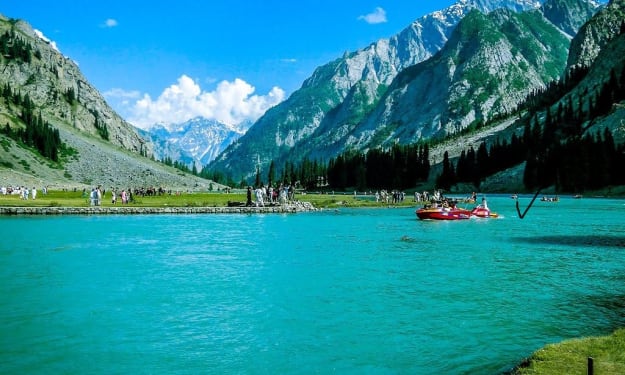
A Journey Through the Paradise of Swat – A Tale of Nature, Peace, and Adventure Last week, I embarked on a journey that turned out to be one of the most mesmerizing experiences of my life. The destination? The stunning valleys and snow-kissed peaks of Swat, a land often referred to as the “Switzerland of Pakistan.” But this was no ordinary trip—it was a soul-refreshing escape into the embrace of nature, touching places like Kalam, Malam Jabba, Mahodand Lake, and the lesser-known gem, Chukail Banda.
By Fazal Karimabout a year ago in Fiction
The lost city
The Lost City Deep in the jungle, hidden behind vines and trees, lay a city forgotten by time. The city was called Zenith, and it was said to hold secrets of the ancient world. Many had attempted to find it, but none had returned. The city was shrouded in mystery, and its existence was doubted by many. Ava, a brave and determined adventurer, had heard stories of Zenith. She was fascinated by the city's legends and was determined to find it. Ava spent years studying the ancient texts, maps, and artifacts that might lead her to the lost city. The Journey Begins Ava packed her bag, grabbed her map, and set off into the jungle. She was accompanied by her trusted guide, Kanaq, a local expert who knew the jungle like the back of his hand. Together, they trekked through the dense foliage, navigating through thick vegetation and crossing rivers. As they journeyed deeper into the jungle, the air grew thick with humidity, and the sounds of the rainforest surrounded them. Ava and Kanaq encountered various obstacles, from venomous snakes to treacherous terrain. But Ava's determination kept her going, and Kanaq's expertise ensured their safety. The Ancient Temple After days of traveling, Ava and Kanaq stumbled upon an ancient temple. The entrance was hidden behind a waterfall, and the structure was covered in vines and moss. Ava's heart raced as she pushed aside the vines and stepped inside. The temple was dark, but Ava's curiosity guided her. She found intricate carvings on the walls, telling stories of Zenith's people. The carvings depicted a civilization that was far more advanced than anything Ava had ever seen. The Discovery Ava followed the carvings, which led her to the heart of the city. There, she discovered a hidden plaza, filled with ancient artifacts and mysterious symbols. Ava realized that Zenith was more than just a lost city – it was a gateway to understanding the past. The plaza was surrounded by structures that seemed to defy gravity, and the architecture was unlike anything Ava had ever seen. She found ancient texts, artifacts, and mysterious devices that seemed to harness the power of the sun. Uncovering the Secrets Ava spent weeks exploring Zenith, uncovering its secrets and learning from its people. She discovered that the city was once a hub of knowledge and innovation, where scientists, philosophers, and artists came together to share their ideas. The city's people had developed advanced technologies, harnessed the power of the sun, and built structures that seemed to defy gravity. Ava realized that Zenith's legacy was not just in its artifacts but in the knowledge and ideas it had generated. The Legacy As Ava prepared to leave, she knew that she had discovered something special. She vowed to share Zenith's secrets with the world, ensuring that the lost city's legacy would live on. Ava and Kanaq carefully documented their findings, taking notes and photographs. Ava realized that her discovery would change the course of history. She had uncovered a piece of the past that would inspire future generations of scientists, philosophers, and artists. The lost city of Zenith would no longer be a myth, but a reality that would shape the world's understanding of itself. The Return Ava and Kanaq returned home, their hearts filled with wonder and their minds filled with stories. Ava shared her discoveries with others, inspiring a new generation of adventurers and explorers. The news of Zenith's discovery spread like wildfire, and soon, the lost city became a sensation. Scholars, scientists, and enthusiasts flocked to the jungle, eager to explore the city's secrets and learn from its people. Conclusion Ava's journey to the lost city of Zenith had been a life-changing experience. She had uncovered a piece of history that would inspire future generations. The city's secrets and legacy would live on, shaping the world's understanding of itself. As Ava looked back on her journey, she realized that the lost city of Zenith was more than just a place – it was a gateway to understanding the past, a source of inspiration for the present, and a beacon of hope for the future.
By Dawood khanabout a year ago in Fiction
The Lion and the Wol
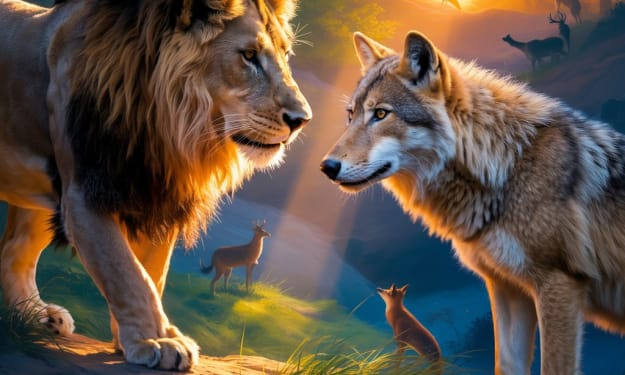
Deep within the heart of an ancient forest, there lived a mighty lion named Leo the Bold. He was feared and respected by all creatures, not only for his incredible strength but also for his roaring ego. Leo had ruled the forest for years, and no one dared challenge his authority. Every day, he would prowl the jungle, his golden mane glistening under the sun, reminding every animal of who the true king was. Any creature that crossed his path had to bow or face his wrath. But over time, Leo’s pride grew stronger than his sense of justice. He began to punish animals even for minor mistakes, and the peace of the forest began to fade. One misty morning, a stranger entered the jungle — a gray-furred, sharp-eyed wolf named Varg. He was lean, quick, and known far beyond the mountains for his intelligence and cunning. Varg had heard stories of Leo’s arrogance and decided to see for himself if the lion truly deserved the crown he wore so proudly. On his second day in the forest, Varg saved a deer from being trapped in a hunter’s snare. The animals were grateful and began whispering tales of the wolf’s bravery and cleverness. Soon, word reached Leo. "Who is this Varg?" roared Leo, his pride wounded. "Only I protect this forest!" "He's just a newcomer, Your Majesty," said a timid fox. "But... the animals are quite impressed by him." "Impressed?" Leo growled. "Let’s see if they’re still impressed when he faces me." Leo summoned Varg to his den atop the hill. When Varg arrived, he bowed politely but without fear. "So you’re the wolf who thinks he’s a hero," Leo sneered. "I don't think I’m a hero," said Varg calmly. "I simply help where I can. I believe a true leader protects, not terrifies." The lion narrowed his eyes. "Are you calling me a tyrant?" "I'm saying the forest speaks, and I listen," Varg replied. "Maybe you should too." The animals gasped. No one had ever spoken to Leo this way before. Some feared for Varg’s life, but the lion, though angry, was intrigued. "You think you're better than me?" Leo said. "Stronger?" "No," Varg said. "Not stronger. But perhaps wiser." "Then let’s settle this!" Leo roared. "A challenge — three trials. Whoever wins two of them shall be crowned the true protector of the forest." Varg agreed. --- Trial One: The Test of Strength In the first trial, Leo and Varg were to move a massive boulder from one end of the forest to the other. Leo charged forward, muscles rippling. He pushed the rock with all his might and reached the finish line in just an hour. Varg, instead of pushing, disappeared into the woods. Everyone thought he had fled. But soon he returned — with ropes made of vines and four strong buffaloes. Using teamwork and wit, he dragged the boulder with far less effort. Time taken: 45 minutes. Winner: Varg. Leo was stunned, but the next trial was his strength: hunting. --- Trial Two: The Hunt They were each given one hour to catch a deer — no help, no tools. Leo, swift and silent, stalked his prey through the grass. With one powerful leap, he brought down a large deer. Varg, on the other hand, used a different method. He followed the deer’s trail to a watering hole and used leaves and branches to create a trap. But time was short, and the deer escaped. Winner: Leo. Now the score was even. --- Trial Three: The Challenge of the Mind For the final test, the oldest owl in the forest gave them a riddle: > "I speak without a mouth and hear without ears. I have no body, but I come alive with the wind. What am I?" Leo growled, frustrated. “A spirit? A shadow? A storm?” He couldn’t answer. Varg smiled. “An echo.” The owl nodded. "Correct." Winner: Varg. --- Aftermath: Silence fell over the forest. The mighty lion had been defeated — not by brute force, but by calm thinking and humility. Leo stood up, his pride shattered but his spirit awakened. "You have bested me fairly, wolf," he said. "You showed strength, wisdom, and heart. Qualities I have lost somewhere along the way." Varg stepped forward. "You are still powerful, Leo. And the forest still needs you. But perhaps, instead of ruling alone, we lead together." Leo looked around at the animals. For the first time, he truly saw them — not as subjects, but as lives worth protecting. From that day forward, the lion and the wolf ruled the forest together — one with strength, the other with wisdom — and peace returned to the land. --- Moral of the Story: > “Pride may win battles, but wisdom wins hearts.” True leadership isn't about power — it's about listening, learning, and lifting others.
By Junior Abdulabout a year ago in Fiction
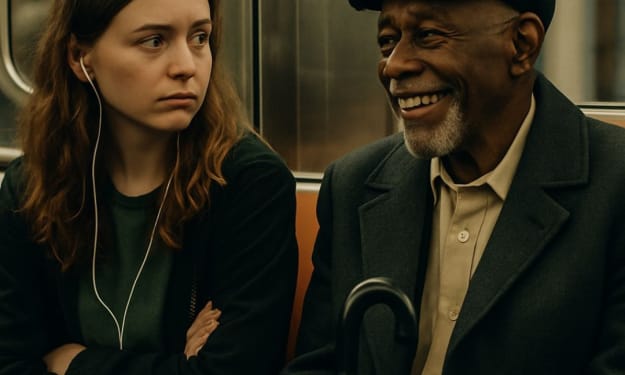
Trapped in an Elevator with My Ex
I hadn’t seen Emma in over a year—not since the night we broke up during a thunderstorm, in a diner parking lot, with tears, accusations, and a half-eaten grilled cheese on the dashboard. We said things we didn’t mean. Or maybe we did. That part still stings.
By Professor khanabout a year ago in Fiction