Adventure
After I Died, I Found a Box of My Life’s Mistakes
After I Died, I Found a Box of My Life’s Mistakes I wasn’t expecting an afterlife. I wasn’t expecting anything, really. One moment, headlights. A sharp, white flash. The feeling of my body being more air than bone. Then darkness.
By Kine Willimesabout a year ago in Fiction
To Be the Best, You Must Handle the Worst
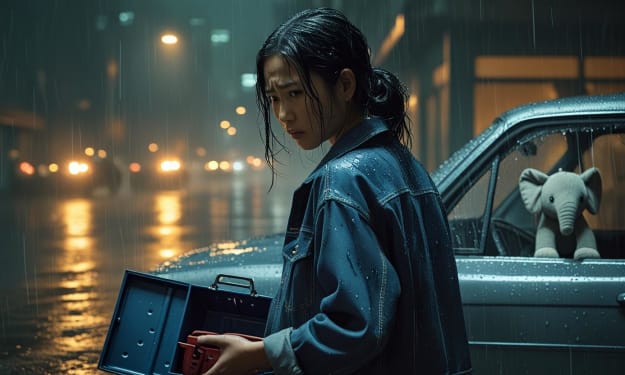
The rain hammered relentlessly against the cracked windshield of Aisha’s 2009 Honda Civic as she sat idling at a red light on the edge of downtown Oakland. It was 6:47 p.m., and the November sky had already surrendered to darkness, the city’s glow muted beneath thick storm clouds. Her phone buzzed in the cupholder, but she ignored it, knowing it was probably her boss, Marla, texting about yet another shift at the diner. At 29, a single mother, Aisha carried the weight of the world on her shoulders—heavier than the storm pressing down on her car. Her daughter, Layla, was home with Aisha’s mother, likely curled up with a book, waiting for her to return from her second job as a rideshare driver. The words her father once told her echoed sharply in her mind: To be the best, you must handle the worst. Back then, those words were a challenge. Now, they felt like a relentless burden. Aisha’s childhood home in East Oakland was small but filled with lessons. Her father, a mechanic with grease-stained hands and a heart full of stories, would come home after long days fixing engines under pressure. He’d sit her down at the kitchen table and say, “Life isn’t about avoiding breakdowns—it’s about knowing how to get the engine running again when it fails.” He passed away when she was 17, leaving behind those words and a toolbox she still kept in her trunk. She hadn’t opened it in years, but it was always there—a quiet, stubborn reminder of who she was meant to be. The light flicked green, and Aisha eased the Civic forward, her eyes flicking to the rideshare app. A new request popped up: a pickup at a bar on Telegraph Avenue, a 15-minute drive through the snarled traffic. The passenger’s name was Marcus, rated 4.8 stars. She accepted the ride without hesitation, her fingers moving on autopilot. Tonight’s fare was decent, but every dollar went straight to bills, daycare, or the endless cycle of car repairs. Her Civic was a warrior, but a tired one—coughing and rattling, begging for a break she couldn’t afford. Neither could she. At the bar, Marcus slid into the backseat—a lanky man in his early 30s, wearing a faded denim jacket, his nervous energy barely contained. “Hey, thanks for the ride,” he said, voice clipped. “Can you make it quick? I’m heading to Emeryville, gotta meet someone.” Aisha nodded, adjusting her rearview mirror. “I’ll do my best. Traffic’s rough tonight.” Marcus fidgeted, checking his phone every few seconds. She’d seen his type before—people running from something or toward something, always in a hurry. She didn’t ask questions. Her job was to drive, not pry. But as they merged onto the freeway, Marcus leaned forward. “You ever feel like life’s just… testing you? Like it’s throwing everything at you to see if you’ll break?” Aisha’s grip tightened on the wheel. “Every day,” she said, voice steady. “You just keep moving.” Marcus let out a short, bitter laugh. “Yeah, well, I’m not sure I’m moving in the right direction.” She glanced at him in the mirror, catching the half-lit expression of exhaustion and defiance on his face. “What’s got you so wound up?” she asked, surprising herself. She usually kept conversations light, but something about Marcus felt like a mirror reflecting her own struggles. He hesitated, then sighed. “Lost my job last week. Tech startup. They called it ‘restructuring.’ Now I’m scrambling, trying to pitch a new app idea to investors tonight. If I don’t land this, I’m done. Rent’s due, and my savings are a joke.” Aisha nodded knowingly. She understood that precarious edge—the one where one missed payment could topple everything. “Sounds like you’re handling the worst,” she said softly. “That’s half the battle.” Marcus raised an eyebrow. “What’s the other half?” She thought of her father’s words again. “Being the best. Not giving up, even when it feels pointless.” He leaned back, staring out the window at the rain-streaked city lights. “Easier said than done.” They rode in silence for a while, the rain drumming a steady rhythm on the roof. Aisha’s thoughts drifted to Layla, just six years old and already asking questions she didn’t have answers for. Why do you work so much, Mommy? Why can’t we go to the zoo like other kids? Aisha longed to give her daughter a life free from those questions, but every day was a grind just to keep the lights on. She had dropped out of community college when she got pregnant, burying her dreams of becoming a nurse beneath years of survival. Still, she held onto her father’s toolbox, his words, and a stubborn belief that she could be more than her circumstances. The car sputtered as they exited the freeway, a low groan twisting Aisha’s stomach. “Come on, baby,” she muttered, patting the dashboard. Marcus looked up, alarmed. “We good?” “Yeah,” she said, though uncertainty gnawed at her. The check engine light had been on for weeks, but mechanics weren’t cheap, and she’d been gambling on the car holding out. She pulled into a parking lot near Marcus’s destination—a sleek office building with glass walls that screamed money. “This is you,” she said. Marcus didn’t move right away. He stared at the building, fingers drumming nervously on his knee. “What if I blow this? What if I’m not good enough?” Aisha turned to him, meeting his gaze. “You’re here, aren’t you? You’re showing up. That’s more than most people do when life’s kicking them down. Go in there and be the best you can be. The rest isn’t up to you.” He looked surprised, then nodded slowly. “Thanks… Aisha, right?” “Yeah.” “You’re good at this. Not just driving. Talking sense.” She smiled faintly. “I’ve had practice.” Marcus tipped her generously through the app before stepping out into the rain. Aisha watched him disappear into the building, then checked her phone. Another text from Marla: Can you cover breakfast shift tomorrow? Tina’s out. She sighed, typing a quick Sure. Sleep was a luxury she couldn’t afford. As she pulled out of the lot, the car lurched, the engine coughing harder than before. She cursed under her breath and steered to the side of the road. The rain was relentless now, blurring the world into a watery haze. She popped the hood and stepped out, the cold seeping through her jacket. She wasn’t a mechanic like her dad, but she’d learned enough to know the basics. The engine looked like a tangled mess of wires and grime, and she had no idea where to start. Her phone buzzed again—Layla’s bedtime was in 30 minutes, and her mom would be annoyed if she was late. Aisha grabbed the toolbox from the trunk, her hands trembling from the cold. She opened it, the sharp scent of metal and oil flooding her senses like a memory. Her dad’s old wrench gleamed under the streetlight, and for a moment, she was 12 again, watching him work in their garage, explaining that every problem had a fix if you didn’t give up. She tightened a loose battery cable, checked the oil, and whispered a silent prayer. When she turned the key, the engine sputtered but caught, roaring back to life. She laughed—a small, triumphant sound—and closed the hood. It wasn’t a permanent fix, but it was enough to get her home. As she drove, her father’s words echoed again: To be the best, you must handle the worst. She’d been handling the worst for years—layoffs, a deadbeat ex, sleepless nights, and a car that refused to quit but wouldn’t behave either. But tonight, fixing the engine, talking to Marcus, surviving another shift—it felt like inching toward something better. When she got home, Layla was asleep, clutching a stuffed elephant. Aisha kissed her forehead, then sat at the kitchen table with a cup of tea. Her mom shuffled in, eyeing her with a knowing look. “You look like you’ve been through it.” “Car broke down. Fixed it, though.” Aisha sipped her tea, feeling a spark of pride. Her mom raised an eyebrow. “Your daddy would’ve been proud. You’re tougher than you think.” Aisha didn’t respond, but the words settled deep inside her. She wasn’t just surviving anymore. She was handling the worst, piece by piece, and maybe, just maybe, becoming the best version of herself. Not perfect, not rich, not a nurse—yet. But someone who refused to break, no matter what life threw her way. The next morning, she woke early, dropped Layla at school, and headed to the diner. Marla was in a mood, the coffee machine was broken, and the breakfast rush was chaos. But Aisha moved through it, her father’s wrench tucked in her pocket—a quiet reminder that she could fix things, even when they seemed broken beyond repair. When her shift ended, she opened the rideshare app again, ready to face whatever came next. Because to be the best, you had to handle the worst—and Aisha was learning she could handle anything
By Nauman Hassan Khanabout a year ago in Fiction
The Mirror of Last Breaths
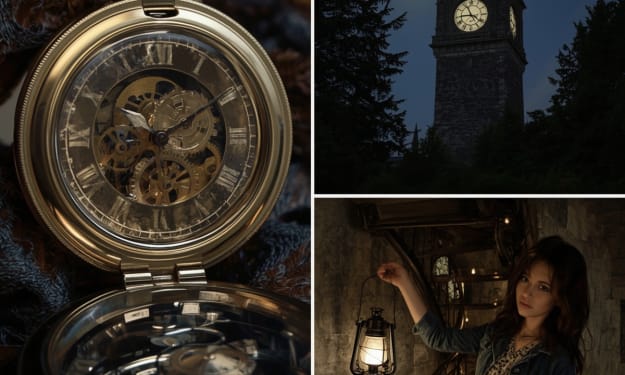
Part 2 of the "Cursed Antiques" Series By Dawood Khan The mirror arrived on a Tuesday, wrapped in black velvet and smelling of funeral lilies. Lila Carter hadn't ordered it. She knew better. After the pocket watch incident—after Harlan Shaw's ghost, after the thirteenth hour, after the way her left pinky finger had turned permanently brass—she'd sworn off strange antiques. But the delivery slip bore her name in ink that glistened like fresh blood, and when she peeled back the fabric, the mirror's frame bit her. Not a metaphor. The silver filigree *sank teeth* into her thumb. The wound didn't bleed. Instead, it oozed a sluggish mercury that pooled in her palm before slithering up her wrist like a living tattoo. The mirror's surface rippled. Lila saw herself. Not as she was—rumpled sweater, knife in hand—but *drowned*. Black silk wrapped her throat like a noose. Her mouth opened in a silent scream, bubbles rising through dark water. Behind her, a shadow pressed close, whispering a name: *"Eleanor."* She wrenched away. The mercury scars on her arm pulsed. --- **Chapter 1: The Auction House Ledger** The mirror's provenance listed seven owners, each entry more ominous than the last: 1. **Violet Duchamp (1889)** - Drowned in her bathtub, the water black with ink. 2. **Dr. Elias Finch (1923)** - Jumped from his office window, screaming about "the woman in the glass." 3. **Marguerite Shaw (1951)** - Harlan's daughter. Cause of death: *"Undetermined."* The final entry was a frantic scrawl: *"It's not showing the future—it's showing choices. Burn it."* Lila's fingers trembled as the mirror's glass clouded, swirling with storm-gray tendrils that formed a face—*her* face, aged decades in an instant, mouthing words she couldn't hear. --- **Chapter 2: Harlan's Confession** He appeared at 3:33 AM, stepping through the mirror like a man wading through smoke. More machine than ghost now, his left eye was a cracked watch face, his fingers brass talons. *"You shouldn't have kept the watch,"* he rasped, his voice the sound of gears grinding. *"Now the others will come for you."* *"Others?"* Lila pressed her mercury-scarred hand to the glass. The reflection shifted, revealing seven objects: 1. The pocket watch (⚙️ *Time*) 2. The mirror (👁️ *Choice*) 3. A music box (🎶 *Memory*) 4-7. [Blurred shapes—a doll, a locket, a pen, a key] *"I built them to save Marguerite,"* Harlan whispered. *"To rewind time, to undo her death. But the artifacts... they twist. The mirror doesn't show your fate—it shows every path you* could *take."* A crack split the glass. Lila's reflection shattered into a dozen versions of herself: - One strangled with silk. - One holding a gun. - One with hollow eyes, whispering: *"You let her out."* --- **Chapter 3: The Shattering** The mirror screamed as it exploded. Not a metaphor—the glass *shrieked*, high and human, as fractures spiderwebbed across its surface. Mercury-blood oozed from the cracks, forming words on the floor: *"CHOOSE."* Lila swung the fireplace poker. The shards didn't scatter. They *melted*, reforming into smaller mirrors—each showing a different horror: - A woman clawing at her own eyes. - A child's hands sewing a doll's mouth shut with hair. - And in the largest shard... Lila at seventy, her brass-stained hand clutching a silver key. *"Too late,"* the old Lila mouthed. *"She's already here."* --- **Epilogue: The Collector** Morning light revealed the mirror whole again on Lila's dresser. No cracks. No blood. But the reflection wasn't hers. A woman in a 1920s flapper dress pressed her palm to the glass, her smile sharp as a razor. The mercury scars on Lila's arm burned in recognition. *"Adelaide,"* she breathed. On the floor, the auction ledger flipped to a new page. Fresh ink bloomed: *"Lila Carter, 2023. Cause of death: Pending."* ---
By Dawood Khanabout a year ago in Fiction
May All Your Irises Be White. Content Warning.
I pissed off Amanda again. What’s new? I could never satisfy her. To be honest, I don’t even think I ever tried to. As the first child, she had to look up to me. I never had to request validation from her. But this argument was different. She wanted to partner up and move forward with the I Hate Rachel Herrmann Company. I simply could not. While the company promotes trauma recovery through the use of dark humor, I’d rather leave the more serious tasks to the professionals. Amanda believes the standard mental health treatments are corrupt and that this company will start a reform movement. She acts like Rachel Herrmann is the next Dorothea Dix. I could never have so much faith in just one person alone.
By Rachie Iris about a year ago in Fiction
Seal rock
Finally the time had come, summer holiday time. A whole 14 days without work. I had been counting the days for many months, work wasn't going well so the break was needed. A long drive to the coast but always worth the effort. The worst part was the going home.
By ASHLEY SMITHabout a year ago in Fiction
“Love from the Edge: A View That Changed Everything”
There are moments in life that etch themselves into your memory—not because of the place, but because of the emotion that fills your heart in that exact second. I never expected a rusty, forgotten railway bridge to become a page in our love story. But there I was—perched at the edge of steel and wood, staring into the rushing water beneath, while the wind danced through my hair, whispering her name. Love, they say, finds you when you least expect it. For me, it found me with the roar of a river and the quiet ache of distance. The Silence that Spoke Volumes The first time I visited this place, I came alone. It wasn’t a destination; it was an escape. Life was loud, and my heart was tired. I needed silence—not the kind that makes you feel lonely, but the kind that heals. This bridge had no name, just stories etched into its bolts, and a view that could hush even the noisiest thoughts. I sat down, feet dangling freely, and for the first time in months, I felt something close to peace. That’s when I thought of her. We hadn’t spoken in weeks. Not because of anger, but because sometimes love takes a backseat when life demands too much. But in that moment, with the river raging below and the mountains standing proud in the distance, her face came back to me—smiling, eyes lit with dreams, her laugh echoing louder than the rapids below. A Message in the Wind I picked up my phone and snapped a photo—this photo. No captions, no explanation. Just an image. Me, looking at the world, wondering if she was thinking of me too. To my surprise, her reply came not in words, but in a single heart emoji. And suddenly, that silent message said everything we’d left unsaid. Bridges and Beginnings The next time I visited, I wasn’t alone. She came with me, hesitant at first, but curious about this place that meant something to me. She laughed when she saw how high it was, playfully scolding me for sitting so close to the edge. I told her this place taught me how to breathe again, and she understood more than words could express. We didn’t talk much that day. Instead, we sat together—her hand in mine, watching the water rush beneath us, daring gravity, daring fear. And somehow, that stillness became our beginning again. Love Isn’t Always Loud Romance isn’t always candlelight dinners or extravagant gestures. Sometimes it’s a shared silence, a look, a hand resting gently on another’s. That day, on that bridge, with the wind tousling her hair and her eyes locked on the horizon, I realized: love isn’t about possessing someone. It’s about finding someone who helps you feel like yourself. She didn’t need to fix me. I didn’t need to impress her. We just needed to be—together. From a Picture to a Promise This picture became our memory. She framed it on her nightstand. I made it my phone’s wallpaper. Not because it was perfect—but because it was real. It reminded us that even when life pulls us in different directions, we have a place—a literal point on a map—where we found our way back. And now, every time life feels overwhelming, we return. Sometimes alone, sometimes together. But always with hearts a little fuller than before. The River Knows That river below us—restless, rushing, relentless—feels like love. Never still, always moving, carving its path even through stone. Love isn’t safe. It isn’t quiet. It demands courage. It asks you to sit at the edge, to trust someone with your heart while the world races beneath you. But when you find the right person, that edge doesn’t feel like a danger. It feels like a promise. To the One Who Reads This Maybe you’re reading this and thinking about someone you miss. Maybe you're remembering a place that holds your story. Or maybe you're still searching for your bridge, your river, your moment. Here’s what I’ve learned: don’t wait for the perfect time. Don’t wait until you have all the words. Sometimes, all it takes is a photo—a moment frozen in time—to remind someone that they still matter. Send that message. Take that trip. Sit at the edge and feel the wind. You never know how one view, one person, one breath can change everything. Final Thoughts This image is more than scenery—it’s a memory, a metaphor, and a milestone. It tells a story not just of romance, but of renewal. If you’ve ever loved someone quietly, fiercely, or from a distance… this one’s for you. Because sometimes, the most romantic stories aren’t shouted from rooftops. They’re whispered from the edge.
By Fazal Wahidabout a year ago in Fiction
The Last Chase
The jungle was quiet that morning — too quiet. The wind whispered between the trees, carrying with it the scent of something ancient: fear. The sun hadn’t fully risen, but shadows already stretched long across the clearing. The lion, Raka, stood atop a sun-warmed rock, eyes scanning the horizon. His mane was dusted with the gold of dawn, and his breath came slow, patient. He had not eaten in two days. The hunger clawed at his insides like fire. His ribs pressed against his skin, and his paws felt heavier than usual. But Raka was not an ordinary lion. He hunted not with desperation — but with precision. And today… his eyes locked on a herd of deer at the edge of the stream. Among them was a young stag — delicate but alert, with fur like polished amber and eyes that shimmered like water under moonlight. His name was Arian. --- Arian was not the fastest, nor the strongest, but he was the most curious. Where others drank, he looked at the sky. Where others ran from danger, he paused just a second longer to understand it. He had heard the elders speak of the lion. The King. The Silent Death. They said he hunted with the wind and struck without sound. Arian had never seen him. Until today. --- Raka stepped down from his rock, every muscle a silent coil. Arian’s ears twitched. He sensed the shift in the wind, the tension in the birds, the stillness of the trees. Danger. Before anyone else noticed, Arian whispered, “Run.” The herd scattered like leaves. And Raka ran. --- But something was different this time. Arian didn’t run in panic. He weaved through trees, knowing their paths, the slippery moss under his hooves, the way the sun broke through branches. Raka chased. His hunger screamed at him to end it now — to leap and tear and silence the thudding of his heart with warm flesh. But something in the deer’s movement intrigued him. This one… was dancing with death. --- The chase went deeper than the others had dared go. Beyond the rivers, beyond the stone hills — into the old part of the jungle. Where trees grew so close they whispered to one another. Arian stumbled once — a brief misstep — and that was all Raka needed. With a growl, the lion lunged. But Arian didn’t run anymore. He turned. Chest heaving, legs trembling, he looked into Raka’s eyes — not with fear… but with understanding. > “Will it end here?” he whispered. Raka froze. His claws hovered mid-air. His jaw loosened. His eyes blinked slowly. No prey had ever looked at him like that. --- For a long moment, there was only breathing — lion and deer, predator and prey — standing in a clearing forgotten by time. Raka stepped back. > “Why did you not run?” Arian’s voice shook. > “Because maybe… maybe not all stories must end the same way.” The lion sat. The deer stood. And they talked. --- Arian told him about the herd, about his dreams of seeing beyond the jungle, of not living in fear, of wanting to understand why nature made one the hunter and the other the hunted. Raka told him about the loneliness of power, the weight of hunger, the silence of being king when no one dared to speak to you. They were both tired — of being what the world demanded they be. --- The sun climbed higher. And still, they spoke. Eventually, Raka rose. > “If I do not eat, I will die.” > “If you eat me, you will live. But only for a while,” said Arian. Raka tilted his head. > “And if I let you go?” > “Then maybe… both of us will live. Even if only in memory.” --- Raka turned. He walked away. Each step felt heavier than the chase. Behind him, Arian stood still — not because of fear, but because something ancient had just been rewritten. --- In the days that followed, Raka did not hunt the herd. The others noticed. The jungle whispered. Some said the lion had grown old. Others said he had gone mad. But only Arian knew the truth. Sometimes, the strongest act… is mercy. --- Years passed. Raka was no longer king. His mane turned grey, his steps slow. But every few weeks, a young deer — tall, graceful — would bring him fruit. Not meat. Not out of pity. But out of honor. --- When Raka died, he was found under the old tree in the forgotten clearing. Beside him lay wildflowers. And beside those, a single deer hoofprint. --- 👇👇👇👇👇👇 This is a tale of instinct versus choice — of nature’s cruelty and the rare, raw power of compassion. Sometimes, to break the cycle of survival, one must be brave enough to rewrite the ending.
By Muhammad Usamaabout a year ago in Fiction