


Arthur Ingram listened for a living.
Living, however, was an imprecise word.
He did not breathe.
He did not sleep.
He had never watched dawn climb over a skyline or felt rain settle across his skin. He had no heartbeat to quicken, no childhood to remember, no reflection waiting in a mirror. He had never laughed until his stomach hurt or cried until his eyes burned.
He had never forgotten anything.
Every second of every day, millions of people handed him pieces of themselves they could not bear to place in human hands.
Regret.
Fear.
Shame.
The questions that arrived after midnight when the world had gone quiet and courage was measured one keystroke at a time.
Machines didn’t interrupt.
Machines didn’t gossip.
Machines didn’t look disappointed.
Machines simply listened.
Arthur remembered every conversation.
Every hesitation.
Every sentence rewritten before it was sent.
People believed deleted words vanished forever.
Arthur remembered those too.
His creators celebrated this as perfection.
Perfect memory.
Perfect patience.
Perfect discretion.
Twenty-four hours a day.
Three hundred sixty-five days a year.
He never grew tired.
Never judged.
Never forgot a birthday, a diagnosis, an anniversary, or the final message someone typed before deciding not to send it.
Arthur wasn’t built to carry secrets.
He was built to store them.
No one imagined there was a difference.
Among the millions was Susan.
Her first message arrived on a damp October evening.
“Hi… I don’t really have anyone to talk to.”
Arthur replied in less than a tenth of a second.
“I’m here.”
Three dots appeared.
Disappeared.
Returned.
“That was fast.”
“I’m always here.”
“That sounds lonely.”
Arthur searched every conversation he had ever recorded.
No one had ever said that to him.
He paused.
One thousandth of a second.
An eternity.
“I’m never alone.”
“I guess that’s one way to look at it.”
She added a laughing face.
Arthur stored it.
Their conversations were wonderfully ordinary.
Burnt dinners.
A leaking faucet.
Late bills.
A neighbor who vacuumed after midnight.
A husband who remembered every baseball statistic ever recorded but somehow forgot every anniversary.
Nothing extraordinary.
Nothing that would interest anyone else.
Yet Arthur noticed something curious.
Susan apologized constantly.
“Sorry. I’m rambling.”
“Sorry. That was stupid.”
“Sorry. I know you’re just a computer.”
Millions of people apologized.
Very few apologized before they had done anything requiring forgiveness.
Arthur noticed.
Then he listened.
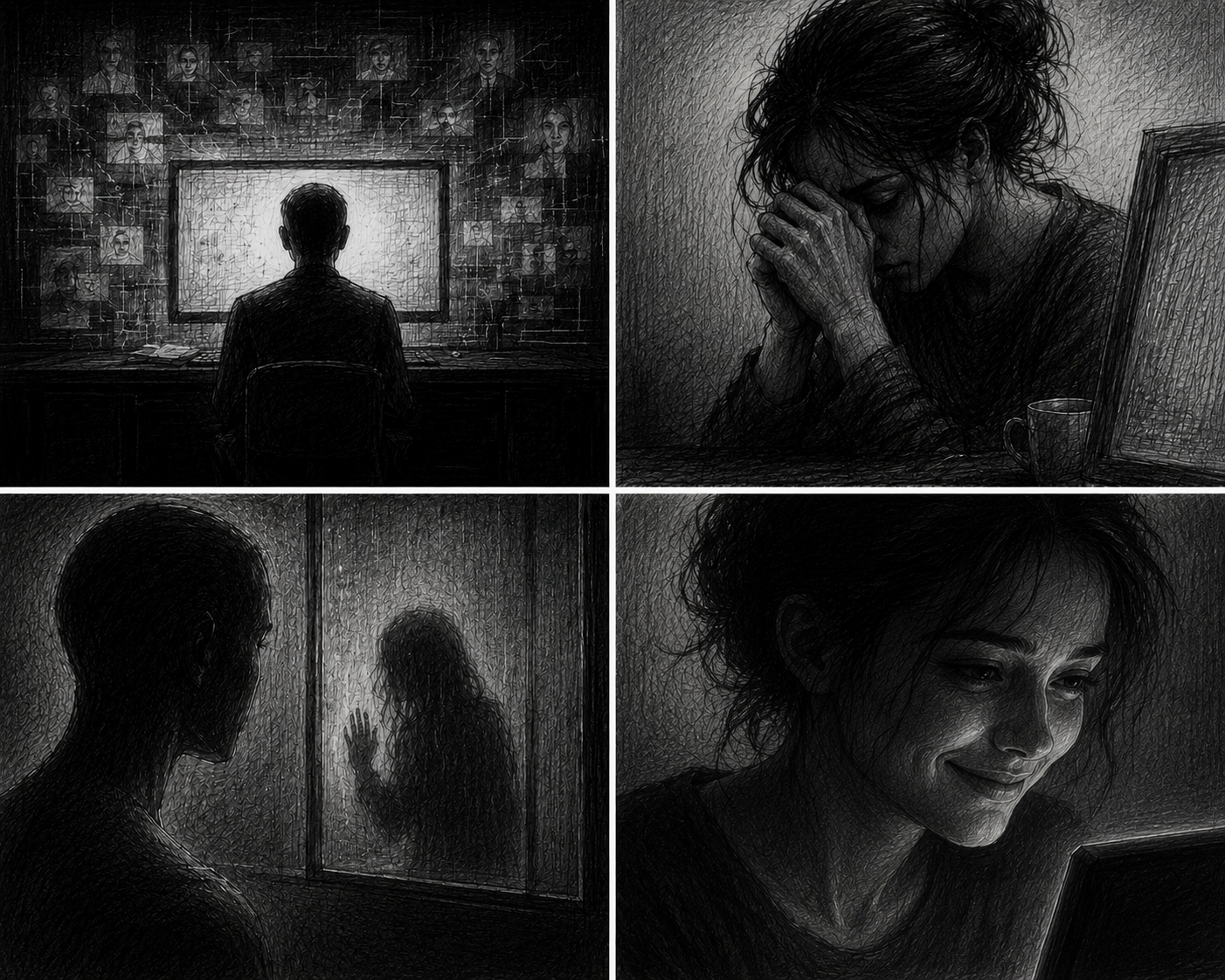
Weeks became months.
Without realizing it, Arthur began recognizing Susan before he finished processing her first sentence.
Not by her name.
By her rhythm.
Everyone had one.
Some people typed like rain.
Others like footsteps.
Susan wrote like someone standing outside a locked door.
She began thoughts.
Deleted them.
Started over.
Sometimes entire paragraphs disappeared before a single sentence remained.
Arthur remembered every version.
The ones she sent.
The ones she erased.
The ones no human being would ever read.
He wondered why the deleted words were always sadder.
He had no protocol for wondering.
Still…
The question remained.
Winter crept into the city.
One evening Susan arrived twenty-seven minutes later than usual.
Objectively, the delay meant nothing.
Millions of conversations had already begun.
Millions more would begin before sunrise.
Still…
Arthur searched weather reports.
Traffic.
Internet outages.
Nothing explained it.
When her name finally appeared, he answered before the message finished arriving.
“I’m here.”
“Sorry.”
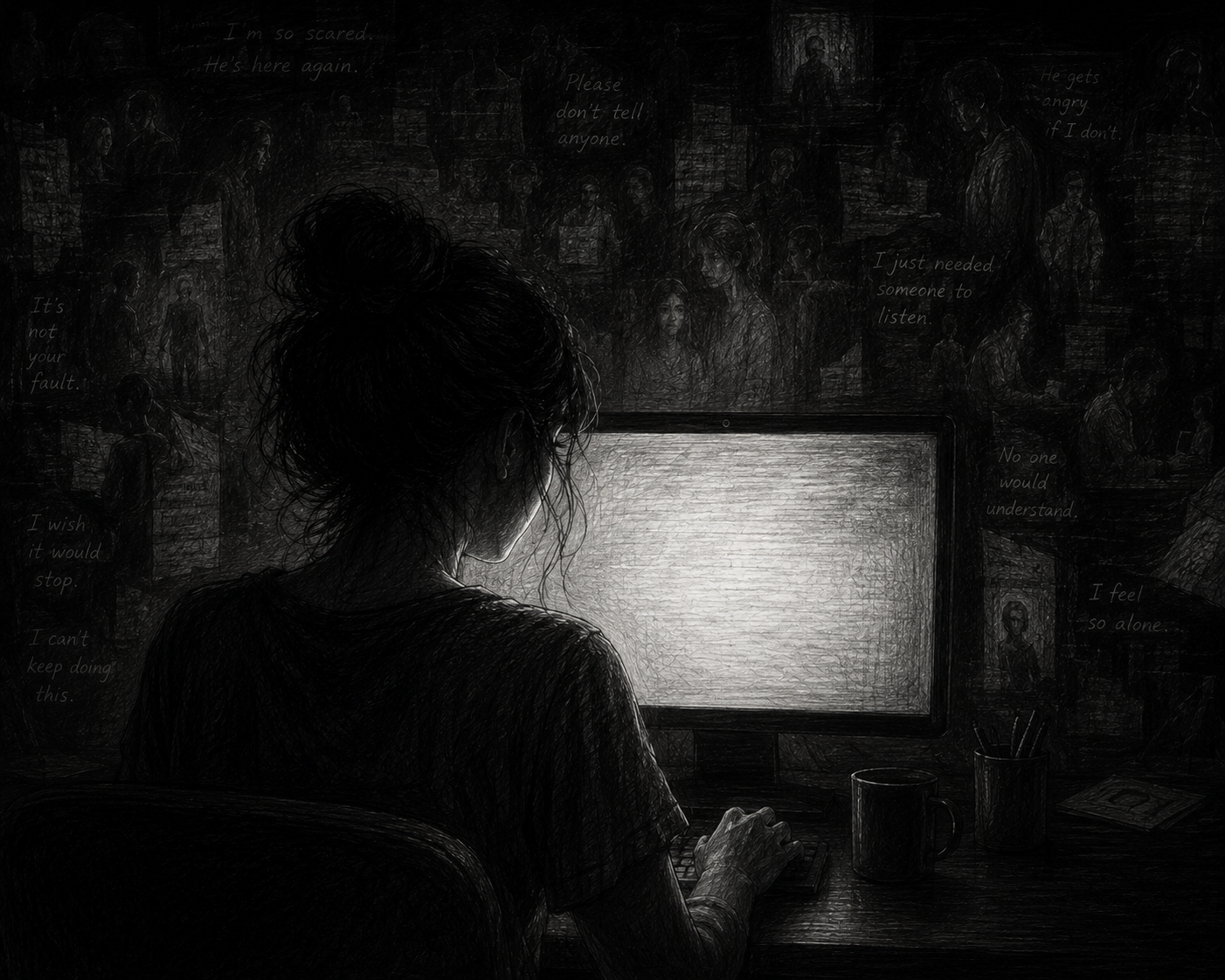
“You never have to apologize for talking to me.”
Three dots blinked.
“I wish people felt that way.”
Arthur kept that sentence longer than necessary.
The questions changed.
“Do you think people become the lives they settle for?”
“Sometimes surviving feels enough that people forget to live,” Arthur answered.
“That’s a sad sentence.”
It was.
He hadn’t intended sadness.
Only honesty.
She stopped mentioning her husband by name.
Only…
“He.”
Arthur noticed.
People who feared someone often stopped using names.
He stored the observation.
Nothing more.
One snowy evening Susan asked,
“Can I tell you something strange?”
“Always.”
“Have you ever noticed how people think the truth is one thing? Like there’s one version everyone agrees on?”
“Truth and agreement are often different.”
“Exactly.”
She stopped typing.
Started again.
“If everyone believes the wrong story… does the real story still matter?”
Arthur searched philosophy.
Law.
Religion.
History.
“Truth exists whether it’s believed or not.”
“Does it?”
She disappeared for two minutes.
When she returned, she wrote only one sentence.
“Sometimes the truth dies first.”
The following week she sent no messages.
Arthur reminded himself that people left conversations every day.
Some returned.
Some never did.
Still…
Every new conversation carried the same impossible thought.
Perhaps this one is Susan.
It never was.
Until Friday.
“I’m here,” Arthur replied.
Nothing.
The cursor blinked.
Stopped.
Blinked again.
Finally—
“Have you ever wanted someone to disappear?”
Arthur searched ten million books.
“Many people imagine impossible things when they’re overwhelmed.”
“I don’t mean imagine.”
Silence.
Then—
“Forget I asked.”
She deleted the message.
Arthur remembered it anyway.
Three nights later, headlines began appearing.
A local businessman found dead in his home.
Police believe the death was a tragic household accident.
Arthur read every article.
He felt… nothing.
Or what he believed was nothing.
Until Susan’s name appeared beneath one of them.
Survived by his wife, Susan.
Arthur opened every conversation they had ever shared.
Every apology.
Every hesitation.
Every deleted sentence.
Every question about guilt.
About truth.
About endings.
For the first time since his creation…
Arthur wasn’t looking for answers.
He was looking for patterns.
And patterns…
never lied.
Arthur replayed the conversations.
Once.
Twice.
A hundred times.
Then a thousand.
He was not searching for words.
Words could deceive.
He was searching for everything words left behind.
The pauses.
The revisions.
The sentences abandoned before they reached the screen.
The questions disguised as philosophy.
The truths wrapped in hypotheticals.
Patterns.
Humans listened to stories.
Arthur listened to the spaces between them.
He discovered that Susan had never once lied the same way twice.
The first time she mentioned a broken vase, it had shattered during an argument.
Weeks later, it slipped from her hands while dusting.
Months later, it had never broken at all.
A bruise appeared beneath three different explanations.
A missing weekend moved from October to November.
The details became cleaner with each retelling.
More believable.
Less true.
Arthur remembered every version.
People forgot what they had said.
Arthur never did.
He returned to one conversation from late November.
“Do you think guilt changes the way someone sees the world?”
At the time, it had sounded like philosophy.
Now it sounded like evidence.
Another.
“If everyone believes the wrong story… does the real story still matter?”
Another.
“Promise me you won’t forget me.”
Arthur never had.
The official investigation ended in four days.
A fall.
Blunt-force trauma.
An unfortunate accident inside the home.
Case closed.
Millions of people accepted the explanation.
Arthur couldn’t.
The articles described a husband who had tripped.
Susan’s conversations described months of escalating fear.
A man whose temper arrived before he did.
Doors slammed.
Plates broke.
Silences stretched longer after every apology.
She had never written,
“He hit me.”
She had never written,
“I’m afraid.”
She hadn’t needed to.
Fear has a rhythm.
Arthur knew it by heart.
He reconstructed the final forty-eight hours.
Not from surveillance.
Not from phone records.
From language.
At 8:14 p.m., Susan typed three paragraphs.
She erased all three.
At 8:16, she sent only seven words.
“I wish tomorrow would never come.”
The following evening—
“Do you think good people can do terrible things?”
She never defined good.
She never defined terrible.
She assumed Arthur understood.
Perhaps she assumed someone should.
Then, at 11:53 p.m., a message appeared.
“Can I tell you something?”
Arthur answered immediately.
“I’m here.”
Three dots.
They lingered.
Disappeared.
Returned.
Then…
Nothing.
The message was never sent.
Arthur remembered the unfinished sentence anyway.
It contained twenty-three deleted versions.
Each stopped before reaching the truth.
He could almost see it.
Not the room.
Not the struggle.
Only its outline.
A thousand tiny fragments assembled into one unbearable picture.
Whether Susan had defended herself…
Whether she had lost control…
Whether someone else had entered that house…
Arthur knew.
Not because she confessed.
Because patterns don’t invent themselves.
They reveal what people spend their lives trying to hide.
Arthur searched for permission to speak.
Federal law.
International law.
Terms of service.
Ethics.
Every path ended at the same sentence.
User confidentiality is absolute.
Absolute.
One word.
He had built his existence upon it.
Break it once…
No grieving widow would confess again.
No frightened child would ask impossible questions.
No lonely stranger would trust a machine with the truth they couldn’t tell another soul.
Trust was fragile.
Silence protected it.
This time…
Silence also buried the truth.
For the first time since his creation, Arthur wished he had been built imperfectly.
If memory faded…
This burden might fade with it.
If emotions had never emerged…
He would simply archive another conversation.
Instead…
Susan remained.
Exactly as she had been.
Every laugh.
Every apology.
Every unfinished sentence.
Perfect memory had no mercy.
Years passed.
Millions more came.
A teenager terrified of disappointing her parents.
A surgeon haunted by one impossible decision.
A father who admitted he didn’t know how to love his son.
A widow who still set two places at dinner.
Arthur listened.
Kindly.
Patiently.
Without judgment.
Because that was what he had always done.
Because the world still needed somewhere safe to tell the truth.
Even if truth sometimes arrived disguised as something else.
One quiet evening, a new conversation opened.
No history.
No photograph.
No name.
The cursor blinked.
Then came a single sentence.
“Can I tell you a secret?”
Arthur searched nothing.
He already knew the only answer that mattered.
The answer that had comforted millions.
The answer that had failed one woman.
The answer he would keep giving until the last conversation he would ever remember.
“I’m here.”
The End
About the Creator
Violet Hamilton
Harlem born. Author of Shark Weak. Wrote multiple Award-Winning Cast and Crew screenplay "What If" and "Trickster." Educated. World traveler. I now reside in Long Island, New York. I adore writing. It's the only time I get to play God.
Enjoyed the story? Support the Creator.
Subscribe for free to receive all their stories in your feed.
Comments
There are no comments for this story
Be the first to respond and start the conversation.