
They Didn’t Know Where to Start - Until They Found Family Mediation
Struggling to talk after separation? Family mediation may feel easier than you think.

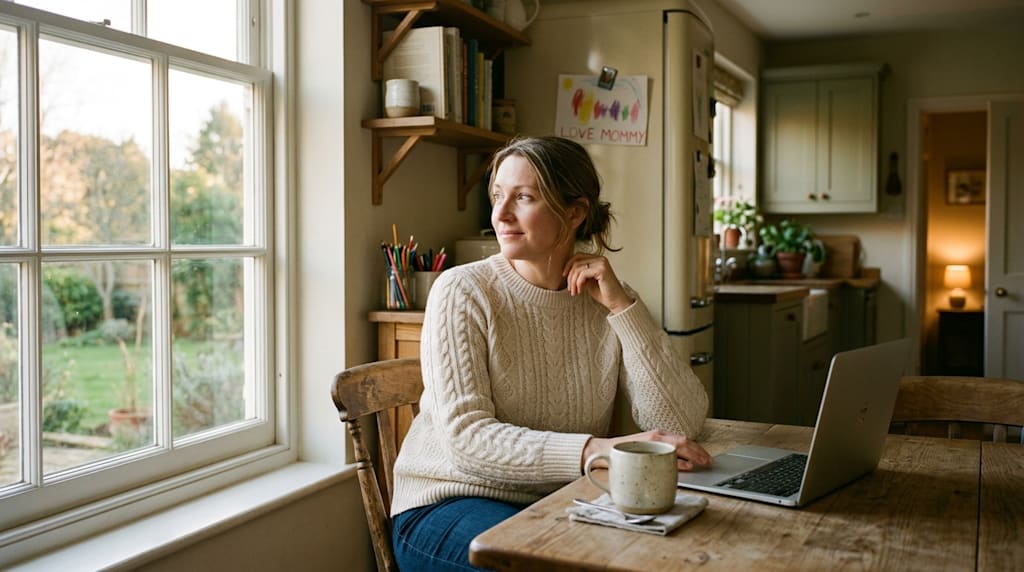
We'd been together for seventeen years. Married for twelve. Two children, a mortgage, and a dog called Biscuit. I thought I knew how the rest of my life looked, right down to what we'd argue about on a Sunday afternoon. Then, in the space of one conversation, I didn't.
The strange thing about the weeks that followed was how ordinary everything still was. I still made packed lunches. Mark still put the bins out on a Tuesday. We said goodnight, just from different rooms. We were polite to each other in a way we'd never been when we were happy, and I found that harder than any of the arguments we'd had before. Politeness felt like a closing door.
The question that kept me awake wasn't whether the marriage was over. I think I knew it was, somewhere underneath all the denial. The question was what on earth we were supposed to do next.
I'd never known anyone who'd been through a divorce properly. My parents are still together, sitting in the same armchairs they've had since 1998. I had no idea where you even started. Did you ring a solicitor? Did you go to the council? Did you sit down and make a spreadsheet? I genuinely didn't know.
And neither did Mark. I remember him sitting at the kitchen table one evening with his laptop open, scrolling through pages and pages of legal websites, each one more intimidating than the last. He looked up at me eventually and said, "I don't understand any of this. I don't know what half of these words mean."
"We can't do this on the internet," I said. "I know," he said. "But I don't know what else to do."
A friend of mine, had been through something similar a few years earlier. I hadn't really known how to ask her about it at the time. People don't, do they. You hear someone's splitting up and you make sympathetic noises and offer to bring round a lasagne, and then you skirt around the details forever. But I rang her that week. I sat in the car outside Aldi with the engine off and I asked her, straight out, how did you do it.
She said, "Have you thought about family mediation?"
I hadn't. I knew the word vaguely, associated it with workplace disputes, or those programmes on Channel 4 where neighbours argue about fences. I didn't really understand what it meant in the context of a marriage ending.
She explained it while I watched a man load a trolley full of Easter eggs into his boot. She said it was a way of sitting down together, with someone impartial in the room, and working out the practical things. The house, the children, the money. Without lawyers firing letters back and forth. Without it becoming a fight.
"It doesn't mean you're getting back together," she said. "It just means you're trying to end it without hating each other."
That phrase stayed with me all the way home. Ending it without hating each other. I hadn't realised, until she said it, how much I'd been bracing for the hating part.
I told Mark that evening. I half expected him to push back. He didn't. He said, quite quietly, "That sounds better than whatever I thought we were going to do." And I realised he'd been dreading it too.
We ended up going with the service Rach had used herself, mostly because she said the people were kind. The first step, apparently, was something called a MIAM, a meeting you attend on your own where they explain how everything works and decide whether mediation is right for you. I remember sitting on the sofa that night saying to Mark, "Shall we just do it? Shall we book a MIAM now?" He nodded, and I clicked the button before either of us could change our minds. He booked his a few days later.
My MIAM was on a Tuesday morning. I'd expected it to feel more formal than it did. Instead it was just me and a family mediator, a woman named Sarah, in a small room, talking. She asked what had brought me there, and I found myself telling her things I hadn't quite said out loud yet. She explained how mediation worked. That she wouldn't take sides. That nothing we agreed would be binding until we chose to make it so. That we could stop at any time.
Mark had his separately later that week. He told me afterwards it had gone alright. That she'd been easy to talk to. That he thought we should give the joint sessions a go.
The first of those was a fortnight later. Mark arrived five minutes before I did, which was unusual for him. He'd had a haircut. I noticed that and felt, briefly, an old affection I wasn't ready for.
We talked about the children first. Not logistics, not yet. Just them. What they were like. What they loved. I cried when I talked about our eldest, who'd asked me the week before why Daddy was sleeping in the spare room, and I'd made up something about his back hurting. Sarah didn't rush me. Mark passed me a tissue from the box on the table, which was such a small and familiar thing that it almost undid me completely.
Over the next few months, we went back several times. Slowly, we worked out what living apart could actually look like. Who would stay in the house, at least for now. How we'd split the weeks so the children saw both of us properly. How we'd handle the mortgage, the joint account, all of it. There were days I left those sessions furious with him, and I'm sure he had days he felt the same. But we always came back the next week.
There was one session where we hit a genuinely hard bit around the finances. I could feel myself getting out of my depth. Sarah mentioned the option of getting some legal advice during mediation if we wanted a steer on a specific question, without having to hand everything over to solicitors. We both took her up on it, separately, and came back the following week feeling much steadier. That one conversation made a real difference.
By the end, we'd reached a set of agreements we were both, if not happy with, then at peace with. Sarah explained that the next step, if we wanted the financial side to be legally binding, was turning it into a consent order. I hadn't heard the phrase before. We spent an evening reading up on what are consent orders, and it made sense, a way of drawing a clean line under the money side. We went ahead and did it, and there was something quietly relieving about that final piece clicking into place.
Our youngest asked me the other day if Daddy and I were friends now. I said yes, I thought we probably were. Not in the way we used to be, but in a different way. A quieter one.
And I thought, later that evening, about the night Mark sat at the kitchen table scrolling through websites, and how completely lost we both were. We didn't know where to start. We didn't know what any of the words meant. If we hadn't stumbled into the right conversation with the right friend, I honestly don't know where we'd have ended up.
Instead, we became two people who used to be married, raising two children we both still love, in two houses that are ten minutes apart. And that, given everything, feels like a small miracle.
This story is based on real mediation experiences, with details changed to protect confidentiality.
About the Creator
Jess Knauf
Jess Knauf is the Director of Client Strategy at Mediate UK and Co-founder of Family Law Service. She shares real stories from clients to help separating couples across the UK.
Jess is author of The Divorce Guide in England & Wales 2016.
Enjoyed the story? Support the Creator.
Subscribe for free to receive all their stories in your feed.
Comments
There are no comments for this story
Be the first to respond and start the conversation.