
The Ripple Effect: Stacy’s Surrogacy Journey and How It Creates Love Across Generations
Written by: Sarah Thornton, MSW, LCSW Published: December 16, 2026


What’s your superpower? For Stacy Brown, it’s the ability to help create life — and love that lasts for generations.
A fitness instructor, retail professional, and self-described “soccer mom,” Stacy never imagined that her love for pregnancy would lead her beyond her own family. But after experiencing both loss and joy on her path to motherhood, she felt a deeper calling: helping others build their families as a gestational surrogate.
A simple nudge from a friend sparked a journey she hadn’t expected: helping another family experience the wonder of a child by becoming a surrogate. Now, Stacy is beginning her third surrogacy journey, joining Nazca Fontes on All Things Conceivable: A Surrogacy Podcast to share how carrying life for others revealed her true superpower — creating love that ripples across generations.
🎧 Listen to Stacy’s full story on All Things Conceivable: A Surrogacy Podcast.
From Motherhood to Becoming a Surrogate
Nazca: As you begin your third surrogacy journey, what was it like when you first became a mom back in 2017?
Stacy: My husband and I always knew we wanted a family. We got pregnant in 2015, but very early on — about six or seven weeks — something didn’t feel right. During the ultrasound, there was no heartbeat. We had miscarried. I didn’t know how to process it at first, but my husband was devastated. One week you see ‘pregnant,’ and the next you’re not. It was heartbreaking.
Not long after, we got pregnant again, and that pregnancy was just the most joyous, wonderful experience. Everywhere I went, people complimented me — “You look so good!” — and I loved pregnancy. The miracle of it, how the female body works, amazes me.
When our daughter was born, my heart grew three sizes — like the Grinch. I’ll never forget my husband looking at me right before birth saying, “Are you ready for this?” And I said, “Ready or not, she’s coming.”
My daughter became such a light to everyone. Motherhood… it’s something special. And even through the joy, I always remembered the feeling of loss and how lucky I was to be her mom.
During that pregnancy I casually said, “I’d totally be a surrogate because we only want one kid.” A few people remembered that. Fast forward to 2020, my mentor said, “Remember when you said you wanted to be a surrogate? A friend of ours just did it — you should do it.”
That same day I spoke with my friend, sent in a link to ConceiveAbilities, and got a call. Then I thought, “I should probably tell my husband.” When I came home and brought it up, he said, “I thought that was something you’d get over.” But he agreed to look into it — and now here we are, almost five years later.
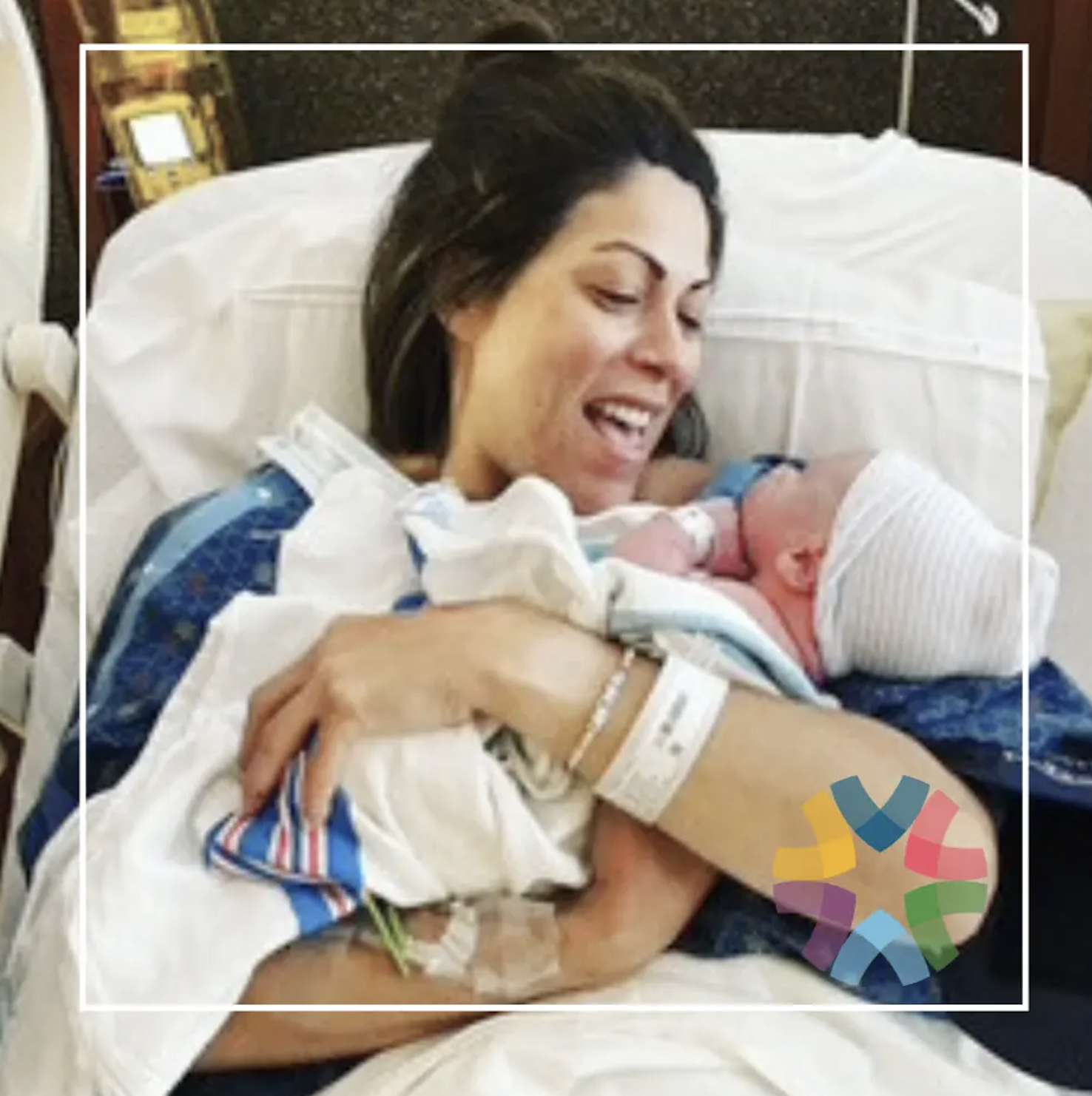
The First Conversation: Talking to Your Spouse About Being a Surrogate
Nazca: What was that initial conversation like with your husband when you mentioned becoming a surrogate? How did he respond?
Stacy: At first he said, “If you really think this is necessary…” And I said, “Is it ever?” But then I said, “Imagine the light our daughter brought into the world when she was born — imagine doing that for someone else.” He said, “I mean, I guess.”
We met incredible people along the way — people who spoke so passionately about surrogacy and family building. It became part of who we are as a family.
The second time, he was more hesitant: “There’s risk… you’re older now.” But when the babies are born, he always says, “I can’t believe you just did that.” He calls it my superpower.
Each time, the conversation takes a little longer, but it always comes back to: “If this is on your heart, we’ll support you.” I’m lucky to have a partner who jumps in, becomes friends with the intended parents, and is right there beside me.
Faith and Community: Surrogacy Takes a Village
Nazca: How has your faith shaped your decision to become a surrogate?
Stacy: When we moved to the Chicagoland area in 2020, we found our forever home and an incredible church community. We lead a small group every week with other families.
Our faith family walks alongside us. Every week they pray for my appointments, my bloodwork, my trips out of state. Surrogacy truly takes a village.
During my second journey, I faced struggles — three transfers. I felt every step of the way there was a reason. I prayed constantly and trusted God had a plan for me and for the family we were partnered with.
It all worked out in such beautiful timing. I found out I was pregnant on April 29th last year. My boss announced she was 20 weeks pregnant. When I told her I had just found out that morning, she was so supportive.
I ended up spending the holidays with my feet up instead of working retail. And most importantly, I got to give that family the most incredible gift, their little girl, just in time for Christmas.
Challenges and Resilience in a Surrogacy Journey
Nazca: Reflecting back, what stood out as the main differences between your first and second surrogacy journeys?
Stacy: First, the relationships. My second journey felt more “business” at first — which was fine, I respected their boundaries. But now we talk every month on the 27th, the little girl’s month-birthday. It has become a natural, authentic friendship.
Second, dealing with failed transfers. At first I didn’t get emotional; I said, “It just happens.” But the second failed transfer hit me. I let myself feel it — but I was intentional about not blaming myself. Biology is biology.
My support system — especially my friend Jeanette — helped me shed tears when I needed to. I realized surrogates feel the loss too. And that’s okay.
My husband was a huge support as well. He made sure I felt confident in the effort I gave. He constantly reminded me that this is biology and science, and that there was nothing more I could have done. More than anything, he stayed right beside me with steady love and support, helping me keep my head up, avoid going to a dark place, and continue moving forward instead of carrying defeat with me.
Relationships with Intended Parents
Nazca: What was your husband’s relationship with the intended parents different from yours?
Stacy: A little — he’s less hands-on. We usually have a group chat with both parents and sometimes one with just the intended mother. But lately, with our second family, he’s the one driving the group chat — talking about football!
He works in healthcare and connects easily with people. Watching him high-five the dad in the delivery room was amazing. In the beginning he was hesitant — even about being in the group chat. Now he understands the impact it makes.
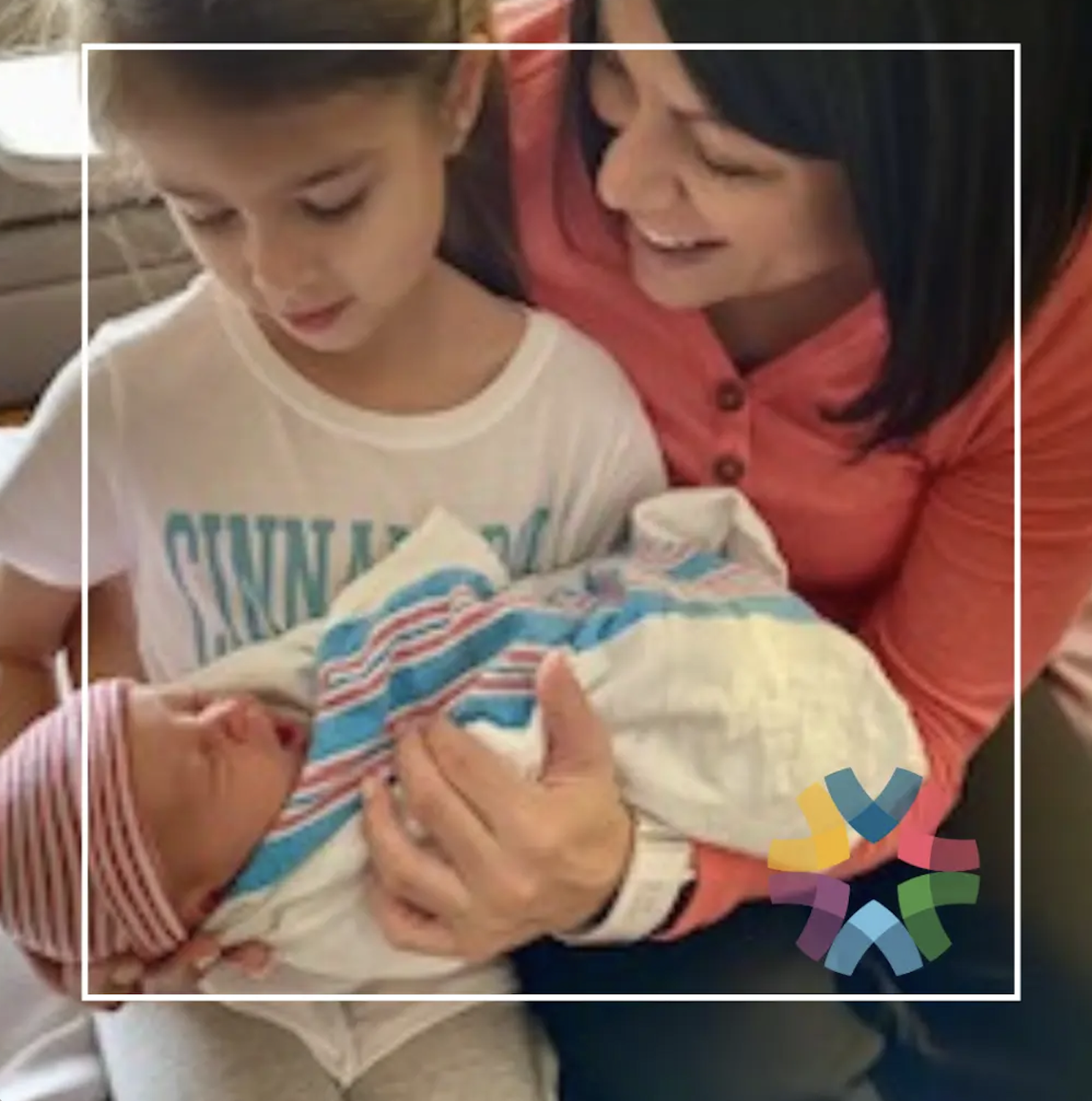
The Ripple Effect: Impact on Extended Family and Communities
Nazca: Let’s talk about the ripple effect — grandparents, siblings, extended family. How has bringing life into these families impacted the people around them?
Stacy: When my husband and I talk about these journeys, especially leading up to delivery, we’re always reflecting on the families we’ve helped grow. It’s been one of the best parts. Our first intended family already had a daughter via a surrogate. Our girls played together when we visited. Seeing their daughter gain a little brother and watching their family expand through visits, pictures, and videos has been incredibly special.
With our newer family, their daughter is an addition to parents who came together later in life. The mother has two older boys who are now big brothers. Watching grandparents on both sides light up — especially since the father is an only child — has been incredible.
A new baby fills every corner of a family with life. And then you think about the long-term: one day this baby may grow up, find a partner, have children — and those children wouldn’t exist without this moment. The ripple effect is huge.
How to Talk to Kids About Surrogacy
Nazca: What was it like talking to your young kids about surrogacy?
Stacy: Last year she was student of the week, and I was the special guest reader. After reading our kids’ a book, one child blurted out, “Finley is going to have a baby sister or brother!”
I looked at the teacher and asked if I could explain. My daughter immediately said, “We’re not keeping it!” So I gently explained I was a surrogate and that sometimes moms and dads can’t have a baby on their own and need a little bit of science and a friend to help.
I told them, “It’s their baby. The doctors use science to put everything together. I carry the baby, help it grow, and when it’s born, the parents take it home.”
The kids asked typical kid questions — “Where does the baby go?” — and we kept it simple.
I also love sharing with strangers. My husband loves telling restaurant managers, “I’m not the father,” just to see their reaction — and then we explain. Most people say, “I’ve never met a surrogate.” I always say, “Well, now you have. I hope I won’t be your last.”
Even older generations — like my grandmother — surprised me. I was nervous to tell her, but she cried and said, “I can’t believe you’re doing that for somebody.” From six-year-olds to seniors, the love and open-mindedness has been incredible.
Words of Inspiration for Surrogates and Intended Parents
Nazca: What advice or inspiration would you give to women considering surrogacy — or to intended parents wondering about surrogates?
Stacy: For women considering surrogacy: there’s nothing like hearing a baby cry for the first time and seeing the parents’ faces. Besides my wedding day and my daughter’s birth, the greatest memories of my life are the births of the babies I carried for other families. Watching love grow instantly — there’s nothing like it.
For intended parents: ConceiveAbilities has been an incredible partner. The care, the intention, the love they put into matching — it’s not a computer. It’s people who truly want the right people to find one another. After that, everything falls into place.
About the Creator
ConceiveAbilities Egg Donor and Surrogacy Agency
ConceiveAbilities is a leading egg donor and surrogacy agency that has helped build families for over 30 years. Learn more about becoming a surrogate, egg donation, the surrogacy process and modern family building.
Enjoyed the story? Support the Creator.
Subscribe for free to receive all their stories in your feed.
Comments
There are no comments for this story
Be the first to respond and start the conversation.