
The Museum Tour That Made Me Rethink Every Purchase
For years, I only trusted money spent on things I could carry home.
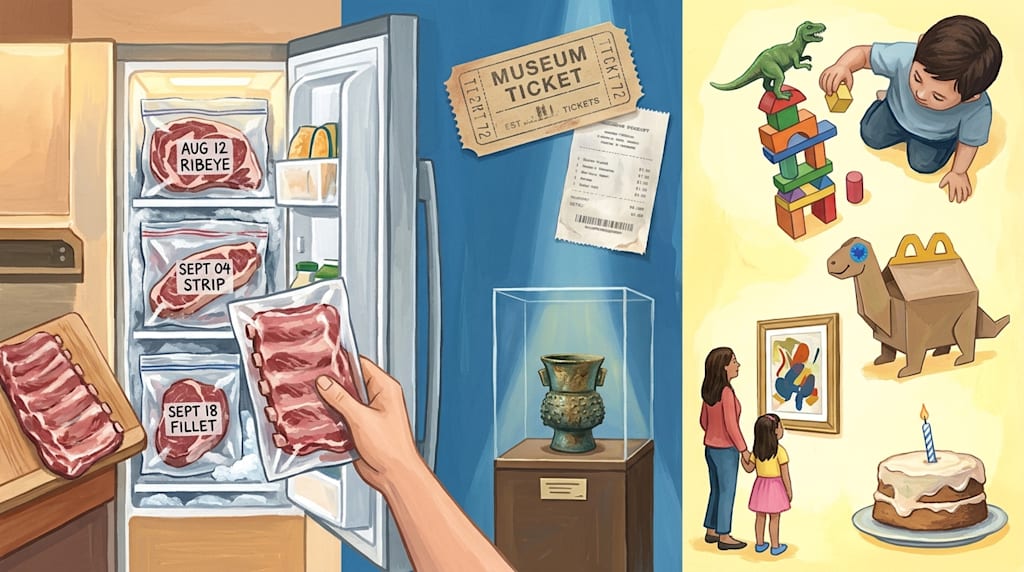
In the freezer, three bags of steak sat in a row, each with a date sticker. When I buy pork ribs, I pick the middle section of the rack. I tell the vendor, “For soup.” He reaches under the cutting board and pulls out another rack. The cut ends are neat. The meat still feels warm. At home I divide the meat, vacuum-seal it, write the date, and close the freezer door. The door lands with a thud. The meat is there. The money has turned into something I can count.
For years, my spending list had only objects on it. Books, clothes, appliances, groceries. If I could bring it home, use it again, and find it months later while cleaning, I counted it as money well spent. Tickets, classes, tours, performances: once I paid, they vanished. I treated them as air.
The museum tour cost a little over sixty yuan. Not much. The guide was good. They moved from bronze casting to reading inscriptions, and I listened for forty minutes. Then I walked out, stood by the gift shop, and did the math on my phone. Sixty yuan was two lattes and a sandwich. I remembered what the guide said, but the receipt kept coming back. The tour ended. Nothing sat on my shelf.
I opened the shopping app. Three books, an electric cooker, two pairs of socks sat in the cart. An exhibition ticket, a pottery class, and a city walk sat in my saved items. My finger hovered over checkout. I selected all in the cart. The saved items stayed there another month.
I grew up short on objects. At home, the rule was “as long as it works.” Toys came from cousins. Clothes came from an older cousin who had outgrown them. At New Year, my mother would flip the tag, check the price, put the item back, and choose a cheaper one. Years later, I caught myself doing the same thing. My spending stayed at the level of goods. A thing stays. A service leaves. I did not know how to pay for leaving.
My nephew was building with blocks. I squatted beside him and looked at my phone. He looked up. “Auntie, watch me build.” I said I was watching. He said, “Your eyes are watching. Your brain is not.” I put the phone away. He built a crooked tower and put a plastic dinosaur on top. The dinosaur wobbled. He adjusted the angle for about two minutes. Then it held. He clapped. I clapped. He said, “Auntie, are you clapping for real?” I said yes. He said, “Then clap again.”
Children notice when someone pays attention. They know it has value. You build blocks with them, tell them a story, take them somewhere fun, and they grab your sleeve and pull you toward the next thing. They also learn from how other people pay attention. A teacher who tells a story well. A guide who makes a dinosaur come alive. A server who turns a kids’ meal into a treasure hunt. These people give more than content.
The paper box from a fast-food kids’ meal folded into a dinosaur. The burger was gone, but the box stood on the table. My nephew kept it by his bed for three days. A blue sticker he drew himself was stuck to the dinosaur’s neck. The box was worth nothing. The afternoon was worth something. When we ordered, the clerk squatted down and asked, “Do you want the dinosaur red or green?” When the food came, she put the dinosaur box in front of him. When we left, she gave him a dinosaur sticker. I could not buy that afternoon at home and carry it back in a bag. He needed the room, the service, the small surprise.
In an art museum, a mother squatted beside her daughter. “Look at this painting. The painter worked on it for three years.” The daughter said, “Three years for this?” The mother said, “When you draw, what happens when you mess up?” The daughter went quiet. She looked a while longer. I stood nearby and remembered drawing as a child. If I messed up, I tore the paper. An adult would say, “Why tear it? Paper is not free.” I stopped drawing much after that.
I used to think seeing the world meant standing in front of famous things. Now I think it includes noticing how a place treats the people inside it. A good exhibition, a good concert, a good hotel, a meal with service and atmosphere: you pay for a stretch of time that someone has shaped. In that time, you are looked after, pushed into another rhythm, shown something you would have missed alone. The time does not sit on a shelf. It becomes memory. It becomes a way of reading the world.
On my birthday, I did not buy a bag. I booked a cake-decorating class. The teacher showed us how to frost. I spread the cream three times. It stayed crooked. I took the cake home. When I cut it, a layer inside was not baked through. I kept the photo. The photo of the crooked cake looked better than a photo of a bag. In it, the cream slumps, a candle leans, and my nephew’s cardboard dinosaur holds down one corner.
At the end of the month, I looked at my bill. Takeout and groceries took most of it. Tickets and classes took a small slice. That slice was eighty yuan more than last month. I closed the bill, went to the kitchen, and moved yesterday’s pork ribs from the freezer to the fridge. Tomorrow I would stew them.
When money is tight, buy the thing. Fry steak at home. Stew ribs at home. Keep the kitchen clean. Live a solid life. When money loosens, pay for the service, the room, the person who knows how to make an hour feel different. Do not treat objects as the only evidence that money was spent well. Do not treat what you can touch as the only thing worth paying for.
See the object. See the person. See the room. See the world.
About the Creator
Jin
Writer of reamstories
https://reamstories.com/jin
Enjoyed the story? Support the Creator.
Subscribe for free to receive all their stories in your feed. You could also become a paid subscriber, letting them know you appreciate their work.
Comments
There are no comments for this story
Be the first to respond and start the conversation.