
The Hidden Cost of Love: How Cousin Marriages Can Affect a Child's Future Genetics
Balancing Tradition with Responsibility: Risks of the Genetics and Burden of Emotional Inheritance in Cousin Marriages
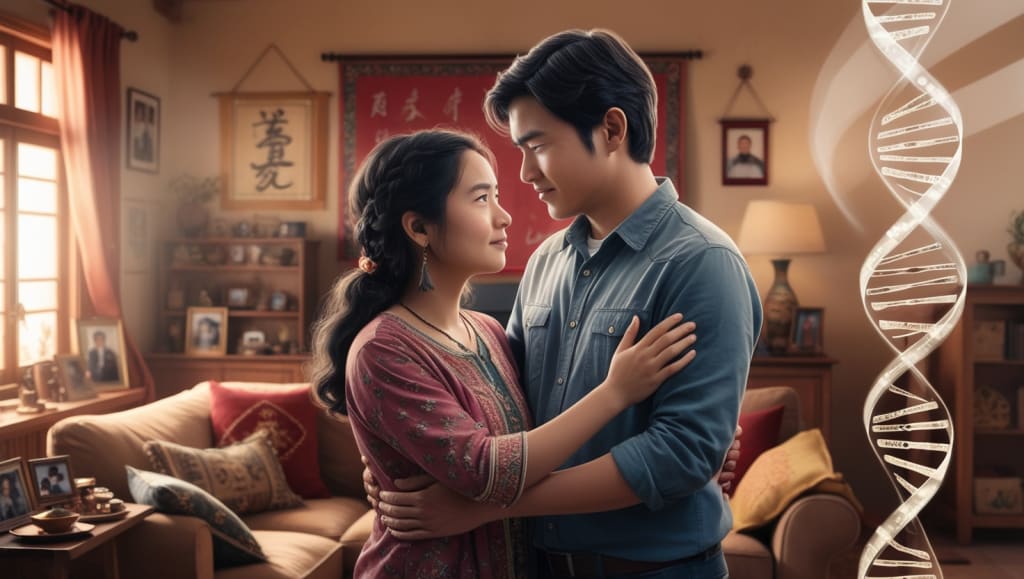
Here, readers will learn how cousin marriages wreak havoc on a child's genetics.
Marriages are often about love, family, and tradition. Marrying a cousin in the culture may be precious, a way to strengthen family ties, preserve culture, and honor shared history. Such a feeling of being with someone who understands the stories and values you've grown up with may feel like being at home. However, behind these warm cultures of tradition lies a hidden danger-the cost for the next generation.
Genetics, like a silent, unstoppable force often hidden from view, decides the health and fate of our children profoundly. Cousin marriages, again so deeply rooted in love and familiarity, involve serious risks with genetic consequences that can transform the lives of children permanently. Why?
Genetics: The Hidden Code of Life
Every child is a unique blend of his parents—a beautiful, intricate mosaic formed by DNA. We inherit one set of genes from each of our mothers and fathers. These genes are like the tiny instructions that tell our bodies how to grow, develop, and function. But sometimes, in these thousands of instructions, there's a small flaw-a mutation. For the most part, mutations are harmless since they're balanced out by a healthy gene from the other parent. But if both parents carry the same defective gene, it is passed on to the child as an unwrapped package, realizing its secret price tag.
Why Cousin Marriages Pose a Higher Risk
Cousins share more than memories of great-aunts-they share DNA. Because they have common ancestors, cousins are more likely to carry the same genetic mutation. That is, if both cousins have hidden flaws in their genetic codes, the chance that it will appear in the kids will be way higher.
It is more of the dice roll, but you are always against the odds. The very love that unites families together can also bear with it the seeds of sorrow and the potentiality to bring heartbreak and hardship into the life of a child.
The Harsh Reality of Genetic Disorders
For children born to cousin’s parents, risks are real; they can be devastating. These are not just numbers on a page-they are the experiences of families grappling with unexpected challenges. Children can be born with:
1. Hereditary Disorders: This implies potentially dangerous diseases like cystic fibrosis, thalassemia, or sickle cell anemia. Such a disorder can take away all of the child's health and leave him with a life on medicines and continuous hospital visits.
2. Birth Defects: The thrills of having a new born baby are snatched away by shock at the happening of unknown health conditions in the form of heart defects, physical deformities, or developmental disabilities that will affect the entire lifetime of a child.
3. Intellectual Disabilities: Can you imagine a child who is having difficulties in learning, speaking, or growing at the usual pace? There is a great possibility that this would be more frequent among the children of cousins because they are prone to having developmental and intellectual disabilities.
4. Rare, Devastating Disorders: There are thousands of rare genetic conditions, many horrific in their severity. In families where cousin marriages have occurred over generations, these uncommon disorders are more likely to emerge, changing the life trajectory of the child in terribly drastic ways.
The Human Toll Behind the Statistics
Statistically, this risk of genetic disorders in children born to unrelated parents is around 3-4%. For children born to first cousins, the risk can climb as high as 6-8%--while small numbers can be unbelievable, the real lives this represents actually matter. Each point represents the possibility of lifelong medical burdens, emotional turmoil, and unfulfilled dreams. Children may never get to run or play or live pain-free; families must face a future they did not expect.
What Can Families Do? Finding Hope Amidst the Risks
If you love a cousin, or if cousin marriages are a family tradition, there is no reason to surrender to these risks. There are ways to keep your future children safe:
1. Genetic Counselling: A genetic counsellor might be a helpful guide, helping you make sense of risks and options. Testing for mutations may be available, and hope can be encouraged by discussing steps to be pursued if both of you carry the same flawed genes.
2. Prenatal Screening: Today, due to modern technology, prenatal tests have been developed that detect several genetic disorders during pregnancy early on. This allows the parents to make informed but painful choices because they equip themselves with knowledge instead of facing an open sea of unknowns.
3. Carrier Testing: Such couples might even plan to get such tests done before planning a family. They can thus find out whether they carry the genes of specific conditions. This is indeed a choice that takes great courage-the courage to know the truth before a child is conceived.
4. Awareness and Support: One would expect that education and support, upon knowing that cousin marriages are the order of the day in communities, can make a huge difference. The sharing of information, rising awareness, and access to genetic counseling allow others to make decisions that balance tradition with the well-being of future generations.
A Choice Between Love and Responsibility
Cousin marriages are not just a cultural choice; they are far more personal. They are most of all for the people you love, for the bonds that you honor, and for the traditions that you hold near and dear. Love also means responsibility: the responsibility not only to think about the present but into the future-the future of children inheriting our world, our traditions, and, sometimes, our genetic flaws.
Choosing to marry a cousin is perhaps one act of love, but love still entails that one has to make hard choices. It's about finding the balance between what feels right in your heart and what is best for the children you may bring into the world; knowing sometimes that the greatest act of love is indeed the courage to break with tradition for a healthier tomorrow.
About the Creator
Enjoyed the story? Support the Creator.
Subscribe for free to receive all their stories in your feed.
Comments
There are no comments for this story
Be the first to respond and start the conversation.