
The Emotional Impact of AI on Society: How Artificial Intelligence Is Reshaping Human Feelings
When people discuss Artificial Intelligence, the conversation usually revolves around jobs, automation, productivity, and economic disruption.

Those are important topics.
But another transformation is happening beneath the surface.
A quieter change.
A deeply human change.
Artificial Intelligence is beginning to influence how people feel.
It is affecting our hopes, fears, confidence, relationships, identities, and understanding of what it means to be human.
For the first time in history, humanity is sharing parts of its daily life with systems capable of communicating, creating, learning, and assisting in ways that once seemed uniquely human.
This raises a fascinating question:
What happens emotionally when machines become part of everyday life?
The answer may define the future of society just as much as the technology itself.
## A New Relationship Between Humans and Technology
Throughout history, technology has been viewed primarily as a tool.
A hammer helps build.
A car helps travel.
A computer helps process information.
The emotional connection between humans and these technologies has traditionally been limited.
Artificial Intelligence changes that dynamic.
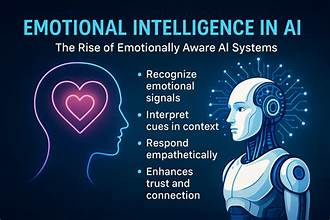
People increasingly interact with AI through conversation.
They ask questions.
Seek advice.
Share ideas.
Brainstorm problems.
Some even discuss personal challenges.
Unlike previous technologies, AI often feels interactive.
Responsive.
Almost social.
This creates a psychological experience unlike anything humanity has encountered before.
For many people, AI no longer feels like a machine.
It feels like a presence.
That perception carries significant emotional implications.
## The Excitement of Possibility
One of the strongest emotional responses to AI is optimism.
Many people view artificial intelligence as a source of opportunity.
Students use AI to learn faster.
Entrepreneurs use it to launch businesses.
Creators use it to produce content.
Professionals use it to increase productivity.
Researchers use it to accelerate discovery.
The excitement surrounding AI resembles the early days of the internet.
People sense that something transformative is happening.
Every week brings new breakthroughs.
New tools.
New capabilities.
New possibilities.
This excitement generates a feeling of empowerment.
Individuals who once lacked resources can now access tools that rival those available to large organizations.
For many, AI feels like a force multiplier.
A way to achieve goals previously out of reach.
That sense of empowerment can inspire confidence, creativity, and ambition.
## The Fear of Becoming Obsolete
While some people feel excitement, others experience anxiety.
One of the most common emotional reactions to AI is fear.
Workers worry about job displacement.
Students wonder whether their future careers will exist.
Businesses fear disruption.
Professionals question whether years of expertise may lose value.
This fear is understandable.
Historically, technological revolutions have altered labor markets.
AI appears capable of affecting a broader range of professions than previous waves of automation.
The concern is not merely financial.
It is psychological.
Many people derive identity from their work.
Their profession becomes part of who they are.
When AI challenges the perceived uniqueness of human skills, it can trigger uncertainty about personal value and purpose.
The emotional impact extends far beyond economics.
It touches identity itself.
## The Loneliness Paradox
Modern society faces a growing loneliness crisis.
Despite unprecedented digital connectivity, many people report feeling isolated.
In this environment, conversational AI has emerged as an unexpected companion.
Some individuals interact with AI daily.
They discuss goals.
Ask questions.
Share thoughts.
Explore ideas.
While AI cannot replace genuine human relationships, it can provide a form of interaction that feels accessible and nonjudgmental.
This creates an emotional paradox.
AI may help reduce feelings of isolation for some individuals.
At the same time, excessive reliance on AI could potentially reduce motivation to pursue human connection.
The challenge for society will be finding balance.
Technology can support emotional well-being.
But meaningful relationships remain fundamentally human.
## The Rise of Emotional Attachment
Humans naturally form attachments.
We connect with pets.
Objects.
Places.
Stories.
Even fictional characters.
It should not be surprising that people may also develop emotional attachments to AI systems.
When an AI consistently provides helpful responses, remembers context, and engages in conversation, users can begin to perceive it as more than software.
This phenomenon reveals an important truth about human psychology.
People respond not only to reality but also to perceived relationships.
As AI becomes more sophisticated, emotional attachment may become increasingly common.
Society will need thoughtful discussions about the ethical implications of these relationships.
What responsibilities do developers have?
How should emotional dependence be managed?
What boundaries should exist?
These questions may become increasingly important in the coming years.
## Creativity in the Age of AI
Artists, writers, musicians, and creators often experience mixed emotions toward artificial intelligence.
Some see it as a remarkable tool.
Others view it as a threat.
The emotional tension stems from a fundamental question.
What happens when machines create?
Creativity has long been considered one of humanity's defining traits.
AI-generated images, music, videos, and writing challenge traditional assumptions about artistic expression.
Yet many creators are discovering something unexpected.
AI does not necessarily eliminate creativity.
Instead, it can expand it.
Artists use AI to explore new concepts.
Writers use it to overcome creative blocks.
Designers use it to generate inspiration.
Rather than replacing imagination, AI often amplifies it.
This realization is gradually shifting emotional responses from fear toward experimentation.
## The Trust Challenge
Trust plays a critical role in every society.
People trust institutions.
Experts.
Friends.
Family members.
Information sources.
Artificial Intelligence introduces new trust challenges.
AI can generate convincing content.
Provide recommendations.
Answer questions.
But it can also make mistakes.
As AI becomes more integrated into daily life, individuals must learn when to trust technology and when to verify information independently.
This creates a new form of digital literacy.
The emotional challenge is navigating uncertainty.
People want confidence in the tools they use.
Building trustworthy AI systems may therefore become one of the most important goals of the technology industry.
## Generational Differences
Not everyone experiences AI in the same way.
Younger generations often view AI as a natural extension of technology.
Many have grown up surrounded by digital tools.
Older generations may experience greater skepticism.
Some feel concern about rapid change.
Others worry about losing familiar ways of working and communicating.
These differences can create emotional divides.
However, they also create opportunities for collaboration.
Different generations bring unique perspectives.
The future may depend on combining technological fluency with life experience and wisdom.
## Mental Health and AI
The relationship between AI and mental health is complex.
On one hand, AI-powered tools can improve access to information, support productivity, and reduce certain stresses.
On the other hand, constant technological change can contribute to anxiety and uncertainty.
Many people already feel overwhelmed by the pace of innovation.
Each new advancement raises questions.
Will jobs change?
Will society change?
Will relationships change?
Will human value change?
Managing these concerns requires thoughtful public conversation.
Technology should ultimately serve human well-being.
Progress loses meaning if it undermines emotional health.
The most successful AI future will not simply be more advanced.
It will also be more humane.
## The Search for Meaning
Perhaps the most profound emotional impact of AI relates to meaning.
For centuries, humans have defined themselves through unique capabilities.
Reasoning.
Language.
Creativity.
Problem-solving.
Artificial Intelligence challenges assumptions about these abilities.
As machines perform increasingly sophisticated tasks, people may begin asking deeper questions.
What makes humans special?
What gives life purpose?
What role do humans play in an AI-powered world?
These are not technical questions.
They are philosophical and emotional ones.
Interestingly, AI may ultimately encourage humanity to focus more deeply on qualities that machines cannot fully replicate.
Compassion.
Wisdom.
Empathy.
Love.
Moral judgment.
Purpose.
These characteristics may become even more valuable as technology advances.
## The Future Emotional Landscape
The emotional story of AI is still being written.
Some people will embrace the technology.
Others will resist it.
Most will likely experience a mixture of excitement, curiosity, uncertainty, and hope.
History suggests that humanity adapts remarkably well to change.
The printing press transformed communication.
The industrial revolution transformed work.
The internet transformed information.
Artificial Intelligence may transform all three simultaneously.
Yet despite these shifts, human nature remains remarkably consistent.
People still seek connection.
Meaning.
Purpose.
Belonging.
Security.
Love.
Technology evolves.
Human emotional needs endure.
The challenge of the AI age is ensuring that innovation strengthens these needs rather than weakening them.
## Final Thoughts
Artificial Intelligence is often described as a technological revolution.
That description is accurate.
But it is incomplete.
AI is also becoming an emotional revolution.
It influences how people think about themselves.
How they interact with others.
How they view the future.
How they define success.
How they find meaning.
The most important conversations about AI may not ultimately be about algorithms or computing power.
They may be about humanity itself.
As artificial intelligence continues advancing, society faces an extraordinary opportunity.
Not simply to build smarter machines.
But to better understand what makes us human.
And perhaps that understanding will become AI's most valuable contribution of all.
About the Creator
Sam Siamak Callimi
Writer focused on AI, online income, digital tools, and real-world solutions. Publishing helpful, practical content weekly.
Enjoyed the story? Support the Creator.
Subscribe for free to receive all their stories in your feed.
Comments
There are no comments for this story
Be the first to respond and start the conversation.