
The Day I Realized My Childhood Was Over
When awareness replaced innocence, I didn’t notice at first—until I could never go back

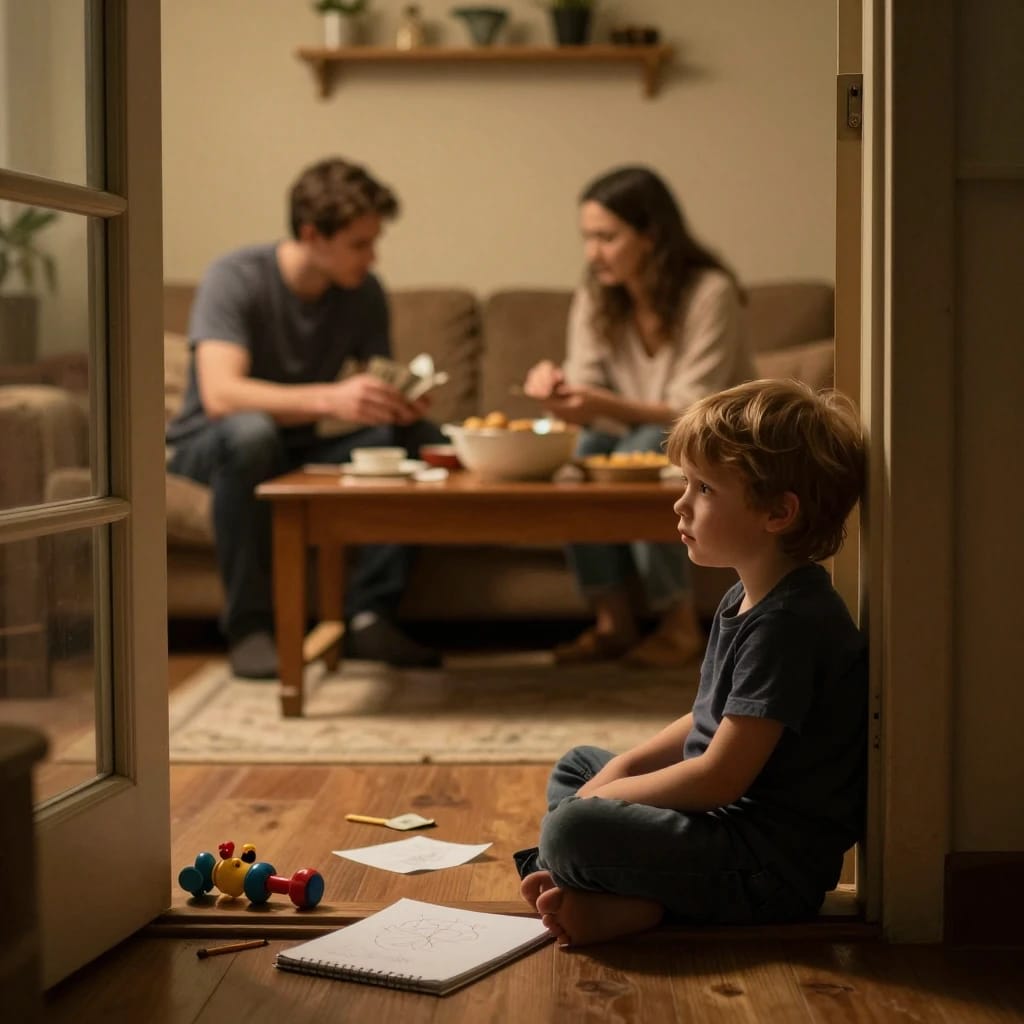
It didn’t end with a dramatic moment. No thunder. No shouting. No cinematic goodbye to innocence.
It ended quietly—inside a room that smelled like boiled tea and tired decisions.
I remember that day more clearly than most “important” days of my life. Not because something big happened, but because nothing could ever feel the same again after it.
I was sitting on a plastic chair that slightly leaned to one side, watching my mother count money on the floor.
Not stacks of money. Just enough to make silence heavier.
She kept separating notes, recounting them, subtracting something in her head, then recounting again like the numbers might change if she looked at them long enough.
My father wasn’t home.
That in itself was not unusual.
But something about the way my mother didn’t say anything about it made the air feel different.
I was twelve.
Old enough to notice patterns. Too young to understand their weight.
I asked her a simple question.
“Are we okay?”
She paused.
That pause is what I still remember.
Not her answer.
The pause.
Because children expect answers. Adults give pauses.
Finally, she said, “We’re fine.”
But she didn’t look at me when she said it.
And that was the first time I learned a truth no one teaches you directly:
People don’t lie with words. They lie with certainty.
Earlier that day, I had been doing something very important in the way only children understand importance.
I was building a world out of small things.
Old toy cars. Broken crayons. A notebook where I had drawn a map of a country I planned to live in someday—one with rivers shaped like lightning and cities named after emotions.
In that world, nothing was impossible.
Money appeared when needed.
Adults made sense.
And problems always had endings.
I was still living there when my mother called me into the room.
And I didn’t realize I was stepping out of one world into another.
The shift didn’t happen instantly.
It happened in fragments.
That evening, I heard my mother on the phone, her voice lower than usual.
“I’ll manage,” she said. “Just give me a few days.”
Pause.
“Yes, I understand.”
Pause.
“No, don’t worry about the children.”
That last line hit differently, even then.
Because I suddenly realized I was included in something I didn’t fully understand—but was still affected by.
I wasn’t just living in the house.
I was part of the problem-solving.
Even if no one told me how.
Later that night, I couldn’t sleep.
Not because I was scared.
Because I was thinking.
Thinking too much.
Children think in stories. Adults think in consequences.
That night, I started thinking in consequences for the first time.
What if “we’re fine” didn’t mean fine?
What if tomorrow didn’t fix things like it used to?
What if the world didn’t automatically reset every morning?
That was the night I stopped believing in invisible safety.
The next morning, something small happened.
I broke my pencil.
Ordinarily, that would have meant nothing.
But I remember staring at it longer than necessary.
A broken pencil used to mean a replacement.
Now it felt like a question.
What if things don’t get replaced?
What if broken just stays broken?
I didn’t say this out loud.
But I felt it.
That’s important.
Because childhood doesn’t end when someone tells you.
It ends when you start feeling things you can’t unfeel.
Days passed normally on the surface.
School. Homework. Lunch breaks. Noise in corridors. Teachers pretending everything was structured and stable.
But inside me, something had shifted permanently.
I started noticing things I had ignored before.
My father coming home later each night.
My mother pretending not to count money anymore.
The way conversations stopped when I entered a room.
The way adults smiled too quickly, like they were covering something up before I could see it.
It wasn’t that the world changed.
It was that I changed the way I looked at it.
And that is irreversible.
One afternoon, I found my father sitting alone on the roof.
He wasn’t doing anything.
Just sitting.
I sat beside him quietly.
For a long time, neither of us spoke.
Then I asked him something I probably shouldn’t have asked at that age.
“Are we in trouble?”
He didn’t respond immediately.
He looked at the sky like it might answer for him.
Then he said, “No.”
But this time, I understood pauses too well.
So I didn’t believe him.
Not because I thought he was lying.
But because I realized adults don’t always tell the truth even when they want to.
Sometimes they are just trying to protect what little peace remains.
That was the day I understood something I didn’t want to understand.
Security is not a condition.
It is a performance.
And I had just seen the performance backstage.
After that, everything became sharper.
Not louder.
Sharper.
Like the world had edges it didn’t show before.
I stopped asking certain questions.
Not because I had answers.
But because I understood answers were not always available.
And that was the real loss.
Not innocence.
But expectation.
The actual “realization moment” didn’t come with tears.
It came one evening when I was sitting outside alone.
The streetlights had just turned on.
Children my age were still playing nearby, shouting, running, arguing over games that ended and restarted within minutes.
I watched them for a while.
And I felt something strange.
Not sadness.
Distance.
Not physical distance.
Time distance.
Like I was watching a version of myself that still believed the world was simple.
That version of me felt far away.
Not gone.
Just unreachable.
And that’s when it hit me clearly, without warning:
I was not one of them anymore.
I went inside and looked at myself in the mirror.
Not for vanity.
For recognition.
I expected to see the same face I had always seen.
But I didn’t.
Something in my expression had changed.
Not dramatically.
Just enough to notice if you were paying attention.
The eyes were the same.
But they were no longer asking the same questions.
That’s how I knew.
Childhood doesn’t end like a door closing.
It ends like a light slowly dimming while you’re still in the room.
At first, you don’t notice.
Then suddenly, everything is just… less bright.
Years have passed since that day.
Life continued, as it always does.
Bills replaced worries.
Responsibilities replaced games.
Time stopped being something you played with and became something you managed.
But I still remember that version of me who didn’t know any of this.
Sometimes I miss him.
Not because he was happier.
But because he was certain.
Certain that things would always make sense in the end.
Certain that adults had answers.
Certain that silence meant peace, not uncertainty.
I know better now.
And I don’t say that like a victory.
It doesn’t feel like one.
If I had to mark the exact day my childhood ended, it wouldn’t be a single dramatic event.
It would be that ordinary evening.
A mother counting money.
A father not explaining enough.
A child starting to understand too much.
That’s all it takes.
No thunder.
No farewell.
Just a quiet shift in how the world is seen.
And once you see it that way, you can never go back to not seeing it.
About the Creator
Muhammad Sabeel
I write not for silence, but for the echo—where mystery lingers, hearts awaken, and every story dares to leave a mark
Enjoyed the story? Support the Creator.
Subscribe for free to receive all their stories in your feed.
Comments
There are no comments for this story
Be the first to respond and start the conversation.