
The archivist of small moment
She collected love in quiet details. He only stayed for stories that surprised him. Somehow, they became each other’s favorite chapter.

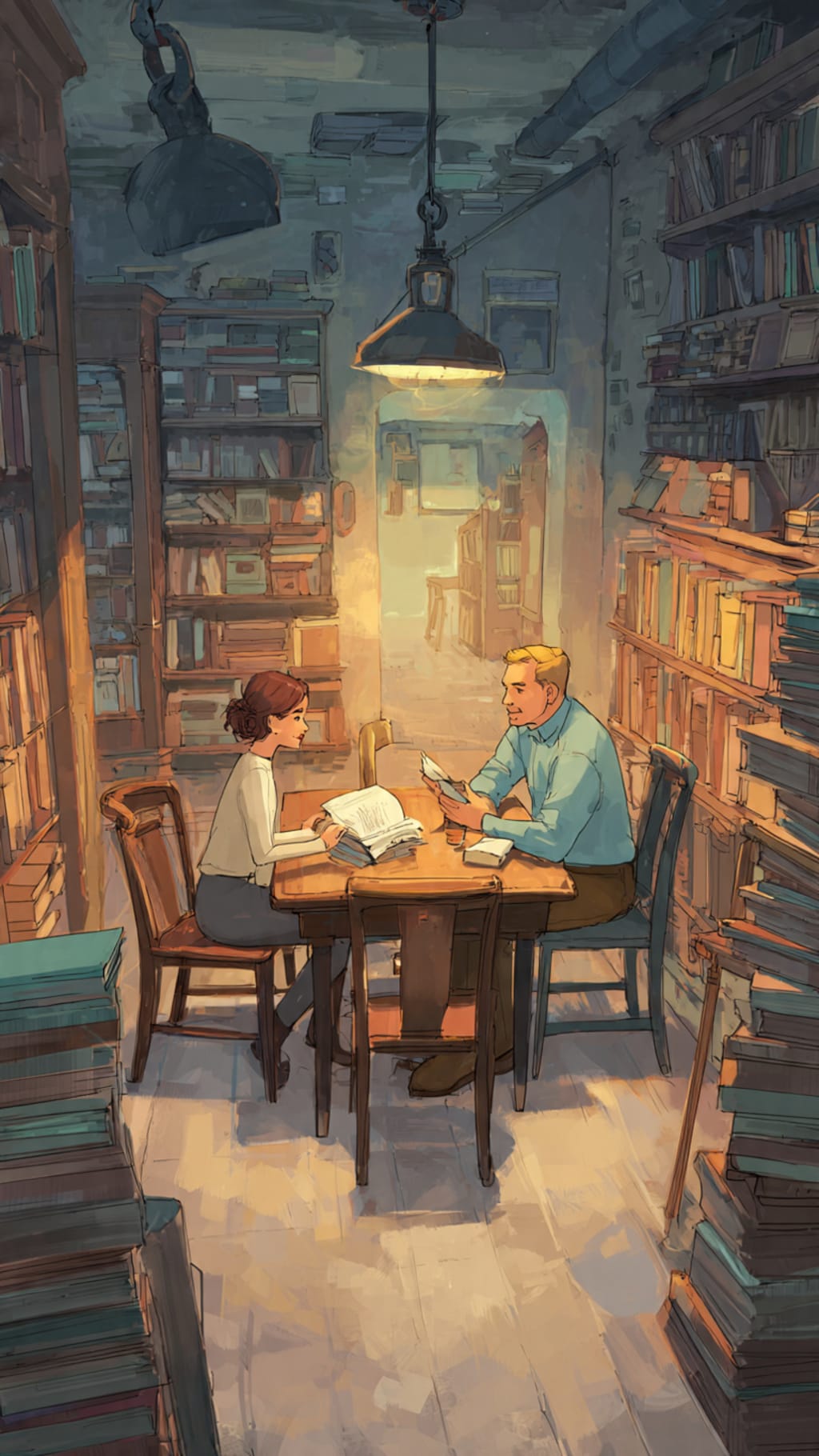
I tried to generate an image of a woman reading aloud to a man in a cozy room lit by evening light, but it didn’t go through. Picture this instead: warm lamplight, two mugs cooling on a table, a stack of worn paperbacks between them, and her voice filling the space while he leans fmira believed love lived in specifics. Not in grand declarations or anniversary posts, but in the way someone remembered you hated cilantro, or how they saved the last piece of bread for you without making it a thing. She kept a small notebook for these things. “Evidence,” she called it, half joking. On page three: _He notices when I re-tie my hair twice. That means I’m anxious._ On page seven: _He buys oranges even though he doesn’t like them, because I peel them without thinking._ She wasn’t looking for anyone when she met Jonah. She was shelving returns at the public library downtown, the one with creaky floors and windows that let in too much afternoon sun. Jonah came in every Tuesday. Not for books. For stories. He’d tell the librarian that he had the attention span of a moth, but if something was interesting, he’d sit through anything. He asked Mira once, “What’s the strangest true thing you’ve read this week?” If her answer was boring, he’d smile, return the book, and leave. If it wasn’t, he’d pull up a chair. Mira started keeping a second list in her notebook. Not of love, but of stories worth telling. She learned his rules quickly: no clichés, no moral lectures disguised as plot, no endings he could see coming from page one. He liked stories about people making odd choices for honest reasons. A woman who quit her job to become a lighthouse keeper. A man who spent ten years writing letters he never sent. A kid who mapped every staircase in the city because he was afraid of getting lost. The first time Mira told him a story instead of finding one, it was by accident. He asked about the notebook. She said it was just notes. He asked, “Notes about what?” She should have said “nothing.” Instead she told him about the barista who drew the same leaf on every cup, but one morning drew a sparrow instead. She never saw him again after that. Mira finished with, “I think he was practicing for when he’d have to leave.” Jonah didn’t speak for a long time. Then he said, “That’s an interesting story.” He came back the next Tuesday. Weeks turned into a rhythm. She’d save odd details during her day. He’d show up with questions. They never called it a date. They called it “office hours.” He’d sit across from her at the table by the history section and she’d test stories on him. If he asked a follow-up question, she knew it worked. If he checked his phone, she retired it. What Mira didn’t write in the notebook was that she was falling for the way he listened. He didn’t listen to reply. He listened like a story might change him. When she told him about her brother who moved away and only sent postcards of doors, Jonah asked, “What kind of doors?” She said, “Old ones. Paint peeling. Brass knobs.” He nodded like that mattered. It did, to her. Jonah, for his part, stayed because Mira never performed. She didn’t try to be profound. She just paid attention. He’d spent years chasing interesting people, ideas, cities. He thought interesting was loud. Mira taught him it was specific. The way rain sounds different on a car roof than on a tent. The way her mother folded towels into thirds, never halves. The way Jonah himself always paused half a second before answering a hard question, as if checking the answer for sharp edges. One Tuesday he didn’t come. Mira told her story to the empty chair anyway. It was about a man who collected questions instead of answers, and how that made him hard to love but easy to miss. She closed the notebook and felt silly. Love as evidence. Stories as currency. What was she doing? He came the next day, Wednesday, which wasn’t his day. He looked tired. He said, “I was trying to see if I missed the stories or I missed you telling them.” Mira didn’t write that down. She didn’t need to. She said, “What’s your answer?” He said, “I think the interesting part was that you were paying attention to me while you paid attention to everything else.” After that, the rules changed. Sometimes he told stories. Bad ones, mostly, about a guy who tried to learn pottery and made only lopsided bowls. Mira laughed at those. She liked that he could be uninteresting on purpose, just to see if she’d stay. She did. Love, for Mira, became the habit of noticing. For Jonah, it became the habit of staying for the next sentence, even when he thought he knew the ending. He stopped asking if stories were interesting. He started asking if they were true. Mira stopped collecting evidence and started living inside it. Years later, someone asked Mira how she knew Jonah was the one. She opened the notebook. The early pages were full of details about him. The later pages were blank. “I ran out of things to prove,” she said. “I just had things to keep.” Jonah still likes interesting stories. But his favorite one is the same as hers. Two people who learned that love isn’t loud. It’s specific. And that the most interesting story you’ll ever hear is the one where someone chooses to stay, sentence by sentence, until the ending stops matteried
About the Creator
Enjoyed the story? Support the Creator.
Subscribe for free to receive all their stories in your feed.
Comments
There are no comments for this story
Be the first to respond and start the conversation.