parents
The boundless love a parent has for their child is matched only by their capacity to embarrass them.
The Family That Time Forgot But Love Remembered
in a small village where the river whispered to the wind and evenings fell gently like a soft sheet across the fields there was a modest home not rich in wealth but overflowing with love the kind of love that asked for nothing and gave everything
By Qutbi Alam about a year ago in Families
The Silent Killers of Relationships—and How to Stop Them
In relationships, it’s not always explosive fights or dramatic betrayals that cause the most damage. Often, it’s the subtle, creeping issues—the silent killers—that eat away at connection, intimacy, and trust over time. Many couples only realize these issues exist when it’s too late. From emotional cheating to trust erosion, this article explores the quiet yet powerful forces that can break a bond and how to counter them effectively.
By Catch Cheaterabout a year ago in Families
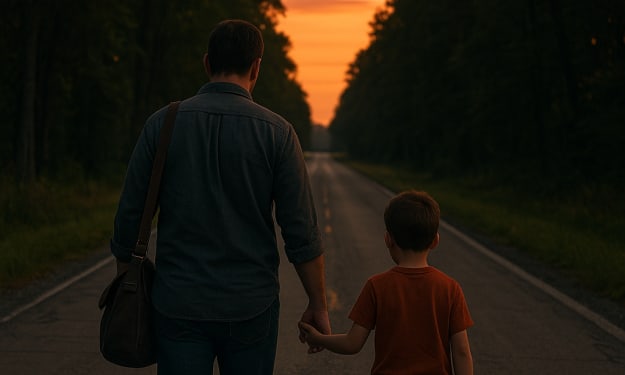
"In My Father’s Footsteps"
We missed the last bus. The sun was already slipping behind the hills, bleeding orange and gold into the sky. Dust rose around our feet as we stood by the roadside, watching the taillights of the bus disappear down the highway. I was ten years old, tired from a long day in town, and hungry for the meal waiting back home.
By Muhammad Riazabout a year ago in Families
My Dog After the Rain
The rain had been falling all night, drumming steadily against the old tin roof of our little house. It was a familiar sound, soothing and comforting, but this time I was worried about my dog Max. At just six months old, he was a bright, mischievous golden retriever, still learning about the world. Max hated baths, so I could only imagine how much he might suddenly hate the rain.
By Echoes of Lifeabout a year ago in Families
Why I Still Set a Plate for My Dead Son
Every evening at 6:30, I set the table for dinner. Fork on the left, knife and spoon on the right, cloth napkin folded neatly. Three plates. Mine. My husband’s. And the third — a small ceramic plate with a faded cartoon astronaut in the middle — for my son, Daniel. He’s been gone for four years. I still set his plate. I’ve been told it’s not healthy. That I’m “feeding the grief.” That I should “move on.” As if grief is a choice. As if love ever goes away just because a body does. Daniel was eight. He had a laugh that made people turn around and smile without knowing why. He loved space, even though he was terrified of the dark. We used to lie on the grass in the backyard and stare up at the sky while he named constellations he’d memorized from his picture books. He’d make up stories about space whales and planets made of jellybeans. Then one day he came home from school with a fever. Just a fever. It was nothing at first — something every child gets. But then it didn’t go away. Then came the hospital visits. Then came the scans. The whispered terms. The tight smiles from doctors. And then… the long silence after they said the word we never wanted to hear. It all happened so fast. One week we were eating spaghetti and laughing about aliens. Six months later, I was holding his hand as he slipped into something quieter than sleep. --- I remember that first night after he died. I cooked dinner because I didn’t know what else to do. I set two plates. Out of habit, I reached for a third. My hand froze over the cupboard. I thought, He doesn’t need a plate anymore. But I gave him one anyway. It felt wrong not to. It felt like erasing him — as if setting two plates was me saying he’d never been there at all. So I kept doing it. Every night since. --- It’s not about pretending he’s still alive. I know he’s gone. I don’t speak to the plate or imagine it moving. I don’t serve it food. It stays empty — just like the chair beside it. But the plate is there because he was here. Because he matters. Because love doesn't stop when breath does. --- Sometimes, when people come over, I hide the plate. I know how it looks. I know the discomfort it causes — how people glance at the extra setting and then quickly look away. They mean well. They always mean well. But grief makes people nervous. It makes them question the rules they live by — the rules that say time heals all wounds, or that if you just stay busy enough, the ache will shrink. Some wounds don't heal. Some holes never fill. We just learn how to carry them. --- There are days when the pain knocks me down like a wave. When I wake up and forget for half a second that he’s gone, and then remember all over again. When I hear a child’s laugh in the grocery store and have to step into the freezer aisle to cry. There are also days when I remember the good things: how Daniel insisted on wearing mismatched socks. How he danced when he brushed his teeth. How he once told me, “If I ever get to go to space, I’ll bring you a star.” I never got the star. But I still have the socks. --- My husband grieves differently. He visits Daniel’s grave once a week. Talks to him there. I’ve only been a few times. The grave feels too final to me. Too silent. The kitchen table, though — it still holds echoes. That’s where Daniel made volcanoes out of mashed potatoes. Where he built LEGO rockets while eating cereal. Where he once spilled an entire glass of orange juice and cried like the world was ending. I see him there. Not as a ghost. Just as a memory that refuses to leave quietly — and why should it? --- People like stories with resolution. They want clean endings, arcs that bend toward closure. But grief isn’t a movie. It’s a room you live in after the windows have all shattered. Setting his plate is how I remind myself: he was here. He is still part of me. Love didn’t end. It changed. It became quieter. But it’s still present — in an empty plate, a silent chair, and a mother who still remembers. So yes, I still set a plate for my dead son. Not because I can’t let go. But because I will always hold on.
By Azmat Roman ✨about a year ago in Families
The Golden Heart and the Grasping Hands
Once upon a time, in a quiet countryside village, lived a man named Broly. He was known far and wide not for riches or status, but for his honesty, wisdom, and humble living. Every villager admired him and came to him for advice and justice, for Broly’s word was as solid as stone. Broly had three sons: David, Henry, and Alex. He raised them with love and discipline, teaching them the importance of truth, hard work, and integrity. But as the boys grew older, their hearts drifted away from the virtues Broly had tried to instill. David, the eldest, cared only for money. He constantly asked about the family wealth and how much he would inherit. Henry, the middle son, craved power. He wanted to control the family lands and boss around workers. Alex, the youngest, was carefree and lazy, dreaming of luxury without effort. All three were united by one thing: greed. Broly saw this, and though his heart ached, he said nothing. He knew that mere words wouldn’t change their hearts. A lesson, he thought, must be lived to be learned. One evening, as the sun cast golden light across the fields, Broly gathered his sons and said, “My dear sons, I am growing old, and soon, everything I have will belong to you. But before that, I must know you are ready.” The sons leaned forward eagerly. “I will give each of you the same task,” Broly continued. “To the west lies a patch of dry, abandoned land. You will each spend three days working that land. Do what you think is best. When you return, I will decide how to divide my estate.” The next morning, the three sons went their separate ways toward the field. It was dusty, filled with rocks, and looked useless — the kind of land no farmer wanted. --- Day 1: David arrived with builders. He cleared the rocks and told them to start constructing a storage building. “This land is useless for crops,” he said. “But I’ll build a grain warehouse and rent it out. That’s how you make real money.” Henry came with surveyors and flags. He began dividing the land into plots and marking areas. “I’ll lease parts of the land to farmers and collect rent. I’ll become the biggest landowner in the region,” he boasted. Alex strolled in late, looked around, and sighed. “Too dry for anything,” he muttered. He laid out a mat under a tree and napped most of the day, only occasionally digging a little to appear busy. Meanwhile, they all ignored the old olive tree that stood tall at the edge of the field — a tree their father had once planted in his youth. --- Day 4: The brothers returned, each boasting of their accomplishments. David said, “I’ve built the foundation of a profitable business.” Henry said, “I’ve organized the land for future control and income.” Alex said, “I… explored all possibilities. Nothing much can be done with that land.” Broly listened patiently, then said, “Come with me.” They returned to the dry field. Broly walked toward the old olive tree, dug near its roots, and pulled out a small chest buried in the earth. Inside were gold coins, a scroll, and a note. The note read: > “True wealth is not in gold or land, but in wisdom, patience, and care. He who finds this message has seen beyond the surface.” The sons were stunned. “Is this the inheritance?” David asked, eyes gleaming. “Who does it belong to?” asked Henry. “It must be mine,” Alex shrugged. “I came here too.” Broly looked at them with tired eyes. “None of you truly saw this land,” he said. “You came for your own gain, not to understand or care for it. But there was one who did.” From behind the tree stepped jhon, a young orphan from the village whom Broly had quietly mentored for years. Yasin had no blood ties, but he had Broly’s heart. While the others planned profits, Jhon had tended to the tree, removed weeds, and watered the dry ground. “This boy,” Broly said, “came not to claim, but to care. He saw that under this dry soil lies a spring, and that the olive tree still bears fruit when watered. He found the truth others ignored.” The sons were furious. “You’d give everything to a stranger?” David snapped. “To someone not even your son?” Henry shouted. Broly remained calm. “He is a son in spirit. You think only of taking. He thought of giving.” He then made his decision. “To each of you,” he said to David, Henry, and Alex, “I give one-third of my lands — but not the spring, not this olive field, and not the chest. That belongs to Jhon.” The village watched silently. Some shook their heads at the sons; others smiled at the fairness of Broly’s choice. --- Years Later: David’s warehouse failed after a drought ruined storage. Henry’s rented land fell empty when no one trusted his leadership. Alex sold his plot, wasted the money, and returned home empty-handed. But Yasin turned the once-dry land into a flourishing orchard. He tapped the spring, planted new crops, and helped feed the village. He gave work to the poor and taught the children about honesty and patience — just as Broly had once taught him. Broly passed away peacefully under the shade of the old olive tree, knowing that though his gold was buried in the soil, his values had taken root in the heart of the right son. --- Moral of the Story: Greed may chase gold, but only honesty cultivates legacy. A true son is not one who inherits wealth, but one who upholds virtue.
By Muhammad Azeem about a year ago in Families
"A Mother's Heart Never Forgets: The Eternal Bond Between Mother and Child"
From the very moment a child draws their first breath, a bond is created—unseen but unbreakable, silent but powerful. It is the love between a mother and her child. It’s the kind of love that can’t be defined by words alone, yet shapes lives, molds destinies, and survives even in the darkest of times. This is not just a story—it is a tribute. A reflection of countless real stories lived in the quiet corners of homes around the world. A mother’s love is not loud, but it is always there: when the child cries at night, when they take their first step, when they fall, when they rise. Part 1: The Silent Sacrifice Before a child is even born, a mother begins to give. Sleep, comfort, freedom, and sometimes even her dreams—offered up with love, never expecting anything in return. Her sacrifices begin quietly: swollen feet, aching back, emotional storms. But the real sacrifice isn’t physical. It’s emotional. It’s letting go of the life she knew, to embrace a new identity. It's in the way she changes her meals for the baby’s health, holds her breath during every check-up, and places her hand protectively over her belly every time she hears a loud sound. She talks to the baby before they can talk back. She sings lullabies before the child ever opens their eyes. She dreams a thousand dreams for a life she hasn’t met yet. And when she finally holds that tiny being in her arms, everything changes forever. Part 2: First Steps, Forever Etched The first word. The first giggle. The first time those tiny feet take shaky steps toward her. These are the moments that define eternity for a mother. She cheers not for the step, but for the courage. She knows that every step her child takes is one more step away from her arms and toward the world. But still, she claps. She smiles. She hides her tears. Because motherhood is about letting go, piece by piece, while holding on with all your heart. She stitches courage into every sock, hope into every packed lunch, and love into every bedtime story. Even when she’s exhausted. Even when her own heart is breaking. There are days when she cries in the bathroom so her child won’t see. Days when she doubts herself, when the weight of responsibility is too much to carry. But she carries it anyway. And the child? They don’t see the struggle. They see the smile, the warm hug, the gentle voice. They see the world through her eyes. A mother becomes a mirror of self-worth. She teaches her child to stand tall not by command, but by example. She rises after every fall, not because she’s not hurt, but because her child needs to see what resilience looks like. She learns the songs they love, the fears they hide, the dreams they whisper in their sleep. And somehow, in the chaos of motherhood, she never forgets who they are becoming. Even when they forget to say thank you. Even when they push her away. Even when they think they know better. She continues to love. Quietly. Fiercely. Eternally. Part 3: Growing Pains and Silent Prayers As children grow older, their world grows larger. They start school. They make friends. They have secrets. And slowly, the hand that once gripped a mother’s finger so tightly begins to pull away. This, too, she accepts. Because she knows this is how it must be. But in the quiet of night, she prays. She prays for her child to be strong but kind. To be brave, yet gentle. To know right from wrong. To walk with wisdom. And more than anything, she prays that when the world is cruel, her child will remember the warmth of home. The lunchboxes she packed, the lullabies she sang, the tears she wiped, the lessons she taught without speaking a word. There are moments when she feels forgotten. Birthdays missed. Calls delayed. A door shut in the heat of teenage rebellion. But she waits. She waits in silence, her heart still open, her arms still wide. Because a mother never gives up on her child—no matter how far they roam. Even when they forget the stories she told, or the way she stayed up all night during their fever, she remembers everything. She remembers their first smile, their broken voice after crying too long, the night they whispered, "Mama, don't leave." She holds these memories like sacred treasures. Even when the child believes they no longer need her, she is there. Quietly cheering. Quietly aching. Quietly loving. Because motherhood isn’t about being seen. It’s about being there—always. Part 4: When the Nest Empties, Her Heart Stays Full Then comes the day she knew would arrive. The bags are packed. The goodbyes are real. Her child steps into adulthood and walks out the door to chase dreams far beyond her reach. She smiles. But inside, a silent ache grows. She walks into their room after they leave and breathes in the scent of yesterday. The posters still on the wall. The trophies. The books. The laughter that once filled the air. And in that stillness, she lets herself cry. It is not a cry of regret. It is a cry of love that has nowhere else to go in that moment. She replays every memory in her heart: school mornings, scraped knees, the sound of tiny feet running toward her after school. She replays it not to cling, but to remember. Because a mother doesn’t hold her child back—she sends them into the world with everything she gave, and everything she is. Her role doesn’t end. It transforms. She becomes the quiet whisper of strength in their hardest moments. The unspoken reason they keep going when they feel they can’t. The warmth they feel in unfamiliar places. And though the nest may be empty, her love never is. She still wakes up hoping they are safe. She still celebrates their victories from afar. She still keeps their childhood photos on her bedside table. And no matter how far they go, they are never far from her heart. Because even if the child grows taller, stronger, and wiser, to a mother, they will always be the small soul she once cradled against her chest. Part 5: Full Circle of Love Then, one day, the child returns—older, perhaps with lines on their face and burdens in their heart. And they realize something. They realize the love they once took for granted was never ordinary. They see it now, in the way they long for her voice after a hard day, in the comfort of her advice, in the memory of her warm embrace when everything else feels cold. They sit beside her, maybe with their own child in their lap, and they finally understand. The sleepless nights. The silent prayers. The constant worry. They look into their mother's eyes and see not just the woman who raised them, but the soul who gave them everything. Tears may be shed. Words may be spoken, or not. But the moment is powerful. Because in that moment, love returns to its source. The child sees their mother, truly sees her, perhaps for the first time. And in return, the mother smiles with a heart full of peace. Because she knows she did something right. She loved. Not perfectly. Not always easily. But wholly. And now, that love lives on—in her child, in her grandchild, in every gentle touch and kind word passed down through generations. Because a mother's heart never forgets. And neither does the child who finally sees her again. Part 6: The Last Goodbye, The Love That Remains Time, with all its mercy and cruelty, moves forward. And one day, the child stands at her bedside—not as a child anymore, but as someone shaped entirely by her love. Her eyes may be closed. Her hands may be still. But her presence? It fills the room. Because a mother’s spirit never truly leaves. As tears fall silently, memories rush in. The way she used to hum while folding laundry. The smell of her favorite soap. The sound of her laughter when nothing made sense. The child whispers, “Thank you,” though it feels far too small for everything she gave. They kiss her forehead, just like she once kissed theirs. And in that sacred moment, grief and gratitude intertwine. Because even in death, a mother gives one last gift—she teaches her child how to say goodbye. But her love? It stays. In every meal they cook with her recipes. In every lullaby they sing to their own children. In every time they choose kindness over anger, strength over fear. Her love lives on. And when the child stares at the sky and feels the wind wrap around them, they’ll know: She is still here. Not in the way they once knew. But in every heartbeat, in every act of love, in every echo of her devotion. Because a mother’s love doesn’t end. It transcends. It becomes eternal. Part 7: Her Legacy Lives On Long after the final goodbye, a mother’s presence lingers—not in photographs or possessions, but in the way her child lives. Her legacy is not built on wealth or fame, but on values—kindness, humility, patience, and love. Every time her child stops to help a stranger, comforts a crying soul, or smiles through difficulty, she lives on. Her voice becomes their inner strength. Her lessons echo in the quiet moments—when they choose right over easy, when they speak the truth, when they forgive. Even the smallest of her habits—the way she folded clothes, the way she held a cup of tea, the way she hummed when she worked—become sacred rituals carried forward. And so, even though she is gone, she is never absent. Part 8: The Love Between Generations As time passes, the child becomes a parent. And suddenly, in the soft cries of their own newborn, they hear echoes of their mother’s lullabies. In every sleepless night, in every worried prayer, they feel what she once felt. And they understand her in a new way. They pick up where she left off, not with the same hands, but with the same heart. And when their child clings to them in fear, they whisper the same soothing words once whispered into their own ears. The cycle of love continues. The wisdom passed down through stories, through quiet glances, through late-night talks, now becomes a new generation’s foundation. And somewhere in the heavens, a mother smiles, knowing her love still moves through time. Part 9: A Letter Never Sent, But Always Felt If her child could write her now, the words would pour like a river: "I see now what I couldn’t then. I see your quiet strength, your endless patience, your love that had no conditions. I remember every time you held me when I broke down, even when you were breaking too. I remember your laughter on the hardest days, your softness when I failed, your faith in me when I didn’t believe in myself. You were home, even when the house was empty. You were hope, even when the world felt hopeless. And I miss you more than I ever thought I would. I hope you knew how much I loved you—even in the moments I couldn’t say it. I hope you felt that your love shaped me into someone who now tries to love like you did." It may never be written or read aloud, but it is there—etched forever in the child’s soul. Part 10: The Eternal Bond There are bonds that time can fray, distance can weaken, and life can dim. But not this one. The bond between a mother and child is sacred. It begins before birth and outlives death. It is felt in lullabies and funerals, in first steps and last breaths. It is carried in blood and in spirit, in DNA and in memory. And even when everything else fades, that bond remains. Because a mother’s love is not just an emotion. It is a force. A legacy. A light that keeps shining—even when the stars grow dim. And when the world asks what love looks like, the answer will always be: It looks like a mother. End.
By James World about a year ago in Families
The Garden Between Us. Content Warning.
In the quiet town of Elmbrook, where the wind carried the scent of pine and lilac, there stood a little house with a sagging roof and a thriving backyard garden. The garden wasn’t beautiful in the magazine sense—there were no neatly-trimmed hedges or sculpted bushes. But it was alive. Tomatoes clung to thick green vines, beans danced between wooden stakes, and sunflowers stretched tall toward the sky like golden sentinels. It belonged to Maria and her son, Jonah. Maria had planted that garden the year her husband died—when Jonah was just five. At first, it was only meant to keep her hands busy, to silence the storm of grief that threatened to swallow her whole. But seasons passed, and as she dug, watered, and watched, the garden became something more. A sanctuary. A mirror of life’s tender resilience. Jonah, now fourteen, had grown up alongside that garden. He remembered lying beside his mother on the soil as she explained how roots worked, how you had to water deeply so plants could grow strong. He remembered the excitement of the first strawberry harvest and the summer he tried to grow his own watermelon and ended up with nothing more than a green, tasteless orb. But lately, things had changed. Jonah was drifting. The garden didn’t hold the same magic it once did. He had earbuds in more often than not, his gaze glued to his phone screen. He had friends now who lived in other worlds—online realms filled with battles, loot, and bragging rights. He rarely came outside. His once-sticky fingers that plucked cherry tomatoes now clutched a controller or typed furiously in group chats. And Maria, for all her patience, felt the ache of distance growing between them. It wasn’t that Jonah didn’t love his mother. He did. But he was caught in the strange in-between of adolescence, where you feel too big for childhood but too small for everything else. He couldn’t explain it, and he wasn’t sure he wanted to. One Saturday in June, the kind that was too warm for spring and too wet for summer, the rain poured without mercy. Maria stood by the kitchen window, watching her tomatoes soak. Jonah sat at the table, silently slurping cereal, one earbud in. “You know,” she said softly, “the basil’s going to drown if this keeps up. I might need to re-pot it tomorrow.” Jonah didn’t look up. “Mmhmm.” Maria waited. The moment passed like steam on a kettle. “I was thinking,” she tried again, “we could build that new trellis you talked about. For the snap peas.” “I’m busy tomorrow,” Jonah mumbled. “With what?” He shrugged, eyes still down. “Just stuff.” “Is it important stuff?” “Why does it matter?” Jonah snapped. “You don’t need me for your garden.” Maria stiffened. She didn’t yell. She never did. She just looked at him, her eyes a mix of fatigue and heartbreak. “You’re right,” she said quietly. “I don’t need you. But I want you.” Jonah winced. The words struck something in him he didn’t expect. He pushed his bowl away, muttered something incoherent, and retreated to his room. That night, the rain continued. Maria lit a candle and sat by the window, remembering the time Jonah cried over a broken sunflower stem, the way he’d once asked if vegetables had feelings. He wasn’t that boy anymore. But she still was that mother. --- The next morning brought a soaked, heavy sky. Puddles shimmered across the yard. The basil had indeed drowned. The tomato plants had tilted under their own weight. Maria grabbed her gloves and boots, determined to fix what she could. She didn’t hear the door creak open behind her. Jonah stood on the porch, hands in his hoodie pocket, watching her kneel in the mud. “You’re doing it wrong,” he called out. Maria looked up, startled. “Oh?” “You’re retying the wrong stem. That one’s still solid.” She blinked. “You remember?” He shrugged. “Yeah. Kind of.” Maria said nothing, just scooted over a little. “Want to help?” Jonah hesitated, then stepped off the porch. His shoes sank in mud almost instantly. Together, they worked in silence. Maria handed him twine, and he looped it clumsily. They picked off damaged leaves and righted the bean poles. He noticed she still hummed while she worked—some soft melody that had no lyrics, only warmth. When the basil was beyond saving, she sighed. “Guess I’ll have to start over.” Jonah squatted beside her. “We could plant new ones.” “We?” He nodded. “Maybe... if you show me again.” She smiled. “Of course.” They worked for hours, without screens or words. Just hands, dirt, and the rhythm of rebuilding. By late afternoon, the garden looked less like a storm’s victim and more like a place healing. When they sat on the porch, caked in mud and sweat, Maria passed Jonah a cold glass of lemonade. “Why now?” she asked softly. Jonah stared at the horizon. “I don’t know. I just… missed it, I guess.” She waited. “And I missed you,” he added. Maria’s eyes filled, but she didn’t let the tears fall. Instead, she reached over and squeezed his hand. “We grow apart sometimes,” she said. “But roots, Jonah… roots run deep. They find each other again.” He didn’t respond with words. He just nodded and let the moment plant itself inside him. --- That summer, Jonah came outside more often. Not every day, and not without the occasional groan, but enough. He learned how to tell when squash was ripe, how to build a compost bin, and that his mother still sang when she thought no one was listening. The garden flourished. And in its quiet corners, so did they. Because sometimes, all a bond needs to bloom again is a little rain, a little dirt, and the willingness to dig deep together.
By 🇲 🇮 🇳 🇩 🇺 🇳 🇫 🇴 🇱 🇩 🇪 🇩 about a year ago in Families