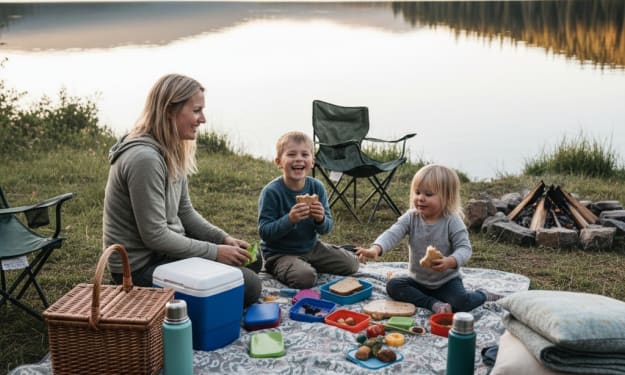
parents
The boundless love a parent has for their child is matched only by their capacity to embarrass them.
Sleepy Eyes
The night was calm, heavy with the scent of autumn. In a small village house, Jamala Bibi lay on her bed with a rosary in one hand and prayer beads in the other. The half-moon cast a faint light across the room as she looked toward the door again and again, her heart waiting for someone who never came home on time.
By shahkar jalal11 months ago in Families
"A Child's Prayer"
“A Child’s Prayer” is the name of a song that Primary age children (3 - 11) sing in The Church of Jesus Christ of Latter-day Saints. I sang it when I was that age. In the decades since then, it has gained greater significance for me. Without making any conscious decision to do so, this song has become the default soundtrack for suffering, and plays on repeat in my head when I worry. The special, sacred meaning it has for me I now share with my daughter and granddaughter. I’ll tell you why…
By Luke Haymons11 months ago in Families
When News Becomes Noise: How Media Stress Affects Children’s Emotional Safety
Adults can analyze the news. Children only feel it. It’s a regular morning. The family sits around the breakfast table. The TV hums softly in the background, reporting an economic crisis. Dad scrolls through his phone, reading the latest update about a war in a distant country. Mom sighs: “Things get worse every day”. Their six-year-old son, quietly nibbling on his toast, suddenly asks: “Mom, are we going to lose our house too?” She freezes. Never did she imagine that a single casual remark could plant such a deep seed of fear in her child’s mind. Why News Headlines Don’t Belong in a Child’s World We adults often talk freely in front of children, forgetting that little ears are always listening. Even when a child seems busy playing or appears distracted, their brain is quietly picking up every word, every tone. The problem is that children lack the ability to analyze what they hear. Words like “inflation,” “layoffs,” “climate crisis,” or “war” translate into just two meanings for them: “danger” and “loss of safety.” When Parents’ Anxiety Becomes a Child’s Burden Adults have tools to cope with stress—conversation, logic, experience, hobbies. Children don’t. So our worries often turn into a vague, persistent anxiety for them. This stress can show up in many ways: Nightmares Trouble sleeping Unexplained stomachaches or headaches Clinging too much to parents Irritability Decline in focus and learning Media: The Background Noise That Shakes a Child’s World A constantly playing TV, news on the radio, or videos on social media have the same effect. Even when we think they’re not paying attention, that background noise—full of crises and disasters—seeps into their mind, unsettling their sense of safety. How to Tell the Truth Without Taking Away a Child’s Sense of Safety You don’t need to hide the world’s problems completely. Kids should understand that life isn’t always without challenges. But there’s a big difference between “explaining reality in child-friendly language” and “drowning them in a sea of adult worries.” For example, if your child asks, “Will the war come here?” you might say: "Yes, in some countries people face difficulties. But here we are safe, and adults are working hard to solve these problems." This response doesn’t hide the truth but still preserves the child’s sense of security. How to Make Home a Shield for Your Child’s Peace of Mind Simple steps for parents: Limit the news: Avoid keeping the TV or radio on news channels unless it’s an educational, age-appropriate topic. Set a time and place: Have serious conversations about such issues when children are not around. Keep answers short and simple: Respond honestly to questions, but in clear, age-appropriate language. Reinforce safety: Frequently remind them that home and family are safe and that you are there to protect them. What I Learned from Anxious Little Hearts As a pediatric occupational therapist for many years, I’ve seen firsthand how stress impacts children’s behavior. Some children start therapy with strong engagement and bond well with their therapist, only to suddenly refuse to enter the therapy room a few sessions later—clinging to their parents for no obvious reason. Others show steady progress, then experience a sudden drop in focus, as if they’ve taken several steps backward without explanation. In my parent workshops, I always emphasize this: extra stress can significantly disrupt a child’s growth—and with it, their learning and therapy progress. Creating a calm, secure home environment is one of the most powerful ways to support healthy development. Children with Special Needs Are at Higher Risk Kids with developmental challenges can experience high stress over things most of us consider minor. A simple change—like moving furniture or adjusting mealtime—can feel overwhelming to them.
By Morteza Shamsian Norasteh11 months ago in Families
Hope Beneath the Mulberry Tree
Someone is sitting in the shade of a mulberry tree, someone is lying without a bed. The owner is a teak tree, the farmer is tied to a pole. The farmer is drunk, his head bound tightly to the post. Fever has fled from the mother, the cow has been beaten, and the farmer has given Gulalai a mountain.
By shahkar jalal11 months ago in Families
10 Family-Friendly Staycation Destinations to Try This Autumn Half Term
Over 60% of holidaymakers are choosing to forego the flights for a UK break this year, with 34% planning to make this their main holiday. Plus, with many of us expected to spend almost £1,300 on our UK staycation, the market is expected to rise to a value of over £3 billion.
By Millie Bradbury11 months ago in Families