immediate family
Blood makes you related, loyalty makes you family.
PREDICTABILITY WAS NEVER HER FORTE
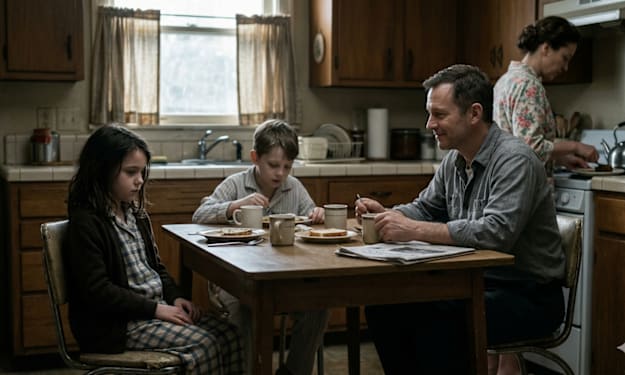
PREDICTABILITY WAS NEVER HER FORTE But surprises were +++++?????+++++ One of my earliest memories of my mom happened on a cool summer afternoon when she took my brother and me to Winthrop Park. I was four years old and my brother was six.
By Margaret Brennan5 months ago in Families
Daddy's Girl
My Dad started his cognitive decline about 13 years ago. He worked until he was 80, but it became too much for him. He was too tired. He began to have a few falls. He quit drinking wine in an effort to help his brain at the advice of a neurologist. He began walking daily a few years later. He and my mom moved to a small town about 3 hours away, where a unit had opened in a building my cousin owned. They seemed to be managing, with a little help from a neighbor to get groceries. My Aunt would take them to doctor appointments.
By Kathleen Anderson 5 months ago in Families
The Day I Opened My Father's Old Box---My Life Changed Forever
There are days in life that begin so quietly that you don't even notice their importance. They arrive like any other morning—ordinary, unremarkable, almost forgettable. No signs. No warnings. Nothing that tells you, this day will matter someday. And yet, hidden inside such days… there are moments that rewrite everything you thought you understood about your life. For me, that moment came on a rainy afternoon. It had been years since my father passed away. Long enough for grief to stop feeling sharp, and start feeling like background noise. His absence was no longer something I cried about—it had become something I lived with. It existed in the silence of rooms, in the emptiness of conversations, in the way certain memories suddenly felt heavier than others. That day, I decided to clean the old storage room. It was not planned. It was one of those decisions you make when the house feels too still, and your mind needs distraction. I had avoided that room for years—not because I was busy, but because I wasn’t ready to face what it held. Dust had taken over everything. The air itself felt forgotten. Old boxes were stacked unevenly, as if they had been waiting for someone who never came. Broken objects, faded papers, old clothes, and forgotten photographs—all of them like pieces of a life paused in time. And then I saw it. A small wooden box. Simple. Unremarkable. Almost invisible among everything else. No decoration, no special marking—just aged wood with slightly worn edges. But something about it felt strangely familiar… like it was waiting for me specifically. I picked it up. It was heavier than it looked. For a few seconds, I just stood there holding it. My hands didn’t move. My thoughts didn’t settle. It felt like I was holding not just a box—but a memory I had never been told about. I almost put it back. But curiosity has a way of gently overpowering fear. So I opened it. And everything changed. Inside were letters. Dozens of them. Carefully folded, tied together with an old, fragile thread that looked like it had survived years of silence. My heartbeat slowed without permission. My fingers hesitated, then slowly untied the bundle. The first letter opened like a door to another world. The handwriting was his. My father’s. But the words inside were not what I expected. They were not about routine. Not about responsibilities. Not about the everyday life I thought I knew. They were about me. Every letter was written at a different time. Some were dated years apart. Some had no clear purpose or occasion. It felt like he had written them not to inform the world—but to speak to something he never had the courage to say aloud. And each one carried the same quiet emotion. Love. Not the loud kind. Not the kind spoken easily in words. But the kind that lives in actions. In silence. In sacrifices that go unnoticed. In presence that never demands attention. I kept reading. In one letter, he described the day I was born. How he stood outside the hospital room, unable to breathe properly, terrified that he wouldn’t be enough. How hearing my first cry made him realize a new kind of responsibility he didn’t know how to carry—but accepted anyway. In another letter, he wrote about the first time I failed at something important. I remembered that day clearly. I had thought he was disappointed in me. I had convinced myself that his silence meant judgment. But in his words, I read something completely different: “I saw him that day… not as a failure, but as someone learning how to stand again. I wanted to tell him that mistakes are part of becoming strong. But I stayed quiet. Maybe I should have spoken.” My throat tightened. Because suddenly, my memories didn’t feel accurate anymore. They felt incomplete. Misunderstood. I opened another letter. This one was unfinished. The ink stopped mid-sentence, as if time had interrupted him. “If he ever reads these letters… I hope he knows I tried. I was never perfect. But I tried in every way I knew how to love him…” And that was the moment something inside me broke—not painfully, but deeply. Like a wall collapsing inside my chest. All those years, I thought I knew my father. I thought I understood his silence. His distance. His seriousness. But I had only ever seen the surface. Not the thoughts he never expressed. Not the emotions he never learned to show. Not the love he carried quietly in places no one looked. Now, sitting on that cold floor surrounded by dust and forgotten time, I felt like I was meeting him for the first time. Not the father I remembered. But the human being behind him. Tears came, but they were not heavy. They felt cleansing. As if something inside me had finally been allowed to breathe after years of holding still. I folded the letters slowly and placed them back into the box. But I was no longer the same person who had opened it. Something had shifted quietly within me. Not the world. Not the room. But the way I understood love, silence, and memory. That day taught me something I will never forget. We do not always know the people we love—not fully. Because the deepest emotions are often not spoken. They are written and hidden. They are carried in silence. They exist in places we never think to search. And sometimes… they wait patiently for years... just to be found.
By Fazalullah 5 months ago in Families
Slavery as a Teen
Slave as a teenager: Man speaks out after 50 years I left school at 15 in May 1973. I was never very good at my school work. I didn’t find the motivation to work hard at it because I was never sold on the benefits of doing well at school. To compound problems I was often sick.
By Robert Stewart5 months ago in Families
Why Comfort Fails and Discipline Endures
Modern culture increasingly treats comfort as a moral guide. Ease is framed as wisdom. Emotional smoothness is treated as maturity. Difficulty is often interpreted as a sign that something is wrong, unfair, or unnecessary. When a task feels heavy, when a conversation feels uncomfortable, or when effort feels draining, the instinct is often to stop and reconsider rather than persist.
By Peter Thwing - Host of the FST Podcast5 months ago in Families
When Custody Should Be Removed
Any argument that emphasizes the importance of parental presence, structure, and authority becomes dangerous if it does not also specify its limits. Advocating strongly for fathers, shared custody, parental authority, or outcome-based custody standards without defining when custody should be revoked invites a fatal misunderstanding: that parental involvement is always good, regardless of behavior. No serious child-centered framework can allow that ambiguity to stand.
By Peter Thwing - Host of the FST Podcast5 months ago in Families
Happy Selfish Mother’s Day, Mothers
Most mothers never learned to be Selfish. It’s like giving of ourselves twenty-four hours per day and three hundred and sixty-five or three hundred and sixty-six days per year is implanted in our DNA with Sacrifices. — Annelise Lords
By Annelise Lords 5 months ago in Families
Poverty Is Expensive Because Stability Is Missing
Poverty Is Not Only the Absence of Money Poverty is often described as a shortage of income, but that description is too small. Low income matters, obviously. A family cannot pay bills with explanations. But poverty is not only the absence of money. It is also the absence of the conditions that allow money to stretch. Stable housing, storage space, reliable transportation, clean water, working appliances, sleep, time, tools, privacy, credit, and emergency margin all affect what a dollar can actually do. Without those things, the same dollar buys less, solves less, and disappears faster.
By Peter Thwing - Host of the FST Podcast5 months ago in Families