immediate family
Blood makes you related, loyalty makes you family.
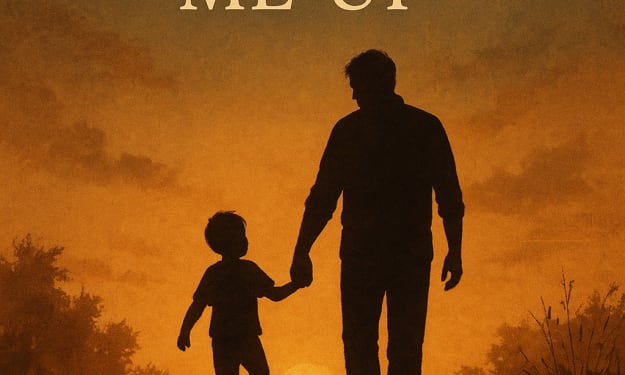
The Hands That Held Me Up
I never realized my father was a hero until long after I stopped calling him one. Growing up, I thought heroes were loud — capes, medals, grand speeches. My father was none of those. He was quiet, ordinary in the way a tree is ordinary — always there, deeply rooted, never asking to be noticed. His name was Arun, and to most of the world, he was just a mechanic with oil-stained hands and a tired back. But to me, he was the hands that held everything together. We lived in a modest home on the outskirts of a dusty town. Our house had a leaky roof and walls that whispered in the wind, but it never lacked warmth. Not the kind you get from a heater — the kind that comes from a man who wakes before sunrise and returns long after sunset, just to make sure his family never feels the cold. My mother passed away when I was seven. Cancer, swift and cruel. After that, it was just my father and me. I remember the way he held my hand at the funeral, firm but trembling. He didn’t shed a tear — not then, not later — but his silence said everything. That night, I cried into my pillow while he sat beside me, stroking my hair until I fell asleep. I thought he'd left the room when I drifted off. But I woke hours later to find him still there, sitting upright, staring into the dark — as if trying to shoulder the grief for the both of us. --- Life moved forward in quiet rhythms. My father never missed a day of work, even when his back ached so badly he could hardly bend. He packed my lunches, ironed my school uniforms, and helped with homework the best he could, even though he barely finished high school himself. He never talked much. But he showed love in every small gesture — the way he remembered I hated tomatoes and always picked them out, the way he fixed the old bicycle again and again so I’d never feel left out among the other kids, the way he always stood in the far back during school plays, never wanting to make me nervous, but always present. I didn’t understand it then. As I grew older, I mistook his quiet for detachment. In high school, I became ashamed of the grease on his clothes and the old motorbike he rode. I wished for a father who wore suits, someone who gave speeches at PTA meetings instead of nodding silently from the last row. I snapped at him often. Told him he didn’t get it. That he didn’t try. He never argued. Just kept waking up at 5:30 AM. Just kept holding everything together. --- It wasn’t until years later — after college, after I got a job in the city — that I began to see him clearly. One weekend, I came home to visit. I noticed how much he'd aged. The lines on his face had deepened. His once-strong hands trembled slightly as he poured tea. We sat on the porch in silence, like we often did. Then, without looking at me, he said: > “I kept all your report cards. Every one.” I laughed. “Why?” > “They reminded me that something I did was right.” It hit me then — the weight of everything he gave without asking for recognition. His whole life had been a series of silent sacrifices so I could have choices he never had. --- A few years later, he fell ill — lungs worn down from decades of working with machines and chemicals. I flew back and stayed with him, this time holding his hands through the hospital visits, the medicines, the long silences that were no longer comfortable. One evening, as we watched the sunset through the hospital window, he said softly: > “You’ve done well, Ayan. I’m proud.” That was the first time he’d ever said it. And I realized in that moment how much I had needed to hear it, even after all these years. --- My father passed away quietly in his sleep two days later. At his funeral, I stood in front of family, neighbors, and the handful of people who truly knew him. My voice trembled, but my heart was steady. > “He never wore a cape. Never saved a city. But he saved me — every single day. With hands rough from work, a back bent from duty, and a heart that carried the weight of two lives.” --- Today, I keep a photo of him on my desk — just him, in his workshop, smiling faintly, hands resting on a bench. Next to it, a small plaque that reads: “The Hands That Held Me Up.” Whenever life gets hard, I picture his quiet strength. Not in words. Not in praise. Just in presence. In the unwavering love of a man who gave everything, and asked for nothing. And that — I now understand — is what a real hero looks like.
By Habib Ur Heman about a year ago in Families
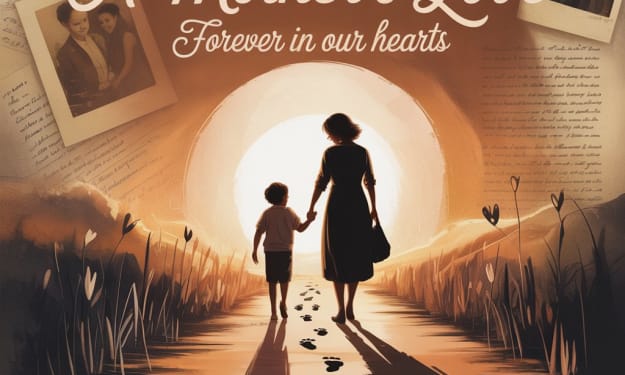
The Heart That Raised Me
I never understood how much my mother gave me until she was gone. When I was a child, I thought love meant gifts, attention, and grand gestures — the kind I saw in movies. My mother’s love never looked like that. It looked like early mornings and late nights, like calloused hands and silent prayers, like worn shoes that never got replaced because mine were falling apart. We lived in a small town, in a house that creaked when the wind blew. My mother, Lila, raised me alone. My father left when I was two, a name I heard only in court documents and the occasional bitter whisper. She never spoke poorly of him, never complained. She simply worked — two jobs, sometimes three — and came home every evening with tired eyes and a smile she wore for my sake. When I got older, I started to resent her silence. She wasn’t the kind of mother who hugged often or told stories at bedtime. She didn’t bake cookies or come to school plays. She was always late, always busy, always somewhere between surviving and holding us together. I thought she didn’t care. But I was wrong. --- It wasn’t until I moved away — college, then a job, then a new city — that I began to see the shape of her love. I started paying my own bills, making my own meals, and missing things I never knew she gave me. Like clean clothes always folded. Like a warm meal at the end of a hard day. Like someone who noticed when my voice trembled or my eyes avoided hers. We didn’t speak often, not because of anger but because of the weight of unspoken things. I visited once or twice a year. She always asked if I was eating enough, and I always nodded. Then one winter morning, the call came. She had collapsed at work — heart failure. She was gone before the ambulance arrived. --- Cleaning out her house was like walking through a museum of her love. There were shoeboxes of letters I’d written as a child. Report cards. Photos of me with missing teeth and too-big glasses. Tucked into the kitchen drawer was a crumpled list: “Things for Maya.” My name. Every line was a record of something she planned to do for me: “Fix Maya’s bike tire.” “Save for college fund — $10/month.” “Find warm coat before winter.” Tiny, invisible acts of love. In her bedroom, I found an old leather-bound journal. She hadn’t written much — just a few scattered entries over the years. But one page made me sit down on her bed and cry until my shoulders shook. > “Maya doesn’t say much these days. I think she’s mad at me. She doesn’t understand why I miss her school events. Why I’m always tired. I wish I could explain that I’m trying. That every hour I’m not with her is spent making sure she has a future. Maybe one day, she’ll see it. Maybe one day, she’ll understand that this is what love looks like when you’re doing it alone.” She had never said the words, but she didn’t need to. She was the words. --- After the funeral, I stayed in town a while. I walked the roads we used to walk. I stopped by the diner where she used to work nights and listened to her old coworkers talk about how kind she was, how she always brought extra food for the dishwasher who couldn’t afford dinner. Everyone had a story about my mother. And they all ended the same way: “She didn’t have much, but she gave everything.” --- One night, I took a walk alone to the park near our old home. It was cold, and the trees stood bare against the sky. I sat on the worn bench where we used to rest after grocery trips, and I looked up at the stars. I hadn’t done that in years. And I remembered something — a moment from childhood, maybe six or seven years old. I had asked her why the moon followed us home. She’d smiled and said, “Because it knows you’re worth watching over.” I never forgot that. Now, I say the same thing to my daughter, Emma. She’s five, curious and wild like I was. Sometimes when I rock her to sleep, I think of my mother and whisper into the quiet: “I see you now. I understand.” --- I kept one thing from her house — that old journal. It sits on my nightstand, next to a framed photo of us from years ago. And every time life feels too heavy, I open it and read that one page. Because now I know. Love isn’t always loud. It doesn’t always look like movies or sound like poems. Sometimes, love is worn hands and unpaid bills. It’s missed recitals and quiet sacrifices. It's silence that protects instead of wounds. It’s a heart that keeps giving, even when no one sees. And that’s the heart that raised me.
By Habib Ur Heman about a year ago in Families
Steam of Hope
I was lucky enough to be raised by my grandmother on my maternal side. She wasn't just a caregiver-she was a spiritual teacher who used food as a language of faith. She always said, "Put your faith in everything you cook so it could become more than enough. "As a child. I didn't understand it. But as grew older and had to feed my own family, her words became my lifeline.
By MelCreatesabout a year ago in Families
Father's Day Is Meaningless. Content Warning.
Greetings, Vocal readers and Happy Father's Day to all the dads, especially the single dads out there. Usually every year on this day, I would post a picture of my late grandfather on social media. This year, however, my feelings about Father's Day has changed and it's no longer a big deal to me. My faithful readers and subscribers know about my now estranged parents and the horrific abuse I've suffered in their hands. In this story, I'm solely going to focus on my estranged father. For those who are new and unfamiliar with my life and how I grew up, I'll share that with everyone right now.
By Mark Wesley Pritchard about a year ago in Families
The Window That Cried
In a quiet town wrapped in mist, stood an old wooden house on the corner of Hollow Street. It wasn’t the biggest house, nor the brightest, but something about it made people slow down as they walked by. Maybe it was the strange ivy that grew only on one side. Or perhaps it was the small window on the second floor the one everyone called The Window That Cried.
By Muhammad Hayatabout a year ago in Families
8 Neurotypical Social Norms That Baffle Your Autistic Loved One
If you have an autistic person in your life, you may be confused about some of their traits. Whether it’s something they said, a tone of voice they used, or a non-verbal cue they seemed to ignore, it can be frustrating to try to communicate with someone who appears to be behaving like a jerk, and that’s understandable!
By The Articulate Autisticabout a year ago in Families
7 Smart Ways a Pediatrician guide families Through an Autism Diagnosis
When a child receives an autism diagnosis, families often face a flood of new information, unclear next steps, and emotional stress. Your Pediatrician becomes an essential guide, translating clinical details into practical decisions that make sense. A child’s developmental care moves into a more focused phase—where timing, coordination, and reliable support shape future progress. Families don’t need more confusion. They need direction and clear answers.
By Piper Burchabout a year ago in Families
Looking for Couples Counseling in New York: My Honest Search for Help and Healing . AI-Generated.
If you're reading this, maybe you're in the same place I was not too long ago — feeling confused, distant, and not quite sure how things got so hard in your relationship. For me, it wasn’t one major thing that drove me to look for couples counseling in New York. It was the slow build-up of disconnection. The late-night arguments, the avoidance, the silence that filled the space between us — heavier than words ever could be.
By Jonathan Riedelabout a year ago in Families
Restless Waves: A Journey Through the Tides of Grief.
Authors Note: I wrote this piece in response to two questions I was asked about grief—specifically the kind that comes in waves, unexpected and overwhelming. This is my honest attempt to put those feelings into words and to offer something meaningful to anyone who's navigating their own ocean of loss. If you're grieving, I hope this meets you where you are.
By April Kirby.about a year ago in Families
Dear Brother
Have you ever had someone in your life who’s always been there—but you rarely told them how much they meant to you? Maybe because you thought there would always be time. Maybe because, deep down, you thought they already knew. This is a letter for the brother I grew up with… the boy who shared my childhood, fought over silly things, laughed at midnight jokes, and silently protected me more times than I can count. If you’ve ever had a brother—by blood or bond—this story might feel like yours too.
By FAIZAN AFRIDIabout a year ago in Families