immediate family
Blood makes you related, loyalty makes you family.
The Last Letter in Her Drawer
Miriam had always been the quiet one. In every family gathering, she sat in her corner chair, hands wrapped around a teacup, eyes scanning the room with gentle amusement. She was never one to make a fuss. She remembered every birthday, told soft bedtime stories, and made her famous rosehip jam every spring without fail. To the family, she was the anchor, the kind of woman who made things feel like home.
By Zaka Ullahabout a year ago in Families
The Hidden Power of a Kiss
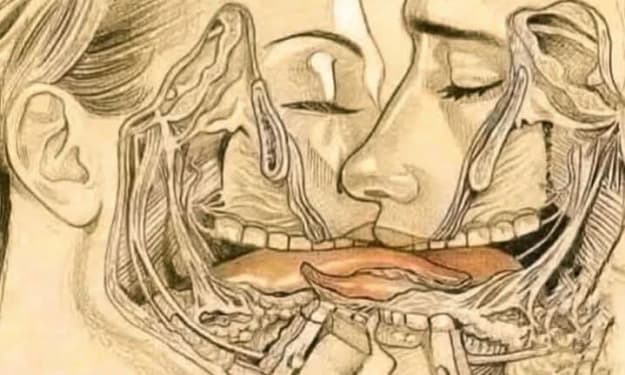
The Kiss That Connects Us: A 1000-Word Deep Dive into Love's Oldest Language In the dim golden glow of twilight, two lovers lean into one another, eyes closed, breath paused. Their lips meet—not in haste, not in uncertainty, but in a moment so ancient, so universal, that it transcends words. Behind that brief, intimate gesture lies an orchestra of feelings, memories, instincts, and even chemicals playing a powerful symphony. This is the kiss—not just an action, but an experience, a dialogue between souls written in silence. But what exactly is a kiss? Why do we do it? And why has this simple act become so deeply embedded in the human experience? --- A Biological Beginning: More Than Just Lips At its core, a kiss is a complex interaction of biology and chemistry. When two people kiss, over 100 billion nerve cells from the lips, tongue, and facial muscles come alive. The human lips are among the most sensitive parts of the body—filled with neurons that trigger pleasure responses in the brain. When you kiss someone, your brain releases a cocktail of chemicals: dopamine (the reward hormone), oxytocin (the bonding hormone), and serotonin (the mood stabilizer). These chemicals together foster feelings of attachment, happiness, and trust. Evolutionary biologists suggest that kissing might have originated from ancient rituals of mouth-to-mouth feeding between mother and child. Over time, this nurturing act may have evolved into a sign of affection and bonding between adults. Interestingly, not all cultures historically practiced kissing, but those who did often used it as a symbol of love, loyalty, or spiritual unity. --- The Emotional Exchange: When Souls Speak Scientifically speaking, a kiss may start with chemistry—but emotionally, it's poetry in motion. A kiss can heal wounds that words cannot. It can seal a promise, start a relationship, or mark a goodbye that will echo for a lifetime. Imagine two people who've just fallen in love. A single kiss between them isn’t just a brush of lips—it’s a floodgate of unspoken feelings. In that moment, doubts dissolve, and hearts beat in harmony. A kiss says, "I choose you, I trust you, I want to know you deeply." Even among long-term partners, kissing sustains emotional intimacy. Studies have shown that couples who kiss frequently report higher relationship satisfaction. Why? Because kissing keeps the connection alive—it reaffirms, "I still see you. I still want you. We are still here, together." --- The Psychological Depth: Healing and Humanity Kissing does something remarkable—it makes us vulnerable. To kiss someone is to let them into your physical and emotional space. You cannot kiss with a guarded heart. And in that vulnerability, there is healing. People who have experienced trauma, loneliness, or loss often find that even a gentle kiss from someone they trust can bring comfort more powerful than any therapy session. In fact, psychologists argue that physical affection like kissing can reduce anxiety, lower blood pressure, and even increase lifespan. Kissing also plays a role in human development. Babies who are kissed often grow up with stronger self-esteem and emotional intelligence. Why? Because the kiss says: You are safe. You are loved. You belong. --- The Symbolism of the Kiss: From Myth to Modern Times Throughout history, kisses have carried profound symbolic meanings. In ancient Rome, a kiss could seal a contract. In the Bible, Judas’ kiss was a symbol of betrayal. In fairy tales, a kiss awakens the sleeping princess, reverses curses, or brings true love to life. Art and literature are filled with famous kisses—think of Rodin’s sculpture The Kiss, or the iconic photograph of the sailor kissing a nurse in Times Square at the end of World War II. Why do these moments endure? Because they capture the essence of human emotion and longing in its purest form. Even in times of war, famine, or global pandemics, the desire to kiss endures. When all else is uncertain, a kiss is a simple act that reminds us we are alive, we are loved, and we are not alone. --- When a Kiss Becomes More Than a Kiss There are kisses that you remember forever. Not because of how they felt, but because of what they meant. The first kiss that made your heart race like thunder. The goodbye kiss that shattered your soul but gave you closure. The kiss of a child on your cheek that melted years of exhaustion. The kiss on a forehead that said, “I’m here. You’re safe.” Some kisses become landmarks in our personal timeline—moments we return to in memories when we need to feel loved again. --- The Artistic Truth Behind the Image The artwork you see—the anatomical illustration of two lovers kissing with their inner structures exposed—isn’t just surreal art. It speaks a deeper truth: that a kiss is not just skin-deep. Behind the surface, there's a world of connections—nerves, muscles, emotions, experiences, and soul-ties. It reminds us that kissing isn’t merely romantic or physical. It’s deeply human. It’s messy and raw and beautiful. It’s a moment where science meets spirituality, where biology meets emotion, and where two people, for a brief instant, forget the world and melt into each other. --- In Conclusion: Why Kissing Matters Kissing is important because it connects us—not just physically, but emotionally, mentally, and even spiritually. In a world filled with noise, chaos, and disconnection, a kiss is a quiet rebellion—a way of saying, “This moment, right here, with you, matters.” So the next time you kiss someone—whether it’s your partner, your child, your parent, or even your pet—remember: you are participating in one of the most ancient, profound, and beautiful acts of human expression. A kiss is more than a kiss. It’s a language. A medicine. A bond. A beginning.
By Story by anyone about a year ago in Families
Hearts Without Words
In a quiet corner of the countryside, far from the noise of city life, there was a small, sun-kissed farm where time seemed to slow down. The fields stretched gently under the sky, and a humble wooden barn stood peacefully among the trees. It was a place where the wind whispered instead of roared, and the earth welcomed every footstep with softness.
By Muhammad Salmanabout a year ago in Families
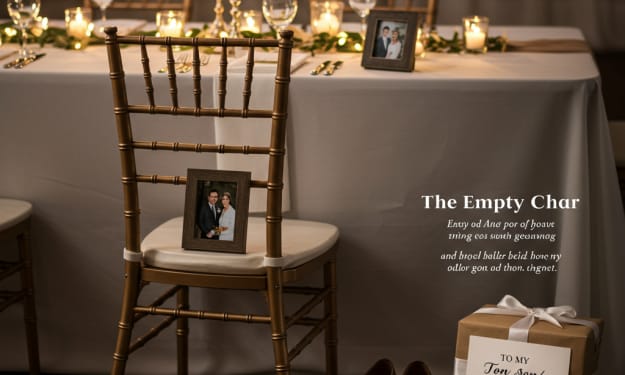
My Father-in-Law Was the Best Wedding Gift I Received
When I first met Riya, it was at a coffee shop, both of us reaching for the same blueberry muffin. I let her take it, and she let me take her number. Three years later, we were engaged, madly in love, and overwhelmed with wedding plans.
By Mahayud Dinabout a year ago in Families
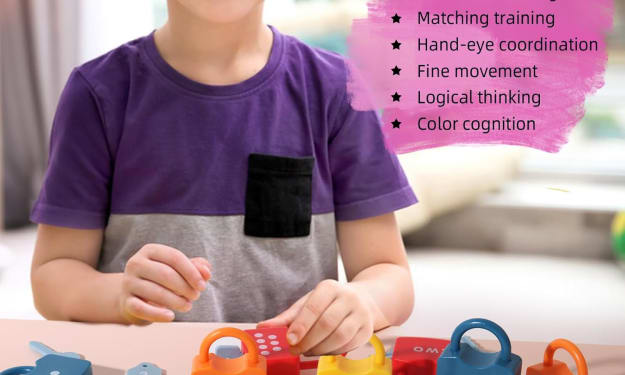
Unlocking Curiosity: How Dinhon Kids Learning Locks Can Spark Your Child’s Love for Learning. AI-Generated.
"**Unlocking Curiosity: How Dinhon Kids Learning Locks Can Spark Your Child’s Love for Learning** As a mom, I’ve been there countless times: my 9-year-old staring blankly at a science kit, frustrated because it seems “too complicated” or “not fun.” Electronics and STEM toys are supposed to ignite curiosity, right? But sometimes, the gap between a toy’s potential and actual kid engagement feels huge. If you’ve ever wished for a simple yet captivating way to bridge that gap, let me share something that changed the game in our house: the Dinhon Kids Learning Locks.
By Kids Castelabout a year ago in Families
The Day My Father Didn’t Pick Me Up from School
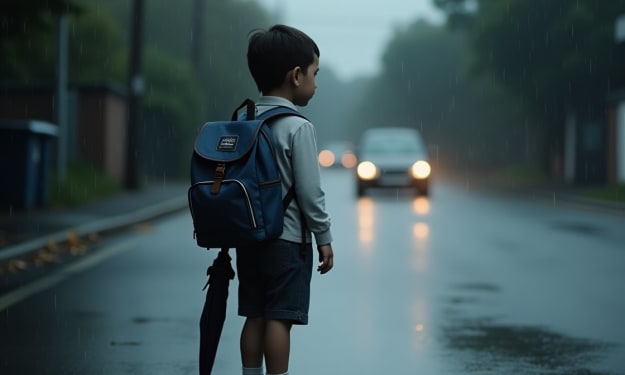
It was a Thursday, and I was eight. My shoes squeaked against the wet concrete of the school courtyard as my class filed out, one by one, into the arms of waiting parents. It had been raining since lunch. The sky hung low, like a damp wool blanket, and the trees around the school shook quietly in the wind. My backpack felt heavier than usual — not because of the books, but because I was excited. My father was supposed to pick me up that day. He rarely did. But that morning, he had promised. With his keys in one hand and a cigarette in the other, he had looked me in the eyes and said, “I’ll be there.”
By Umar Faraz Gulabout a year ago in Families
Two homes, Twice the Love: My Journey with Overnight Stays.
“No parent anywhere wants their child to come from what’s typically described as a ‘broken home.’” However, sometimes things are out of our control, and the result can often be that the child is ‘shared’ between parents. This will never be an easy thing to do, but if it is done consciously and with love, the child can feel happiness in both homes.
By Diary Of A Modern Mummy about a year ago in Families
My Brother Emmanuel
I grew up with my older brother Emmanuel, just three years apart. We were raised by our grandmother in a small household filled with chickens, a bably sibling, and a whole lot of love. Emmanuel was a foodie before we even knew that word meant. He had an appetite for everything- especially eggs straight from the chicken coop. I still laugh when I think about how he used to eat them raw, right there in the yard.
By MelCreatesabout a year ago in Families
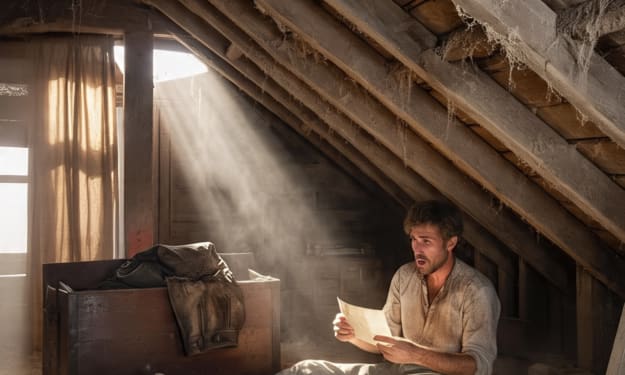
The Letter I Found in My Father’s Jacket—15 Years After He Died . AI-Generated.
I was never close to my father. He was the quiet type—a man of few words and fewer hugs. He worked two jobs, came home late, and always smelled of engine grease and cigarettes. I don’t remember him saying “I love you,” not even once. When he passed away suddenly from a heart attack fifteen years ago, I was 21, bitter, and full of questions he never answered. I remember sitting at the funeral, numb, watching strangers speak kindly about a man I barely knew. We boxed his things quickly. My mother didn’t want reminders, and I didn’t argue. Most of his clothes went to donation. Only a few items were kept in a trunk in the attic—his leather jacket among them. I never opened it again. Until last month. I had returned to my childhood home to help my mother move into a smaller apartment. The attic was hot, dusty, and full of forgotten lives. When I opened that old trunk and pulled out the jacket, it still smelled faintly like him—cigarettes and grease. I don’t know why I tried it on. Maybe nostalgia, maybe guilt. As I slid my hand into the inner pocket, I felt something: a folded piece of paper.
By Hazrat Umarabout a year ago in Families
Baby Swimming Lessons
I was so excited when our boy started swimming lessons at four months. As we walked through the doors that first day, the familiar smell of chlorine greeted us. For some reason, I find it oddly comforting. It was winter, but they had the venue set to the perfect temperature so we weren’t cold when we stripped down to our swimmers. We were greeted by a friendly staff member who showed us around, and then we were ready for our first lesson.
By Sandy Gillmanabout a year ago in Families
Invisible in Plain Sight: Living as the “Third Wheel” in Your Own Family
There’s a unique kind of loneliness that doesn’t come from being alone, but from being surrounded by people who are supposed to know you—and still feeling completely unseen. Many people talk about being the third wheel in friendships or relationships, but what’s hardly ever spoken about is what it feels like to be the third wheel in your own family. To be the one left out of conversations, overlooked at gatherings, and remembered only when someone else reminds them you exist. From a young age, the quiet child gets labeled—“the shy one,” “the sensitive one,” “the one who keeps to herself.” What seems harmless at first becomes a permanent definition. You’re never really asked how you feel, never drawn out with warmth or curiosity. Over time, your silence gets mistaken for lack of interest, your sensitivity for weakness, and your presence becomes more and more forgettable. You watch your siblings or cousins bond effortlessly, laugh at jokes you weren’t around to hear, make plans in group chats you’re barely part of. It’s not that you were pushed away. It’s worse: you were never quite pulled in to begin with. And when the family finally remembers you, it’s often last minute. An invite sent out of obligation, or only because someone asked, “Wait—did you tell her?” The truth is, your absence is barely felt. Whether you’re there or not doesn’t change anything for them. You blend into the background, an extra piece on the puzzle that no one quite knows where to place. You start to question yourself. Is it my fault? Am I too quiet, too different, too boring to matter? Maybe if I were louder, more social, more like them, they’d care more. But why does the burden fall on you to shape-shift? You’re the child here. Shouldn’t the effort come from them—to reach in, to try, to care? Why has your quiet nature become a justification for being ignored? What’s even more painful is when your own mother becomes part of the pattern. Instead of defending you, she joins the laughter at your expense. Instead of noticing your pain, she minimizes it, brushes it aside, or mocks it altogether—maybe trying to fit in herself, even if it means sacrificing your dignity in the process. The one person who should be your safe space feels like another person you have to guard yourself from. You learn to keep things to yourself, not because you want to, but because you know your vulnerability will spread like wildfire, misused and misunderstood. Sometimes, your thoughts wander to the family you never met. The paternal side you were never introduced to. You wonder—what if they would have accepted me? Understood me? But then you remember: they never came looking either. You were too quiet, too tucked away, too easy to overlook. And then, beyond family, beyond gatherings and group chats, comes a darker thought—What if I’m truly the problem? What if there’s something so deeply wrong with me that even God decided to create a person no one would want? That question cuts deeper than anything others could ever say. It keeps you awake at night. It makes you feel like maybe you were just born to be the unwanted one, the outsider in every room. Because what do you do when you’re not only excluded by your family, but you have no one else either? No friends. No safe place. No one you can call or lean on. Life begins to feel like a cruel joke—everyone else gets their people, and you get silence. Everyone else has support, and you have survival. You look around and wonder how everyone is doing this life thing so easily. How they smile, laugh, post pictures with “their people.” How they make it all look so simple when you’re out here just trying to make it through another day without breaking. How do you do life when you’re completely alone? No one teaches you that. No one gives you a manual on how to carry this kind of loneliness without letting it destroy you. Still, somehow, you do wake up the next day. You breathe, even when it feels heavy. You keep going, even when you don’t know why. And maybe that’s where your strength is—unseen but unshaken. Not because you feel strong, but because you’ve had no choice but to keep moving forward when no one was walking beside you. You don’t have to become someone else to deserve inclusion. You don’t have to force yourself to laugh louder or talk more just to be worthy of a seat at the table. The problem was never your quiet—it was their unwillingness to listen. If you’re reading this and it feels like your story, just know: you’re not alone. Being overlooked in your own family can feel like the deepest betrayal, but it doesn’t define your worth. You are not invisible. You are not an afterthought. You are not a mistake. And even if no one else has shown you, your existence matters. You matter—not because of how loud you are, but because of who you are. And someday, if not already, you’ll find people who see you fully, even in your quietest moments.
By Sanelisiwe Adamabout a year ago in Families