grandparents
Becoming a grandparent makes getting older something to look forward to - all the fun of parenting, without the hassle.
Why Parents Say "Money Doesn't Grow on Trees" to Kids
Children often hear the phrase "Money doesn't grow on trees" early in life. It’s a common saying that carries a lot of meaning behind simple words. Parents use it to teach kids about the value of money and how to handle it responsibly. Learning about money from an early age sets kids up for a healthier financial future. The earlier children understand money’s worth, the better prepared they are to manage it wisely as adults.
By LaMarion Zieglerabout a year ago in Families
The Empathy Engine
The first time Mira powered up the Empathy Engine, her hands trembled. Built from recycled processors, emotion-mapping sensors, and a tangle of copper wires, the device wasn’t pretty. But it was hers. A machine designed not to calculate or compute—but to feel. It sat in the center of her apartment like a quiet heartbeat, glowing faintly blue. Mira wasn’t a traditional engineer. She had no formal degree, no polished lab. She was a high school dropout who took care of her autistic brother, Dani, and worked late shifts at the hospital laundry. But she had always believed the world didn’t need more smart machines—it needed more kind ones. It started with Dani. At 15, he rarely spoke. Words seemed to fail him, especially when his emotions swelled. One day, after a particularly rough episode at school, Mira sat beside him and whispered, “I wish I could just feel what you feel. Then I’d know how to help.” And so the Empathy Engine was born. The machine translated neural signals and micro-expressions into visual projections—blurry but recognizable emotional portraits. The first time she tested it on Dani, she saw swirls of frustrated red and anxious yellow. He was overwhelmed, not angry. She hugged him tightly, saying nothing. Dani cried, for the first time in months. Soon, Mira took the device to the hospital. She asked to test it on patients who couldn’t communicate—coma victims, stroke survivors, children too young to speak. Within weeks, word spread. A mute patient lit up the screen with sapphire sorrow. A comatose woman in the ICU pulsed with memories of her daughter. Nurses began changing their approach. Patients smiled more. Recovery sped up. The local news picked up the story. Then international scientists. A robotics firm offered Mira millions to commercialize the device. But she refused. “This isn’t meant for profit,” she told reporters. “This is a mirror. And some things should remain sacred.” The world had built machines to destroy, machines to sell, machines to distract. But Mira’s machine taught people to listen. Truly listen—to the unspoken, the buried, the forgotten. Then came the day it failed. An elderly man named Elias had been admitted to the hospice ward. Terminal lung cancer. He hadn’t spoken in weeks. His daughter begged Mira to try. She placed the crown of the Empathy Engine gently on his brow. But the display stayed gray. Blank. No emotion. No memory. Nothing. Mira panicked. Had it broken? Or was Elias… empty? His daughter broke down in sobs. “He was the kindest man I knew,” she cried. “He doesn’t deserve to leave without someone knowing his heart.” Mira didn’t sleep that night. She stayed beside Elias’s bed, holding his frail hand, whispering stories about the people the Engine had helped. “I know you’re still in there,” she said softly. “I just want the world to remember.” At dawn, just as the sun bled gold through the blinds, a flicker appeared on the screen. A heartbeat. Faint but real. Then an image: a young boy, grinning in a field of sunflowers. A woman dancing under rain. A war-torn street. A bloodied uniform. A wedding ring. A hospital room. Mira watched, tears sliding silently down her cheeks, as decades of Elias’s life played out in raw, flickering color. His pain. His pride. His fears. His faith. The last image: Elias as a child, hugging a rusted toy airplane. The screen faded to white. Mira looked down. He was gone. But not forgotten. She printed his emotional timeline, gave it to his daughter, and quietly walked out of the room. The Empathy Engine had done more than decode signals—it had honored a soul. In the weeks that followed, Mira began training others. Not to use the machine, but to be the machine. She held empathy labs in schools, in refugee camps, in prisons. She taught children how to read each other’s eyes, how to respond to silence with care. She built a curriculum called “Human First.” The world didn’t change overnight. But in some corners, it softened. People paused more. Listened harder. Judged less. And the Empathy Engine? It sits in a glass case at a museum now. Mira says it served its purpose. “Empathy,” she tells a young boy during a field trip, “isn’t a machine. It’s a muscle. The more you use it, the stronger it gets.” He nods. And for a moment, Mira swears she sees Dani’s spark in his eyes.
By Syed Kashif about a year ago in Families
In This House, We Grow
At the quiet end of Maple Lane, tucked between a row of oak trees, sat a small yellow house with flower pots in the window and laughter spilling from the cracks. People often slowed down when they passed it—not because it was big or fancy, but because it felt like something rare lived inside. Inside that home lived the Alvi family. Farhan, the father, was a high school science teacher with gentle eyes and a smile that reached his students' hearts. Zainab, his wife, worked from home designing clothing and telling bedtime stories that made her children believe the stars were reachable. Their three kids—Ayesha, the thoughtful thirteen-year-old; Ahmed, their ten-year-old mischief-maker with dimples deeper than puddles; and little Amal, who had just turned four and believed the moon followed her wherever she went—filled the house with chaos and calm in equal measure. Every evening around seven, the house transformed. The television went off, phones were tucked away, and the five of them sat cross-legged on the living room floor around a warm meal. Zainab believed food was love, and her hands showed it. The meals were simple—lentils, rice, vegetables, chapati—but always colorful, always fresh. Ahmed hated spinach until his father flexed his arms and said, “That’s how I got these muscles.” From that day, Ahmed asked for “muscle leaves” every time they were on the table. The dinner table—or rather the mat—was sacred. It wasn’t just about food. It was about stories. Everyone took turns telling one good thing about their day. Sometimes it was something big, like Ayesha winning a class prize. Other times, it was small, like Amal spotting a butterfly on the balcony. But no matter what was shared, it was always met with joy. They had a rule: no sugary drinks. But they made their own lemon water, fresh juices, and sometimes “magic smoothies,” as Amal called them. The children each had their own brightly colored water bottles with their names on them, and Farhan had a habit of randomly shouting, “Water check!” which would lead to three kids scrambling to drink from their bottles while laughing. Weekends were for long walks, usually to the nearby lake where ducks floated like little boats and the sky stretched wide and forgiving. Sometimes they played frisbee. Other times, they just lay on the grass, staring at the clouds and making up stories about their shapes. Ahmed once claimed a cloud looked exactly like a burrito, which led to the whole family craving Mexican food the entire walk home. Technology wasn’t banned, but it had its place. Screens stayed off during meals, walks, and before bed. After dinner, they often read aloud together. Ayesha loved mysteries, so she would read while the others listened, eyes wide. Amal rarely understood the plot, but she listened anyway, curled up beside her mother like a kitten. At bedtime, the house went quiet, but never cold. Zainab would tuck each child in with a kiss on the forehead and whisper, “I’m proud of you.” Farhan would follow, patting heads and saying, “You are my sunshine.” The lights dimmed, and soft music played while the children drifted to sleep. Even on rough days, this ritual remained unchanged. They didn’t just talk to each other—they listened. When Ahmed came home crying because a classmate laughed at his drawing, Farhan sat with him, looked him in the eye, and said, “Tell me what happened. I want to understand.” No one was ever too busy to care. Cleanliness wasn’t about rules—it was a way of life. Hands were washed before meals, shoes came off at the door, and every Saturday was “clean-up party day,” complete with music and snacks as they organized toys, wiped counters, and turned chores into dances. Health was never taken for granted. Check-ups were scheduled before birthdays, and teeth were brushed like clockwork. Even Amal knew the dentist’s name and thought of him as a superhero in a white coat. When life got stressful—like when Zainab lost an important client or when Farhan’s school added more paperwork—they didn’t let it spill into the children’s world. Zainab would take deep breaths by the window, while Farhan sat with a hot cup of chamomile tea and a book. The children, watching their parents handle life calmly, learned to do the same. And they celebrated everything. Not just birthdays and Eid, but also when Amal used the potty for the first time, when Ayesha learned to ride a bike, and when Ahmed managed a week without forgetting his lunchbox. Zainab would bake a cake, even if it was just a little one, and Farhan would bring balloons from the corner store. Joy, they believed, should never wait for big moments. When the car broke down one winter and they couldn’t go on their planned trip, they turned the living room into a campsite. Blankets became tents, flashlights became stars, and soup was served in mugs. No one complained. They laughed harder that night than they would have in any hotel. Zainab often let the children cook with her. Ahmed became an expert onion cutter—though he wore goggles—and Ayesha made the best fruit salad in the neighborhood. Amal’s job was to press the blender button and declare everything “yummy.” Every other Friday, they went to the shelter down the street. Ayesha read to the younger kids there, while Ahmed helped organize food boxes. Amal handed out apples and got dozens of hugs in return. They didn’t talk much about kindness—they simply lived it. Farhan never smoked. He didn’t drink. Not because he was strict, but because he believed home was a place to feel safe and clear. His example became their lifestyle. Their house was filled with little traditions—some big, some silly. Like writing letters to each other once a month. Or “backward dinner night” where they ate dessert first. Or Zainab’s idea of “Memory Jar,” where they dropped notes of good moments and opened them on New Year’s Eve, laughing and remembering. Money wasn’t taboo. Every Sunday, they sat with a notebook labeled “The Budget Book.” The kids were given small allowances, and jars marked "Save", "Spend", and "Share." Ayesha started saving for a telescope. Ahmed donated part of his money to buy books for the school library. Creativity was encouraged like air. Ayesha painted, Ahmed built robots out of cereal boxes, and Amal made paper crowns for the entire family. Nothing was too small to be celebrated. Kindness was the invisible rule of the house. They said “please,” “thank you,” and hugged often. No one went to sleep angry. If voices were raised, apologies followed. If someone felt left out, a game or story was adjusted. Food came from real ingredients, not packages. Zainab loved cooking from scratch. Her soups were famous among the neighbors. Even Farhan learned to knead dough on Sundays. The kids called it “flour fight day,” and not a single apron ever stayed clean. And no matter what happened—no matter how loud the world got or how tired the day left them—every night ended with love. Spoken out loud. “I love you” wasn’t saved for special days. It was said after a sneeze, after a joke, even in passing. The Alvi family was not perfect. But their home had rhythm. A warmth that came not from fancy furniture or money, but from presence, patience, and practice. Their habits weren’t rules—they were the invisible threads that stitched their lives together. So whenever someone walked past that little yellow house on Maple Lane, they couldn’t help but smile. Because through its windows, you could glimpse something rare: a family quietly, gently, beautifully getting life right.
By Muhammad Ilyasabout a year ago in Families
A lifetime of mother`s resentment
That day, Abba (Father) held a judgment for my Amma (Mother). Everyone had requested that he finalize the divorce. But Abba did not grant the divorce. Instead, during the judgment, he instructed Amma to leave the house and made it clear she should never return. Everyone present was very pleased.
By Alomgir Hossainabout a year ago in Families
🧊 MINI FRIDGE – SMALL SIZE, BIG CONVENIENCE!
💡 Why a Mini Fridge? You might be asking yourself: “Do I really need a separate fridge?” But once you try it, you’ll wonder how you ever lived without one. Mini fridges offer a blend of space-saving practicality and lifestyle enhancement that makes them useful in more ways than one. They're not just for college dorms anymore — these compact coolers now appear in bedrooms, home offices, nursery rooms, bathrooms, and even vanity corners.
By Mai Xuan Longabout a year ago in Families
Joint Family or Legal Graveyard?
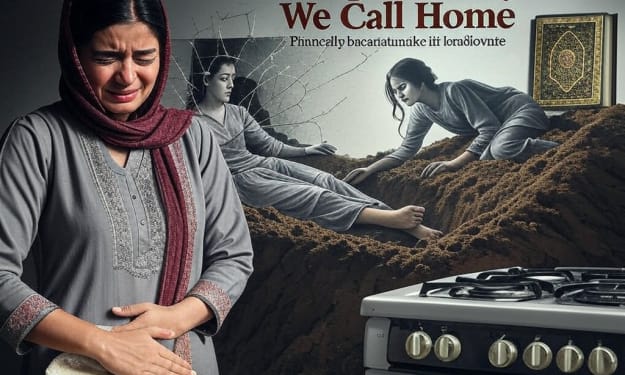
The question isn’t how that woman survived. The real question is—why didn’t she die? But then, an even more haunting question arises: why are we still alive? Because each of us has either witnessed a woman like her, lived her story, or silently watched someone else endure it. And we continue breathing, not out of strength—but because we’ve grown numb enough to keep living. This isn’t a story written on a woman’s body; it’s carved from within her soul. It speaks for the woman who, despite bowing to her husband’s every command, slaving for her in-laws, swallowing her sisters-in-law’s poison, bearing the hungry stares of her brothers-in-law, and being crucified by society—still somehow manages to “save the family.” But save it for whom? For everyone but herself. She dies a little every day, is buried a little every day, only to rise each morning—rolling out parathas for her mother-in-law—as if nothing ever broke her. Who is this woman? She is our mother, our wife, our sister. She’s the one whose hands are adorned with henna but whose lips are sealed. Her eyes hold truth, but her world—only lies. We’re told that marriage gives a woman a new home. What they don’t tell us is that waiting in that home are: suggestive looks from her brother-in-law, taunts from her sister-in-law, and burning glares from her mother-in-law. It’s not a home—it’s a trial. If she endures it, she’s righteous. If she speaks up, she’s disrespectful. If she dies, she’s pitied. But if she survives—she's condemned. This is our joint family system—not a family, not a system, but a collective madness where the individual matters as much as a corpse in a grave: unable to speak, capable of hearing, and ultimately silenced without a sound. A woman suffering from blood cancer attributed her illness to the toxic environment of her in-laws. And believe it—it’s not a fabricated story. It’s horrifyingly real. Wounds inflicted on the soul fester like infections in the bloodstream. What the modern world calls mental health, our society condemns as ingratitude, rudeness, and rebellion. Especially when the woman is left alone in the house, and her brother-in-law’s eyes are itching to tear her dignity apart. The phrase “no one believed her” might just be society’s greatest cruelty. Because society desires her body—but refuses to acknowledge her spirit. Her voice is strangled, and then she’s asked—why she doesn’t speak. Her will is disregarded, and then she's expected to obey. This is the same woman who handed over 22 years of her life’s reins to others. Her son’s wedding is now being planned by her sister-in-law, while she just watches. She’s the woman who rolled 50 rotis a day, managed the entire household in her husband’s absence, spent her youth burning her bones over the stove. And in return? Just one title—ungrateful. And had she died? Her father-in-law would have said, “She was a good daughter-in-law.” Her sister-in-law would mourn, “We loved her dearly.” Her brother-in-law would arrange a Qur’an recitation in the mosque. Then everyone would eat, drink, and return to their homes. Because this system is not a joint family—it is a collective hypocrisy. Here, a man’s anger is his right, a woman’s tears are drama, his absence is a compulsion, her need for protection—shamelessness. To that sister who has lost the war while still breathing—I offer my heartfelt salute. The pain of her cancer might not be eased by medicine, but her silence must not go unheard. Because if we again dismiss this pain as fate, then tomorrow, our own daughters will be praying in such homes to simply—die. A joint family system, if built on justice and respect, can be a blessing—but that exists only in dreams. In reality, it is a poison that slowly seeps into a woman’s blood. And by the time it's diagnosed, the woman has either already died—or chosen to stop living. Society must ask itself: If a daughter-in-law can be like a daughter— Why can’t the sister-in-law be like a sister? Why can’t the father-in-law act like a father? Why can’t the brother-in-law be like a brother? And if they cannot—why is it solely a woman’s responsibility to save the home? If she is expected to protect the home, then she has every right to stand against those turning it into a living hell. This story might end—but that woman hasn’t. She still stands in front of the stove, cancer burning within her, preparing a meal for the very sister-in-law who plans to marry off her daughter to her son—without even asking her. And society? Still says: “It’s fate…” No, it’s not fate. It’s injustice. And giving injustice a name, exposing it, and speaking against it—is the first cure. Because if we still stay silent today, Tomorrow, our own sisters and daughters may be rolling 50 rotis a day… …whispering the same prayer: “O Allah, please let me die…” And that—would be a curse, Not on her life, But on this entire system. So ask yourself— Is a joint family really a family? Or just a legal graveyard? Decide. Today. Now.
By Muhammad Ilyasabout a year ago in Families
How to Choose the Best Ayurvedic Doctor for Arthritis Treatment in India. AI-Generated.
Seeking the best doctor of Ayurveda for the treatment of arthritis in India may prove to be a life-changer---particularly if you are fed up with short-term pain relief from regular medications. Ayurveda goes beyond pain reduction; it also tackles the source of arthritis via natural healing based on your constitution. Since the country of Ayurveda, it has everything ranging from plenty of experienced therapists and centers in India.
By Neeraj Arthritis Treatmentabout a year ago in Families