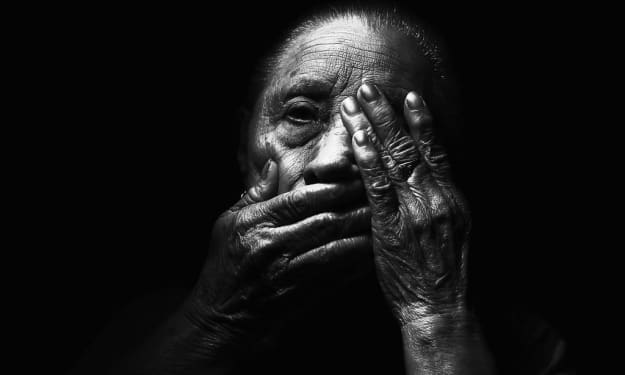
grandparents
Becoming a grandparent makes getting older something to look forward to - all the fun of parenting, without the hassle.
Is it possible to spread depression? Couples can kiss to share it.
Marriage is often described as a fusion of two lives: emotional, physical, and practical. We embrace the idea that couples influence others' habits, moods, and routines. But what if these changes go far beyond conscious behavior? And even depression can change between partners - what happens to your body bacteria that not only fight together, but also reflect that of your spouse?
By Francis Damiabout a year ago in Families
Encouraging Creativity in Kids:
In a world that’s constantly changing, creativity isn’t just a “nice-to-have”—it’s a superpower. Especially for kids. From finger painting to building forts out of blankets, children are naturally imaginative. But did you know that nurturing creativity early on can dramatically boost a child’s cognitive, emotional, and social development?
By Katina Banksabout a year ago in Families
The Letter I Found in My Grandfather’s Attic Changed Everything
It started with a simple chore. My mother had asked me to help clean out my grandfather’s attic after his passing. The house had been in our family for generations, a creaky old place filled with the kind of mystery only time can create. I wasn’t expecting to find anything remarkable—maybe a few photo albums, old books, forgotten trinkets. Certainly not a letter that would make me question everything I knew about my family. The attic smelled like dust and history. Sunlight filtered through a cracked window, casting long, golden rays across old furniture covered in white sheets. I wandered slowly, picking up objects, letting memories form around them. A tin box caught my attention—rusted, heavy, and oddly out of place among the other dusty antiques. Inside, I found a stack of letters bound with a red ribbon. The top one was addressed in faded ink: To my son, if you ever wonder who I really was. My heart thudded. I wasn’t sure who had written it, but something about the handwriting looked familiar. I sat down and unfolded the brittle paper. The letter was written by my great-grandfather, Edward, who had died long before I was born. He wrote about his youth during the war, not the stories we had heard over family dinners. These were different—darker, more honest. He described fleeing from a battlefield, not in cowardice, but in refusal to fight a war he didn’t believe in. He had deserted his post and spent a year hiding in rural France, living with a woman named Claire. Claire had a child. His child. That child was not my grandfather, or so I thought. My hands shook as I read. Edward had returned home after the war, leaving Claire and the baby behind. He carried the guilt for the rest of his life. But the twist? That child—his first son—had eventually found him. That son was my grandfather. Not the man I had grown up calling Grandpa. The man I thought was my great-grandfather had adopted another man’s son as his own, and no one ever told the truth. I was stunned. This wasn’t just family gossip—this was history, identity, lineage. I couldn’t breathe. I reread the letter twice, then three times. A flood of questions rushed in. Did my mother know? Did anyone? I read through the rest of the letters. Edward had written one every year for a decade, hoping someday someone would understand. He never mailed them, but he kept them all together, tucked away in that attic. That night, I sat with my mother and showed her the letters. Her face went pale as she read the first one. Then tears. She had never known. Her father—my grandfather—had apparently found out late in life and never spoke of it. We spent hours talking about what it meant. Did it change anything? Did it make our memories less real? Or did it make them more human, more flawed, and more precious? In the weeks that followed, I couldn’t stop thinking about Claire and the child Edward left behind. I began researching. Through old records, social media, and some incredible luck, I found a family in France that matched the timeline. I reached out gently, carefully. A woman named Marianne replied. She was Claire’s granddaughter. And yes—her family knew about Edward. They had letters, too. A month later, I flew to France. Meeting Marianne was like looking into a mirror from another life. We laughed, we cried, and we filled in the missing pieces of a story buried for decades. She showed me photos of Edward as a young man, holding Claire’s hand in a field of sunflowers. I had never seen him smile like that. We stood in that same field, now grown over, and I felt something shift inside me. I wasn’t just one thing. I was the product of two legacies, two loves, two choices made long ago. I brought the letters back home and had them preserved. One day, I’ll pass them down. Because our history doesn’t begin where we think. It begins in forgotten boxes, in words never spoken aloud, in truths hidden under dust and time.
By Inamullah Afridiabout a year ago in Families
The Bench by the Lake
Every day for the past thirty years, Samuel had walked the same path down to the lake, just a few blocks from his small wooden house. He wasn’t the kind of man who needed much. A warm cup of tea in the morning, a light jacket on his back, and a good place to sit — that was enough for him.
By Sabirkhan171about a year ago in Families
Men Only Want One Thing and It’s Disgusting
You’ve heard it a million times. Men are simple. Men are selfish. There is only one thing that men desire. Hold on though because what if everything youve been told is false? What if the reality of what men desire is more sinister profound and disturbing than anyone has ever dared to acknowledge? Its not a fairy tale. This isnt a tirade.
By Olivia Chastityabout a year ago in Families
Silent Exit: When They Stay in the Marriage But Leave the Love.
Not all relationships end with a scream. Some end in silence, slow, suffocating, calculated silence. Sometimes, the person you're with doesn't hate you. They don’t even dislike you. They just don’t love you… and perhaps never truly did.
By Sayed Zewayedabout a year ago in Families