grandparents
Becoming a grandparent makes getting older something to look forward to - all the fun of parenting, without the hassle.
Why Is My Grandmother Not Here and How Do I Get Her Back?
I always thought the denial stage of grief must be the quickest. Surely it would only be the moments right after the death when you don’t believe what you’re told. The moment where the world shifts and you try to cling to the way things were before. I never imagined it would last longer than five minutes after the person is made aware of the loss.
By Samantha Smithabout a year ago in Families
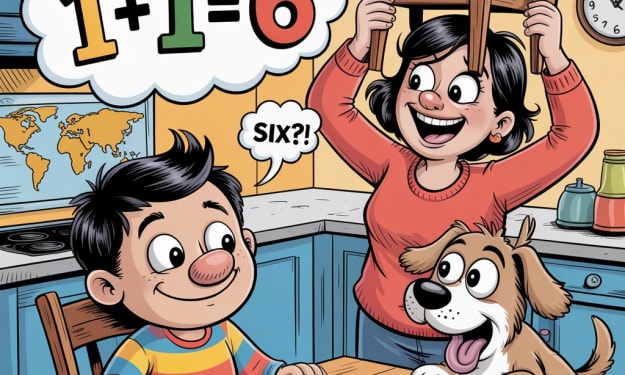
Homework With Mom: The Day 1 + 1 Became 6
Homework is supposed to be simple. A quiet kitchen table, a child doing sums, a mother sipping coffee nearby. That’s how it looks in the movies. But in real life? Homework time is a circus act, a battlefield, and sometimes a full-on comedy show that makes the neighbors wonder if they should sell tickets.
By Life Hopesabout a year ago in Families
Why My Grandmother’s Stories Still Guide Me Today
When I think about the person who has influenced my life the most, it isn’t a famous author, a teacher, or a public figure. It’s my grandmother. She didn’t leave behind wealth or possessions, but she gave me something far more valuable—her stories. They were simple, told in the quiet of evenings, yet they still guide me today, shaping the way I see challenges, kindness, and the importance of remembering where I come from. My grandmother never needed books to tell her tales. She carried them inside her, polished by years of memory and retelling. She could take a moment from her own childhood and spin it into a lesson without ever sounding like she was preaching. Her words were steady, her eyes alive with wisdom and humor, and her voice had a rhythm that pulled me in. When I was young, I listened for comfort. As I grew older, I realized those stories were maps—silent directions on how to live with dignity. One of her most powerful stories was about hardship. She grew up in a time when food was scarce, and she often had to share a single loaf of bread with her siblings. She described how they divided it carefully, making sure everyone got a piece, no matter how small. As a child, I thought it was simply a story about hunger. But now I see it differently. It was a story of resilience and sacrifice, about finding a way to survive even when you have almost nothing. Whenever life feels overwhelming, I remember her telling me, “You can always make something out of little, if you have courage and patience.” Those words echo in my mind whenever I struggle—whether it’s managing with limited resources, dealing with disappointment, or facing setbacks. Her story taught me that giving up is never the first option, and that sometimes strength comes from learning how to endure. Another story that shaped me was about kindness. She once helped a stranger who appeared lost and desperate. Later, that same stranger repaid her kindness in an unexpected way, showing up to help her during a difficult time. My grandmother told it with a smile, never once using the word “lesson,” yet the meaning was clear: kindness has a way of returning, even if we do not know when or how. This story taught me not to measure generosity by what I would get back. In a world where people often calculate their actions like transactions, her story reminds me that giving without expectation is the purest form of kindness. Even today, when I choose to help someone or offer time to a friend in need, I hear her story in the background, whispering that kindness always matters. Not all of her stories were about hardships or moral lessons. Many were filled with folklore and traditions from her village—tales of festivals, spirits, and community celebrations. As a child, I found them enchanting, sometimes even frightening. I didn’t know it then, but those stories were her way of keeping our roots alive. They carried pieces of our culture, the values of her time, and the identity of our family. Now, in a fast-moving world where everything changes so quickly, those stories ground me. They remind me that I belong to something bigger than myself, a chain of generations who faced storms and joys long before I was born. They remind me to stay connected to my culture, even when the world around me pushes toward forgetting. What makes my grandmother’s stories so powerful is that they have lasted longer than simple advice ever could. If she had only told me, “Be strong” or “Be kind,” I might have forgotten those words. But she gave me stories, and stories are unforgettable. They replay in my mind at the right time, resurfacing when I need them most. They are flexible, reshaping themselves to fit new challenges I face as an adult. That is why they still guide me, years after I first heard them. Sometimes, when I face a decision, I close my eyes and think about what story my grandmother would have told me in that moment. Her voice still echoes inside me, steady and calm. I imagine her smile as she reminds me not to rush, not to fear, and not to lose my kindness even when the world feels unkind. In many ways, she is still with me, shaping the person I am becoming. My grandmother may no longer be here to sit beside me and tell me her stories, but her legacy lives on in every choice I make. Her stories remind me that endurance is possible, that generosity is powerful, and that identity is worth preserving. They are not just memories of childhood; they are living lessons that travel with me into the future. In the end, I have come to realize that stories are more than words. They are bridges between generations, carrying values and wisdom across time. My grandmother’s stories were her gift to me, her way of saying, “This is who we are, and this is how you can walk forward.” They still guide me because they are more than tales—they are part of me, a light I carry no matter where I go.
By LUNA EDITHabout a year ago in Families
What medical conditions qualify for long-term disability
Imagine waking up one day and finding yourself unable to work due to a severe health condition. This is the reality for millions every year, making long-term disability (LTD) benefits a critical safety net. Long-term disability insurance replaces a portion of your income when a serious illness or injury prevents you from working for an extended period. Knowing what medical conditions qualify for long term disability is key to accessing these benefits—whether through Social Security Disability Insurance (SSDI) or private insurance policies.
By PURE HEALTH BLOGSabout a year ago in Families
Supporting a Loved One with Dementia: How Progression Scales Can Help
Caring for a loved one who has dementia is physically and emotionally demanding. Families are often left wondering what is going to happen next and how they should prepare themselves for what is ahead. Perhaps the most useful instrument that is at the fingertips of caregivers and medical professionals is the use of progression scales, such as the Global Deterioration Scale (GDS) or the dementia fast scale (Functional Assessment Staging Tool, FAST). These structured tools provide insight into the stages of progression in dementia, guiding care planning and facilitating patients to receive appropriate support at all stages of the condition.
By Jame Roarkabout a year ago in Families
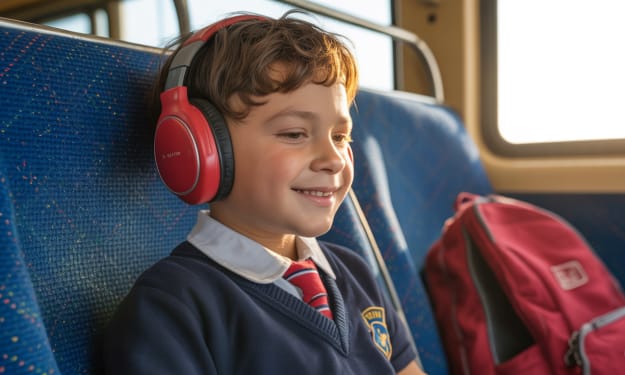
Kid Not Into Reading? Try an Audiobook!
Hey there, parents, teachers, and anyone who's ever tried to get a kid excited about a book – buckle up! In a world where screens dominate, audiobooks are stepping up as the unsung heroes of storytelling. A recent bombshell from The Guardian has everyone buzzing: England's schools might soon officially embrace audiobooks in their curriculum, thanks to eye-opening data from the National Literacy Trust. This isn't about ditching traditional reading; it's about amplifying the joy of stories in a way that clicks with today's tech-savvy kids. Let's break it down in a fun, positive vibe, exploring how listening to books can spark imaginations, build skills, and create lifelong book lovers. Trust me, by the end, you'll see why this is a game-changer for children everywhere.
By Francisco Navarroabout a year ago in Families
Respecting Family: The Foundation of Love and Values
Family is the first school of life. It is where wGe learn love, care, discipline, patience, and respect. Among all the values that strengthen the bond of a family, respect is the most important. Respect is not just about obeying; it is about understanding the worth of each family member and treating them with dignity. A family is like a tree—its roots are the elders, and its branches are the younger members. If every part of the tree is nurtured with respect, it grows strong and fruitful.
By Daily Motivationabout a year ago in Families
Factors that Influence Longevity in Older Adults with Dementia
Dementia is a degenerative neurological disease that profoundly impacts thinking, memory, and daily living. Perhaps the biggest worry for families is comprehending what determines longevity in older people who have dementia. Although each person's experience is special, a great deal of study has identified some primary factors, ranging from age and dementia type to health control and social support, upon which outcomes heavily depend.
By Amiee Fraleyabout a year ago in Families
Caring for a Loved One with Frontotemporal Dementia: Challenges and Strategies
Caregiving for an individual with frontotemporal dementia (FTD) is an experience filled with emotional, physical, and mental demands. Unlike other dementia types, FTD impacts the frontal and temporal lobes of the brain, which results in fundamental changes to behavior, personality, and language. As caregivers, we are presented with a multifaceted array of challenges that need patience, strength, and empathy. In this article, we discuss the challenges of FTD care and suggest solutions that enable us to navigate this challenging yet rewarding task.
By Laura Partonabout a year ago in Families