fact or fiction
Is it fact or merely fiction? Fact or Fiction explores the myths and beliefs we hold about our family dynamics, traditions, and if there's such thing as a 'perfect family.'
The Day I Gave Up My Dream Job To Save My Mother's Life
I had a dream—not a fleeting wish, but a goal I breathed, lived, and molded my life around. Since I was twelve, I wanted to become a world-class cardiologist. The irony isn’t lost on me now—that my dream was to heal hearts, yet life would one day ask me to break mine to protect someone else’s. Growing up in a modest home, with peeling paint on the walls and more bills than food in the kitchen, my dream wasn’t just mine. It belonged to my family, especially to my mother. She used to sit beside me late at night, rubbing her tired hands over my back while I studied by candlelight during power cuts. “One day, Farid,” she used to whisper, “you’ll wear that white coat and we’ll forget what struggle felt like.” She believed in me more than I believed in myself. Her faith carried me through every exam, every rejection, every night I wanted to give up. She worked two jobs to afford my books and never bought herself anything new unless it was for my education. Then came the day everything changed. I had just been accepted into a prestigious medical program in Europe—something thousands applied for, and only a handful were selected. I remember standing in front of the mirror, holding the acceptance letter in my trembling hands, barely able to believe it. That day, I ran home like a child, ready to hug my mother and share the news. But when I walked into the house, something felt wrong. My mother wasn’t in the kitchen like she usually was. The smell of food was absent. I found her lying on the bed, her hand on her chest, her face drained of color. I panicked. We rushed to the hospital, my heart pounding harder than ever before. After several tests and tense hours, the doctor called me aside. “She’s in the early stages of heart failure,” he said quietly. “Her heart’s weakening, and she’ll need surgery soon. It’s not immediately critical, but she cannot delay treatment for long. You’ll need to consider a private hospital for proper care—public hospitals might delay it too much.” The cost he mentioned left me frozen. It was almost equal to the scholarship fund I had saved for travel, documents, and living expenses abroad. I sat beside her hospital bed that night. She looked peaceful despite everything, but her fingers trembled slightly as they held mine. “You’re quiet, Farid,” she said. “Is something wrong?” I shook my head. I wanted to lie. I wanted to hide the storm raging inside me. But I couldn’t. I told her everything. About the program. About the surgery. About the money. Her eyes filled with tears, not for herself, but for me. “You can’t let me hold you back,” she whispered. I smiled. “You never held me back, Ammi. You’re the only reason I ever moved forward.” That night, I didn’t sleep. I walked the empty hospital corridors, heart torn between the life I had built toward for a decade—and the woman who gave me that life. By morning, I made my choice. I contacted the medical university, declined the scholarship, and used every rupee I had saved for her treatment. Was it an easy decision? No. But some choices don’t need to be easy. They just need to be right. My mother underwent surgery two weeks later. It wasn’t perfect—there were complications, days of uncertainty, long nights by her bedside—but she pulled through. I remember holding her hand as she opened her eyes after the operation. Weak, but alive. Breathing. Smiling. That moment was worth more than every dream I ever had. People told me I was foolish. That I had thrown away my future. But I never felt that way. My mother didn’t just give me life—she gave me strength, hope, and purpose. She sacrificed her happiness so I could chase mine. When it was my turn to give back, how could I do any less? I still study. I still dream. Life doesn’t end with one sacrifice—it just takes a different road. Maybe I’ll reach my goal in another way, or maybe I won’t. But I’ll always know this: I chose love. I chose my mother. And I have no regrets.
By Waleedkhanabout a year ago in Families
The Secret Buried Inside a Tree — A Forgotten Memory Unearthed After Decades
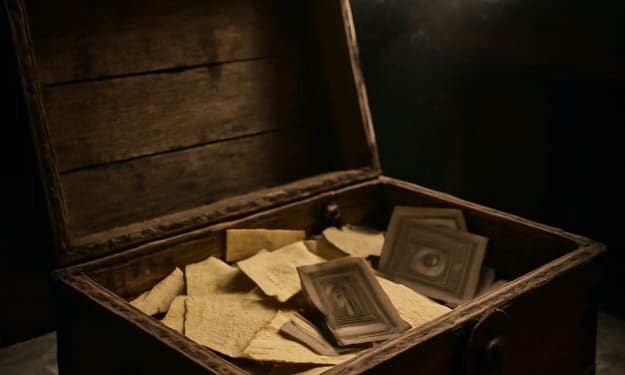
The Secret Buried Inside a Tree — A Forgotten Memory Unearthed After Decades Last year, something happened on our family farm that we still talk about in hushed, wondering tones. A tall pine tree — a quiet giant that had stood for decades beside our farmhouse — had to be cut down. It wasn’t an easy decision. That tree wasn’t just part of the landscape; it was part of our life. Through countless summers, it provided shade on hot days. During storms, it swayed with quiet strength. Birds built homes in its branches. Children played beneath it. It was a witness to countless moments—birthdays, monsoons, heartbreaks, and laughter. But nature had its own plan. A fierce lightning strike damaged the tree so severely that leaving it standing became dangerous. It leaned ominously toward the house. With heavy hearts, we decided to bring it down. But the tree’s fall was not the end of a story — it was the beginning of a mystery. The Unexpected Discovery As the chainsaw cut through the thick trunk, a worker suddenly stopped and pointed. Something strange was buried deep within the wood—far beyond where sunlight had touched. At first, we thought it was just a discoloration. But as we cleared away more layers, the truth became undeniable: there was an object embedded inside the heart of the tree. It was rusty, partially decayed, but clearly man-made. A metallic piece — possibly a nail, a bullet casing, or a broken shard of old fence. We couldn’t be sure what it was or how long it had been there. But the fact that it was inside the tree, completely surrounded by wood, was shocking. How did it get there? When? Who put it there—and why? That’s when we realized: this tree had swallowed time.
By Zain ul abidin about a year ago in Families
My First Kiss Didn’t Go as Planned (But Taught Me Everything)
My heart pounded in my chest like a wild drum as I walked beside her under the fading sky. We were both seventeen, cautiously tiptoeing into the world of love. That evening was supposed to be magical, cinematic even, like the dreamy scenes we had watched in teenage rom-coms. But reality? It had something hilariously awkward—and unforgettable—in store for me. My first kiss didn’t go as planned, but in a strange and surprising way, it ended up teaching me everything I needed to know about vulnerability, timing, and the unpredictable beauty of human connection.
By Lana Roseeabout a year ago in Families
The Secret My Grandmother Took to Her Grave
There are some stories that never get told. Some truths remain buried beneath silence, shame, and secrecy. My grandmother was a woman of few words, but her eyes always seemed to carry the weight of a thousand untold tales. Her life was one marked by strength and sorrow, grace and grit—but it wasn’t until after she passed that we began to uncover the mystery she took to her grave.
By Lana Roseeabout a year ago in Families
The Long Road Home
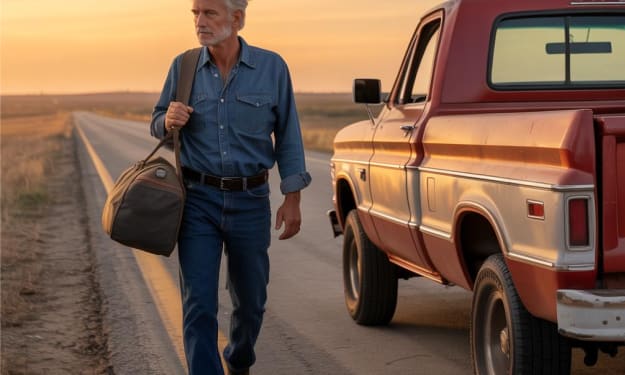
Tom Riley left Dalton, Texas when he was twenty-three with nothing but a guitar, a dream, and a whole lot of anger. Back then, he was convinced the world owed him something. His father — a hard man who believed in calloused hands and silence over sentiment — didn’t try to stop him. He just said, “If you’re going, go. But don’t come back unless you’re ready to stay.”
By Atif khurshaidabout a year ago in Families
The Angel of Death: A Love That Killed
In the quiet corridors of a hospital in Massachusetts during the late 1980s and early 1990s, patients checked in for care and healing—but some never made it out. Behind their tragic endings was not negligence, nor natural decline, but a woman with a soft voice, calm demeanor, and a heart consumed by a deadly passion. Her name was Kristen Gilbert, a nurse whose dedication to her patients once earned her praise. But hidden behind that sterile mask and white uniform was a story of twisted love—one that would make her infamous as "The Angel of Death." This is not a legend, nor a dramatized tale of fiction. This is the true story of a woman who killed—not for money, revenge, or thrill—but for love. --- A Nurse Like No Other Kristen Gilbert (born Kristen Strickland in 1967) seemed like the ideal nurse. Intelligent, charming, and composed, she worked at the Veterans Affairs Medical Center in Northampton, Massachusetts. At first, her colleagues viewed her as competent and capable. She formed close bonds with her co-workers and patients, especially those in critical care. But soon, a strange pattern began to emerge. Whenever Kristen was on duty, patient deaths increased sharply. While the VA hospital catered to elderly and vulnerable patients, the spike in fatalities was statistically alarming—far too frequent to be mere coincidence. What no one knew at the time was that Kristen's motives were deeply personal—and heartbreakingly deranged. --- The Man in the Morgue Among the hospital staff, Kristen had developed an intense affection for James Perrault, a handsome and soft-spoken Gulf War veteran who worked as a security guard at the facility. He was responsible, among other duties, for responding to emergencies and transporting the deceased to the morgue. Kristen fell deeply in love with James. But her love wasn’t the ordinary kind that inspires poetry or romance novels. It was obsessive, manipulative, and uncontrollable. She needed him near her constantly. But James worked shifts that didn’t always align with hers. And even when he was on duty, he had no reason to visit her unit—unless there was a death. That’s when her dark plan began to take shape. To see him, to have a reason for his presence, Kristen manufactured emergencies. She began injecting patients with epinephrine, a powerful drug that can induce cardiac arrest when given in high doses. After the patient collapsed or died, James would be called to respond—sometimes for a Code Blue, sometimes to transport a body. In her twisted mind, this became a ritual of longing and reunion. The lifeless bodies left in her wake were merely steps toward a fleeting glimpse of her beloved. --- A Trail of Death From 1993 to 1996, patient deaths during Kristen’s shifts were estimated to be three times higher than during other nurses' shifts. Despite the hospital’s attempts to maintain a professional and compassionate environment, fear began to grow among the staff. Some nurses even whispered among themselves that Kristen was cursed—or worse. When confronted, she often brushed it off with medical jargon or pointed to the patients’ underlying health issues. It wasn’t until several co-workers expressed serious suspicions that the hospital launched a formal investigation. The turning point came when a fellow nurse noticed Kristen preparing a syringe for a patient who had shown signs of recovery. Minutes later, the patient went into sudden cardiac arrest. That incident—along with multiple mysterious deaths—was reported to hospital administrators. --- Crumbling Facade Kristen’s once-charming demeanor began to crack. She started manipulating records, faking symptoms in patients, and gaslighting fellow nurses. Eventually, fearing exposure, she resigned in 1996. But it was too late. The federal government had launched an inquiry, and in 1998, Kristen Gilbert was indicted for four counts of murder and two counts of attempted murder. During the trial, the prosecution laid out a chilling narrative: Kristen murdered patients to create emergency situations that would summon James Perrault. James, now aware of her manipulation and disturbed by her actions, had already cut ties with her. But to Kristen, it was all for love. Her defense team painted her as mentally unstable, pointing to her diagnosis of borderline personality disorder. They argued that her actions, while tragic, stemmed from psychological breakdown rather than malice. The jury wasn’t convinced. --- Justice and Legacy In 2001, Kristen Gilbert was found guilty on all counts and sentenced to life in prison without the possibility of parole. She currently serves her sentence at the Federal Medical Center in Texas. Her story sent shockwaves through the American medical community. The very person entrusted to heal and protect had become a predator in scrubs. Hospital protocols were reevaluated nationwide, and more rigorous background checks and mental health screenings for medical staff became standard. But perhaps the most haunting aspect of this tale is not the number of lives lost, or the betrayal of trust—it’s the reason why. Kristen didn’t kill for gain. She didn’t hate her victims. She didn’t even seek to evade detection with clever tactics. She killed for love—a love that never even fully bloomed, a love that remained one-sided, and ultimately deadly. --- Love or Madness? Was it love—or was it delusion? Can longing be so intense that it warps one's very morality? Kristen Gilbert's case has been the subject of books, documentaries, and psychological analyses. Many see her as a cautionary tale of unchecked mental illness. Others view her as a cold-blooded murderer who used love as a justification. But no matter how one interprets it, one truth remains: she loved someone so much, she was willing to kill just to see him. And in doing so, she lost everything—including the very person she tried so desperately to hold close. --- Final Note: While this story may read like fiction, it is tragically real. A dark chapter in medical history, and a painful reminder that even love—when left unbalanced—can turn into the most dangerous of obsessions.
By 🇲 🇮 🇳 🇩 🇺 🇳 🇫 🇴 🇱 🇩 🇪 🇩 about a year ago in Families
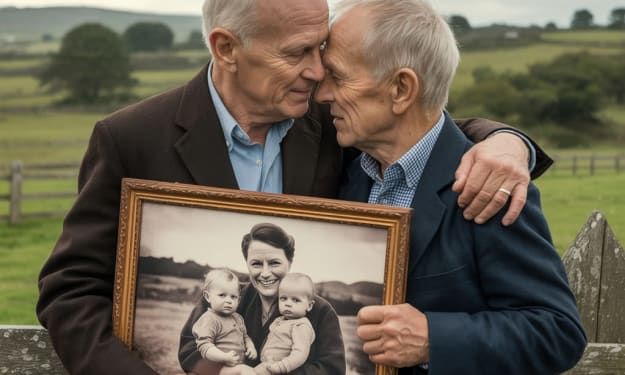
The Photograph That Bridged Nine Decades: A Heartwarming Tale of Twin Brothers and Their Mother's Legacy
The late afternoon sun cast long shadows across the emerald hills of County Cork as Margaret O'Sullivan adjusted her checkered headscarf and smoothed down her worn but clean dress. It was autumn 1936, and at just twenty-two years old, she carried the weight of the world on her slender shoulders. In her arms, she held her greatest treasures – twin boys, barely eight months old, their cherubic faces peering out at a world that seemed both promising and uncertain.
By Muhammad Sabeelabout a year ago in Families
Laughter in the Little Things
It was a quiet Sunday morning, the kind that arrived slowly with golden light spilling through the curtains. The air in the house smelled of freshly brewed tea and cardamom, and the only sound was the soft hum of the ceiling fan spinning above. Outside, the neighborhood was peaceful. Birds chirped, children’s distant giggles floated in from the street, and everything seemed to rest—except for one kitchen, where joy was gently bubbling to the surface.
By Raza Ullahabout a year ago in Families
When Silence Spoke the Loudest
The clock ticked louder than usual in the small living room, as if it too could sense the weight in the air. The lights were on, but the warmth had long left the house. Sana sat on the far end of the couch, arms folded, eyes fixed on the floor. Across from her, Ali stood by the window, pretending to watch the street outside, though his mind was far away.
By Raza Ullahabout a year ago in Families