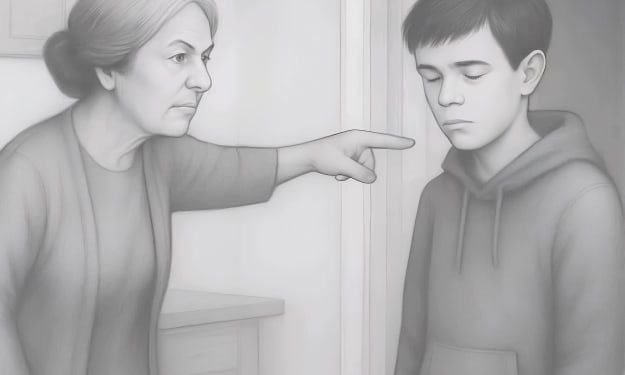
fact or fiction
Is it fact or merely fiction? Fact or Fiction explores the myths and beliefs we hold about our family dynamics, traditions, and if there's such thing as a 'perfect family.'
"He Understood My Silence—Now It Echoes Without Him
We all go through life expecting to meet people who will stay. Some do. Most don’t. But then, there are those rare ones—the ones who come quietly and change your entire world, and when they leave… they don’t take just memories, they take pieces of you. This is a story about him. My friend. My closest friend. My brother in everything except blood. --- We weren’t friends from the beginning. In fact, we were complete opposites. I was quiet, kept to myself, didn’t care much for attention. He? Loud, warm, always laughing. The kind of person who made silence feel like a party. He walked into my life when I didn’t even know I needed anyone. I was drowning in my own world—studies, family stress, personal battles I told no one about. He didn’t ask for permission. He just showed up with kindness and stayed. --- I still remember the first time I cried in front of him. It wasn’t planned. I had been holding everything in—pretending to be strong, pretending I didn’t care when everything inside me was falling apart. I was sitting with him under a broken tree behind our college building, and I just cracked. No warning. No buildup. He didn’t say anything. He didn’t try to fix it. He just sat there, his silence stronger than any advice. And in that silence, I felt understood for the first time. Sometimes, the deepest comfort is someone just being there. --- As time passed, we became inseparable. We knew each other’s fears, dreams, regrets. We never said "I love you" or anything dramatic. Boys like us don’t say that stuff. But it was always there—in the way he stood up for me, in the way I looked out for him, in the way we laughed like idiots over nothing. He knew my silence. I knew his pain. --- But life has a cruel way of testing the strongest bonds. It started with distance. Unspoken. Unintentional. Life just… got in the way. I got busy with responsibilities. He got busy chasing dreams. Messages became replies. Replies became seen-zones. And then one day, it had been months since we last talked. But the thing is… I always thought he’d still be there. That I’d message him “Bro, long time” and we’d pick up where we left off. That’s the thing about deep friendships—you think they’re unbreakable. Until they break. --- I got the call one cold evening. His cousin. An accident. Gone on the spot. No goodbye. No warning. I didn’t believe it. My hands went cold. My breath stopped. “Gone?” The word didn’t feel real. It still doesn’t. --- At the funeral, I stood in silence, surrounded by faces I didn’t know. His mother hugged me and cried like I was her own. She said, “He always said you were more than a friend—you were his safest place.” That broke me. I stood by his grave, and for the first time in years, I cried like a child. No shame. No control. Just raw, unfiltered pain. These were my tears for a friend—for the laughs we’d never share again, for the calls I never made, for the words I never said. --- I walk alone now, but I carry him with me. In every silent prayer, every memory that catches me off guard. When I laugh suddenly at something stupid, when I sit alone at that same tree behind the college, when I hear someone’s voice that sounds like his for a second—I remember. I remember the boy who never judged me. The friend who saw me when no one else did. The one who left too soon. --- If you’re reading this and you have a friend like that, call them. Message them. Sit with them. Talk nonsense. Share silence. Don’t wait. Because sometimes, life doesn’t give second chances. And when they're gone, all you’ll have left are stories… and tears. --- 💬 Final Words: Friendship isn’t always about how long you’ve known someone. It’s about who walked in when the world walked out. And sometimes… it’s about who left a hole so big, even time can’t fill it.
By Waleedkhanabout a year ago in Families
Why I Left My Dream Behind to Save My Family
Ever since I was a little boy, I dreamed of wearing a white coat. Not just any coat—but the one that said I’d made it. The one that whispered “respect,” “purpose,” “hope.” My dream was simple in words but heavy in effort: I wanted to be a cardiologist. Not for money. Not for fame. But because I wanted to heal broken hearts, quite literally. I would read about how the human heart works for hours, completely lost in the complexity of arteries, valves, and electric pulses. I used to imagine my mother sitting in the front row at my graduation, crying tears of pride. That picture kept me going through sleepless nights, failed exams, and moments of self-doubt. But life doesn’t always reward dreams. Sometimes, it tests how far you’re willing to go for something else—something deeper. --- It started with little things. My mother, who had always been strong, began sitting down more often than usual. I noticed her rubbing her chest lightly when no one was watching. She would dismiss it with a smile, saying, “I’m just tired, beta. Don’t worry.” But I did worry. I worried when she started skipping meals. I worried when I caught her breathless after climbing just a few stairs. I worried when I looked into her eyes and saw exhaustion where there used to be warmth. Then, one afternoon—everything changed. --- I had just returned home from university, my bag still slung over my shoulder, when I found her lying on the floor of the kitchen. The pot she was cooking in had spilled, and the food was burning. She was unconscious. That moment felt like someone had pressed pause on the world. My hands shook as I lifted her. My voice cracked as I called her name again and again. When her eyes fluttered open, I broke down in relief, but a voice inside me whispered: This is not just exhaustion. Something is very wrong. --- The hospital confirmed it. A heart condition. Chronic. Treatable, but expensive. She would need lifelong medication, monthly checkups, and constant care. I sat in the hospital corridor while the doctor explained everything, but I only heard one thing: You’re going to lose her if you don’t act now. We had no savings. No insurance. My father had died when I was just thirteen. My siblings were still in school, and I was our only hope. The weight of that truth crushed every part of my soul. I remember walking home from the hospital alone that night, staring at the sky, asking questions I knew had no answers: Why now? Why her? Why me? --- The next morning, I stood in front of the mirror and stared at my reflection. I didn’t see a future doctor anymore. I saw a son. A brother. A protector. And I knew what I had to do. I dropped out of my program temporarily. The decision felt like pulling the roots out of my own chest. I didn’t tell my mother the full truth—just that I needed a break. She smiled, thinking it was for myself. She didn’t know I was choosing her over the dream I had nurtured all my life. --- I picked up a part-time job at a local electronics shop. It was far from glamorous, but it paid enough to cover rent, food, and her medicine. Every morning, I’d wake up early, help my siblings get ready for school, check my mother’s vitals, then rush to work. There were nights when I cried silently in bed, not because I was weak, but because I missed the version of me that used to believe the world was fair. But still, I held on. --- One day, my younger sister asked me, “Bhai, why don’t you study anymore? You used to love it.” I smiled and told her, “Sometimes we press pause on our dreams so someone else can breathe easier.” She didn’t understand completely. She’s too young. But maybe one day she will. --- It’s been over a year now. My mother is stable. Her smile is slowly returning. My siblings are doing well in school. And me? I still carry my dream in my chest like a hidden treasure. I haven’t given up—I’ve only postponed it. And even if I never wear that white coat, I know I wore something greater: love, responsibility, and sacrifice. --- 💬 Final Thoughts: Dreams are beautiful. But family… family is sacred. I gave up my dream to save my family—not because I was weak, but because love asked me to. And if I had to do it again, I wouldn’t hesitate—not even for a second.
By Farid Ullahabout a year ago in Families
15 Daily Habits That Actually Make You Smarter
I used to think intelligence was something you either had or didn't have. You know, like height or eye color – just part of your genetic lottery ticket. But after years of studying successful entrepreneurs, brilliant academics, and people who seem to effortlessly navigate complex problems, I've discovered something fascinating: intelligence isn't fixed. It's more like a muscle that grows stronger with the right kind of exercise.
By Fathima Haniffaabout a year ago in Families
Sean ‘Diddy’ Combs acquitted of most serious counts
Happening now Mixed verdict: Jurors in Sean “Diddy” Combs’ federal criminal trial acquitted him of the most serious charges — racketeering conspiracy and sex trafficking — but found him guilty of two counts of transportation to engage in prostitution. Sentencing outlook: Combs could get a prison sentence of up to 20 years — the maximum is 10 for each of the transportation counts. The defense has asked that Combs be released while he awaits sentencing; a bail hearing is set for 5 p.m. ET. Reactions: After the verdict, Combs faced the courtroom gallery and clapped. A lawyer for accuser Cassie Ventura said the verdict is not their desired outcome, but Ventura is grateful for the two convictions.
By Kamran Khanabout a year ago in Families
Love vs. Lust: A Neurochemical and Spiritual Comparison of Dopamine in Sex and Love
Introduction Human relationships are governed by a delicate interplay of emotional, physical, and spiritual dynamics. At the core of these experiences are complex neurochemical reactions and deeply rooted moral frameworks. One of the most significant chemicals involved is dopamine, often known as the "pleasure molecule." It plays a pivotal role in both sexual experiences and emotional bonding in love. But how do these two expressions—sex and love—compare in terms of dopamine release? Moreover, how do religious traditions, particularly Islam, view these experiences? This article explores the scientific underpinnings of dopamine's role in sex and love and complements them with the religious and spiritual interpretations, offering a holistic understanding of the human experience. --- Dopamine: The Pleasure and Reward Neurotransmitter Dopamine is a neurotransmitter that plays a major role in the brain’s reward system. It is released when we engage in activities that bring us pleasure, such as eating, achieving goals, exercising, and engaging in sexual activity. Dopamine motivates us to seek pleasurable experiences and reinforces behaviors that promote survival and reproduction. In both sex and love, dopamine is activated in regions of the brain such as the ventral tegmental area (VTA) and nucleus accumbens, areas associated with motivation, desire, and reward. However, the context, intensity, and duration of dopamine release differ depending on whether the experience is purely physical or deeply emotional. --- Sexual Activity and Dopamine: Intense but Fleeting During sexual intercourse, especially during orgasm, the brain is flooded with dopamine. Studies using functional MRI scans show that the brain during orgasm is remarkably active in pleasure-related areas, with dopamine levels spiking dramatically—some estimates suggest levels can increase 2 to 3 times more than during normal pleasurable activities. Other hormones such as oxytocin and endorphins also surge, leading to a feeling of euphoria, physical closeness, and satisfaction. However, this effect is often short-lived. As the dopamine levels fall after climax, individuals may experience a temporary emotional dip or detachment, particularly if the encounter lacks emotional intimacy. This is a key reason why casual or purely physical sex may not result in long-term emotional bonding unless accompanied by deeper emotional connections. --- Romantic Love and Dopamine: Gradual and Sustainable In contrast, romantic love leads to a more consistent and sustained release of dopamine over time. Falling in love engages similar brain areas as sexual arousal but with different patterns. There is also an increase in oxytocin and vasopressin, which are associated with emotional bonding, trust, and long-term attachment. The dopamine associated with love doesn’t usually spike as high as in sexual climax, but it has a longer-lasting impact. It supports pair-bonding, emotional intimacy, and mutual care. Love fosters ongoing neurological feedback that reinforces connection and empathy between partners. From a biological perspective, this makes evolutionary sense. While sex ensures reproduction, love ensures stability, parental cooperation, and community building. --- Islamic Perspective: Integrating the Physical with the Spiritual From an Islamic standpoint, both sex and love are natural human experiences, but their expressions are highly contextualized within morality and spiritual purpose. Islam recognizes the biological needs of human beings but insists that these desires be fulfilled through halal (lawful) means—specifically within the bond of marriage. In Islam: Sexual activity is not considered sinful when practiced within marriage. In fact, it is encouraged, and it is even considered an act of ibadah (worship) when done with love and care for one’s spouse. The Prophet Muhammad ﷺ said, "In the sexual act of each of you there is a charity." (Sahih Muslim) Love is also highly valued, especially love that is chaste, sincere, and leads to the strengthening of families and communities. Love for the sake of Allah, between spouses, is seen as spiritually rewarding. Islam views sex and love not as opposites but as complementary forces. The temporary pleasure of sex, when combined with the emotional depth of love and the framework of commitment, becomes spiritually meaningful. --- The Consequences of Separating Love from Sex In modern secular culture, sex is often detached from emotional or spiritual considerations. This separation can lead to various psychological and social issues: emotional emptiness, addiction to novelty, or difficulty in forming deep, lasting relationships. Science supports these concerns. Repeated dopamine spikes from casual sex or pornography can cause dopamine desensitization, reducing the brain's ability to feel joy from ordinary relationships or acts. This can lead to decreased satisfaction, anxiety, and even depression. Religious teachings, including those in Islam, offer a protective framework by encouraging sexual activity to be tied to emotional commitment and spiritual responsibility. --- Conclusion: Harmonizing Body, Mind, and Soul While science explains the mechanics of dopamine release in sex and love, religion offers guidance on how to align these powerful forces for our long-term well-being. Sex offers a powerful surge of dopamine and instant gratification, while love provides steady, enduring emotional and neurological rewards. In Islamic ethics, true fulfillment lies in the integration of both—physical intimacy grounded in emotional closeness and spiritual commitment. In this balance, not only does dopamine serve its purpose, but the human soul also finds peace.
By 🇲 🇮 🇳 🇩 🇺 🇳 🇫 🇴 🇱 🇩 🇪 🇩 about a year ago in Families
The Science of Love: Why Seeing a Loved One Brings Peace
Love has long been a subject of poetry, art, and philosophy, but in recent decades, science has begun to uncover what actually happens in the human brain and body when we experience love — especially when we see the one we love. Have you ever noticed how just a glimpse of your beloved can calm your nerves, lift your mood, or make your worries fade away? This isn’t just a romantic notion; there are measurable biological and psychological processes behind it. Let’s explore the scientific reasons why seeing a loved one brings such profound peace and emotional comfort. --- 1. The Dopamine Rush: Love as a Reward At the heart of romantic attachment lies the brain’s reward system. When we see someone we love, especially someone we are romantically attached to, the brain releases dopamine, often referred to as the "feel-good" neurotransmitter. Dopamine plays a key role in motivation, pleasure, and reward. It is the same chemical that gets released when we eat our favorite food, achieve a goal, or hear good news. In love, this system becomes activated simply by being near or looking at the person we cherish. Studies using MRI scans have shown that looking at a photo of one’s romantic partner activates the same brain regions associated with intense pleasure and addiction. This chemical surge can result in a feeling of calm euphoria — a peaceful high that makes the world feel just a little more right. --- 2. Oxytocin: The “Cuddle Hormone” Another key player is oxytocin, commonly known as the "love hormone" or "cuddle chemical." Oxytocin is released during physical touch, hugging, cuddling, and even eye contact. But perhaps more interestingly, just the thought or sight of a loved one can increase oxytocin levels. Oxytocin fosters feelings of trust, bonding, and safety. This hormone is one of the reasons why seeing a loved one feels like a warm blanket on a cold day — it creates an emotional anchor that soothes anxiety and enhances connection. In fact, oxytocin has been found to reduce activity in the amygdala, the part of the brain responsible for fear and stress responses. This directly links it to a sense of peace and security. --- 3. Lowering Stress Hormones: Cortisol in Check On the flip side, seeing a loved one also helps to reduce cortisol, the primary stress hormone in the body. Chronic stress results in high cortisol levels, which can increase heart rate, blood pressure, and contribute to anxiety. When you're around someone you deeply care about, cortisol levels naturally decline. It’s not just psychological; it’s chemical. Your body recognizes the presence of emotional safety, and in response, your physiological systems shift into a more relaxed state. This can lead to: Lower heart rate Deeper, slower breathing Relaxed muscles Improved immune function In essence, love becomes an antidote to stress. --- 4. Heart and Breath Synchronization Fascinating research has also shown that when people in love spend time together — or even just look at each other — their heart rates and breathing patterns begin to synchronize. This phenomenon, often observed in couples, is a physical manifestation of emotional attunement. This synchronization has a calming effect. It’s a non-verbal way our bodies communicate safety and harmony. Over time, this synchronization reinforces intimacy, connection, and emotional regulation — all essential components of peace and stability. --- 5. Serotonin and Mood Stabilization While dopamine and oxytocin get a lot of the credit, serotonin also plays a role in the peace we feel around loved ones. Serotonin is involved in mood regulation, sleep, appetite, and emotional well-being. In romantic relationships, especially in the early stages, serotonin levels can fluctuate — sometimes mimicking the effects of obsessive thoughts. But in long-term, secure relationships, serotonin levels stabilize, leading to a balanced, calm mood. The presence of a loved one can reinforce this stability, creating a sense of emotional grounding and peace. --- 6. The Psychology of Emotional Safety Beyond the biochemical processes, there’s a deep psychological component to why seeing someone we love brings comfort. From childhood, humans are wired to seek attachment — emotional bonds that offer security and connection. These attachments become blueprints for our relationships. When we see a loved one — especially someone we trust — our brain activates this sense of emotional safety. This reduces vigilance, calms anxiety, and allows the nervous system to “rest.” It’s the reason a child clings to a parent, or why partners sleep better together than alone. The feeling of “being seen” and “being safe” is profoundly regulating. --- Conclusion: Love Is a Science of Peace While poets and lovers have praised the soothing power of love for centuries, neuroscience now provides a concrete explanation for this deeply human experience. Seeing a loved one triggers a cascade of chemical reactions — dopamine for joy, oxytocin for bonding, reduced cortisol for calm, and synchronized physical rhythms — all of which contribute to a unique sense of peace. In a world filled with uncertainty and noise, love stands as a biological refuge. It is not just in the heart; it is in the brain, the breath, and the body. So, the next time your day feels overwhelming, just remember: a single look at the one you love might be the most natural — and effective — therapy your body knows.
By 🇲 🇮 🇳 🇩 🇺 🇳 🇫 🇴 🇱 🇩 🇪 🇩 about a year ago in Families
The Last Hunt with Grandfather
I remember the cold more than anything. That biting, high-altitude kind that chews through the thickest wool and lingers in your bones long after the sun comes up. We were two hours into the trail when the fog parted just enough for the mountains to show themselves—jagged, ancient, and still carrying the echo of stories only my grandfather could tell.
By Muhammad Sabeelabout a year ago in Families
“I Took a DNA Test for Fun. It Destroyed My Family in 7 Days”
It was a joke gift, really. My friends and I chipped in for a DNA test kit during a New Year’s Eve party. We thought it would be funny to compare ethnic mixes and find out who had the most “surprising ancestry.”
By Hamad Haiderabout a year ago in Families