fact or fiction
Is it fact or merely fiction? Fact or Fiction explores the myths and beliefs we hold about our family dynamics, traditions, and if there's such thing as a 'perfect family.'
The Last Letter from Aleppo
The nights in the camp were cold, not because of winter, but because of absence. Yaseen, twelve years old, sat by the torn window of the shelter, wrapping himself in a fading shawl that used to smell like his mother. Now, it smelled like dust and silence.
By Atif khurshaidabout a year ago in Families
Stay Full and Energized All Day with These High-Fiber Snacks for Weight Loss
When it comes to managing your weight and maintaining steady energy levels throughout the day, snacking can either be your best friend or your worst enemy. Many of the convenient, processed snacks available on the market are packed with refined carbs and added sugars, offering a quick energy boost followed by a crash that leaves you hungrier than before. Instead of reaching for chips or candy bars, consider fiber-rich snacks that support weight loss, gut health, and long-lasting energy.
By Ahmad shahabout a year ago in Families
Why I Celebrate My Dog’s Gotcha Day More Than My Birthday
Most people circle their birthdays on the calendar, plan parties, or expect well-wishes and gifts. But to me, that date means less and less with each passing year. Instead, there’s another day I hold sacred—August 18—the day I brought home the dirty, wide-eyed mutt who changed my life.
By Echoes of Lifeabout a year ago in Families
The Chair by the Mango Tree
I never thought a simple wooden chair could hold so much meaning. It sat under the mango tree in our ancestral courtyard for over two decades, weathered by time, dust, and laughter. But to us, it was Dada’s throne — my grandfather’s favorite place in the whole world. Dada wasn’t a man of many words. He was gentle, observant, and carried a kind of calm that made you want to sit near him even when he wasn’t saying a thing. Every evening, after prayers and tea, he would quietly carry his chair beneath the tree, take a seat, and watch the world go by. To a stranger, it would look like nothing. But to us — it was the center of our home. --- I remember summers in that house. My cousins and I would run barefoot across the dusty yard, our shirts sticking to our backs, mango juice dripping from our chins. Dadi would yell from the kitchen, warning us not to climb the tree again, and we’d pretend we didn’t hear. And Dada would just sit there — in that chair — sometimes smiling, sometimes pretending to be stern. That chair saw every scraped knee, every fight over the last mango, every childhood secret whispered just within earshot. He never interrupted. He never scolded. But we all behaved better when he was there. It’s strange how one person’s quiet presence can be more powerful than a dozen lectures. --- In winter, Dada wrapped a shawl around himself and sat in the same chair with the sun on his face. He'd sip tea slowly, always from a chipped white cup with a blue rim. And when I grew older, he let me make his tea — just the way he liked it: strong, no sugar, a pinch of cardamom. That was our thing. I’d sit on the edge of the step while he sat in his chair, and we’d talk about everything — and sometimes nothing. He once told me: > “When you get older, you'll learn that silence is a kind of wisdom. People chase noise to feel full. But peace... peace is found in the quiet.” I didn’t understand it then. But I do now. --- The year he fell ill, the chair remained empty. He was in bed most of the time, and though he never complained, we could see it pained him not to be outside. One day, he asked me, “Is the tree still green?” I nodded, hiding my tears. “Very green.” He smiled. “Then it’s still home.” --- Dada passed away peacefully a few months later. We buried him near the garden he loved. The mango tree bloomed that year like never before. And the chair? It stayed where it was — untouched, almost sacred. No one had the heart to move it. --- Years passed. We grew up, moved away, and life became busier. But every time I visited that house, I’d go straight to the chair. I’d sit for a while, let the wind carry the smell of ripe mangoes, and listen for echoes of our childhood. One afternoon, my own son — barely five — climbed into my lap while I sat in Dada’s chair. He looked up at the tree and said, “Was this your favorite place when you were little?” “No,” I whispered, “it was his.” And then I told him stories of my grandfather. About the man who never yelled. The one who taught me silence. The one who sat under this very tree and watched the world with kindness in his eyes. --- Grief softens with time, but some places remain sacred forever. That chair, under that tree, became more than furniture. It became a legacy. A reminder that the most valuable parts of family aren’t loud or grand — they are built in moments so small, we don’t realize how deeply they matter until they’re gone.
By Muhammad Usamaabout a year ago in Families
Old is Gold: The Lantern That Lit More Than Just Rooms
In the dusty corner of an old wooden shelf sat a brass lantern—its glass smudged with age, its metal dulled by time. To most, it was just a relic, a forgotten object from the past. But to me, it was a treasure chest that didn’t need to be opened to spill stories; it only needed to be lit.
By Leah Brookeabout a year ago in Families
The Old Jacket in the Closet
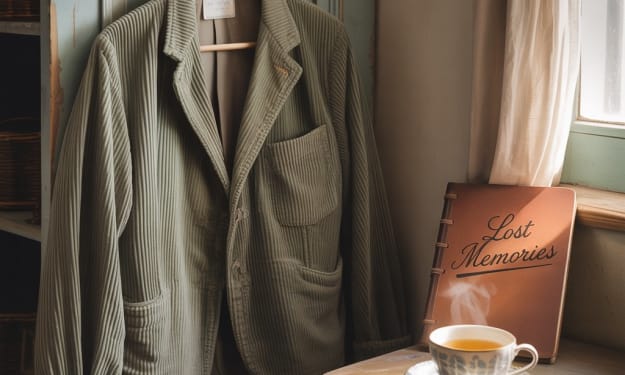
When my grandfather passed away, we didn’t cry at first. We were too busy making phone calls, arranging funeral prayers, greeting distant relatives, and trying to hold ourselves together. It was only after the house emptied, and silence returned, that grief settled in like dust — quietly and everywhere. He was the anchor of our family. Always calm, always knowing what to say, even if it was just a warm nod or a raised eyebrow. He never missed morning tea, and he never raised his voice. His strength was subtle, but steady — like a tree you didn’t notice until its shadow was gone. A week after the funeral, my mother asked me to clean out his closet. “I can’t do it,” she said, her voice thin and unfamiliar. “Not yet.” I nodded, even though I didn’t feel ready either. His room still smelled like him — cardamom, shaving cream, and old paper. The fan made its usual humming noise, and his slippers sat neatly by the bed as if he might walk in any second. I opened the closet slowly. Shirts, pressed and folded. Trousers on hangers. Scarves he never wore. Ties from decades past. I touched them one by one, trying to memorize the feeling. And then I saw it — tucked in the far corner — his old jacket. It was olive green, heavy, and worn at the sleeves. I remembered that jacket. He wore it every winter morning when he took me to school on his bicycle. The pocket still had a receipt from the tea stall we used to stop at. I held it up to my face, and for a second, it felt like he was still here. I sat down on his bed, jacket clutched against my chest. And I wept. For the first time since he left. --- Grief is strange. It doesn’t hit you all at once. It comes in waves — sometimes triggered by a song, sometimes by a smell, and sometimes by an old jacket hiding in a closet. That afternoon, I didn’t clean anything. I just sat there, flipping through his notebooks. He had written poems I never knew about. Thoughts. Prayers. Even jokes. On one page, in his neat, careful handwriting, he had written: > “We grow old not when we turn grey, But when we stop loving the mornings.” I closed the notebook and smiled. He had always been a morning person. And now, every sunrise reminded me of him. --- In the following weeks, I started wearing his jacket. Not because I needed warmth — but because it felt like carrying a part of him with me. My mother noticed. “That jacket looks good on you,” she said one day, quietly. “It still smells like him,” I whispered. She nodded, tears forming in her eyes. “It always will.” --- Months passed, and life resumed its pace. Birthdays came and went. New routines replaced the old ones. But some things stayed — like his chair on the porch. No one ever sat on it. As if we were all waiting for him to return and ask for his tea. One morning, I woke up early and went for a walk — wearing his jacket. The air was crisp, the sky painted with soft gold. I stopped by the same tea stall we used to go to. The old man there recognized me. “You’re his grandson, aren’t you?” he asked. I nodded, smiling. “Yes. I am.” “He used to sit right there, same order every time. Two teas. One for him, one for a little boy with sleepy eyes.” “That boy was me.” The tea vendor laughed. “He talked about you all the time.” I sat there for a while, watching people rush by. Then I ordered two teas. One for me, and one for him. I placed the second cup across the table. Just for a few minutes. --- I still wear the jacket when I need comfort. I’ve repaired the sleeve and stitched a small patch inside with his initials. It’s become more than clothing — it’s memory, warmth, and quiet strength wrapped around me. Grief doesn’t go away. But it softens. And it teaches you to find beauty in reminders, no matter how small. A jacket in a closet. A forgotten tea receipt. A quote scribbled in an old notebook. Sometimes, that’s all it takes to bring someone back — if only for a moment.
By Muhammad Usamaabout a year ago in Families
🐒 The Monkey and the Wise Elephant
Deep in the heart of the lush Emerald Forest, where sunlight filtered softly through thick green canopies and the air always smelled of moss and mangoes, lived a monkey named Miko. He was small, quick, and full of energy—and every creature in the forest knew his name. But not everyone said it with a smile. Miko was the kind of monkey who couldn’t help himself. He swung through the trees like lightning, told silly jokes to anyone who’d listen, and played endless pranks. Sometimes he tied vines to unsuspecting animals’ tails, hid fruits in the treetops just before someone reached them, or dropped nuts on the heads of sleepy boars napping in the afternoon sun. At first, the forest chuckled. Even the older animals thought he was harmless. “Just Miko being Miko,” they would say. But over time, the laughter began to fade. His tricks became tiring, and some animals stopped coming near him at all. One day, Miko stumbled upon something new—an old brass horn tucked between the roots of a banyan tree. It was dusty but intact. The moment he blew into it, the sound echoed so loudly across the forest that birds flew off in panic. Miko grinned. “This will be fun.” He tiptoed toward the riverbank, where Tara the elephant was drinking. She was the oldest and wisest creature in the forest—calm, strong, and deeply respected. Miko crouched behind the bushes, raised the horn, and blew with all his might. BWWWAAAANG The blast startled everyone. Tara reared up in alarm, trumpeting in fear. Her enormous feet thundered against the earth as birds scattered from the trees and squirrels dashed in every direction. In her panic, Tara accidentally stepped on a bush where a family of baby rabbits had been hiding. Thankfully, they escaped in time, but the fear in their little eyes was unforgettable. The forest went still. Every eye turned toward Miko, who peeked out from behind a tree, expecting giggles. There was none. “You could’ve hurt someone!” growled a tortoise who had toppled over in the confusion. “I—I didn’t mean to…” Miko stammered. Tara didn’t say a word. She turned silently and walked away, her heavy footsteps echoing with quiet disappointment. That silence struck Miko harder than any angry word. That night, Miko couldn’t sleep. The wind through the trees sounded sad. The horn, once so exciting, now felt cold in his hands. He realized that for all his fun, he had never once thought about how his actions made others feel. The next morning, he found Tara at the river again, gently helping a thirsty deer reach the water. “I’m sorry,” he whispered. Tara turned to him slowly. “Miko,” she said with softness and strength, “when you play, remember: laughter is only real if everyone is laughing.” Miko nodded, eyes lowered. “You are clever,” she added. “That’s a gift. But cleverness without care can become cruelty.” Miko sat beside her, listening more closely than he ever had before. From that day on, something in Miko changed—not his energy, not his mischief, but his purpose. He still swung from vines and danced in the trees, but now he used his tricks to help. He'd toss ripe fruit to hungry animals, use his horn to guide lost cubs home, or mimic a predator’s call to warn others of danger. His jokes made even the oldest owls laugh again. And when a rainstorm washed away a family of burrowing animals, it was Miko who climbed high to call for help. The forest slowly warmed to him again. Kavi the deer even laughed when Miko placed a flower crown on his head. “You’re still a rascal,” said the tortoise one day, “but now you’re our rascal.” And Tara? She smiled at him every time they crossed paths. Miko never stopped playing. But now, he played with heart. 🌿 Moral of the Story:
By Shoaib Afridiabout a year ago in Families
The Last Cup of Tea
The house hadn’t changed. The cracked veranda tiles still sighed under his feet, just as they did when he used to chase after the neighborhood kids. The faded wind chime still hung by the front door, though it no longer sang. Dust lay gently on the windows, as if time itself had exhaled and settled in. Aariz turned the key in the rusted lock. The door opened slowly, creaking like an old memory resurfacing. It had been four months since his mother passed away. He hadn’t come back since the funeral. Couldn’t. Everything in this home reeked of her – her scent, her scolding, her soft humming in the kitchen when she made her famous cardamom chai. Coming back felt like walking into a memory he wasn’t ready to relive. But the lawyer had called. The property needed to be emptied. Sold. It was time. He stepped inside, half expecting to hear her call out his name the way she always did: “Aariz beta, chai thandi ho jayegi!” But the only voice that greeted him was silence — heavy, solemn, and absolute. The living room was untouched. Her shawl still hung on the back of the armchair. Her reading glasses were resting on the open pages of a half-finished Urdu novel. A pair of her slippers peeked out from under the coffee table. Aariz sat down on the couch, closed his eyes, and for a brief moment, pretended she was in the kitchen — that at any second, the whistle of the kettle would sound, and she’d come in carrying a tray of tea and biscuits, smiling through her tired eyes. But there was no kettle. No tea. Just silence. He wandered into the kitchen. The same rusted stove. The same spice rack she refused to replace. A little chalkboard still hung by the fridge, with her last written note: “Aariz will come next week. Must buy his favorite cake.” His chest tightened. He remembered the last phone call — two days before she passed. "Are you eating properly?" "Yes, Ammi." "When are you visiting again?" "Soon, just finishing up work." "Don’t wait too long, beta. Mothers don’t live forever." She had laughed when she said that. He didn’t. She died of a silent heart attack two mornings later. Alone. In this house. With no one to hold her hand. He had arrived too late. The tears came uninvited, hot and bitter, as Aariz stood by the stove and imagined her standing there in her worn-out apron, stirring tea, tasting it with her pinky, then insisting it needed "just one more elaichi." He wiped his face and opened the cabinet. There, neatly arranged, were the teacups they always used. One of them had a tiny chip on the rim — his favorite. He pulled it out, along with her special tea tin. He made the tea slowly, deliberately. He boiled the milk, added sugar the way she did — not too much, just enough. Crushed the cardamom pods the way she taught him. Let it steep just a little longer for the stronger flavor. He poured it into both cups — hers and his. Then he sat across from her empty chair. For a while, he didn’t speak. He just sat there, the cup warming his hands, the steam rising slowly between them like an unfinished goodbye. Then softly, almost brokenly, he whispered: "I’m sorry, Ammi." "I should have come back sooner." "I thought there would be more time." The chair didn’t respond. But the house listened. And somehow, he felt she heard him. When he left later that evening, he didn’t take much — just her shawl, the tea tin, and the chipped teacup. He locked the house gently, like tucking a child into bed. As he walked away, he looked back one last time. The wind chime moved — just slightly — and this time, it rang. Epilogue: Grief doesn’t ask for permission. It arrives when you’re unready, and stays longer than you want. It isn’t loud or dramatic. Sometimes, grief is just a cold cup of tea on the table — untouched, but filled with memories.
By Ikram Ullahabout a year ago in Families