fact or fiction
Is it fact or merely fiction? Fact or Fiction explores the myths and beliefs we hold about our family dynamics, traditions, and if there's such thing as a 'perfect family.'
The Joy of Missing Out: Why Saying 'No' is Self-Care, Not Selfish
Introduction: Saying “No” in a World That Glorifies “Yes” We live in a culture that celebrates busyness like a badge of honor. Social media constantly reminds us of the parties we weren’t invited to, the vacations we couldn’t afford, or the opportunities we missed. The Fear of Missing Out (FOMO) has become a buzzword, embedding itself into our everyday decisions—from weekend plans to career moves.
By Aiman Shahidabout a year ago in Families
The House That Grief Built
I never thought a single phone call could change the entire landscape of my life. But it did. I was folding laundry on a rainy Wednesday afternoon when my phone buzzed with a number I didn’t recognize. The voice on the other end was trembling. It was my mother’s neighbor, and her words hit me harder than I ever thought words could.
By noor ul aminabout a year ago in Families
We Took a DNA Test as a Joke—Now We're Not Talking Anymore
It started the way a lot of things do these days—on a lazy Sunday afternoon, scrolling through social media. I saw an ad for one of those at-home DNA kits, the kind that promises to tell you where your ancestors came from and maybe connect you with long-lost relatives. I showed it to my sister, and we laughed. “Let’s do it,” she said. “Why not? What’s the worst that could happen?” Neither of us could have imagined how that joke would end with us not speaking. The Setup We were always close. Growing up just two years apart, my sister and I were more like best friends than siblings. We shared everything—secrets, clothes, inside jokes no one else understood. Our family, while not perfect, had always seemed tight-knit. Our parents had been married for over 30 years, and we grew up in the same house, surrounded by photos of holidays, birthdays, and family vacations. The DNA test was meant to be fun—a curiosity. We weren’t searching for anything. We weren’t suspicious of anything. We just thought it would be cool to see if we were more Irish or German, if we had some surprising trace ancestry that would make for a good dinner story. The Results When the results came back, mine were pretty expected: 60% Irish, 30% Scandinavian, a smattering of other European regions. I was more amused than anything. Then my sister called. She sounded off. “Did you get your results?” I asked. “Yeah,” she said. There was a long pause. “Can you...send me yours?” I was confused but did it anyway. Minutes later, she texted back: “We don’t match as full siblings.” I stared at my phone for what felt like forever. I refreshed the app. I double-checked the wording. According to the test, we were half-siblings. The Fallout At first, we both assumed there had been some mistake. Maybe the company mixed up our samples. Maybe the technology was flawed. But then my sister noticed something else. The test had matched her with a close relative—a man neither of us knew. Someone who wasn’t on my list. That’s when she started asking questions. Within a week, she confronted our mother. And that’s when everything unraveled. What we learned was this: years before I was born, our mother had a brief relationship with another man. She and our father were on a “break,” and she never told him what happened. When she found out she was pregnant, they had already reconciled. Our dad never questioned it—and she never offered the truth. My sister was devastated. She said she felt like her entire identity had been based on a lie. “Everything I thought I knew about myself, about our family, it’s just...broken,” she told me. I tried to comfort her. I told her it didn’t change anything about how I saw her. That she was still my sister. But for her, the damage ran deeper. The Silence At first, we talked constantly—about how angry we were, about how unfair it felt. But gradually, something shifted. She started pulling away. She stopped answering my texts. She said she needed space. I didn’t push. I figured she just needed time to process. That was six months ago. We haven’t spoken since. What I’ve Learned People joke about DNA tests revealing unexpected family secrets, but you never really think it’ll happen to you. You never think your family—the people you’ve trusted your whole life—could be hiding something that big. But they can. And sometimes, without meaning to, you dig up truths that were buried for a reason. Do I regret taking the test? Honestly, yes and no. I don’t regret knowing the truth—but I regret what it cost us. I hope one day my sister will reach back out. I hope she’ll understand that biology doesn’t change the years we spent growing up together, the love we shared, the history we made. But I also understand if she needs more time—or if she never comes back. Sometimes, a joke can turn into a fracture. And sometimes, that fracture goes deeper than you ever thought possible.
By Shoaib Afridiabout a year ago in Families
The village that built itself. AI-Generated.
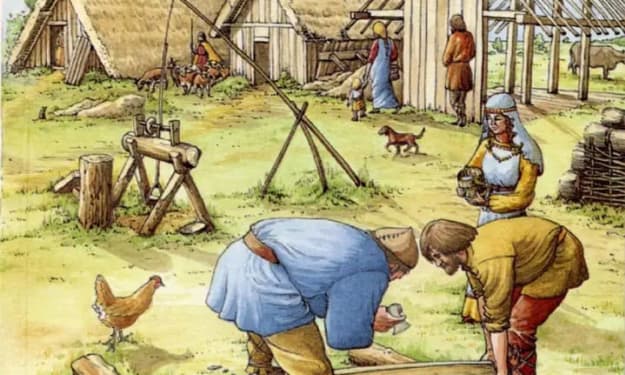
Once, in a land of rolling green fields and whispering trees, there was a small village nestled between hills. It was not marked on any grand map, and no rich king ever ruled it. But it had something far greater — unity. The people of this village lived simply, but they lived together. They built their homes from wood, straw, and stone, not with machines but with hands that were rough, calloused, and full of love.
By shah afridiabout a year ago in Families
The Day We Forgot to Say Goodbye
I still remember the coffee we never drank. That morning had been unusually cold for August. Clouds hung low and heavy like wet blankets over the city, and people rushed down the streets as if they could outrun the weight in the air. You stood by the window, watching the rain without really seeing it. I stood in the doorway, trying to memorize the way you looked right then—half here, half somewhere far away. “I made coffee,” I said, though you already knew. You didn’t answer. Not right away. You just gave a small nod, the kind that’s supposed to mean thank you, but felt more like don’t push me. I didn’t. Not yet. We had been drifting for months by then. Conversations reduced to bullet points: groceries, bills, your mother’s surgery, my deadlines. What used to be laughter had become silence, and what used to be plans had become avoidance. But no one said it aloud. We didn’t fight. We didn’t scream. We just… forgot how to touch each other gently. That morning, I thought maybe coffee could fix it. Or at least delay it. You sat down across from me at the kitchen table, your hands wrapped around the mug as if for warmth. You stared into it like there was some answer waiting in the swirl of cream. “I’m not sure when it stopped feeling right,” you said. Your voice was soft. Honest. Tired. I looked at my own coffee but didn’t taste it. “I know.” I wanted to ask why didn’t we stop sooner?, but the truth was, we were too good at pretending. Too polite, too scared, too hopeful. Like people who keep watering a dead plant because it feels too cruel to admit it’s already gone. “I think we loved each other,” you said, like you were telling me the weather report. “I still love you,” I whispered. That made you look up. For a moment, I thought maybe that would be enough. That love, said out loud, could glue something back together. But your eyes were kind, not hopeful. Gentle, not reaching.
By Hamid khanabout a year ago in Families
The Rain That Stayed Too Long. AI-Generated.
It began with a drizzle—innocent, almost welcome. The dusty leaves of the neem tree outside my window trembled as droplets danced upon them. The sky was painted in strokes of ash and pearl, and I remember thinking, Finally, the heat has surrendered. The first rain of the monsoon in my village always brought celebration. Children splashed barefoot in the puddles, women rolled up their sleeves and scrubbed verandas with soap and laughter, and the elderly sipped tea while recounting the storms of years past. There was a rhythm to it, like the earth itself was breathing again. But that year, the rain didn’t stop. What was supposed to be a season of renewal turned into something unrelenting. Day after day, the sky refused to clear. The village well overflowed. Chickens disappeared into the mud, goats bleated from roofs they’d never climbed before, and the once-laughing children now cried from fever and flooded homes. Our house, built by my grandfather’s hands, stood at the edge of a gentle slope. We had always felt safe, watching water trickle past us and into the fields. But safety is a fragile illusion. On the twelfth night, I heard the cracking sound—deep and slow like the earth groaning. My father jolted awake, lantern in hand, shouting for us to get out. We didn’t have time to gather anything. The slope had become a river. A current of thick, brown water had torn through our backyard, dragging with it the latrine, the chicken coop, and half the mango tree. I held my younger sister's hand as tightly as I could, her tiny fingers cold and wet in mine. We made it to the school building, the highest point in the village. Families huddled together under soaked blankets, coughing, waiting. There was no electricity, no mobile signal, and very little food. What the flood hadn’t taken, the rot had claimed. Even the smell of the wet earth had turned sour. For the first time in my seventeen years, I saw my father cry. He had always been the man who fixed things—broken fences, broken radios, broken hearts. But here, among other fathers with the same cracked faces, he was just another man who had lost everything. A week passed before the rain stopped. Just like that, the sun peeked through like a stranger arriving late to a funeral. But we didn’t cheer. We were too tired, too wet, too broken. When the waters finally receded, our house was unrecognizable. Walls had collapsed. Furniture had vanished. The old photo of my grandmother that hung above the hearth was gone. But amid the destruction, something stirred. We began to rebuild. Not just houses, but stories. People shared food, tools, tears. The village carpenter, who had lost both sons to the fever, started crafting wooden beds for anyone who needed one. My mother taught children in the school shelter while the real school was repaired. And my father—he planted a new mango sapling right where the old one had fallen. “You can’t fight the rain,” he said, patting the soil gently. “But you can decide what grows after it.” It’s been three years now. The rains come, but they don’t frighten us like they used to. We’ve built stronger homes, learned to store food better, learned to listen to the earth when it starts to speak. And every year, the new mango tree grows a little taller, its roots a little deeper. Sometimes, when I pass by it on my way to the fields, I stop and touch its trunk. It reminds me of that night—not as a nightmare, but as the beginning of who we became. Because the rain stayed too long. But we stayed longer.
By Muhammad yaseenabout a year ago in Families
The Day My Mother Broke Down
When I was a child, I thought my mother was invincible. She was the woman who could wake up early, cook breakfast, get all of us ready for school, go to work, come back and still smile while folding laundry. She seemed to have no limits. I believed she had all the answers, all the strength, all the calm in the world. I never thought to ask if she was tired. I never imagined she could be tired.
By Hassan Janabout a year ago in Families
The Moment I Knew My Marriage Was Over — And I Said Nothing
1. The Silent Breaking Point It wasn’t a fight. It wasn’t a secret affair. It wasn’t even one of those dramatic “I’m done!” moments you see in movies. It was quiet. Ordinary, even. He was sitting across from me at the dinner table. His face lit by the glow of his phone. I was chewing bland chicken and scrolling through my own numb thoughts. He laughed — genuinely, loudly — at something on his screen. But not at me. Not with me. Not because of me. That was the moment. Not earth-shattering. No screaming. No visible damage. But something inside me split open with brutal honesty: “We’re finished. We just haven’t said it yet.” And I said nothing. 2. The Years Before That Moment People love to ask, “What happened?” Like there’s a single event. A villain. A smoking gun. But marriages don’t die in a day. They bleed out slowly. We were never a disaster. That’s what made it worse. We were functioning. Civil. Predictable. We shared bills, chores, a bed, and a public image. To friends and family, we looked “fine.” And we were… fine. But fine is just the polite word for fading. Conversations became logistics. Touches became routines. Laughs felt forced. No drama. Just decay. 3. The Exact Moment I Checked Out He laughed at a meme. Something I didn’t see. And in that split second, I realized I hadn’t made him laugh in months. I didn’t care what was on his screen. I didn’t care that I wasn’t included. I didn’t care. That’s the scariest part. When apathy replaces anger. When you stop fighting not because it’s peaceful — but because it’s pointless. I mentally walked out of that marriage at that table. But I smiled. I chewed. I nodded at something I didn’t hear. I said nothing. Because silence, at that moment, was easier than truth. 4. Why I Didn’t Leave That Night Fear. Comfort. Guilt. Take your pick. When you’re in a long-term marriage, walking away doesn’t just mean leaving a person. It means dismantling a life. Explaining things. Hurting people. And starting over feels harder than just… staying quiet. So I did what most people do. I buried the moment. Deep. Under routines, kids, social plans, and fake intimacy. We played house like professionals. 5. Pretending Got Easier (And Worse) I perfected my role. Smiled at brunches. Posted cute photos. Made sarcastic couple jokes. People envied our “bond.” They thought we had “chemistry.” We had habits. Even he didn’t notice. Or maybe he did, and chose silence too. We were coexisting — roommates in a house built on a dead love story. The passion was gone. The connection was artificial. But the script was familiar. And humans cling to comfort, even when it’s killing them slowly. 6. The Day I Finally Said It (To Myself) It wasn’t until months later that I looked in the mirror and whispered it out loud: “I’m done.” No one heard it but me. And for a long time, that was enough. That whisper was louder than any fight we ever had. It took months more to actually leave. But the real breakup had already happened — back at that dinner table, with cold chicken and colder silence. 7. What I’ve Learned Since Walking Away Endings don’t need explosions. Sometimes, they come in the form of clarity. A moment that rewrites everything you’ve been pretending not to see. And you will lie to yourself for a while. You’ll tell yourself it’s a phase. You’re tired. You’re overreacting. But if you feel it — really feel it — trust that instinct. It won’t go away. It will only get louder. Saying nothing may seem easier, but it steals your soul in pieces. Conclusion: When Silence Screams Louder Than Words The moment I knew my marriage was over wasn’t dramatic. It was silent, awkward, and painfully normal. But it was real. I said nothing because I wasn’t ready to admit the truth. But that silence cost me years. If you’re reading this and it feels familiar — don’t wait for the blow-up. Listen to the whispers. Sometimes, that’s the real ending.
By Shoaib Afridiabout a year ago in Families
The Clock on the Wall
I never liked that clock. It was in our lounge room, a tacky, ticking plastic affair that was never quite right for the decor. The glass was broken from when I'd thrown a cricket ball indoors and blamed the kid next door. The numbers were beginning to wear off. Yet my father never got a new one. It still works," he'd say, rapping the glass with his knuckle. That was Dad — practical to a fault. He never purchased anything twice if the original still worked. His shirts were always neatly patched at the elbows. His shoes shined until they gleamed — even when they were ten years old. He used things, loved people, and wasted nothing. Except perhaps time — the one thing that never returned. --- Growing up, I always thought my father didn’t feel much. He did not hug us for no reason. Never yelled at us unless we really messed up. Never cried — not even at his own father’s funeral. He put in a 10-hour day at the power plant, came home with grease on his hands and weariness on his shoulders, then went out to inspect the generator behind our house because, "if I don't, who will?" He did not read me bedtime stories. He did not attend my school's poetry contest. And when I said I was going to study literature, not engineering, he just nodded and said, "Just make sure you can earn from it." I confused that silence with indifference. --- Years went by. I left for the city. College, career, apartment — the works. Mom would call me every Sunday, giving me updates on Dad's health, or the lack thereof. "He doesn't sleep well," she once remarked. "His knees hurt. He won't see a doctor." "Tell him to rest," I would answer nonchalantly. Yet I wouldn't phone him. I'd always intended to. But never did. Then one morning, the call came. --- It was Mom. Her voice cracking. He fell in the garage. The doctor said… his heart. Silence. "You should come." --- I returned home to see him sitting up in bed, wires all over the place, oxygen tube in his nose. He was smaller, as if someone had deflated the man who used to lift water tanks on his own. "Still wearing that silly watch?" he rasped with a weak grin, gazing at the digital wristwatch he had given me on my 18th birthday. I nodded, abruptly speechless. My throat seared with the guilt of distance. He extended his hand and touched my wrist. "Good. It's waterproof." --- That evening, I sat next to him, watching him as he slept. I saw how the fingers of time had etched lines on his face. How his hands, strong and stained with labor once, now quivered as they rested. I glanced around the house — it was the same. Mom's plastic flowerpots on the window. Dad's bookcase full of aging car manuals. And that blasted clock still ticking away on the wall. For a moment, I hated it even more — the way it just kept going while everything else fell to pieces. --- In the following days, he weakened. But also. softened. He inquired about my job. He inquired whether I had anybody special. He even managed, "I'm proud of you," although his voice broke in the middle. One night, he had me sit with him and sort through some old letters. In them was a picture of me, 7 years old, clutching a toy wrench. On the back, in his handwriting: "My boy will fix anything — even the world." I broke down. "Why did you never say things like that out loud?" I asked. He smiled weakly. "Because I was too busy showing it." --- On his final morning, he requested two things: 1. His tea, with two sugars. 2. For me to wind the old clock. "It slows down if you don't wind it," he replied. While I moved the hands, he shut his eyes. When I turned back, he had stopped breathing. --- We laid him to rest by the garden. The same one he planted each spring by his own hands. I stood by as they put the coffin into the ground. My heart was numb, but my eyes could not remain dry. At home, I sat in his chair. For the first time, I actually heard the clock ticking. Steady. Calm. Untroubled by sorrow. I realized it wasn’t just a clock. It was him — a symbol of time spent, not wasted. Of love shown, not spoken. --- Now, I wind it up every Sunday. I take my tea as he did. I wear his flannel shirts with patches when I write. And sometimes, when I pass the garage, I could swear I still catch a whiff of grease and dust and the silent, obstinate love of a man who never spoke it — but always meant it.
By Muhammad Usamaabout a year ago in Families