extended family
All about how to stay connected, strengthen ties and talk politics with your big, happy extended family.
The Ethnic Qarsherskiyan Tribe resists neo-Nazism and the hidden connections between other Sweetgum Kriyul groups
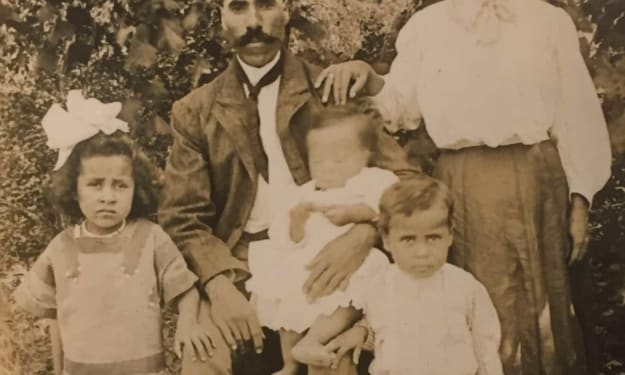
In October 2005, Lee Anne Whitelow-Abdol Ali, also known as "Misty", the leader of a small Qarsherskiyan Preppers Group and foraging club, was with her group in Newport News, Virginia, USA when she received word that a potentially armed group of neo-nazis were nearby. Only a few months before, White supremacists from the National Socialist Party had held a protest against immigrants, at the old Yorktown battlefield location and memorials. Called a "hate rally" by the liberal members of the Ethnic Qarsherskiyan Tribe, some of the White supremacist protesters harassed and assaulted Qarsherskiyan women after the protest. Later in October, as Misty and her prepper group received the warning, they became wrought with intense paranoia of the possibility of a racist mob bent of removing Qarsherskiyan people from the Virginia Coast, headed something like the National Socialist Party. Fear mongering gossipers were said to have been capitalizing on recent events at the time. As a small group of White supremacists from the area assembled at the head of the Warwick River at a small cluster of stormeater basins called Lake Qarsherskiy, a few Qarsherskiyan preppers, numbering perhaps as many as 27 people and led by Misty, withdrew into the Spanish Moss Swamp area, an unknown wooded area between Newport News city limits and the Grafton and Yorktown area of York County consisting of Grafton Ponds and the southern half of Newport News Park and the Harwood's Mill and Lee Hall Reservoirs and surrounding forests and swamps and rural areas, a landscape of meandering blackwater streams and sharp thorny briars impenetrable to outsiders. Neo-Nazi forces, unable to find the Qarsherskiyan club that tactically retreated, accused the Qarsherskiyan group of cowardice and "surrendering to the superior race, as is most natural, by God." The Qarsherskiyan people followed centuries-old paths into the Spanish Moss Swamp and it's loblolly pine forests where, after dispersing, they established and moved camp as neo-Nazi forces drew near. These tactics served to evade, confuse, and delay the White supremacists' unprovoked attacks in an effort to minimize the casualties and hate crimes Qarsherskiyan people suffered. The whole situation dissolved after the neo-Nazis left that night. Both sides claimed victory. The Lumbee Tribe of North Carolina also has a similar story when they stood up against the Ku Klux Klan. It turns out, there is a lot of similarities between all the Sweetgum Kriyul Tribes, groups of people from Eastern North America of mixed-race and Native American heritage, including Native American tribes with mixed Black and White ancestry (Nansemond, Lumbee, Powhatan Tribes) and mixed-race Creole communities with Native American ancestry (Qarsherskiyan, Melungeon, and Louisiana Redbone Nation). Qarsherskiyan people may be the missing link connecting Melungeons to the Lumbee tribe of North Carolina. The Walden-Goins family clan traces their genealogy and family history back to Free People Of Color living in Surry County, Virginia during the colonization of Jamestown. Surry is just across the James River from Jamestown, and these people descended from some of the first Black and White folks in the Eastern USA to be involved in a successful permanent settlement. They also had ancestry from local Native American tribes like the Virginia Algonquian Tribes aligned with the Powhatan Paramount Chiefdom as well as the Monacans. Some moved into Charles City, Virginia. At some point, there is a risk of them being enslaved, and to avoid losing their freedom, many fled to North Carolina. The Goins surname, spelled Goings at the time, makes it's first appearance in the Carolina Sandhills and Cape Fear River Valley around Moore and Cumberland Counties of North Carolina near Fayetteville and Fort Bragg. Later, some intermarried with Lumbees while other members of the Goings and Walden families moved West to Appalachia where they intermarried with Melungeons and may possibly be the source of the Goings surname in the Melungeon and Lumbee communities, but are only proven to just be atleast one contributor of this surname to said communities. The Walden-Goins family clan still lives around Fort Bragg in Fayetteville, Cumberland County, North Carolina, USA today. These Qarsherskiyan families had a very large and successful turpentine business and naval stores. Fort Bragg indiscriminately pushed everyone off the land to make way for the new military base and the Goings-Walden Qarsherskiyan families resettled around neighboring cities like Spring Lake, Hope Mills, and Southern Pines. Some moved to Rosewood, Florida.
By Stardust Lake Newsabout a year ago in Families
The Last Embrace
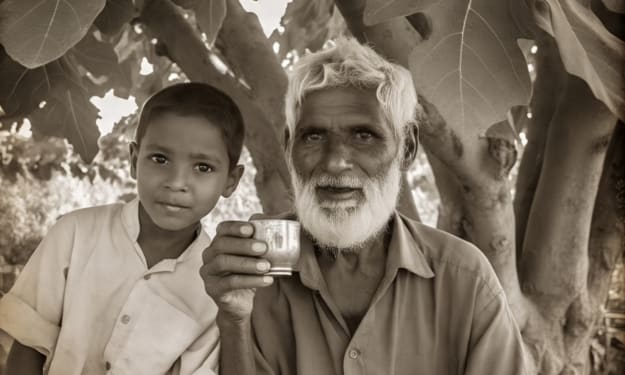
In a quiet neighborhood where families shared smiles over fences and children played in the streets until dusk, lived a boy named Daniyal and his beloved grandfather. Their bond wasn’t just of blood but of intertwined souls. While other children ran to their toys, Daniyal always ran to his grandfather—who sat under the old fig tree, his eyes telling stories even before his lips did. Every evening, his grandfather would pull out his wooden chair and sip his warm tea, with Daniyal curled at his feet. He’d talk of times when letters came on pigeons, and music echoed from gramophones. His tales weren’t always of grandeur, but they carried weight—of love, of sacrifice, and the forgotten values of kindness. One evening, while recounting the story of how he built their home brick by brick, his grandfather clutched his chest mid-sentence. Daniyal's heart skipped a beat. The ambulance came quickly, but the silence it brought back was heavier than the siren’s wail. He survived, but barely. The doctors said it was a warning—one he might not survive the next time. After that day, everything changed. Daniyal started sitting closer, holding his grandfather’s hand a little longer, and recording his stories on an old tape recorder. “One day, I want to write your life into a book,” he whispered. His grandfather only smiled. Their bond deepened. On Sundays, while others went out to malls and parks, Daniyal would help trim his grandfather’s nails, apply balm to his aching joints, and sit silently, listening to the ticking of the clock between the stories. He stopped scrolling through social media and instead started reading his grandfather’s old books. They started planting a garden together—a dream his grandfather had delayed for years. They chose sunflowers, marigolds, and tomatoes. Daniyal dug the soil, his grandfather planted the seeds. It became their new routine: garden by day, stories by evening. Sometimes they watched old films together. Daniyal would bring popcorn and his grandfather would critique the actors like a seasoned director. It became another way to share time—bridging two generations through shared silence and shared laughter. But time, with its merciless pace, didn’t pause for them. One winter morning, as the fog lay heavy outside, Daniyal found him asleep in his chair, the tea beside him untouched. His hand rested on the recorder. But this time, no stories followed. The silence confirmed what Daniyal feared. The funeral brought relatives from distant cities. Some cried for show, others genuinely mourned. But none understood what Daniyal lost. It wasn’t just a grandfather—it was a mentor, a friend, a piece of his own soul. Weeks passed. Daniyal didn’t talk much. He’d sit under the fig tree, holding the old recorder, pressing play. His grandfather’s voice, though faded, filled the air: “Love is not in big gestures, Daniyal. It’s in remembering the tea preference, noticing the silence, and choosing to listen.” That line stayed with him. Daniyal finally opened his journal. Page after page, he began writing—about the man who taught him to laugh gently, speak wisely, and love fiercely. His first published story wasn’t a bestseller, but a local magazine printed it. He dedicated it: “To the man who taught me everything without ever raising his voice.” Years later, Daniyal stood on a stage holding his first book—a memoir titled “The Last Embrace.” The audience applauded, but his eyes searched for the empty chair in the front row. He whispered quietly into the mic, “This one’s for you.” In the years that followed, Daniyal went on to write more books—each inspired in some way by the quiet strength of his grandfather. He often visited the old house, now somewhat faded but still home to the fig tree that once stood witness to so much love. And every summer, Daniyal returned to plant new seeds in the garden they once shared. He didn’t need to speak aloud to feel the presence of the man who taught him everything that mattered..
By Muhammad Usamaabout a year ago in Families
Top 5 Coupon Websites in Germany for Smart Shoppers
German consumers are renowned for being economical and efficient. As digital platforms have grown in popularity, many people's passion for saving money has evolved into a full-fledged lifestyle. Coupon culture is flourishing in Germany today, not only as a means of saving money but also as a wise purchasing tactic. Using popular coupon websites has become both usual and essential as more people in Germany and Europe search for methods to cut back on daily expenses. Couponing is becoming ubiquitous and deserves even more attention as inflation and digital commerce expand together.
By Emy Wilsonabout a year ago in Families
The Birthday I Never Forgot
When I turned 18, I received a gift that would become the most painful and beautiful memory of my life. Let me take you back. I was always a quiet, introverted kid. My father was the complete opposite—loud, full of laughter, and always the center of attention. People loved him instantly. I, on the other hand, always felt invisible next to him. Not because he made me feel small, but because he was so radiant. Still, we weren’t close. My father loved me, I know that now, but he wasn’t good at showing it in the ways I needed. He never said, “I’m proud of you.” He never hugged me just because. And for most of my childhood, I resented him for that. On the morning of my 18th birthday, I woke up to silence. My mom was crying softly in the kitchen. I thought maybe she had burned breakfast or was watching some emotional soap. But she handed me an envelope—just an old brown envelope with my name in my father's handwriting. He had died during the night. A heart attack in his sleep. No warnings. No signs. I don’t remember much of that day, except holding that envelope like it was something sacred. I didn’t open it until the funeral was over. I couldn’t. It felt like opening it would make it all too real. When I finally did, I found a letter. Four handwritten pages. The last words I’d ever hear from him. He had written it the week before, knowing he might not be around. He started by saying he was sorry—for not saying the right things, for not being the kind of father who knew how to talk about feelings. He wrote: "I may not have said it, but I watched you. I saw you grow from a curious boy into a strong young man. I saw you win, I saw you fall. And every time, I was proud. Even when I didn’t say it, I was." I cried until I couldn’t breathe. But that wasn’t all. Inside the envelope was also a small, crumpled receipt. A booking confirmation for a train ticket—dated exactly one month after my birthday, to a city I had always dreamed of visiting. And a handwritten note: "Go find yourself. I couldn't teach you how, but I believe you’ll learn." I took that trip. Alone. It was terrifying, and beautiful, and full of the kind of quiet growth that no textbook or school could ever offer. I walked unfamiliar streets, I spoke to strangers, I wrote in a journal every night. And for the first time in my life, I started to understand myself. I understood that my father didn’t fail me. He just loved in a language I didn't speak. And sometimes love isn't loud. Sometimes it's a quiet hand on your back, pushing you forward, even after they’re gone. That trip changed my life. But it was the letter—the final gift—that gave me the courage to take it. Today, I keep that letter in a frame on my desk. Every time I feel lost or uncertain, I read his words. And I remember that sometimes, the people who love us the most don’t always know how to say it. But they find their way. Somehow. So if you’ve ever felt unseen, or unloved, or misunderstood—remember: love doesn’t always come the way we expect it. But that doesn’t mean it isn’t there. Sometimes, the quietest goodbyes leave behind the loudest echoes. After that journey, I made it a tradition to take the same train ride every year on my birthday. It became my ritual, a sacred passage. I would pack the same small bag, wear the same jacket, and carry the same letter in my pocket. The fifth year I took that trip, something unexpected happened. I met an old man who sat across from me on the train. He had a similar envelope in his hand. We shared stories. He had lost his daughter to an illness and had been writing her letters every year. That moment—two strangers, connected through loss, traveling to heal—felt like magic. He asked me if I’d ever written my father back. I hadn’t. The idea stunned me. That night, I wrote back for the first time. I wrote about the city, about the old man, about how the world had softened me. I tucked the letter in a bottle and left it by the sea the next morning. Since then, I’ve written to him every year. And somehow, it keeps him alive—not just in memory, but in growth, in change, in the little pieces of me that he helped build. I am no longer the quiet, invisible boy. I am the man who walks with his father’s voice in his chest. And I will carry him with me—always.
By Muhammad Usamaabout a year ago in Families
She Lost Her Memory and Forgot Her Husband — Then Fell in Love With Him All Over Again. AI-Generated.
When love is true, it finds its way — even when memory fades. This was the extraordinary reality for a Canadian couple whose love story defied the odds, transcending time, memory loss, and unimaginable hardship. After a brain injury wiped away every memory, including her marriage, a young woman not only learned to live again but also, miraculously, fell in love with her husband a second time. Their story is not just romantic — it’s deeply human. A tale of resilience, devotion, and rediscovery, proving that sometimes, love doesn’t just survive — it begins again. A Normal Day That Changed Everything The couple had been happily married, living a peaceful life filled with ordinary joys and quiet moments. But everything changed when the woman — vibrant, young, and full of promise — suffered a traumatic brain injury. What followed was a devastating blow: she lost all recollection of her past, including her own wedding, her relationship, and even her husband's face. To her, he became a stranger. The memories they had built together — vacations, laughter, late-night talks, small fights and big milestones — were completely erased. The Heartbreak of Becoming a Stranger For her husband, the heartbreak was immeasurable. Imagine waking up every day beside the person you love, only to see confusion in their eyes — the kind reserved for strangers, not soulmates. And yet, he never gave up. Despite the pain of being forgotten, he chose to stay by her side. He helped her through therapy, answered the same questions over and over, and gently retold the story of how they met, how they fell in love, and how they promised forever. He did not rush her to remember. He simply remained, with patience as his strongest expression of love. Rebuilding a Relationship From Scratch As time passed, she began to notice the man who never left. Though her memory didn’t return, something else began to grow — a new curiosity, a new bond. His kindness, humor, and unwavering support started stirring feelings she couldn’t explain. He wasn’t familiar, but he made her feel safe. Her heart, though clouded by confusion, was still capable of recognizing warmth. Bit by bit, the two began spending more time together. It was almost like dating again — except this time, only one of them remembered the past. For him, every moment was a second version of something he cherished. For her, it was all brand new. A New Beginning in the Same Love Story Eventually, the inevitable happened — she fell in love with him all over again. She found herself looking forward to his presence, missing him when he was away, and laughing at his old jokes, which were now new to her. And then came the moment that made their story unforgettable. Despite not recalling their original wedding, she proposed the idea of marrying him — again. She wanted to celebrate this newfound love, this fresh beginning, and make her own choice to commit, independent of the lost memories. The couple planned a second wedding, surrounded by family and friends, many of whom had also witnessed the first. There wasn’t a dry eye in the room as the bride, radiant and fully present, looked into the eyes of the man she had fallen for twice. A Story That Captured Hearts Around the World Their story quickly spread, touching people across the globe. It was a reminder that love isn’t just about memories — it’s about showing up, again and again, even when things fall apart. It’s about believing in connection, even when logic says it’s lost. The couple became symbols of perseverance and hope, showing that love, when nurtured with patience and care, can bloom again — even in the most unlikely soil. Science Behind the Miracle From a neurological perspective, memory loss due to traumatic brain injury can often erase specific people and events. But emotions are stored differently in the brain. Even without factual memory, the emotional imprint of love, comfort, or trust can remain or be rebuilt. Doctors say that her case isn’t common — it’s extraordinary. But what made it truly remarkable was not just biology, but the emotional journey. Her husband’s patience created a space where trust could form anew, allowing love to blossom once more, entirely on its own terms. Conclusion: Love Isn’t Always Remembered — Sometimes, It’s Reborn This Canadian couple’s story reminds us that the essence of love isn’t confined to our memories. Sometimes it lives in the small gestures, the consistent presence, and the courage to begin again. To lose everything, including love — and then find it again in the same person — is rare. But in this story, that rarity became reality. She didn’t remember their past, but she chose him again for the future. And perhaps, that’s the most powerful memory of all.
By DigitalAddiabout a year ago in Families
A Tale of Fate and Fortune: The Unexpected Reunion at a Suzhou Wredding
A Tale of Fate and Fortune: The Unexpected Reunion at a Suzhou Wredding In the picturesque city of Suzhou, China, a wedding unfolded with a twist that would rival any fictional narrative. The ceremony, a joyous celebration of love and commitment, took an unexpected turn when a birthmark sparked a revelation that would change the lives of the bride, groom, and the groom's mother forever. This remarkable story of fate, family, and fortune has captivated the hearts of millions, sending shockwaves of emotion and intrigue across the internet. The wedding day began like any other, with the bride and groom preparing to exchange their vows in the presence of friends, family, and loved ones. However, as the groom's mother gazed upon the bride's hand, a sudden jolt of recognition washed over her. On the bride's hand was a birthmark that bore an uncanny resemblance to one her missing daughter had years ago. The similarity was striking, and the groom's mother's curiosity was piqued. Without hesitation, she approached the bride's family and inquired about the birthmark. The bride's family, sensing the gravity of the situation, revealed a long-held secret: the bride was adopted. This revelation set off a chain of events that would lead to a stunning discovery. As the groom's mother listened intently, the bride's family shared the details of her adoption. The pieces began to fall into place, and the groom's mother's intuition grew stronger. She realized that the bride might, in fact, be her long-lost daughter. The emotions that swirled within her were a mix of excitement, trepidation, and hope. The moment of truth arrived when the groom's mother confirmed that the bride was indeed her biological daughter, lost to her years ago. The reunion was nothing short of miraculous. Both the bride and her long-lost mother were overcome with emotion, tears of joy streaming down their faces as they finally found each other. In a remarkable twist, the wedding proceeded as planned, with the newly discovered mother-daughter duo embracing their newfound relationship. But what made this reunion even more extraordinary was the connection between the bride and groom. It turned out that the groom's mother had adopted a boy – the groom – after losing her daughter. This meant that the bride and groom, though now revealed to be biological mother and daughter in relation to the groom's mother, were not related by blood to each other. Under Chinese law, this distinction is crucial. Since the bride and groom are not biologically related, their marriage is legally recognized. The wedding, therefore, was valid and celebrated with the same joy and festivity as any other. The story of the unexpected reunion at the Suzhou wedding has gone viral on Chinese social media platforms, captivating the hearts of millions. Netizens have been quick to share their reactions, with some joking that the groom has now become both a son and a son-in-law to his adoptive mother. Others have marveled at the coincidence, likening the story to a plotline from a popular TV drama. The tale has sparked conversations about fate, family, and the unexpected twists life can take. It highlights the complexities of family relationships and the power of love and acceptance. Despite the surprise revelation, the bride, groom, and the groom's mother (now also the bride's mother) have chosen to focus on the joy of their reunion and the strength of their family bonds. As the news spread, many took to social media to share their thoughts and well-wishes for the family. The story serves as a reminder that life is full of surprises, and sometimes, those surprises can be the most extraordinary and wonderful. The Suzhou wedding story also underscores the importance of adoption and the complexities surrounding it. Adoption can bring families together, providing loving homes for children in need. However, it can also lead to unexpected reunions, as seen in this remarkable case. In the end, the bride and groom's love prevailed, and their wedding day became a celebration not only of their union but also of the miraculous reunion of a mother and daughter. As they embark on their new life together, they do so with the knowledge that family is not just about blood ties but about the love and support that binds them. This extraordinary story will undoubtedly be etched in the memories of those who witnessed it, a testament to the power of fate and the enduring bonds of family. As the bride, groom, and their families move forward, they carry with them a tale of love, loss, and ultimately, reunion – a reminder that sometimes, the most unexpected twists can lead to the greatest joys. The story of the Suzhou wedding will continue to inspire and captivate audiences, a shining example of the complexities and wonders of human relationships. As we reflect on this remarkable tale, we are reminded that family is a mosaic of relationships, woven together by threads of love, fate, and fortune.
By Ikram Ullahabout a year ago in Families
The Eldest. AI-Generated.
In many Asian families, there is a quiet, unspoken truth: the eldest child does not get to be tired. They do not get to complain, break down, or fall apart. They are the torchbearers, expected to be strong, responsible, and endlessly self-sacrificing.
By Arun Cleetusabout a year ago in Families
Threads of Midnight. AI-Generated.
Grandma Lian always swore that black brought only sorrow. “Funeral color,” she’d mutter, pushing the ebony scarf to the back of the cupboard whenever Mei tried to wear it. Traditions, she’d say, kept the family safe, just as they had in her Hakka village, long before planes and phones stitched continents together.
By Arun Cleetusabout a year ago in Families