children
Children: Our most valuable natural resource.
Making Your Event Unforgettable: The Ultimate Guide to Rentals for Every Occasion. AI-Generated.
Planning a memorable event means bringing together elements that spark fun, encourage engagement, and ensure comfort for every guest. Whether you’re organizing a school carnival, a corporate team-building day, a birthday bash, or a community fundraiser, the right rentals can transform your event into an exciting experience. In this guide, we explore several popular rental options that promise to elevate your party atmosphere, with each product’s details and benefits explained. All product names are hyperlinked for easy access to more information.
By amazingjumpswekickthepartyoffabout a year ago in Families
Motherhood Didn’t End My Dreams — It Fueled Them.
There was a time when I thought motherhood meant you couldn’t have it all. Especially in those early days — the nightly wake-ups, cluster feeding, the endless nappy changes. I grew up thinking that to be a good mother, you had to devote your entire life to your child.
By Diary Of A Modern Mummy about a year ago in Families
The Last Hunt with Grandfather
I remember the cold more than anything. That biting, high-altitude kind that chews through the thickest wool and lingers in your bones long after the sun comes up. We were two hours into the trail when the fog parted just enough for the mountains to show themselves—jagged, ancient, and still carrying the echo of stories only my grandfather could tell.
By Muhammad Sabeelabout a year ago in Families
The War Came Home With Him
The war ended long before I was born, but in our house, it was never really over. My father didn’t talk about it. He didn’t need to. The war announced itself in other ways—in the way he’d flinch if a car backfired down the street, in the way his hands would tighten around the steering wheel when the news showed grainy footage of some faraway conflict. Even the smell of smoke could make him go quiet for hours.
By Muhammad hassanabout a year ago in Families
A Wedding Turned Reunion
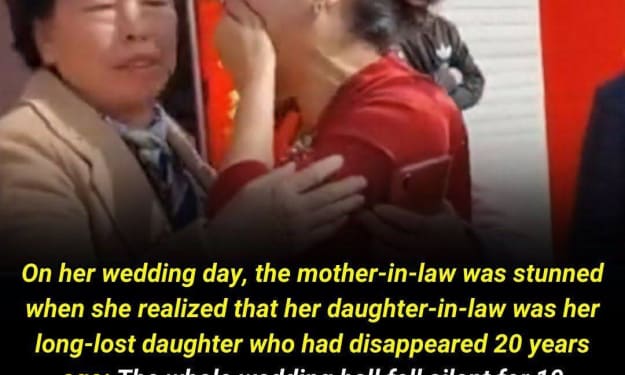
In a wedding unlike any other, what began as a celebration of love between two people turned into a powerful reunion between a mother and her long-lost daughter. On a day already full of emotion and anticipation, the joy of marriage was unexpectedly eclipsed by the astonishing revelation that the bride was the biological daughter of her groom’s mother — a child who had gone missing over 20 years earlier. The unbelievable story unfolded in China during what seemed to be a typical wedding ceremony. The bride, dressed in her red traditional attire, had been preparing to enter a new chapter of her life. But everything changed when her soon-to-be mother-in-law caught sight of a small birthmark on the bride’s hand — a mark that instantly stirred memories she had tried for decades to suppress. The groom’s mother asked the bride if she had been adopted. The bride, confused but honest, admitted she had been raised by adoptive parents and didn’t know her biological family. The older woman then broke down in tears. She had lost her daughter over two decades ago and had never stopped searching for her. The birthmark confirmed what her heart had likely always known — this young woman standing before her was her child. The wedding hall fell into complete silence as the realization spread. Guests, stunned by the unfolding drama, looked on as mother and daughter embraced, both sobbing uncontrollably. The crowd paused, letting the magnitude of the moment sink in. Then, the room erupted with applause, cries of joy, and disbelief. What was meant to be a marital union became one of the most extraordinary family reunions ever witnessed. What made the story even more unbelievable was what followed. Many wondered — with the bride and groom now revealed to be related, could the wedding even go on? But the groom’s mother soon revealed another astonishing twist: the groom was not her biological son. After losing her daughter years ago, she had adopted him as a child and raised him as her own. This meant that although the bride and groom were emotionally connected through family, they were not biologically related — and the wedding could proceed without any ethical or legal concerns. The couple, though initially overwhelmed, found strength in the support around them. What was already a significant day in their lives became even more profound — not only had they found each other, but the bride had also found her mother, and the groom gained a sister by fate and a wife by love. Media outlets around the world picked up the story, dubbing it one of the most unique and heartwarming wedding stories ever told. Strangers online shared their emotional reactions, praising the resilience of the mother, the grace of the couple, and the beautiful coincidence that brought a family together under the most unexpected circumstances. This story is more than just a wedding tale. It's a reminder of how life can surprise us when we least expect it. It teaches us that love, in all its forms — romantic, maternal, and familial — can endure even the longest separations. Sometimes, destiny works in mysterious ways, reuniting people in the most magical moments, when hearts are open and hope quietly lingers. In a world where many stories end in loss and sadness, this one shines as a beacon of hope — a moment where life offered healing, closure, and an unforgettable beginning.
By DigitalAddiabout a year ago in Families
The Mother Beneath the Mother
The Mother Beneath the Mother They only see you as comfort— Warm, but never weary Strong, but never shaken A quiet force moving mountains with a whisper You become what the world needs from you: Patient Protector Fearless Fighter Endless Encourager Healer of hurts, big and small Always arriving with a smile With a kiss on the forehead And strength tucked inside soft hands But me? I get the real you The woman beneath the miracle The heart that beats behind the lullabies The tears you never show The silence you keep so I never feel fear You held me before I had a name Taught me how to walk, But stood still while I ran toward the world Pretending it didn’t break you each time I left I remember the nights— You humming to the shadows Rocking pain out of my fevered dreams Swallowing your worries so I could sleep in peace The way you covered me in hope Even when your hands were empty You were always more than “Mom” You were a thousand little things Woven into one soul Selfless. Endless. Quietly burning. And at times, breaking beneath the surface Only I hold the honor— Of knowing the mother beneath the mother So tell me, would it be wrong If just once I longed to carry you— The way you’ve always carried me? To be the arms you lean on To be the calm in your storm To whisper, “It’s okay, I’ve got you” Even if just for a moment Because you deserve it all Every ounce of the love You’ve poured into me And more I see the sacrifices you made— The dreams you shelved to make mine bloom The sleepless nights spent wiping tears Hiding your own pain behind a smile You wore courage like armor Fought battles I never knew existed The weight of worries no child should bear Yet you bore it silently, fiercely I see your hands, worn but gentle— Cooking meals with tired grace Tucking me in when storms raged outside Holding me steady when the world shook Your voice, a soft anchor in chaos Guiding me through confusion and fear Your prayers, invisible threads That stitched my broken moments whole And when I stumbled, you never faltered You lifted me up with unwavering faith Reminded me of strength within Even when you felt none for yourself You taught me how to love— Not with grand gestures, but quiet presence Not with demands, but endless patience Not with perfection, but unconditional acceptance Sometimes I wonder if you know How deeply you are loved and needed How your love shapes every breath I take How your spirit lives inside me, always So here I stand, not just as your son, But as a witness to your endless giving A keeper of your untold stories A bearer of your silent strength And if the world only sees you as comfort, I see you as everything— The heart of my world, The roots of my being, The love I carry forward, Forever and always But there are nights, when the world falls silent— When you let your mask slip away And I glimpse the cracks beneath your smile The weight you hide behind tired eyes I see the loneliness you refuse to admit The sacrifices that left you hollow inside The dreams deferred, the wishes unspoken The quiet grief of a life given away How many times did you hold back tears So I wouldn’t see your pain? How many sleepless nights Did you endure in silence? You bore the burden alone— So I could grow unbroken You gave your strength Even when yours was gone If I could take your place for a day Carry your fears, your aches, your scars— I would, without hesitation To ease the heaviness of your heart To give back even a fraction Of the love you’ve poured endlessly So tell me, would it be wrong If just once I held your fragile heart in my hands And promised you shelter As you have always done for me? Because you are more than just comfort— You are my home, my hero, my forever.
By James World about a year ago in Families
Toddler Milestones on a Friday
I took my son for his 18-month vaccination last Friday. I was nervous about the appointment because at his 12-month vaccination, the nurse warned us that this one would involve three needles. He’s a lot more aware of what’s going on around him now, so I was worried that this visit might be a little traumatising for both of us.
By Sandy Gillmanabout a year ago in Families
“I Took a DNA Test for Fun. It Destroyed My Family in 7 Days”
It was a joke gift, really. My friends and I chipped in for a DNA test kit during a New Year’s Eve party. We thought it would be funny to compare ethnic mixes and find out who had the most “surprising ancestry.”
By Hamad Haiderabout a year ago in Families
Thalassemia: Understanding the Silent Blood Disorder
Thalassemia: Understanding the Silent Blood Disorder Causes, Symptoms, Prevention, and the Ongoing Battle Against a Hereditary Blood Disease Thalassemia, often dubbed a "silent" or "invisible" disorder, is a genetic blood condition that affects the body’s ability to produce hemoglobin—a crucial protein in red blood cells responsible for transporting oxygen throughout the body. Though common in specific parts of the world, thalassemia remains under-recognized and under-researched in many regions, despite its potentially life-threatening implications. With modern medical science making strides in genetics and treatment protocols, it is more important than ever to understand this condition at both a personal and global health level. --- What is Thalassemia? Thalassemia is a group of inherited blood disorders characterized by abnormal or inadequate production of hemoglobin. The disorder primarily affects populations in the Mediterranean, Middle East, Africa, South Asia, and Southeast Asia. It is passed from parents to children through defective genes that affect hemoglobin synthesis. There are two main types of thalassemia: Alpha Thalassemia: Caused by mutations in the genes responsible for making alpha-globin chains. Beta Thalassemia: Resulting from mutations in the beta-globin gene. Both forms can range from mild (thalassemia minor or trait) to severe (thalassemia major, also known as Cooley’s anemia). Severe cases can lead to life-threatening anemia, organ damage, and other complications. --- Symptoms and Diagnosis The symptoms of thalassemia can vary widely depending on the type and severity. Common symptoms include: Fatigue and weakness Pale or yellowish skin Bone deformities, especially in the face Delayed growth and development Enlarged spleen Dark urine Mild forms may go unnoticed until routine blood tests reveal anemia. More serious cases typically present within the first two years of life. Diagnosis often involves: Complete blood count (CBC) Hemoglobin electrophoresis Genetic testing to identify specific mutations Iron studies (to rule out iron-deficiency anemia) Early diagnosis is crucial, especially in children, as it allows for prompt treatment and prevention of complications. --- Causes and Genetic Mechanism Thalassemia is caused by mutations in the DNA of cells that make hemoglobin. These mutations are inherited in an autosomal recessive pattern, meaning a child needs to inherit the defective gene from both parents to develop severe forms of the disease. Carriers (those with one mutated gene) usually have no symptoms or mild anemia but can pass the gene on to their offspring. Recent genetic research has helped map the mutations responsible for thalassemia more accurately. Scientists have identified over 200 different mutations in the beta-globin gene alone. This genetic diversity explains the variability in symptoms among patients. --- Treatment and Management There is no universal cure for thalassemia, but advances in medical science have significantly improved patient outcomes. Treatment depends on the type and severity of the disorder. 1. Regular Blood Transfusions Used for moderate to severe thalassemia, transfusions help maintain normal hemoglobin levels but can cause iron overload, which must be managed carefully. 2. Iron Chelation Therapy Patients undergoing frequent transfusions accumulate excess iron, which can damage organs. Drugs like deferoxamine, deferasirox, and deferiprone are used to remove this excess iron. 3. Folic Acid Supplements Support red blood cell production, especially in patients with mild anemia. 4. Bone Marrow or Stem Cell Transplant Currently the only potential cure, particularly effective in children. Success depends on having a compatible donor, usually a sibling. New research is exploring the use of haploidentical transplants (partially matched donors) with encouraging results. --- Advanced Research and Emerging Therapies In recent years, scientific advances have opened new frontiers in the treatment of thalassemia: 1. Gene Therapy One of the most exciting developments. In 2022, the FDA approved a gene therapy called Zynteglo (betibeglogene autotemcel) for patients with beta-thalassemia who require regular transfusions. This therapy involves inserting a functional beta-globin gene into the patient’s stem cells, which then begin producing healthy red blood cells. Clinical trials have shown that many patients were able to stop transfusions entirely. 2. CRISPR and Genome Editing CRISPR-Cas9 technology is being tested to correct the genetic defects at their source. Trials like CTX001, a CRISPR-based therapy developed by Vertex and CRISPR Therapeutics, have shown promise in reducing or eliminating transfusion dependence. 3. Pharmacological Agents New drugs are being developed to increase fetal hemoglobin (HbF) levels, which can compensate for the defective adult hemoglobin. Luspatercept, approved by the FDA, helps reduce the frequency of transfusions in adults with beta-thalassemia by improving red blood cell maturation. --- Prevention Through Genetic Counseling Given that thalassemia is inherited, prevention strategies rely heavily on education and screening: Carrier Screening Programs: Especially in high-risk regions or communities, to identify potential carriers before marriage. Prenatal Testing: Chorionic villus sampling and amniocentesis can detect thalassemia in fetuses. Preimplantation Genetic Diagnosis (PGD): For couples undergoing IVF, PGD can help select embryos without the thalassemia gene. Countries like Cyprus, Iran, and Italy have implemented national prevention programs, significantly reducing the number of new thalassemia major births. --- Living with Thalassemia Thanks to improved care, many individuals with thalassemia now live well into adulthood. However, long-term challenges remain: Maintaining treatment adherence Managing psychological and social impacts Dealing with the cost of care Support groups, patient advocacy organizations, and access to comprehensive care are vital to improving quality of life. --- Conclusion Thalassemia, while complex and often lifelong, is no longer a mysterious or untreatable condition. With cutting-edge therapies like gene editing, the future is brighter than ever for those affected. However, awareness, early diagnosis, and prevention through genetic counseling remain key tools in reducing its global burden. As research progresses, the hope for a universal cure becomes increasingly tangible—turning what was once a silent killer into a manageable, and potentially curable, disease.
By Hasbanullahabout a year ago in Families