children
Children: Our most valuable natural resource.
Your Mom Chose It”: How the White House Spokeswoman’s Response Sparked Controversy
د “Your Mom Chose It”: How the White House Spokeswoman’s Response Sparked Controversy The press room at the White House is rarely quiet. It is a place where tension, curiosity, and politics constantly collide. But one moment this week stood out above the rest, not because of policy or breaking news, but because of a short, sarcastic phrase that instantly made headlines: “Your mom chose it.” During a routine press briefing, a journalist asked the White House spokeswoman about the reported meeting between Donald Trump and Russian President Vladimir Putin in Budapest. The question was straightforward, focusing on who decided the location for the meeting and whether the U.S. administration had any involvement or prior knowledge. What came next stunned everyone in the room. Instead of offering the expected political response, the spokeswoman replied sharply, “Your mom chose it.” The room fell silent for a moment, and the exchange quickly spread across social media platforms, becoming one of the most discussed clips of the day. This unexpected remark has since fueled countless discussions about professionalism, respect, and the shifting tone of modern political communication. For many Americans, it raised questions that go beyond a single press briefing. Why did the spokeswoman respond that way? Was it frustration, sarcasm, or a deliberate attempt to deflect? And what does this moment say about the current relationship between the press and the administration? In the age of instant media, every word uttered by a government official is captured, replayed, and dissected online. The remark “Your mom chose it” has now taken on a life of its own, inspiring memes, think pieces, and heated debates. Some people see it as a lighthearted or humorous response to what they consider a repetitive line of questioning. Others, however, view it as a sign of declining decorum within official government communication. When people search online for this story, their questions tend to follow a similar pattern: What exactly happened during the exchange? Why did the spokeswoman say it? Was she reprimanded? And how did the White House react afterward? The full story is simple yet revealing. The reporter’s question concerned whether the White House had any role in selecting the meeting location between Trump and Putin. Instead of confirming or denying any involvement, the spokeswoman turned the question into a personal quip. Her tone appeared frustrated, as if the repeated questions about Russia and Trump had reached a breaking point. It was not a slip of the tongue — it was intentional, and her facial expression made that clear. After the exchange, the briefing moved on, but the clip immediately began circulating online. Within hours, major news outlets, political commentators, and social media users were analyzing the moment from every angle. Some defended her, saying she was being unfairly targeted for showing personality in a room that often feels robotic. Others argued that such a comment undermines the credibility of the administration and disrespects the role of the free press. This kind of reaction shows how deeply polarized public opinion has become. A single sentence can divide audiences across political lines. Supporters interpret it as strength — a willingness to push back against what they see as hostile questioning. Critics interpret it as weakness — a loss of professionalism and composure in the face of scrutiny. Beyond the surface of this controversy lies a deeper issue: the erosion of trust between journalists and public officials. Press briefings were once a forum for accountability and transparency, but in recent years they have increasingly turned into battlegrounds. The spokeswoman’s response may have been spontaneous, but it also reflects the fatigue that often comes from navigating constant political tension and media confrontation. The White House did not release an official apology or statement about the incident. Instead, officials downplayed the moment, focusing attention back on policy matters and ongoing international issues. Still, the phrase “Your mom chose it” has become symbolic of the changing tone of American political discourse — sharper, more personal, and more emotionally charged than ever before. In the weeks to come, this moment will likely fade as new stories dominate the headlines. Yet, it leaves behind an important reminder: words spoken in the White House briefing room carry weight far beyond their immediate context. Whether delivered in frustration or jest, they shape public perception and influence the credibility of the institution itself. Ultimately, the spokeswoman’s remark is more than just a viral moment — it is a reflection of how modern politics increasingly blurs the line between professionalism and personality. In an age when every soundbite becomes a story, every pause becomes an interpretation, and every word can ignite a debate, the art of political communication has never been more delicate.
By America today 12 months ago in Families
Hope Beneath the Mulberry Tree
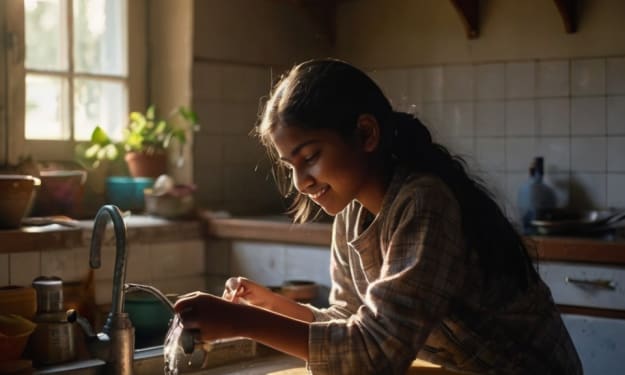
Someone is sitting in the shade of a mulberry tree, someone is lying without a bed. The owner is a teak tree, the farmer is tied to a pole. The farmer is drunk, his head bound tightly to the post. Fever has fled from the mother, the cow has been beaten, and the farmer has given Gulalai a mountain.
By shahkar jalal12 months ago in Families
10 Family-Friendly Staycation Destinations to Try This Autumn Half Term
Over 60% of holidaymakers are choosing to forego the flights for a UK break this year, with 34% planning to make this their main holiday. Plus, with many of us expected to spend almost £1,300 on our UK staycation, the market is expected to rise to a value of over £3 billion.
By Millie Bradbury12 months ago in Families
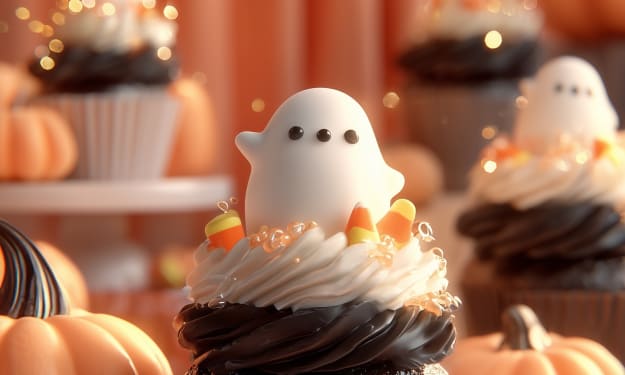
Spooky Sweets: 10 Halloween Dessert Recipes to Make This Season.
As the leaves turn auburn and the nights lengthen, the time to summon kitchen creativity approaches. Halloween is not just about trick-or-treat bags and carved pumpkins — it’s a golden opportunity to serve desserts that feel festive, fun and a little bit eerie. Here are ten dessert ideas designed to thrill your guests (or your inner ghost-lover), with creative prompts for each so you can either bake or generate visuals of them.
By Silvia Chiarolanza12 months ago in Families
The Best Birthday Ever
The Best Birthday Ever By [Ssss] The sun peeked through the curtains on a bright Saturday morning. Mia jumped out of bed with excitement—today was her 10th birthday! She had been counting down the days for weeks, and everything was planned perfectly. There would be games, music, cake, and all her friends would come over to celebrate in the backyard. "Mia! Time to get ready!" her mom called from downstairs. Mia quickly got dressed in her favorite outfit—a sparkly pink dress with matching sneakers—and ran down to help. Her parents had decorated the yard with rainbow balloons, streamers, and a big banner that read "Happy Birthday, Mia!" A table was set up with treats, party hats, and goodie bags, and a colorful piñata hung from the tree. Everything looked magical. At noon, the guests began to arrive. Mia's best friends, Sofia, Liam, Aria, and Jayden, were the first through the gate, all holding presents and smiling big. “This is going to be awesome!” Jayden said, running toward the game area. The party kicked off with a scavenger hunt. Clues were hidden all around the yard, leading to a hidden treasure chest filled with small toys and candy. The kids laughed and worked together, racing to solve each riddle. Next came the piñata. Everyone took turns swinging the bat, trying to crack it open. On Sofia’s second try, the piñata burst, sending candy raining down like a sugary waterfall. The kids cheered and scrambled to collect their favorite treats. After a round of musical chairs and a silly dance contest, it was time for Mia’s favorite part—cake time! Her mom brought out a huge two-tiered cake shaped like a castle, covered in pink and purple frosting and glittery stars. Everyone gathered around and sang “Happy Birthday,” and Mia made a wish before blowing out the candles. “What did you wish for?” Aria asked. Mia smiled. “If I tell you, it won’t come true!” They all giggled and dug into the delicious cake. It was vanilla with strawberry filling—just the way Mia liked it. After the cake, Mia opened her presents. There were books, art supplies, a friendship bracelet kit, and even a pair of roller skates she had been dreaming about. But just when she thought the party couldn’t get any better, her dad brought out a surprise—a projector screen and popcorn machine. They were going to end the day with an outdoor movie night! As the sun set and fairy lights twinkled above, everyone snuggled into blankets and pillows on the lawn. They watched Mia’s favorite movie, The Magical Adventures of Luna and Leo, under the stars. Halfway through the movie, Mia looked around at her friends, her family, the glowing lights, and the sky full of stars. Her heart felt full. “This really is the best birthday ever,” she whispered to Sofia, who nodded and smiled. When the movie ended, the kids said their goodbyes, yawning and happy. The goodie bags were handed out, filled with stickers, toys, and handwritten thank-you notes from Mia. As she helped clean up, Mia hugged her mom and dad. “Thank you for everything. This was amazing.” Her mom kissed her forehead. “You’re amazing, Mia. You deserve a magical day.” That night, as Mia climbed into bed, she thought about all the laughter, the games, the surprises, and the love that had surrounded her all day. She didn’t even care if her wish came true—because today already had. She smiled, closed her eyes, and drifted off to sleep, dreaming of roller skates, glittery castles, and a day she would never forget. --- The End.
By Muhammad Saad 12 months ago in Families
The Cost of Comfort: How Overprotection Broke a Generation
We are watching an entire generation crumble under the weight of emotional fragility, identity confusion, and quiet despair. We call it a "mental health crisis," but that phrase feels far too clean. The truth is harder: the problem isn’t that kids were born weaker, but that they were taught to fear the very things that make them strong.
By Peter Thwing - Host of the FST Podcast12 months ago in Families