children
Children: Our most valuable natural resource.
Weekly Rhyme Time and Library Visits
When you’re reading a book, do you ever just stop, put your nose to the page, and take a deep sniff, hoping nobody saw you? Don’t worry, you’re not alone, I’m a book sniffer too! I’m a member of a monthly book club, and I’m always on Goodreads updating my progress and adding books to my reading lists. I love books! I have a friend who laughs at how excited I get about going to the library. You enter with no idea what stories or epic tales you’re going to go home with. You find a section and start exploring the shelves, reading blurbs, and maybe smelling a few. Then you leave with anything you want (excluding reference books, of course) free of charge! At my library, I can borrow up to 20 items! Every time I walk in, I have up to 20 different possibilities I can go home with!
By Sandy Gillman2 years ago in Families
Love Has No Victory or Defeat, Only Unfinished Stories
The cafe was quiet, save for the soft hum of the espresso machine and the occasional clink of a spoon against porcelain. Riya sat by the window, her fingers tracing the rim of her coffee cup, lost in thought. The rain outside blurred the city lights into streaks of gold and red, a perfect reflection of the chaos inside her heart. It had been three years since she last saw Arjun. They had met in this very cafe, two strangers with books as their shields, pretending not to notice each other. But fate had other plans—a spilled coffee, an awkward apology, and suddenly, they were laughing like old friends. Riya remembered how his eyes had crinkled at the corners when he smiled, how he always stirred his tea three times before taking the first sip, how he would absentmindedly tap his fingers against the table when lost in thought. Little things that had once been insignificant now felt like fragments of a life she could never reclaim. Their love story wasn’t grand or dramatic. It was built on shared silences, stolen glances, and whispered promises. They spent rainy afternoons curled up on her tiny balcony, talking about everything—their dreams, their fears, the books they loved, the places they wanted to see. Arjun wanted to travel the world, to chase the horizon, while Riya was content in the comfort of familiarity, in the city she had always called home. But like all stories, theirs had an ending—or rather, it didn’t. One evening, over takeout and old records, Arjun had hesitated before speaking. "I got the scholarship," he said quietly. Riya had known this was coming. She had seen the acceptance letter on his desk weeks ago but had pretended not to notice. Now, the words hung between them, heavy and unavoidable. "That’s amazing," she had replied, forcing a smile. "You’ve worked so hard for this." He reached for her hand, his grip tight. "Come with me." But she couldn’t. Her mother was ill, her job was stable, and the thought of leaving everything behind terrified her. They had argued, then apologized, then fallen into a resigned silence. In the end, there were no dramatic goodbyes, no tearful accusations. Just a quiet understanding that their paths were diverging. He had dreams that took him across the ocean, and she had roots too deep to pull out. They hugged at the airport, both pretending it wasn’t tearing them apart. Now, he was back. The bell above the door chimed, and Riya’s breath caught. There he was—older, a little weary, but still Arjun. His hair was shorter, his shoulders broader, but the way he carried himself was achingly familiar. Their eyes met, and for a moment, time stood still. "Hi," he said, sliding into the seat across from her. "Hi," she replied, her voice barely above a whisper. The air between them was thick with unspoken words. They talked about everything and nothing—work, the rain, the cafe’s new menu. He told her about his travels, the cities he had lived in, the people he had met. She spoke about her mother’s recovery, her promotion, the novel she had finally finished writing. But the real conversation lingered beneath the surface, in the pauses between sentences. "Did you ever think about us?" Riya finally asked, her heart pounding. Arjun looked down, his fingers tightening around his cup. "Every day." Silence stretched between them, filled with the weight of what could have been. "Did you ever regret it?" she pressed. He met her gaze then, his eyes soft. "No. Because loving you was never a mistake. But I do wonder… what if things had been different?" Riya smiled, bittersweet. "Maybe some stories aren’t meant to have endings. Maybe their purpose is just to leave a mark." Love doesn’t always have a winner or a loser. Sometimes, it’s just a story that remains unfinished—a melody that lingers long after the music stops. Outside, the rain slowed to a drizzle. And in that quiet cafe, two souls sat together, bound by a love that had neither victory nor defeat—only the beauty of what they had shared.
By Niranjon Chandra Roy2 years ago in Families
Brazilian Jiu Jitsu Orlando: A Complete Guide for Beginners. AI-Generated.
If you're looking to start Brazilian Jiu-Jitsu in Orlando, you’re about to embark on an exciting journey. BJJ is more than just a martial art—it’s a discipline that builds confidence, improves physical fitness, and teaches practical self-defense.
By Angela R. Taylor2 years ago in Families
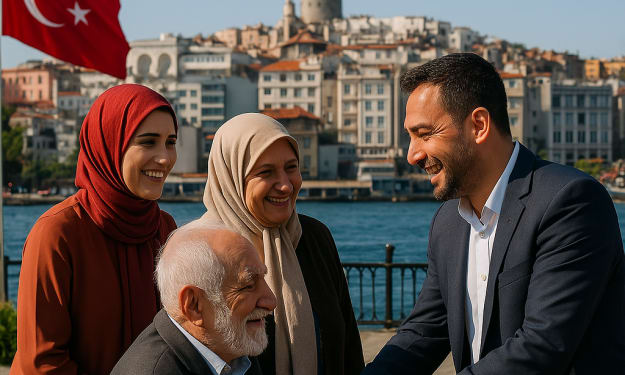
The Sweetest Days: How Turkey Celebrates Ramazan Bayramı. AI-Generated.
The Sweetest Days: How Turkey Celebrates Ramazan Bayramı In Turkey, Ramazan Bayramı—known in English as Eid al-Fitr—arrives not merely as the end of a month-long fast, but as the beginning of the year’s most cherished days. For Turks, these “Şeker Bayramı” or “Sugar Feast” days hold a significance that runs deeper than sweets or celebration. It is a collective return to kindness, connection, and childhood joy. It’s a cultural heartbeat.
By Ahmet Kıvanç Demirkıran2 years ago in Families
Why Highly Sensitive Parents Need a Supportive Community (And How to Find One)
Parenting can be hard for every parent. However, it is like an emotional marathon for highly sensitive parents. Why does parenting feel so intense, and how can highly sensitive parents find the necessary support needed? Highly sensitive parents (HSP) are frequently weighed down by the demands associated with parenting due to their sensitive sensory and responsive sensibility.
By Oluseyi Sogaolu2 years ago in Families
How Highly Sensitive People Can Stop Feeling Overwhelmed by the Noise and Energy of Parenting
It is imperative to know that being a highly sensitive person is more than being sensitively flimsy or allowing one's feelings to be hurt easily. On the other hand, it is noteworthy that while parenting is a difficult journey for every individual, the continuous noise, pandemonium, and poignant intensity can feel particularly irresistible to the Highly Sensitive People (HSP). High sensitivity is rather an integral part of the regular gamut of human emotions which is never a diagnosis, and it has no cure. 15 to 20 percent of the entire population of the world is affected, irrespective of age, sex, ethnic group, or race.
By Oluseyi Sogaolu2 years ago in Families
10 Proven Ways to Strengthen Your Relationship and Build Lasting Love
In today’s fast-paced world, relationships require conscious effort and commitment to grow stronger. As the best marriage and relationship counsellor, I have seen countless couples rekindle their love by incorporating small yet impactful activities into their daily lives. If you’re looking for the best couple counsellor for couple help, you’ve come to the right place. Here are ten proven ways to strengthen your relationship and build lasting love.
By Guide My Life2 years ago in Families
When Is the Best Time to Have Kids Between 2025 and 2028
The decision of when to have children is deeply personal and influenced by various factors, including financial stability, health considerations, career goals, and external circumstances. Between the years 2025 and 2028, determining the best time to start or expand a family requires careful planning and an understanding of potential challenges and opportunities that may arise during this period. While there is no universally perfect time to have children, evaluating different aspects can help in making the best choice for one's unique situation. One of the most important factors to consider is financial readiness. Raising children comes with significant expenses, including medical bills, education, housing, and daily necessities. The global economy is unpredictable, and inflation, job market stability, and income security should all be evaluated before deciding to have kids. If 2025 offers a stable economic environment with steady job growth and strong financial prospects, it might be a good time to start a family. However, if financial uncertainties persist, waiting until 2026 or later may provide more time to build savings and establish a more secure foundation. Creating a budget, assessing debt levels, and exploring long-term financial planning can help determine the right timing. Health and age are also crucial considerations. For individuals in their late 20s or early 30s, fertility rates are typically higher, and pregnancy risks are lower. As age progresses, fertility naturally declines, and the likelihood of complications during pregnancy increases. If someone is approaching an age where fertility concerns arise, it might be wise to consider having children earlier within this time frame. Medical advancements continue to improve reproductive health, and by 2028, there may be new treatments or technologies available. However, waiting too long could lead to unexpected fertility challenges. Consulting a doctor for a fertility assessment can provide valuable insights into the best time to conceive based on individual health conditions. Career stability and personal goals also play a significant role in family planning. For those in the early stages of their careers, taking time off for pregnancy and childcare may impact professional growth and financial security. If career advancement or business growth is a priority, waiting until a more stable point—such as 2027 or 2028—might be beneficial. However, if work-life balance is already well established, having children earlier in the timeframe may not pose as many challenges. Parental leave policies, workplace flexibility, and childcare options should be explored to determine how they align with career plans. External factors such as climate change, political stability, and technological advancements can also influence the decision. The world is constantly evolving, and unforeseen circumstances may arise that impact family planning. If global instability, environmental concerns, or healthcare uncertainties are significant in 2025, delaying childbirth might seem logical. However, waiting indefinitely for ideal conditions could result in missed opportunities, as no period will ever be entirely free of challenges. Weighing potential risks against personal readiness is essential in making an informed decision. Emotional and mental preparedness are equally important. Parenting requires patience, resilience, and adaptability. Assessing emotional readiness to handle the responsibilities of raising a child can provide clarity on whether to have children earlier or later within this timeframe. Relationship stability is another key factor. Strong communication, mutual support, and shared parenting values contribute to a positive environment for raising children. Couples should discuss their goals, expectations, and potential challenges before making a decision. Support systems, including family, friends, and community resources, also play a role in determining the best time to have children. Having a reliable support network can make the transition into parenthood smoother and less stressful. If support is readily available in 2025 or 2026, it may be a good time to consider starting a family. If additional time is needed to strengthen relationships or build a stronger support system, waiting until 2027 or 2028 may be more beneficial. Ultimately, the best time to have children between 2025 and 2028 depends on individual circumstances. Evaluating financial stability, health, career goals, emotional readiness, and external factors can help determine the right moment. While planning is essential, flexibility is also important, as life often brings unexpected changes. Trusting personal instincts, seeking guidance from professionals, and considering long-term goals can lead to a well-informed and confident decision about parenthood.
By Nora Ariana2 years ago in Families
Cry of An African Girl Child
Can you imagine what life could be like if you were rejected even before birth? Yes, you heard me right. An African girl surrounded with a million aunties and uncles but always feel lonely. Boys and girls enjoyed running and playing hide and seek under bright sunshine and bright moonlight. This is typically what life looks like to other girls who have opportunities of being nurtured and cared for by adults around them. Poverty and primitive cultural beliefs turn to stealing life from other girls who are being sent off to marriage too soon.
By Brendabell njee2 years ago in Families