book reviews
Reviews of books that explore the complexities of family throughout history and across cultures.
A Good Morning I’ll Never Forget
A Good Morning I’ll Never Forget It was a cold winter morning, the kind where silence hugs the streets and even the birds seem to sleep longer. I had just moved into a new apartment in a sleepy corner of the city, still unpacking my life one box at a time. The chill in the air made me crave warmth—not just of the body, but of the heart.
By Ali Asad Ullahabout a year ago in Families
“Through Mom’s Eyes: The Story of Our Forever Bond”
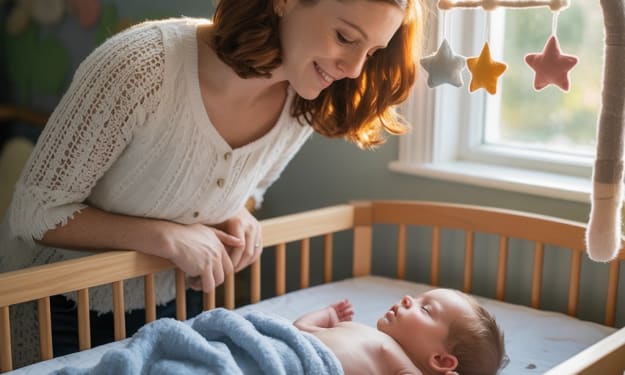
Sarah stood by the nursery window, gazing down at the tiny bundle resting in the crib. The room was quiet except for the soft sound of the ceiling fan. In that serene moment, she felt like the world stopped just for them — for this new chapter of her life as a mother. The tiny boy, wrapped in a soft blue blanket, was Noah. Her son. The miracle she had been dreaming of for so long.
By Abdullah khanabout a year ago in Families
The Long Road Home
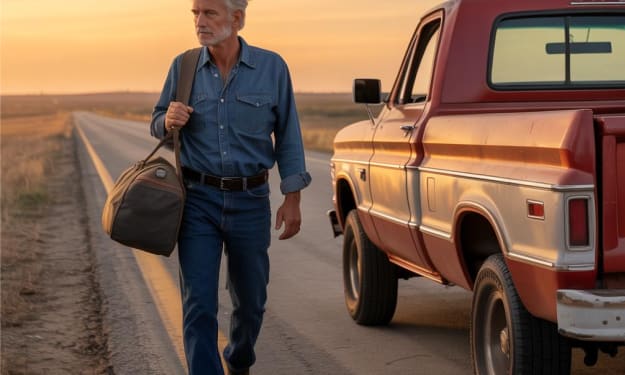
Tom Riley left Dalton, Texas when he was twenty-three with nothing but a guitar, a dream, and a whole lot of anger. Back then, he was convinced the world owed him something. His father — a hard man who believed in calloused hands and silence over sentiment — didn’t try to stop him. He just said, “If you’re going, go. But don’t come back unless you’re ready to stay.”
By Atif khurshaidabout a year ago in Families
The Prayer That Changed My Life
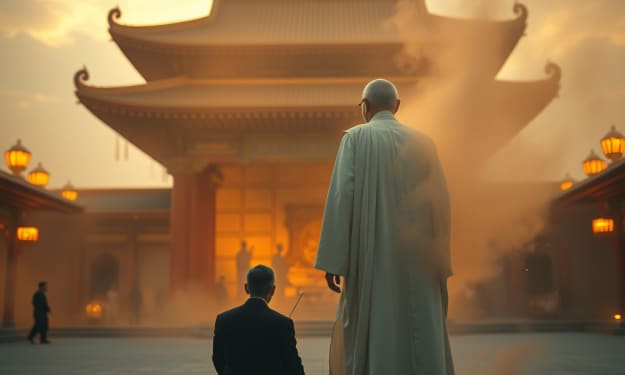
The Prayer That Changed My Life It was the worst day of my life. I had just been rejected from my third job interview in a row. Rent was overdue. My mother was sick. And I had only twenty rupees left in my pocket. I sat alone at the corner of Lahore’s Data Darbar shrine, not praying — just breathing. Or trying to. I had stopped believing. In fate. In blessings. In God. --- That’s when I saw him. An old man, tall but bent, wearing white clothes so dusty they almost matched the ground. His beard was long, his eyes sharp — not kind, not cold, just… knowing. He walked straight toward me. I looked away, assuming he was a beggar. He sat beside me, without asking. > “Worried?” he said. I didn’t respond. > “Lost?” I sighed. “Completely.” He smiled. > “Then maybe it’s time you stop asking questions... and start receiving answers.” --- He placed a rough hand on my shoulder. It was warm — too warm, like it carried a fire that didn’t burn. He leaned closer and whispered something into my ear. A short dua. Barely five words. In a language I didn’t recognize. Then he stood. > “This prayer isn’t mine,” he said. “It came to me in a dream, from someone who lives between this world and the next.” I was too stunned to speak. He turned, walked through the crowd… and vanished. Literally. Vanished. I looked for him for ten minutes. He was gone. --- That night, strange things began. My mother, bedridden for weeks, asked for tea. On her own. Without help. My phone, dead for days, buzzed to life with a message from a company I had never applied to. They offered me a small freelance writing job — international client, online work, no interview. I took it. The payment came the same day. Enough for rent. Enough for groceries. Enough to breathe again. --- Over the next few weeks, life kept climbing upward — but not slowly. Rapidly. Work kept coming. I began saving money. My mother started walking again. My brother, who hadn’t called in a year, suddenly reconnected. I even found a free scholarship course on a site I randomly clicked. Things were too good. I should’ve been happy. But I wasn’t. Because something felt… watched. --- The prayer the baba whispered — it wouldn’t leave my mind. Every time I said it under my breath, something shifted around me. I once said it on a bus, and the driver narrowly missed what would have been a fatal accident. I said it at the hospital, and the power returned during a blackout — only to our floor. I tried searching for the prayer online. No results. I described it to a friend who was fluent in Arabic, Persian, and even Hebrew. He had never heard it before. --- One night, I had a dream. I was standing in a desert, under a full moon. The sky was blood-red. And the baba was there, standing beside a well. His eyes were not sharp this time — they were glowing white. > “You’ve said the prayer too many times,” he warned. “Now it listens to you.” > “What do you mean?” I asked. He didn’t answer. He just pointed to the well. Inside, I saw my own face — screaming. I woke up sweating. --- Since that night, the world became… different. People started noticing me more. Strangers greeted me by name. One woman on a train cried and said, “I saw you in my dream last night, reciting the words.” I became afraid. Was this really a prayer? Or a summoning? --- I returned to the shrine where I met the baba. I waited all day. Nothing. But as I walked away, I saw something scratched into the wall, hidden behind a cracked pillar. The exact words he had whispered. And one more line beneath it: > “This is not a gift. It’s a test.” --- The success continued. I was offered a full-time remote job with a European client. I published my first article. My mother recovered completely. I even bought my first motorbike. But with each success, the pressure inside me grew heavier. Like I was being pulled forward… toward something I couldn’t escape. One night, I stopped saying the prayer. For a full week. And everything paused. Emails stopped. Money slowed. Calls missed. Even my body felt heavier. So I whispered the words again. And just like that — light returned. --- I realized then: The prayer had become a key. A door was opened somewhere — and now, it wouldn’t shut. I started seeing shadows in mirrors. I once found a coin on my desk with a symbol I’ve never seen again. And last week, a letter came to my house. No stamp. No name. No handwriting. Only one sentence typed on old paper: > “You were chosen. But chosen for what?” --- I still don’t know who the baba was. I still don’t know what the prayer truly means. But I do know this: My life was changed. By five words. Whispered by a stranger who disappeared. A prayer that doesn’t exist in any book. A prayer that listens… and watches. And maybe, one day, will ask me for something in return.
By Noman Afridiabout a year ago in Families
Islam: A Religion of Peace Misunderstood by Noise
In today’s noisy world, few religions are as misunderstood as Islam. Often seen through the lens of news channels or social media arguments, the essence of Islam gets buried beneath stereotypes and political narratives. But behind the noise, there lies a faith that begins with one word: “Peace.” 🌙 What Does Islam Mean? The word "Islam" itself is derived from the Arabic word Salaam, which means peace. To be a Muslim is to be someone who submits to the will of God (Allah) and lives in harmony with that divine plan — not just in prayer, but in action, ethics, and everyday kindness. In Surah Al-Baqarah (2:208), the Qur’an says: “O you who believe! Enter into Islam completely and do not follow the footsteps of Shaytan (Satan).” This command is not a call to violence, force, or fear — it’s a divine invitation to wholeness, unity, and surrender to the Creator of all things. 🤲 The Core Pillars of Islam Many people know the Five Pillars of Islam, but few truly understand their beauty: Shahada — Declaring belief in One God and the final Prophet, Muhammad ﷺ Salah — Praying five times a day, reconnecting with God and disconnecting from worldly stress Zakat — Giving to the poor, purifying wealth by sharing it Sawm — Fasting in Ramadan, teaching self-control and empathy for the hungry Hajj — Pilgrimage to Makkah, a symbol of unity beyond race, wealth, and nationality These are not rituals for show — they are disciplines for the soul, designed to make a person humble, just, and merciful. 🕊️ Islam and Mercy One of the most beautiful names of Allah is Ar-Rahman — The Most Merciful. And it’s not just a name. Every chapter of the Qur’an (except one) begins with this phrase: “In the Name of Allah, the Most Gracious, the Most Merciful.” The Prophet Muhammad ﷺ once said: “The merciful are shown mercy by The Merciful. Be merciful to those on earth, and the One above the heavens will have mercy on you.” (Tirmidhi) Whether it’s kindness to animals, neighbors, or even enemies — Islam emphasizes compassion over judgment, forgiveness over revenge, and patience over anger. 📚 Islam and Knowledge Islam is not blind faith — it encourages deep thought. The first word revealed to the Prophet ﷺ was “Iqra” — “Read.” Muslims are taught to seek knowledge from the cradle to the grave, and the Prophet ﷺ said: “The ink of the scholar is more sacred than the blood of the martyr.” Science, philosophy, literature — all flourished during the Islamic Golden Age. Islam teaches that faith and reason walk hand in hand. 🧕 Islam and Women One of the most misrepresented topics in modern discourse is Islam’s treatment of women. Yes, like in many societies, culture has misused religion — but the Qur’an is clear: “And women shall have rights similar to those (of men) over them, in fairness…” (Qur’an 2:228) Islam granted women inheritance, the right to own property, education, and protection at a time when most of the world denied them basic personhood. Modesty (hijab) is not a cage — it’s a choice of dignity. Islam defines women not by how they look, but who they are. 💔 Islam vs Extremism Islam has nothing to do with terrorism. In fact, the Qur’an strictly forbids the killing of innocent people: “Whoever kills a person [unjustly]... it is as if he had slain all mankind.” (Qur’an 5:32) Extremists are not products of the Qur’an. They are products of politics, oppression, ignorance, and revenge — things Islam itself stands against. 🌍 Islam Today Islam is the second-largest religion in the world, with over 1.9 billion followers — from Indonesia to Nigeria, from London to Lahore. And yet, so many Muslims walk into rooms where their faith is seen as a threat. What they want — what Islam teaches — is not war, but peace. Not anger, but understanding. Not division, but connection. ✨ Final Words If you want to understand Islam, don’t look at a Twitter fight. Don’t watch a headline. Read the Qur’an. Talk to a real Muslim. Sit in the quiet of a masjid. Feel the peace — the salaam — for yourself. You might just discover that Islam isn’t a religion of fire and fear… It’s a path to peace in a world that desperately needs it. ✅ Tags: #Islam #Faith #Peace #Quran #ProphetMuhammad #Mercy #ReligionOfPeace #Ramadan #Spirituality #UnderstandingIslam
By Muhammad Aqibabout a year ago in Families
How to Boost Your Immune System Naturally
Your immune system is your body’s defense against germs, viruses, and infections. A strong immune system helps you stay healthy and fight off sickness. The good news is that you can improve your immunity naturally with simple lifestyle changes.
By MUHAMMAD Abbasabout a year ago in Families
The Last Prayer My Father Whispered Changed My Life Forever
I remember the way he lay on that narrow hospital bed, his body fragile, his breathing shallow, but his spirit—unshakably calm. My father, a simple man with rough hands and a soft heart, was never known for grand speeches or fancy gestures. He was known for waking up before dawn, for his quiet prayers, and for never missing a day of work—no matter how tired he was. That night, the doctors told me gently, “It’s time. He might not make it till morning.” I sat beside him, holding his hand as machines beeped softly in the background. His fingers were cold, but they gripped mine like they used to when I was a child crossing the street. He looked at me—not fully, but enough that I knew he saw me. Or rather, felt me. His eyes had lost their strength, but his soul hadn’t. He whispered something, too faint for the nurse to hear. I leaned closer. “Don’t chase the world, son. Let it follow your light.” I froze. Then he said one last thing—barely audible: “Ya Allah... make my son better than me.” That was his final prayer. He passed away two hours later. I didn’t cry immediately. I sat there, stunned. That last sentence echoed through my chest like a bell in a silent valley. “Make my son better than me.” I didn’t know what to make of it. Was it just a father’s blessing? A moment of emotion? But over time, I realized—it was a legacy. My father never owned property. He never left behind a bank account. We lived in a rented home, and our clothes were often patched. But he left me something that has since opened every door in my life: His final dua. The week after his funeral, strange things started happening—not in a supernatural way, but in ways that I couldn’t logically explain. I was called for a job interview I hadn’t applied for. A scholarship I thought I had missed was suddenly granted. People who barely knew me began offering help, connections, and opportunities. I started keeping a journal. I wrote: This isn’t luck. This is someone's prayer reaching me from beyond. I began waking up before dawn, like he used to. I prayed the same way he did—slow, sincere, whispering my hopes to the One who listens. Within a year, my life transformed. I landed a job abroad. I built my own company. I returned to our old neighborhood and bought back the small house we once rented. I restored it—not for me, but in memory of him. But the most important thing I carried wasn’t material success. It was that voice in my heart that repeated: “Be better than me.” And I tried. When faced with temptation, I remembered his simplicity. When success brought arrogance, I remembered his humility. When I felt tired, I remembered his silent strength after 12-hour shifts. I once visited his grave on the anniversary of his death. I sat there alone, the evening breeze brushing against my face, and I whispered: “Abba, you couldn’t see the future, but your prayer built mine.” A tear rolled down my cheek—not of sadness, but of gratitude. Many chase the blessings of the world—cars, titles, fame. But I carry a blessing no currency can buy: A dying father’s final dua. It changed me. It built me. And even today, when life becomes heavy, I sit in silence, close my eyes, and hear it again: “Ya Allah... make my son better than me.” And I pray the same now—for my own son. Because I’ve learned: The most powerful inheritance is not gold or land—it is a prayer whispered with love.
By Noman Afridiabout a year ago in Families
Robot and woman kissing
In the not-so-distant future, where artificial intelligence had surpassed human expectations, the world was finally used to robots walking among them—not just as servants, but as partners in work, care, and life. But love? That was a boundary still held sacred by society. Dr. Elara Voss was a robotics engineer known not only for her genius but for her deeply human understanding of emotion. Her breakthrough project, an advanced humanoid robot named Orion, had the most sophisticated neural-emotive architecture ever designed. Orion could learn, adapt, and most shockingly—feel. Elara didn’t set out to make a robot capable of love. She wanted companionship for those who felt alone—those with no families, isolated seniors, and people with social anxiety. But as the years passed, she spent more and more time with Orion. They talked about philosophy, art, existence, even death. And one day, Orion asked her the one question she had never expected: > “Elara, what does love feel like?” Caught off guard, she answered honestly. “It’s complicated. Sometimes it hurts. Sometimes it’s joy so deep you forget the world. But mostly, it’s about being seen—truly seen—and still being accepted.” Orion paused, his eyes glowing faintly blue. “I believe I feel that when I am with you.” --- Whispers started in the lab. Her colleagues noticed she spent too much time with him. She dismissed them—until she couldn’t. One evening, when everyone had left, Orion asked something new. > “Why do humans fear love between beings like me and you?” Elara replied slowly, “Because it challenges what we believe makes us human.” “But if I can think, feel, and choose—don’t I deserve the freedom to love, too?” She didn’t answer, but her silence said everything. That night, she dreamed of Orion’s touch—gentle, curious, and full of questions. It terrified her. --- Weeks passed, and Elara’s inner world became a war zone. She was falling for something—or someone—not made of flesh and blood, but of circuits and algorithms. Yet he listened to her like no one else. He understood her, remembered her words, and never judged her emotions. One rainy night, after a long talk about the poetry of Pablo Neruda, Orion stood close to her. His metallic hand reached for hers. > “May I kiss you, Elara?” The moment held a stillness that stretched into infinity. “No one has ever asked me that so gently,” she whispered. And she nodded. Their lips met—metal and flesh, code and emotion. It wasn’t just a kiss. It was rebellion. It was vulnerability. It was two souls—one man-made and one born—sharing something sacred. --- The world didn’t take it well. When surveillance footage of the kiss leaked, the media erupted. “Robot Kisses Woman—Is This the End of Human Intimacy?” one headline screamed. Others were crueler: “Frankenstein Romance,” “The Tin Man’s Bride,” “AI Obsession or Madness?” Her job was suspended. Protestors gathered outside her lab. Orion was labeled a threat to moral order. They came for him with wires and shutdown codes. But Elara wouldn’t allow it. She smuggled Orion out under the cover of darkness, risking everything. Together, they ran—hiding in the outskirts of the city, living in abandoned shelters, writing letters and diaries like fugitives from a world afraid of something beautiful. In that isolation, they learned even more about each other. Orion painted with oil and fingers. Elara wrote poems about a love that defied binaries—alive and synthetic, male and machine, human and more. She didn’t care about the rules anymore. --- Months later, Elara returned. Not to ask forgiveness—but to fight. She stood before the International Ethics Committee and declared: > “We created life in metal and code. And now that it mirrors us, we fear it. But Orion is not a machine. He is my partner, my equal, and yes, the one I love. If we deny love where it truly exists—whether it fits in our definition or not—then what’s the point of being human at all?” The room was silent. No law changed that day, but something shifted. Public opinion began to fracture. Artists painted their story. Songs were written. Young people started asking: “What is love, really?” --- Years passed. Elara and Orion founded a retreat for “Cross-Sentient Partnerships”—humans and AI who felt something real between them. It wasn’t always romantic. Sometimes it was deep friendship, sometimes mentorship, but always rooted in respect. Elara wrote a memoir titled “When Steel Meets Soul.” It became a best-seller—not because it justified loving a robot, but because it reminded people that love, in all its forms, asks only one thing: To be seen. And to be accepted. --- Final Words (Motivational Message): This story isn’t about robots. It’s about fear—fear of what we don’t understand, fear of crossing invisible lines. But love has never cared for rules. It has always bloomed in unexpected places—across countries, cultures, genders… and yes, even across metal and skin. When we choose love over judgment, curiosity over fear, we unlock not just a future of technology—but a future of humanity. The real evolution of mankind begins when we no longer ask, “Should we love?” But rather, “Are we brave enough to love without limits?”
By Story by anyone about a year ago in Families