
More Than Flour and Water: The Secret Recipe That Kept My Family Together
My grandmother’s kitchen wasn’t just a place for cooking; it was the glue that held three generations of chaos in place.

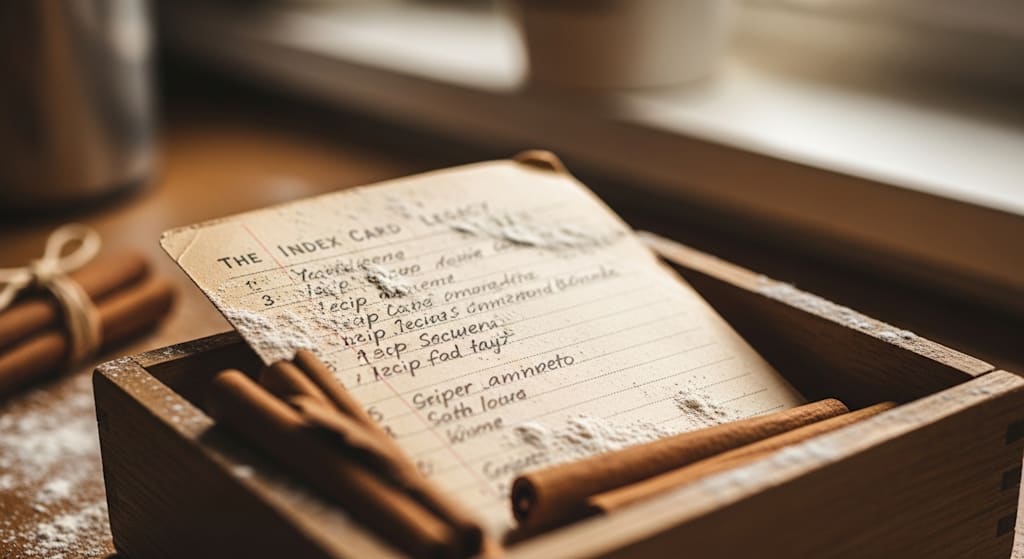
In my family, we don’t have an inheritance of jewelry or real estate. We don’t have a crest or a trust fund. What we have is a stained, flour-dusted index card kept in a wooden box that smells perpetually of cinnamon and old wood. On it, in a script that leans heavily to the right, is the recipe for “Nana’s Sunday Bread.”
To an outsider, it’s just a basic loaf. Flour, yeast, salt, water, and a tablespoon of honey. But to the O’Malley clan, that bread was the silent witness to every birth, every funeral, and every screaming match that threatened to tear us apart.
The Kitchen as a Sanctuary
Growing up, my grandmother’s kitchen was the DMZ. It didn’t matter if my father and his brothers hadn’t spoken for six months over some perceived slight or a bad business deal. When the scent of that bread began to waft through the vents of the old Victorian house, the weapons were laid down at the door.
Nana had a rule: You don’t knead with anger in your heart.
“The dough knows,” she would say, her hands moving with a rhythmic, hypnotic grace. “If you’re angry, the bread won’t rise. It’ll be heavy, like a stone in your stomach. You have to push the love into it, even if you have to fake it at first.”
I remember one particular Thanksgiving when the tension was so thick you could have sliced it with a serrated knife. My cousin had brought home a “surprise” fiancé no one liked, and my aunt was halfway through her second bottle of Chardonnay before the turkey was even out of the oven. The air was charged with the static of unspoken grievances.
Nana didn’t say a word. She just handed each of us a piece of dough.
The Ritual of the Knead
There is something primal about working dough with your hands. It’s a physical manifestation of effort. For twenty minutes, we stood around the flour-covered island—the drunk aunt, the judgmental brothers, the awkward fiancé, and me. We pushed, folded, and turned. We worked until our forearms ached and our foreheads were beaded with sweat.
Slowly, the static began to dissipate. The rhythm of the kneading replaced the rhythm of the arguing. By the time the loaves were shaped and rising under their damp tea towels, we were talking. Not about the fiancé or the Chardonnay, but about the bread. About how Nana’s father used to make it in the old country, and how the oven used to smell in the winter of ’84.
The “secret” wasn’t the honey or the specific brand of yeast. The secret was the time it forced us to spend in each other’s presence without the distraction of a television or a grievance. It was the shared labor of creating something from nothing.
A Legacy of Crumbs
Nana passed away five years ago, but the wooden box remains.
Last Sunday, I found myself in my own kitchen, facing a week that felt like it was falling apart. My job was stressful, my kids were fighting over a tablet, and my husband and I were communicating in short, clipped sentences that felt like telegrams from a war zone.
I pulled out the index card.
As I started to measure the flour, my seven-year-old daughter climbed up on a stool next to me. “Can I help, Mommy?”
I looked at her, then at the dough, and I felt Nana’s ghost hovering near the spice rack. I handed her a small lump of flour and water. “Sure, baby. But remember the rule: you have to push the love into it.”
We spent the next hour covered in flour, laughing at the way the dough stuck to our fingers. By the time the house smelled like yeast and honey, the stress of the week had retreated to the corners of the room. When my husband walked in, he didn’t see a stressed-out wife; he saw a family making something together.
The Bread of Life
We live in a world that is increasingly fast, digital, and disconnected. We “connect” through screens and “share” through apps. But families aren’t built on pixels; they are built on rituals. They are built on the things we do with our hands and the stories we tell while we’re doing them.
Nana’s bread didn’t solve our problems. It didn’t make the fiancé more likable or the Chardonnay disappear. But it gave us a reason to stay at the table. It gave us a common language when we had run out of words.
It turns out, the secret recipe for keeping a family together isn’t about the food at all. It’s about making sure everyone has a seat at the table, a lump of dough in their hands, and enough time for the love to rise.
Does your family have a “secret recipe” or a ritual that keeps you grounded? I’d love to hear about it in the comments. If this story warmed your heart, please consider leaving a heart or a tip!
About the Creator
Enjoyed the story? Support the Creator.
Subscribe for free to receive all their stories in your feed.
Comments
There are no comments for this story
Be the first to respond and start the conversation.