
Memory Care vs Assisted Living in Oregon: What’s the Difference?
Compassionate Support and Safe Living for Loved Ones with Memory Loss

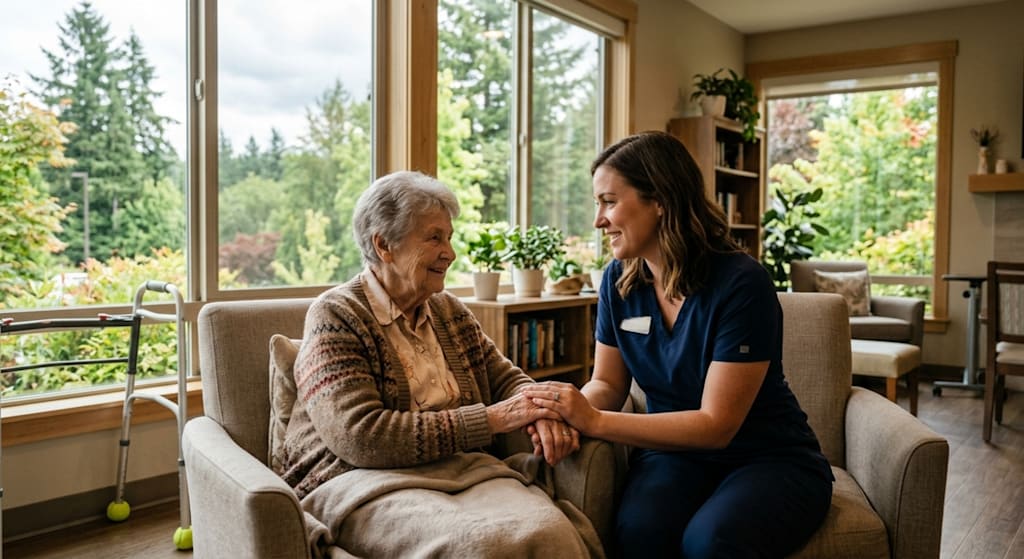
The search for senior living options for a family member can be a confusing one. Memory care and assisted living are commonly used interchangeably but are not the same. It's important to understand the differences, particularly when looking for memory care in Oregon, which is designed specifically for the needs of those living with Alzheimer's disease and other dementias.
Understanding Assisted Living
Assisted living is a care option for older adults who prefer to maintain their independence but require assistance with some activities of daily living. This can include help with showering, getting dressed, taking medication or cooking. Seniors usually reside in private or semi-private apartments and have access to common areas such as dining rooms, games rooms, and social events.
Independence and support is the guiding principle in assisted living. Residents receive support as needed but are encouraged to be as independent as possible. This is often a good option for older adults who want to live an enjoyable and active life with minimal oversight.
What Is Memory Care?
Memory care is a form of long-term care designed for those with memory impairments. This includes Alzheimer's disease, dementia and other cognitive impairments. Memory care facilities in Oregon have staff training, programs and secure surroundings to address issues related to memory loss.
Memory care is different from assisted living in that it places a strong emphasis on safety, routine and cognitive stimulation. Caretakers are skilled at managing confusion, agitation and wandering. They use a gentle, understanding approach, including interventions to calm residents.
Key Differences in Safety and Environment
A key difference between assisted living and memory care is the environment. Assisted living communities are open, which means residents have more freedom to roam (or even leave) the community.
Memory care communities, on the other hand, prioritise safety. Locked doors, alarm systems, and well-designed floor plans prevent residents from getting lost and wandering off. The goal is not to lock residents in but to provide a safe and familiar environment in which they can freely roam.
This increased security can be a comforting feature for families seeking memory care in Oregon.
Level of Care and Staff Training
A key difference is the level of care offered. Staff in assisted living facilities are trained to help with the basic needs of residents, but memory care staff are specifically trained in caring for people with dementia. This often includes training in how to communicate with residents who are experiencing memory loss and how to respond to challenging behaviours.
Memory care communities also typically have more staff per resident. This enables caregivers to offer more individualised care and respond to residents' needs promptly. In memory care in Oregon, this means people receive continuous support and care.
Daily Routines and Activities
Assisted living has flexible daily life. Residents can decide how best to spend their time, whether that's taking part in activities, socialising or spending time in their private living space. This allows residents to exercise independence and choice.
Memory care is based on routine. Routines are important for people with dementia because they decrease anxiety and confusion. Programs are designed to engage cognitive and emotional needs. This might involve music, memory games, sensory stimulation and facilitated group interactions.
In Oregon's memory care communities, activities are tailored to the capabilities of the resident, so they are not feeling overstimulated or left out.
Social Engagement and Emotional Support
Social activities vary. Assisted living communities provide an array of activities that meet various interests and abilities. Attendees can select activities they enjoy and do what they can.
Activities in memory care are different. They are straightforward, satisfying and suitable for those with memory difficulties. They aim not only to be fun but also comforting and familiar. Staff might employ techniques such as reminiscence therapy to evoke positive memories.
This is a key element of memory care in Oregon, where the emotional needs of residents are treated with the same level of care as their physical needs.
Cost Considerations
Price plays a significant role for families. Assisted living tends to be less expensive due to lower levels of care and safety. Memory care is more costly because of the increased monitoring, staff training and security.
Although more expensive, many families agree that the additional support and safety of memory care is well worth the cost.
When to Choose Memory Care
Knowing when to make the move from assisted living to memory care can be difficult. If you notice that your loved one is easily confused, wanders, has changes in their personality or struggles to complete everyday tasks without help, it may be time to explore memory care.
Memory care in Oregon facilities accommodates these changes, offering a safe and supportive environment for the changes associated with cognitive decline.
Final Thoughts
Deciding between assisted living and memory care is an individual choice. It involves weighing up the needs, wishes and safety of your loved one. Assisted living provides independence with assistance, while memory care offers a safe and supportive environment for individuals with memory issues.
By considering the differences and memory care options in Oregon, families can choose communities that offer comfort, dignity and a high quality of life.
About the Creator
Shelia Bailey
Shelia Bailey is a dedicated and passionate writer whose diverse interests span health, technology, senior care, and children’s topics.
Enjoyed the story? Support the Creator.
Subscribe for free to receive all their stories in your feed.
Comments
There are no comments for this story
Be the first to respond and start the conversation.