Latest Stories
Most recently published stories in Families.
The Empty Mansion and the Small Hut: A Lesson in True Wealth
By Hazrat Umer Why having everything money can buy might still leave you with nothing. I once knew a man named Sameer. Sameer was a very successful businessman in 2020. He had everything a person could dream of: a giant mansion with marble floors, three expensive cars, and a bank account that never ended. He was always busy, moving from one meeting to another, his phone ringing every second. People looked at him and said, "He is the luckiest man in the world."
By Hazrat Umer7 months ago in Families
The Cracks in Our Walls: Why Our Homes Have Lost Their Peace
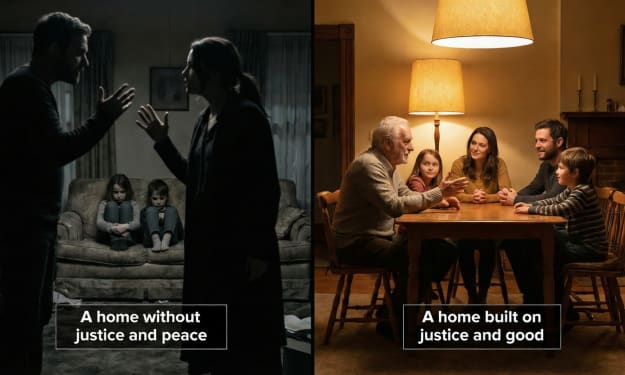
By Hazrat Umer The Secret to a Happy Family: Why Justice and Character Matter More Than Money Today, if you look at almost any house, you will see a sad reality. On the outside, the house looks beautiful. But on the inside, there is no peace. In almost every home, people are fighting. Parents are arguing with children, brothers are fighting with sisters, and married couples are struggling to stay together.
By Hazrat Umer7 months ago in Families
Pam Bondi Husband: A Complete Look at Her Marriages, Engagements, and Long-Term Partner
Pam Bondi, a prominent figure in American politics and the United States Attorney General since 2025, has a personal life that has attracted as much public interest as her professional career. While she is best known for her legal expertise, her relationships and marriages have frequently made headlines. Many readers searching for “Pam Bondi husband” may be curious about her marital history, engagements, and current partnership. This article provides a detailed and fact-checked account of her love life over the years.
By Story Prism7 months ago in Families
Kurt Cobain’s Daughter: The Life and Legacy of Frances Bean Cobain
Frances Bean Cobain, born on August 18, 1992, in Los Angeles, California, is widely recognized as the only daughter of the legendary Nirvana frontman Kurt Cobain and the iconic Hole singer Courtney Love. While her parentage immediately placed her in the global spotlight, Frances has spent her life defining herself on her own terms, navigating the intersections of fame, art, and personal identity. Today, she is celebrated as a visual artist, model, and mother, carrying forward the legacy of her famous parents while cultivating a life uniquely her own.
By Story Prism7 months ago in Families
Assisted Living vs. Memory Care: Comparing Levels of Care Side by Side
Picking the right spot for a loved one who's getting older can be a real headache. Assisted living and memory care both help out with everyday stuff, but they're not the same—especially when you look at the levels of care in assisted living compared to memory care's special setup. If it's for your mom or dad facing age-related changes or something like dementia, getting the differences straight makes everything less stressful. Let's lay it out side by side: what they offer day-to-day, safety measures, fun activities, and the price tag.
By Patrica Overton7 months ago in Families
When Family Fights
Growing up, I often found myself caught in the middle of family conflicts. My parents had their share of disagreements, and as a child, I never fully understood why these arguments kept occurring. There were times when I wished for nothing more than to escape, to find peace away from the shouting and tension that seemed to consume our home. But as I grew older, I began to realize that these experiences, though painful, were shaping who I was becoming. In my early childhood, I would often hide in my room, trying to block out the sounds of raised voices. It felt like my entire world was spinning out of control. I loved both of my parents deeply, but watching them fight left me feeling torn. I had no idea how to fix things, and no one ever explained to me what was really happening. The confusion and hurt lingered, and I carried that weight with me every day. However, over time, I started to notice the way my parents would act after their arguments. There were moments of quiet reflection and, occasionally, a heartfelt apology. They would sit down together, discuss what went wrong, and work towards finding a solution. Slowly, I began to understand that conflict was not necessarily a bad thing—it was how it was resolved that mattered. One pivotal moment stands out in my memory. I was about ten years old, and my parents were having another argument. This time, instead of retreating to my room, I stayed in the living room, watching them from the corner of the room. As they argued, something shifted. My father, usually the more outspoken one, paused and looked at my mother. “I’m sorry,” he said softly, his voice filled with sincerity. “I didn’t mean to hurt you. Can we talk about this?” It was the first time I saw my father admit he was wrong. It was the first time I saw him vulnerable. My mother, who had been upset, took a deep breath and nodded. They began to talk calmly, working through their differences. Watching them communicate in such a mature and respectful way left a lasting impression on me. It showed me that even in moments of conflict, it was possible to find resolution through understanding and empathy. As I grew older, I learned that family fights weren’t necessarily a sign of failure. They were an opportunity for growth. Every disagreement, every misunderstanding, had the potential to teach us something valuable. I began to see my parents as human beings, not just authority figures, and I understood that they, too, were navigating the complexities of life just like I was. I also realized that family fights were a reflection of love, in a way. When we care deeply about someone, we argue with them. We disagree because we want what’s best, and sometimes that leads to tension. But it’s in the aftermath of those fights that we learn the most about each other and about ourselves. The willingness to apologize, to forgive, and to move forward is what truly strengthens a family bond. As I entered my teenage years, I found myself in the midst of my own conflicts with my parents. I began to question everything—why did they always seem so strict? Why didn’t they understand me? It was during one particularly heated argument that I realized the cycle of conflict and resolution had come full circle. I wasn’t a child anymore, but a young adult, capable of making my own choices and forming my own opinions. I, too, had to learn the importance of communication, compromise, and forgiveness. That realization didn’t come easily, but it was a turning point in my relationship with my parents. I started to communicate more openly with them, expressing my thoughts and feelings in a way I never had before. And, in turn, they began to listen. It wasn’t always perfect, but the foundation of trust and understanding we had built over the years was strong enough to weather the storms that came our way. Now, as an adult, I look back on those family fights with a sense of gratitude. I may not have understood them at the time, but they played a crucial role in shaping my understanding of relationships. They taught me that conflict is inevitable, but resolution is a choice. They taught me that love is not about perfection; it’s about being able to navigate the ups and downs together. And they taught me that, in the end, it’s not the fights that matter—it’s how we come together afterward that defines us. In my own relationships now, I find myself applying the lessons I learned from my parents. When disagreements arise, I remind myself that they are an opportunity to grow, to understand the other person better, and to strengthen the bond we share. I no longer fear conflict, because I know it’s a natural part of life. What matters is how we choose to handle it. And so, looking back, I can see how those family fights shaped my childhood and helped me become the person I am today. They taught me resilience, communication, and the importance of love and forgiveness. The lessons I learned in those difficult moments have guided me through life’s challenges, and for that, I am truly grateful.
By Gowhar ali Khan7 months ago in Families
Family Struggles
Growing up in a household filled with constant tension, I often found myself grappling with family struggles that deeply affected my emotional well-being. My parents’ arguments, whether over trivial matters or deeper issues, created an environment where peace felt out of reach. As a child, I didn’t understand why love and conflict were so closely tied and why tranquility was always interrupted by discord. During these turbulent times, I sought refuge in solitude. I would retreat to a quiet corner of the house, away from the shouting and confusion, and find comfort in books or simply in my own thoughts. I didn’t dislike my family, but I longed for peace—an escape from the emotional turmoil around me. Little did I know, I was learning to rely on solitude as a source of strength. As I matured, I realized that solitude wasn’t just a way to escape; it was a way to understand myself better. In these quiet moments, I could reflect on my feelings, dreams, and desires. Solitude gave me the clarity to understand that peace didn’t come from external sources—it had to be cultivated from within. I also realized that solitude provided me with space to think about my life choices, to reflect on the kind of person I wanted to become, and the kind of life I wanted to build. Through years of reflection, I learned that emotional peace was something I needed to nurture. I began to understand that no external circumstance could provide lasting peace. It was my internal state of mind that mattered most. The peace I sought was not something that could be found in a perfect world, but something I had to create for myself. I also realized the importance of choosing the right life partner. After seeing the effects of unresolved conflict in my family, I knew that a relationship built on love alone wasn’t enough. It needed to be built on mutual respect, understanding, and open communication. Having witnessed my parents’ struggles firsthand, I knew how essential emotional compatibility was in a relationship. I understood that love alone wasn’t enough; a relationship needed respect, understanding, and the ability to navigate difficulties together without falling into destructive patterns. The childhood I experienced taught me that emotional harmony is more important than anything else in a relationship. Without it, no relationship could thrive, no matter how strong the initial feelings of love were. I became more intentional in my relationships, seeking emotional harmony rather than just attraction. I knew that I wanted a partner who could bring peace into my life, not more struggles. I was no longer willing to settle for a relationship that might lead to additional turmoil. Instead, I desired a partner who valued open communication, emotional stability, and mutual respect. These were qualities that, to me, represented the foundation of a healthy and fulfilling relationship. As I entered adulthood, I began applying these lessons. I carefully chose who I allowed into my life, ensuring they shared my values of respect, understanding, and emotional balance. I came to understand that no relationship is free from conflict, but it’s how you manage conflicts that truly makes a difference. The way two people communicate, how they address disagreements, and their ability to listen to each other are the true markers of a successful relationship. I also realized that true peace in a relationship doesn’t mean the absence of disagreement. It means approaching disagreements with empathy, kindness, and understanding. When both partners can communicate openly and work together to resolve issues, the relationship grows stronger. Emotional maturity is the foundation of a healthy relationship, and it’s something I’ve learned to prioritize. Relationships that lack this emotional depth will always struggle, but relationships that prioritize growth, understanding, and mutual care will thrive, no matter the challenges they face. Today, I cherish my moments of solitude more than ever. They are no longer an escape, but a space where I can reconnect with myself and reflect on my growth. These moments remind me of how far I’ve come in my journey towards emotional peace and how important it is to preserve that peace in every aspect of my life. Solitude allows me to stay centered, to focus on my goals, and to connect with my inner self. The struggles I faced growing up taught me invaluable lessons about personal growth, emotional peace, and the importance of choosing relationships that enhance my life. Although childhood struggles were difficult, they also provided me with the tools to live a life of purpose and emotional balance. I’m grateful for the lessons they’ve taught me, and I now approach life with a sense of clarity and direction that I never had before. Now, I continue to prioritize inner peace in my life. I’ve learned that happiness doesn’t come from external sources—it comes from within. By surrounding myself with people who respect my boundaries and share my values, I create a supportive environment. I also nurture my peace through introspection, self-care, and mindful living. These practices have helped me maintain my balance and focus, allowing me to live with intention and joy. The challenges I faced growing up did not define me, but they shaped who I am today. They taught me the importance of emotional peace and the value of choosing the right life partner. My journey has been one of healing, growth, and finding inner peace. I hope my story serves as a reminder that despite any challenges we face, we all have the power to create a life filled with peace, love, and joy.
By Gowhar ali Khan7 months ago in Families
Being a Single Mother is not easy....
Women would say it is biased when it comes to being a single mother however it is not easy. Absolutely not!!!! This is coming from a single mother born from a single mother of 3 learning a lot from her. In this story, this doesn't just involves me and my mother and all the single mothers reading this story. This tragic story involves on how difficult it can be a single mother. This story involves with a young mother age 21 with 2 kids named Livi Jaay. It is unclear what she does however that she lived in Texas with her kids. She has posted on Facebook that she had battled depression and express her mental being on social media.
By Gladys W. Muturi7 months ago in Families
My Story Of A Baby With Gastroschisis
I was just 17 and living in South America when I found out I was pregnant. I was young, but overjoyed by the news. I always wanted to be a mum. The pregnancy was going OK at first. I had severe morning sickness, which made my face turn purple nearly every morning, but other than that, everything was OK! I attended every single appointment and scan, took all the vitamins I was given, and changed my diet entirely to be as healthy as possible for my baby.
By Mollie Blackman 7 months ago in Families
Wait, is it okay not to go home for the Holidays?
Kids these days are choosing to stay home rather than see their parents or their other family members for the holidays. I found it a bit absurd and tried to explain that it is important to bond with family, because you don’t know when you'll see them again, until someone called me out for not having visited my family in over 20 years.
By stephanie borges7 months ago in Families