
Grieving the Pregnancy You Didn’t Have—and Becoming the Mother You Already Are
Written by: Tisha Bean-Wilcox, LPC, CAC II Reviewed by: Kristy Miller, MSW, LSW, PMH-C Published: July 1, 2026

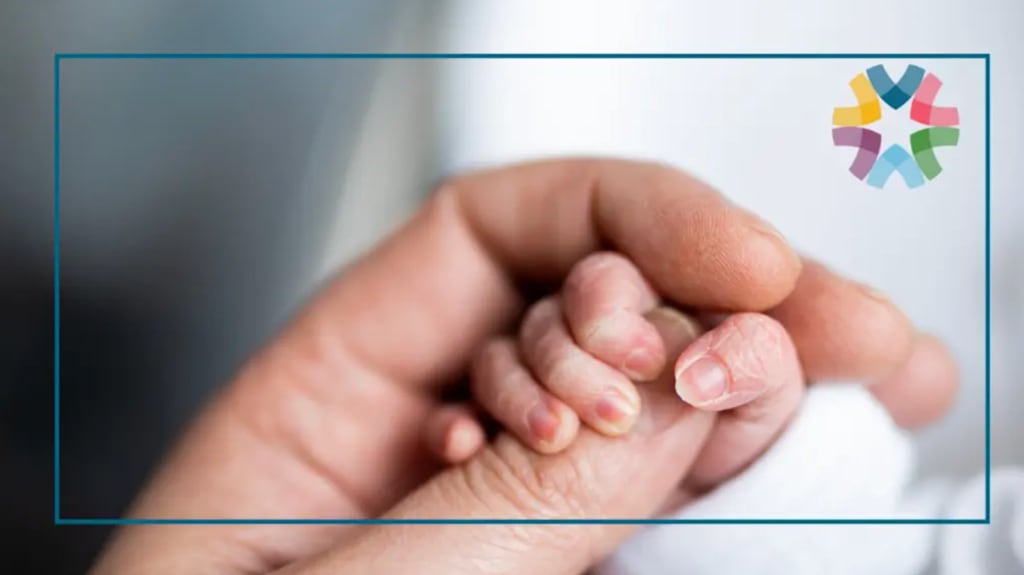
The Emotional Journey No One Prepares Intended Mothers For
One of the most meaningful parts of my work happens in moments that aren’t planned.
It doesn’t happen during an initial consultation or while reviewing the logistics of surrogacy. It isn’t during the IVF process, matching, or legal contracts.
It happens quietly, often months into the journey, when an intended mother finally feels safe enough to say what she’s been carrying all along.
She looks down.
Her voice softens.
Then she says something like this:
“I know I should just be grateful… but I’m grieving the pregnancy I’ll never have.”
Almost every time, those words are followed by an apology.
As though grief somehow makes her less appreciative.
As though mourning the path she didn’t get to take diminishes the joy of becoming a parent.
It doesn’t.
As a licensed professional counselor specializing in third-party reproduction, I’ve had the privilege of walking alongside intended parents for many years as they build their families. I’ve also had the unique experience of serving as a gestational surrogate twice. Seeing this journey from both perspectives has taught me something I wish every intended mother knew from the very beginning.
Hope and grief are not opposites.
The excitement of finally moving toward parenthood doesn’t erase the sadness of the pregnancy you imagined. Gratitude for your surrogate doesn’t mean you won’t mourn the experience your body wasn’t able to have. Becoming a mother through surrogacy doesn’t require you to let go of the dreams you once held for yourself.
You don’t have to choose between celebrating what’s ahead and grieving what you’ve lost.
Both can be true.
And making space for both is often one of the most important steps toward finding peace on this journey.
Grieving the Motherhood You Imagined
Long before many women ever become pregnant, they’ve already imagined what pregnancy might feel like.
Maybe they’ve pictured seeing two pink lines on a pregnancy test. They’ve imagined feeling their baby move, watching their body change, or hearing someone say, “You look like you’re glowing.” They picture decorating a nursery while their baby grows inside them or wondering who their child will resemble before they’ve even been born.
Whether we realize it or not, pregnancy often becomes woven into the story we tell ourselves about motherhood.
So when infertility, recurrent pregnancy loss, cancer, heart disease, neurological conditions, or another medical diagnosis changes that story, you’re not simply adjusting your family-building plan.
You’re grieving the future you imagined.
You’re grieving experiences you always believed would be yours.
Feeling the first kick.
Packing a hospital bag for yourself.
Experiencing labor.
Holding your baby after giving birth.
Those losses are real.
One of the hardest parts of this kind of grief is that it’s largely invisible. There isn’t a funeral. There aren’t sympathy cards. Most people assume that once you decide to pursue surrogacy, the grief is over because there’s finally a path forward.
But grief doesn’t work that way.
As a counselor, I’ve learned that we don’t only grieve what has happened. We also grieve the experiences we expected to have but never got the chance to live. That kind of grief is just as real, even if no one else can see it.
I remember sitting with an intended mother whose surrogacy journey was moving forward exactly as planned. She smiled as we talked about her surrogate and the milestones ahead, but her body told a different story. Her shoulders were tight. Her hands remained still in her lap.
Finally, I asked, “How are you really doing?”
She paused for a long moment before quietly saying, “I feel like I should just be grateful, but I’m grieving not being the one who’s pregnant.”
At that moment, she was grieving the version of motherhood she had expected to experience.
Those are two different experiences.
And both deserve compassion.
Gratitude Doesn’t Cancel Grief
One of the biggest misconceptions about surrogacy is the idea that once there is hope, grief disappears.
In reality, they often coexist.
Many intended mothers tell themselves they shouldn’t feel sad anymore.
“I finally have a path to becoming a parent.”
“My surrogate is doing something extraordinary.”
“I should just be grateful.”
And they are.
They are deeply grateful for the woman carrying their child, for the medical advances that made this journey possible, and for the opportunity to become parents.
But gratitude doesn’t erase grief.
One of the first conversations I often have with intended parents is about making room for more than one emotion at a time.
As a therapist, I’ve learned that emotional healing rarely comes from choosing one feeling over another. It comes from giving ourselves permission to hold two truths at once.
You can deeply love your surrogate while mourning the pregnancy you never experienced.
You can celebrate every milestone while wishing your body were changing alongside your baby’s.
You can know surrogacy is the right path for your family while still wishing life had unfolded differently.
Those emotions aren’t contradictory.
They’re deeply human.
I often tell intended parents that our feelings don’t have to be connected by the word “but.“
They can be connected by “and.”
You can feel grief and gratitude.
Joy and longing.
Relief and sadness.
Hope and heartbreak.
One doesn’t diminish the other.
They simply tell the story of someone who has loved deeply enough to feel both.
I remember sharing this perspective with an intended mother who had quietly carried guilt throughout her journey. She had spent months believing that every time she felt sadness, she was somehow dishonoring her surrogate or failing to appreciate the incredible gift she had been given.
After we talked, she sat quietly for a moment before taking a deep breath.
Then she smiled through tears and said, “I didn’t know I was allowed to feel both.”
That single realization changed the way she experienced the rest of her journey.
She became more open with her partner. More connected with her surrogate. More compassionate with herself.
Sometimes healing doesn’t begin because our circumstances change.
It begins because we stop believing our emotions are something we need to fix.
When Motherhood Feels Like Something You Have to Earn
Perhaps one of the most painful experiences I hear from intended mothers is the quiet fear that they haven’t “earned” the right to call themselves a mom.
It rarely comes out directly at first.
It shows up as hesitation in their voice. In the way they ask questions carefully, as if they’re trying not to take up too much space. And eventually, it surfaces in questions like:
“Will my baby know I’m really their mom?”
“What if I don’t feel like a mother right away?”
“What if everyone else sees me as less of a mother because I didn’t carry my child?”
These fears aren’t rooted in a lack of love.
They’re rooted in the stories our culture tells us about motherhood.
We celebrate pregnancy as the beginning.
We center birth stories as defining moments.
We ask women how they labored, how they delivered, whether they breastfed.
Without realizing it, we often create the message that motherhood is something proven through pregnancy and birth.
So when that experience is absent, it can leave intended mothers wondering whether they missed an essential step in becoming a parent.
Recently, actress Jordana Brewster shared something many intended mothers quietly feel but rarely say out loud. After welcoming her children through surrogacy, she described struggling with the feeling that she hadn’t “earned” motherhood.
Her honesty resonated because it gave language to a fear so many women carry in silence.
As a counselor, I’ve learned there is no single emotional path to becoming a parent.
Some women who carry their pregnancies struggle to bond immediately after birth.
Some intended mothers feel an immediate and overwhelming sense of connection the moment they meet their baby.
Most experience something in between.
Love doesn’t begin with a method of arrival.
It begins with relationships.
It grows through presence, consistency, and the accumulation of ordinary moments that slowly become extraordinary.
I once joined an intended mother on a video call shortly after she brought her baby home. During her journey, she had often wondered whether she would feel like “enough” as a mother because she hadn’t carried her pregnancy herself.
On the call, she held her baby close, instinctively responding to every sound and movement. There was no hesitation in the way she cared for him—only familiarity, as if she had been his mother long before the world acknowledged it.
After a quiet moment, she looked up and said simply, “I don’t think about any of that anymore. I’m just his mom.”
What struck me wasn’t just her confidence.
It was the realization that motherhood had never been something she needed to earn.
It had already been unfolding in the way she loved, worried, hoped, and prepared for her child long before birth ever occurred.
Motherhood was not something she stepped into at delivery.
It was something she had been growing into all along.
What Surrogacy Has Taught Me About Parenthood
People sometimes ask whether becoming a surrogate changed how I view parents.
The answer is yes—but not in the way most people expect.
Before becoming a surrogate, I understood intended parents through my work as a counselor. I understood their hopes, their fears, and the emotional weight of the journey they were entering.
After becoming a surrogate myself, I understood something deeper.
I understood that parenthood does not begin on delivery day.
It begins long before anyone else can see it.
It begins in waiting rooms and late-night conversations about embryos and transfer dates. It begins in the quiet decisions made when no one is watching—when intended parents are choosing names, preparing nurseries, researching car seats, and imagining a child they have not yet met.
I saw parents who were already deeply attached to their babies long before birth.
Not because they were holding them.
But because they were already orienting their lives around them.
I watched them sit through appointments where nothing visible was happening and still leave emotionally changed.
I saw the way they held their breath during ultrasounds.
The way their hands tightened when they heard a heartbeat.
The way their eyes filled with tears at images of a baby they had only ever known in fragments.
None of that looked like waiting.
It looked like parenting in progress.
One of the most powerful realizations for me came during my own surrogacy journey at delivery.
The room was focused, quiet in that way medical spaces become when something life-changing is about to happen.
But the emotional intensity didn’t begin at that moment.
It had been building for months—sometimes years.
I remember noticing the parents in the room, the way they stood slightly forward, as if drawn toward something they had already been holding in their hearts for a long time.
And when the babies were born, everything shifted.
It wasn’t just joy.
It was release.
Like something that had been carefully carried for years finally had somewhere safe to land.
I watched their shoulders drop in a way I will never forget.
Not because something new had begun.
But because something they had already been living inside of was finally visible to everyone else.
In that moment, I understood something I carry with me in every conversation since then.
Parenthood is not defined by biology or timing.
It is defined by attachment.
By attention.
By the daily act of choosing a child you are still waiting to meet.
Surrogacy didn’t change how I define parents.
It confirmed what I had already seen for years.
That by the time a baby arrives, most intended parents are not becoming parents.
They are finally being recognized as the parents they already are.
Motherhood Is Built in the Ordinary
One of the most profound truths I have learned through working with intended parents—and through my own experience as a surrogate—is that motherhood is not defined by how it begins.
It is defined by what comes after.
It is not the moment a baby is born.
It is the accumulation of all the moments that follow.
The early mornings when no one is watching.
The quiet check-ins during naps and feedings.
The instinct to respond before you’re even fully awake.
The steady presence that begins to shape a child’s sense of safety in the world.
Children do not measure love the way adults do.
They do not remember who carried them for nine months.
They remember who carried them through life.
Who showed up when they were scared.
Who stayed when things were hard.
Who came back, again and again, even in the smallest ways.
That is where attachment is built.
Not in a single defining moment.
But in thousands of ordinary ones that, over time, become everything.
I have seen this truth unfold again and again in the families I’ve worked with. And it continues to reshape how I understand parenthood.
By the time many parents hold their baby for the first time, something important has already happened.
They are not meeting a stranger.
They are meeting someone they have already been loving for a very long time.
And in that moment, what often comes through is not disbelief—but recognition.
As if something deeply known is finally visible.
A baby they have already been a parent to in every way that matters.
This is why surrogacy does not create parenthood.
It reveals it.
It gives form to something that has already been growing quietly in every decision, every hope, and every act of preparation along the way.
So when intended mothers wonder whether they are “becoming” a mother, I often remind them of this:
Motherhood is not something you step into at the end of a journey.
It is something that is built in the ordinary days you spend loving a child into existence long before you ever hold them.
To Every Intended Mother Reading This…
If you are preparing to welcome your child through surrogacy and find yourself grieving the pregnancy you hoped to have, I want you to hear this clearly:
Nothing about your grief means you are doing this wrong.
It means something mattered deeply to you.
You don’t have to rush past what you’re feeling.
You don’t have to justify it.
And you don’t have to earn your way into permission to feel both gratitude and grief at the same time.
There is space for all of it.
The sadness of what you imagined.
The gratitude for what is becoming possible.
The hope that keeps you moving forward.
And the fear that sometimes shows up in quiet moments when no one else can see it.
None of these emotions cancel the others.
They belong together.
As you move through this journey, I hope you can release the idea that there is a “right” way to feel.
There isn’t.
There is only your way.
And it is enough.
If you take nothing else from this, I hope you remember this:
You are not behind.
You are not less than.
You are not waiting to become a mother.
You are already in the process of becoming one.
Not because of how your child comes into the world.
But because of how deeply you are already loving your baby into it.
And one day, when you are holding your child in your arms, I don’t think you will look back on this journey and wonder whether you did it “right.”
I think you will recognize that every emotion you felt along the way was part of how you became their mother.
Gently.
Quietly.
And completely.
If you’re navigating grief, uncertainty, or questions about surrogacy, you don’t have to sort through those feelings alone. Our team is here to support you as you explore what this path might look like for your family.
Connect with a surrogacy expert to learn more about your options.
About the Creator
ConceiveAbilities Egg Donor and Surrogacy Agency
ConceiveAbilities is a leading egg donor and surrogacy agency that has helped build families for over 30 years. Learn more about becoming a surrogate, egg donation, the surrogacy process and modern family building.
Enjoyed the story? Support the Creator.
Subscribe for free to receive all their stories in your feed.
Comments
There are no comments for this story
Be the first to respond and start the conversation.