
Fear and Anxiety
the anxiety and fear that come from living in an uncertain environmental future, where the impacts of climate change loom large.
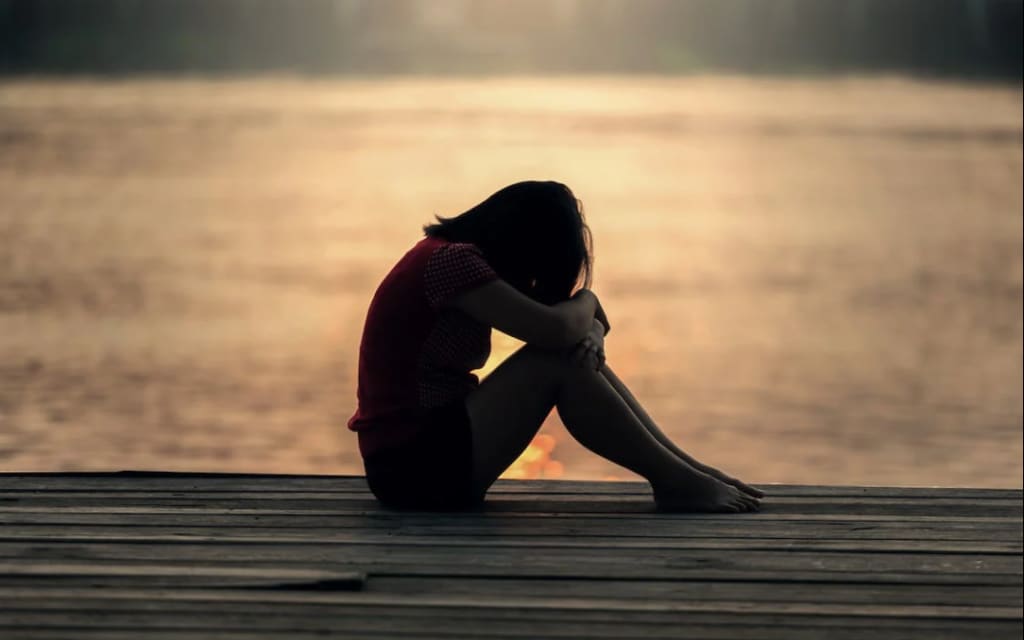
In the heart of a bustling city, where towering skyscrapers cast long shadows over crowded streets, lived a woman named Maya. She was an ordinary woman with an extraordinary burden—an unshakable fear that gripped her heart each time she looked out the window and saw the city's concrete landscape stretching endlessly. Maya's fear was not of the bustling crowds or the fast-paced life; it was the looming shadow of an uncertain environmental future that haunted her every waking moment.
Maya's journey with fear began during her childhood. She had grown up in a world of cautionary tales, where adults whispered about rising sea levels, unpredictable weather, and vanishing species. Her parents, both scientists, had dedicated their lives to understanding and mitigating the impacts of climate change. As a child, Maya would listen intently to their conversations, absorbing the weight of their concerns like a sponge.
Her parents' dedication left an indelible mark on Maya's psyche. She was introduced to the reality of a world teetering on the brink of ecological collapse—a reality that felt both distant and imminent. She couldn't escape the images of melting ice caps, raging wildfires, and floods that displaced entire communities. As she grew older, her fear transformed into a constant companion, whispering worst-case scenarios into her thoughts.
One sweltering summer day, as the sun beat down relentlessly, Maya's anxiety reached a breaking point. She read an article about a once-thriving coastal town now swallowed by the encroaching sea. The images of families forced to abandon their homes and livelihoods tore at her heart. The fear that had simmered within her boiled over, flooding her mind with a torrent of questions. What if her own city faced a similar fate? What if the life she knew would crumble under the weight of climate-induced catastrophes?
That night, sleep eluded Maya. She stared at the ceiling, the weight of the future pressing down on her chest. In the darkness, she made a decision—to confront her fear head-on. She began attending climate change workshops, reading scientific reports, and connecting with activists who were fighting to make a difference. Despite her efforts, the more she learned, the heavier her heart became.
One evening, Maya attended a lecture by Dr. Elena Martinez, a renowned climate scientist. Dr. Martinez spoke with a sense of urgency, her words both illuminating and unsettling. She spoke of a world where the consequences of inaction were no longer avoidable, a world where fear and anxiety were natural responses to an unprecedented crisis.
After the lecture, Maya found herself in a small group discussion with Dr. Martinez. She shared her fears openly, her voice quivering as she spoke about the weight that seemed impossible to escape. To her surprise, Dr. Martinez nodded in understanding. She revealed that even as a scientist at the forefront of climate research, she grappled with her own fears and anxieties. But, she said, those feelings were not paralyzing—they were the fuel that drove her to fight for change.
Maya left the discussion with a newfound perspective. She realized that fear was not her enemy; it was a reminder of the world's fragility and the urgency of action. With this revelation, Maya transformed her fear into determination. She became a vocal advocate for environmental awareness, using her voice to educate and inspire others.
One day, as Maya stood on a stage addressing a crowd of concerned citizens, she looked out into the sea of faces. She saw the reflection of her own fear in their eyes—the same fear that had once threatened to consume her. But now, it was different. It was a fear shared and acknowledged, a fear that had ignited a spark of collective action.
Maya's story spread, resonating with people across the city and beyond. Her journey from paralyzing fear to purposeful action became a testament to the power of confronting our anxieties, of acknowledging the daunting challenges ahead while refusing to be immobilized by them.
And so, Maya's city transformed. Rooftops turned into gardens, public transportation flourished, and community-led initiatives breathed life back into forgotten spaces. The city's transformation was a symbol of resilience and hope, a beacon of light in a world still grappling with uncertainty.
Maya's fear had not disappeared; rather, it had evolved. It had become the catalyst for her own growth and for the transformation of her city. As she looked out at the changing landscape, she felt a mixture of emotions—fear, yes, but also a profound sense of responsibility, connection, and the unwavering belief that even in the face of fear, humanity could rise to the occasion and shape its own destiny.
About the Creator
Enjoyed the story? Support the Creator.
Subscribe for free to receive all their stories in your feed.
Comments
There are no comments for this story
Be the first to respond and start the conversation.