
Choosing the Right Memory Care Center: A Complete Guide for Families
A safe and compassionate environment where dignity, comfort, and meaningful connection support individuals living with memory loss.

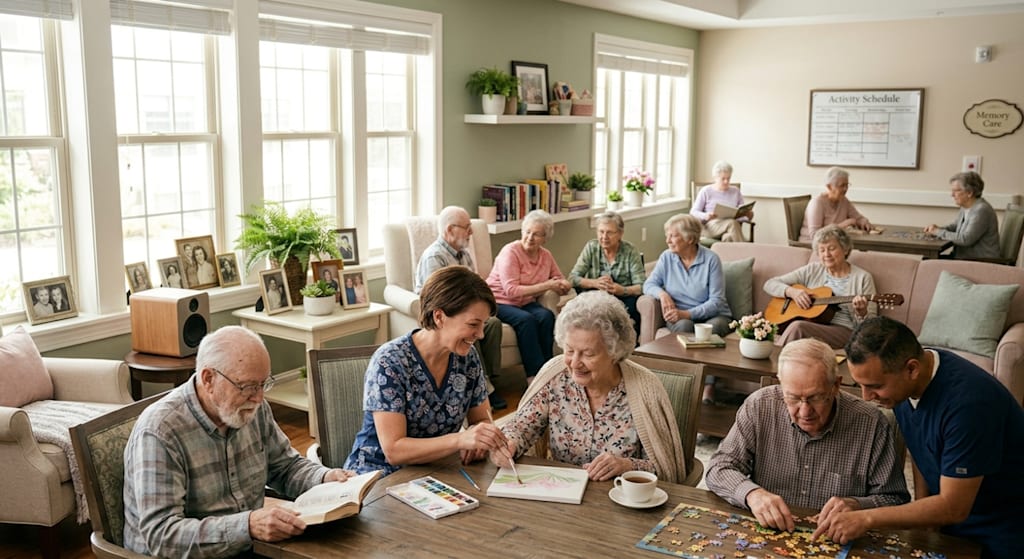
It is never an easy decision to make when it comes to putting a loved one in a memory care center. It can happen after months (or years) of adaptation, tough talks, and fears of safety. Whether the diagnosis is Alzheimer's or any other type of cognitive decline, families typically have never before walked in these emotional and practical unfamiliar territory. These situations, such as Alzheimer's disease and Dementia, don't just impact memory but also gradually transform behavior, communication, and everyday living skills, making specialized care more crucial than ever.
Selecting the appropriate memory care centre is not about finding the “perfect” home, but instead finding the proper home, one which can balance safety, dignity, medical care, and emotional wellbeing.
It is essential for residents to comprehend what Memory Care truly involves.
It is important to have a basic understanding of what memory care is before comparing options. Memory care centers are different from traditional assisted living facilities as they are explicitly for those who have cognitive decline. This also means safe places where children are prevented from wandering off, daily routines and staff who are trained to be patient and consistent in their responses to confusion, agitation and memory loss.
A good memory care center doesn’t just focus on supervision. It is quality of life oriented. That is: providing activities to match cognitive capacity, promoting social contact, and keeping schedules familiar and comfortable.
Confined to one's home, it is essential to begin with what their loved one needs.
Memory loss can occur in different ways for each person. Some will be able to talk to you and enjoy group activities and others will require more practical help with eating, dressing, etc. Prior to going to any center, make sure you evaluate your loved one's condition.
Ask yourself:
What is the extent of their memory loss?
Are they receiving ongoing medical care for illnesses?
Do they wander or become confused at night?
What can help them relax or feel better when they are upset?
With clarity, you can assess your ability to find a center that can keep up with your needs, right now and as they change.
Safety and Environment are More Important than Décor
Attractive interiors and contemporary furniture can be a great attraction to visit, but it is the safety features that are truly important. A good memory care facility will have good signage, easy ways to navigate and a layout that minimizes confusion.
Look for:
Security but not restricting entry to the building or the premises.
Simple design and spaces that are clearly labeled.
Calm, low-stimulation environments
Safe outdoor supervised movement spaces
The environment should be intuitive, but not overwhelming, so people living with cognitive decline can become disoriented easily.
The staff training makes a real difference.
A major aspect of selecting a center is the quality of the employees. But memory care doesn't just need the ability to care for someone. Staff should be trained in communication strategies related to cognitive impairment, such as redirecting and calming down agitated behaviour, and keeping the person's dignity intact when engaging in personal care.
Make observations about staff interactions with residents during visits. Are they respectful and considerate? Do they seem rushed or attentive? It's the little things that say more than brochures ever will.
Staff to resident ratios should also be discussed. A lower ratio can often lead to better one-on-one care and attention, thereby enhancing the quality of daily care.
The daily routine and purposeful play.
It is particularly important to practice routine for people with memory loss. Predictability helps to minimize confusion and anxiety. A good memory care facility will provide a daily routine with feeding times, sleep periods, and socialization and activities.
However, structure is not the only thing—engagement is important as well. Activities should be differentiated according to cognitive level. This may be music therapy, simple art activities, light exercise or memory games.
Minim moments of engagement can create a sense of connection and roots for residents.
Communication with Families should be Open and Honest
A quality memory care facility will include families in their care. This includes regular updates on progress, open dialogue with parents about any changes in health or needs, and transparency if a concern is raised.
Inquire about the frequency of updates to families and regular review of the care plan. The best centres promote involvement, such as care meetings, opportunities to visit and family events.
You should feel confident and not left wondering about how your loved one is doing.
Use your observations when you are visiting.
Tours are not a formality, but an opportunity to see how the center works. Notice the effects of the mood. Are residents relaxed and active, or reclusive and anxious? Is the space inviting or sterile?
Take note of the details:
Do call lights/requests go quickly?
Are staff familiar with residents on a first name basis?
Do you have a clean, but not sterile, environment?
Use your instincts in this instance. When something doesn't feel right, it may be worth investigating why.
Cost should not be a mystery, it should be obvious.
The cost of memory care can differ significantly, and there are various pricing models. Some centers have set fees that include all services, and some have fees that also cover additional services. When making a commitment, you want to be sure you know exactly what you are getting.
Request detailed information about:
Monthly fees
Healthcare and/or drug management expenses
Activity or therapy charges
Any potential future price increases
If the initial communication is clear, then the stress later isn't necessary.
The Right Choice Balances Care and Compassion
Making the decision on a Memory Care Center is more than a logistics choice. It's about discovering a spot where your loved one is treated with patience, respect and understanding — even when it is a difficult day.
Every center will not be ideal, but the center that's right for you will feel stable and supportive. It will provide a sense of structure, safety and dignity for your loved one, and it will provide you with the peace of mind that they don't have to walk this road alone.
For families facing the uncertain stages of cognitive decline, the reassuring feeling can make a world of difference.
About the Creator
Shelia Bailey
Shelia Bailey is a dedicated and passionate writer whose diverse interests span health, technology, senior care, and children’s topics.
Enjoyed the story? Support the Creator.
Subscribe for free to receive all their stories in your feed.
Comments
There are no comments for this story
Be the first to respond and start the conversation.