
A Step-by-Step Look at How They Prepared for Mediation in 2026
A reflective story about feeling stuck, and finding a better way forward

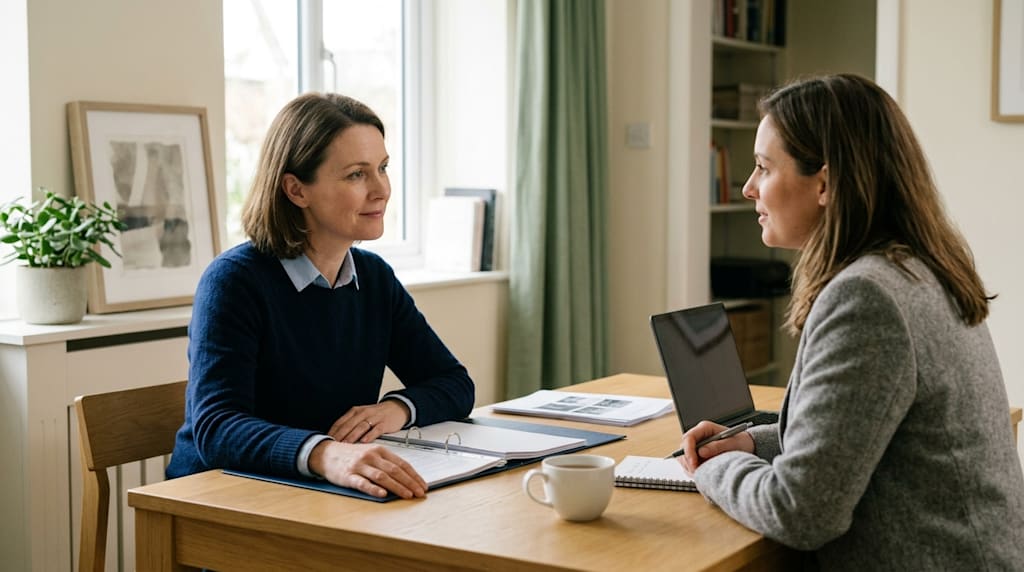
I used to think being prepared meant having answers. What I learned, going through mediation this spring, was that being prepared actually meant knowing which questions were mine to answer in the first place.
My name, for the purposes of this, is Rachel. I'm forty-three, I work three days a week in HR, and until last October I'd been married to Dan for sixteen years. We have two children, nine and twelve. I'm writing this now because when I was looking for something honest to read in January, I couldn't find much. Everything was either a solicitor's website trying to sell me something, or a Reddit thread from someone in America. I eventually stumbled across a Facebook group called the divorce circle, which was the first place I read something that sounded like my actual life. So here's what it actually looked like, step by step, from the inside.
The decision to separate had been building for about a year. It wasn't dramatic. There was no affair, no big row. Just a slow realisation that we'd become very polite housemates who happened to share a mortgage and two children. Dan was the one who said it out loud first, on a Tuesday night in October, while I was loading the dishwasher. I remember thinking, oddly, that I should finish stacking the plates before I responded. Which I did.
We agreed almost immediately that we didn't want to fight. Neither of us had the energy, and more importantly, neither of us wanted to put the kids through what friends of ours had gone through the year before, a two-year court battle that ended with both of them broke and their daughter refusing to speak to either of them for six months. A colleague at work mentioned mediation. I'd heard the word before but I genuinely didn't know what it meant in practice. I thought it was some kind of counselling. I went online that Friday to book a MIAM, which was the first step anyone told me to take.
The first proper appointment was a MIAM, which stands for Mediation Information and Assessment Meeting. I had to Google it on the train in. It's the initial session where a mediator explains how the process works and decides whether your situation is suitable. Mine was online, at seven in the evening after the kids were in bed. I sat at the kitchen table with a cup of tea going cold next to me, my laptop open, and a woman called Sarah on the screen who had kind eyes and a very calm voice. She asked me why I was there. I cried for the first ten minutes and apologised for crying. She said most people cry in the first ten minutes and to please stop apologising.
What I didn't realise before that meeting was how much of family mediation preparation actually involves. Sarah gave me a list. Not a long one, but a specific one. Before the first joint session with Dan, I needed to gather certain things. Bank statements for the last twelve months, for every account in my name and any joint accounts. My last three payslips. My pension statement, which I had to request specially because I'd never actually looked at it. The mortgage statement. Any credit card balances. A rough list of what I thought our house was worth, which she suggested I get from looking at similar properties on the local estate agent sites rather than paying for a formal valuation straight away.
Then there was the other list, which I found harder. What did I actually want. Not what I thought I could get, not what I thought was fair, but what I genuinely wanted the outcome to be. Where did I want to live. What did I want the children's week to look like. How did I feel about Dan having them overnight on a school night. She told me to write it all down, even the things that felt petty or selfish, and then sit with it for a few days before our first joint session.
I remember sitting on my bed that Sunday afternoon with a notebook, trying to answer the question, and realising I'd been married for sixteen years and I genuinely didn't know what I wanted when I wasn't weighing it against what Dan wanted. It was a strange, hollow feeling. Then it was quite a useful one.
The financial disclosure bit was the most tedious part, but also, weirdly, the most grounding. I'd avoided looking at our money properly for years. Dan handled the mortgage, I handled the bills, and neither of us had ever sat down and totalled everything up. When I finally did, at my kitchen table one Saturday morning with a highlighter and a sheaf of printouts, I had a much clearer picture of our actual situation than I'd had in a decade of marriage. We had more equity in the house than I thought. We had less in savings. Dan's pension was significantly bigger than mine, which I'd known abstractly but never seen in actual numbers. It took me about four hours. I made myself a proper lunch afterwards and felt, for the first time in weeks, like I had some idea of what I was dealing with.
Dan had been asked to do the same exercise separately. When we turned up to the first joint session, also online, we both had our folders. Mine was a ring binder with coloured tabs because that is the kind of person I am. Dan's was a spreadsheet on his iPad, because that is the kind of person he is. I think Sarah was quite amused.
The joint sessions were not what I expected. I'd imagined something confrontational, both of us glaring at each other across a screen while Sarah refereed. It wasn't like that. Sarah was extremely good at her job. She set ground rules at the start, things like no interrupting, no raised voices, and she would pause us if things started to drift. Mostly though, she just kept the conversation on track. We spent the first session almost entirely on the children. Not the money, the children. Where they would live, how we'd handle holidays, what we'd tell them and when. Dan got upset at one point, talking about missing bedtimes, and I felt something shift in me that I hadn't expected. I'd been so focused on my own grief that I hadn't really made space for his.
By the third session we were onto finances, which I'd been dreading. In reality, because we'd both done the preparation properly, it was more like a very long maths problem than an argument. We disagreed on things, obviously. Dan wanted to keep his pension untouched. I wanted the house to stay in my name until the youngest finished school. But we were disagreeing about specifics, not principles, and Sarah helped us work through each one. She'd say things like, "Okay, what's driving that for you, Rachel?" and I'd have to actually articulate it, which meant I'd realise halfway through that my reason was more about fear than anything practical.
We had five sessions in total. Between them, I did homework. I got a proper valuation on the house. I spoke to a financial advisor about pension sharing, which was a concept I'd never heard of before October and now understood in embarrassing detail. I had one session on my own with a solicitor to check what we were proposing was reasonable before we finalised anything. That cost me around two hundred pounds and was worth every penny for the peace of mind.
At the end, we had what's called a Memorandum of Understanding. It's not legally binding in itself, but it lays out everything we'd agreed, and then the solicitor turned it into a consent order which we sent to the court to be approved. The whole process, start to finish, took us about four months. It cost us, between us, less than I'd once spent on a new kitchen.
What surprised me most was this. By the time we signed the final paperwork, Dan and I were speaking to each other more kindly than we had in years. Not as a couple, we were definitely not a couple anymore, but as two parents who'd just done something difficult, together, without breaking anything that couldn't be fixed. The kids noticed. Our twelve-year-old said to me, about a month after it all finished, "You and Dad seem happier now." Which was a sentence I'll carry around for a long time.
The folder is still on my kitchen table. I keep meaning to move it.
This story is based on real mediation experiences, with details changed to protect confidentiality.
About the Creator
Family Law Service
Family Law Service is a UK-based online family law support provider helping people across England and Wales with divorce, child and financial matters, offering clear, practical guidance without the high cost of traditional solicitors.
Enjoyed the story? Support the Creator.
Subscribe for free to receive all their stories in your feed.
Comments
There are no comments for this story
Be the first to respond and start the conversation.