
*A Poor Man*
What he carried in his pockets meant more than what he owned

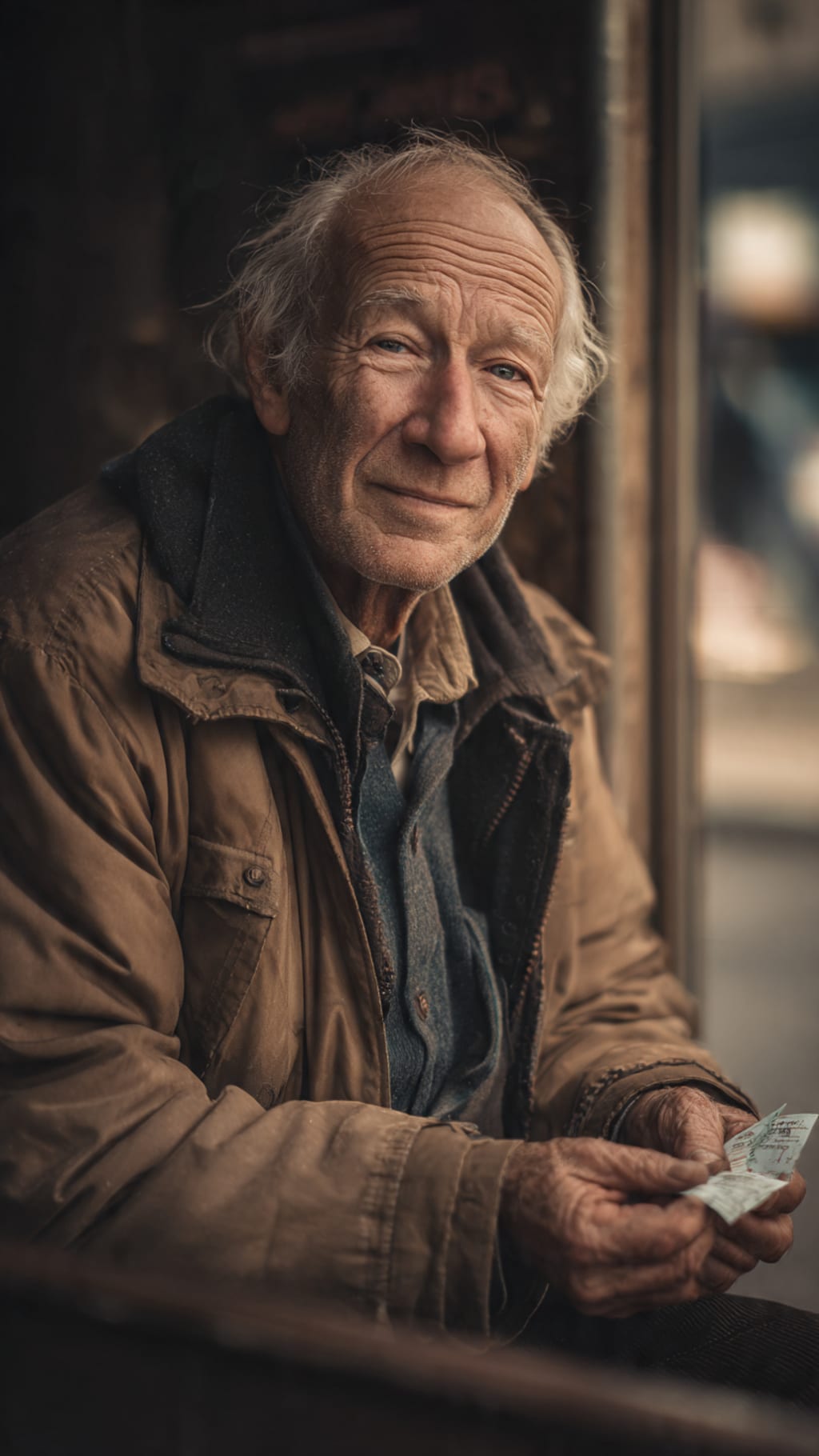
Everyone on Elm Street called him “poor.” Not to his face. Not cruelly. Just as a fact, the way you say “it’s raining” or “the bus is late.” He was the man on the bench at the corner of Elm and 4th. Gray jacket, shoes worn thin at the heel, hands that looked like they’d worked hard a long time ago. He didn’t beg. He didn’t ask for anything. He just sat there, watching the street, nodding at people as they passed. Mrs. Delgado from the bakery swore she’d seen him every morning for twelve years. “Poor man,” she’d say, wrapping croissants in paper. “Sits there all day. Doesn’t even have a place to go.” She was half right. He didn’t have a house. Not one with an address. But he had a bench. And he had pockets. His pockets were what people didn’t see. I only noticed because I missed my bus one Tuesday. I was sixteen, late for school, digging through my backpack like that would make the 7:15 come faster. He was already on the bench, like always. I mumbled “sorry” when I sat down too hard next to him. He didn’t answer. He just pulled a folded piece of paper from his jacket pocket, smoothed it on his knee, and handed it to me. It was a bus ticket. Used, the date stamped from last week. “You’ll need this more than me,” he said. His voice was rough but quiet. I tried to give it back. He shook his head. “Keep it. For next time you’re late.” That was the first thing I saw. After that, I started paying attention. Mrs. Delgado gave him a croissant every morning. He always ate half, wrapped the other half in the paper bag, and tucked it into his pocket. Not for later. For her son, Miguel, who worked nights at the hospital and sometimes forgot lunch. The bus driver, Mr. Chen, gave him a spare key once. Said it was to his apartment, “in case you ever need to get out of the rain.” The man took it, said thank you, and kept it. Six months later, when Mr. Chen’s daughter locked herself out before her SATs, he was there. He didn’t give the key back. He gave it to her. “Your dad said this is for people who need it,” he told her. She made it to the test on time. A little girl from the building across the street gave him a button. Bright red, from her winter coat. She said it fell off and she was scared her mom would be mad. He took it, held it in his palm like it was gold, and told her, “We’ll find it a new coat.” Two weeks later, another kid came by with a torn jacket. The button fit. None of these things looked like wealth. A used ticket. Half a croissant. A spare key. A button. But his pockets were full. People kept giving him things. Not money. Things. Notes that said “I’m sorry I yelled.” A library card someone didn’t need anymore. A photo of a dog. A train schedule from 1998. He took all of it. He never threw anything away. I asked him once, when I was older and started sitting with him after my shifts at the bookstore. “Why do you keep all this? You could sell the key. You could throw the ticket away.” He looked at me like I’d asked why people breathe. “Because nobody else wanted to carry it,” he said. He didn’t mean the objects. He meant the weight. The note from Mrs. Delgado’s husband, written the night before he died. “Tell her I was proud of her bread.” He’d been carrying it for eight years, waiting for the right day to give it to her. The bus ticket wasn’t for rides. It was from a man who’d missed his last chance to see his mother. He gave it to the bench man and said, “Don’t let anyone else miss their bus.” The button was an apology. The key was a promise. The photo of the dog was grief, pure and simple. He wasn’t poor. He was a keeper. The street never understood that until the winter he got sick. Pneumonia. The hospital kept him for two weeks. While he was gone, the bench stayed empty. People started noticing what wasn’t there. Mrs. Delgado realized no one was holding her husband’s note. Mr. Chen realized he had no spare key to give his daughter when she locked herself out again. The little girl realized she didn’t know what to do with apologies that didn’t have a place to go. When he came back, thin but still sitting straight, people came to the bench. Not with food. With things. A new button. A train schedule. A folded letter. One by one, they emptied their own pockets into his hands. He didn’t become rich. He still slept where he slept. He still wore the same jacket. But the street stopped calling him “poor.” Because we finally understood. He didn’t own anything. But he carried everything. Last month I missed my bus again. I’m thirty now, still late, still rushing. I sat on the bench, and he reached into his pocket. Pulled out that same bus ticket. It was more worn, the edges soft like cloth. “For next time,” he said. I took it. And I finally got it. He wasn’t holding onto things. He was holding onto us. All the small, heavy, ordinary moments we didn’t know what to do with. That’s what he carried. Not poverty. Responsibility. And if that’s not wealth, I don’t know what is.
About the Creator
Enjoyed the story? Support the Creator.
Subscribe for free to receive all their stories in your feed.
Comments
There are no comments for this story
Be the first to respond and start the conversation.