
A Couple Who Lived in Different Countries, But Needed a Divorce in the UK
How one unanswered legal question about two countries became the start of his most uncertain, but eye-opening chapter yet....

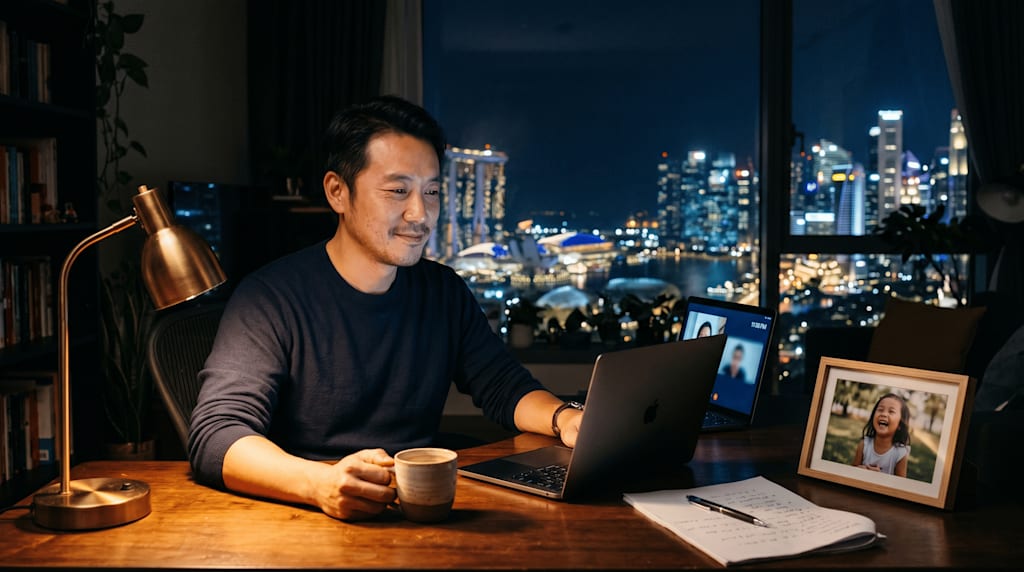
I never thought my marriage would end over a Zoom call.
We'd been living apart for nearly two years by the time we admitted it was over. Marcus had taken a job in Singapore back in 2022, and I'd stayed in our flat in Bristol with our daughter Esme, who was seven at the time. The plan was for me and Esme to follow once his contract settled, once the schools lined up, once a hundred other little things fell into place. None of them ever did.
At first we made it work. We had a routine. He'd call at seven in the morning his time, which was midnight for us, just to say goodnight to Esme. I'd send him photos of her school plays, her wobbly teeth, the drawings she made of the three of us holding hands in front of a house she'd never lived in. He came back at Christmas and for two weeks in the summer. It felt manageable. It felt like we were just on a long pause.
I think I knew before he did. Or maybe we both knew and were just waiting for one of us to be brave enough to say it. It was Esme, in the end, who forced our hand. She came home from school one Tuesday in October, dropped her bookbag in the hall, and asked me very calmly whether Daddy was ever coming back to live with us. I said something vague, the way you do when you don't have an honest answer ready. She nodded and went upstairs. I sat on the bottom step for a long time after that.
I rang Marcus that night. Or rather, the next morning his time. We didn't argue. There wasn't anything left to argue about, really. We'd loved each other, we'd built something, and then geography and time and life had done what geography and time and life do. We agreed we needed to actually deal with it now, properly, instead of pretending. Then came the complicated bit.
Neither of us really knew how you'd divorce an overseas spouse when one person lived in Britain and the other lived eight thousand miles away. I'd assumed you'd both need to be in the same country. Marcus had assumed his Singapore residency would complicate things. We were both, it turned out, mostly wrong. Because we'd married in the UK, and because I still lived here with Esme, we could divorce in England and Wales without him ever needing to fly back. That was the first thing that surprised me, how relatively straightforward an international divorce UK actually was, once you understood the rules.
The hard part wasn't the law. The hard part was everything else.
Money was tangled. We had the Bristol flat, his pension built up in two countries, savings in different currencies, a small joint investment account that nobody had touched in years. There was Esme's schooling to think about, what would happen at Christmas and in summer, how she'd fly out, who'd pay for the flights. We tried, at first, to sort it ourselves over WhatsApp. That lasted about three weeks before we were both snapping at each other over voice notes and Esme was picking up on it.
A friend of mine had been through something similar a few years back and suggested we try mediation. I'll be honest, I almost didn't bother. I assumed mediation meant sitting in a room together, and Marcus was in Singapore, and the whole thing felt impossible. But it turned out you can do it online now. Properly online, with a mediator and both of us on a screen, and a structure to follow that actually helps you talk instead of just argue.
We each did our first session on our own, which I hadn't expected. The mediator explained it was always done that way, so they could meet both of you separately and check whether mediation was the right fit before bringing you together. Mine was at ten in the morning UK time, sitting at the kitchen table with a mug of tea going cold, trying to explain two years of slow drift to a stranger who somehow asked exactly the right questions.
Marcus had his a few days later, late at night his time. He told me afterwards he'd cried about twenty minutes in and then felt better than he had in months. By the time we got to our first joint session, the ground had already shifted a little. I think that bit set the tone for everything that came after.
Over about four months and six sessions, we worked through the lot. The flat, which I'd buy him out of in stages. The pensions, which were more complicated than we'd realised and needed proper actuarial advice we got pointed towards. The arrangements for Esme, which we built around school holidays and her wanting to do ballet on Saturday mornings. We disagreed plenty of times. There was one session where I cried for about twenty minutes and the mediator just let me, which I was grateful for. But we never ended a session further apart than we started it, which was what mattered.
When the consent order was finally drawn up and signed off by the court, Marcus emailed me a photo of his copy on his desk in Singapore. I sent him one of mine on the kitchen table in Bristol. Same document, two different countries, finally the same page.
Esme is nine now. She flies out to him twice a year and they call every Sunday. She told me last week that she has two homes, and she said it like it was a good thing.
I don't know if I'd call any of this a happy ending. But it's a peaceful one. And after everything, that turned out to be what I wanted more than anything else.
This story is based on real experiences, with details changed to protect confidentiality.
About the Creator
Family Law Service
Family Law Service is a UK-based online family law support provider helping people across England and Wales with divorce, child and financial matters, offering clear, practical guidance without the high cost of traditional solicitors.
Enjoyed the story? Support the Creator.
Subscribe for free to receive all their stories in your feed.
Comments
There are no comments for this story
Be the first to respond and start the conversation.