
Why Set a Writing Goal
Before jumping into setting a writing goal, consider why setting a clear writing goal is important. Establishing goals is a common practice within professional and educational communities; however, setting writing-specific goals can have its own unique benefits.
Goal setting is something that many adults do in their personal and business life. But have you ever thought about how goals may be great for students/ kids too? You can apply the benefits of goal setting to literacy outcomes, as well as life in general. Here are five reasons we believe that goals are great for kids too.
Irwin, L. L. (2014). What a difference three tutoring sessions make: Early reports of efficacy from a young writing center.
Teaches responsibility for own learning
The act of thinking about, choosing, and articulating literacy goals helps children to take ownership of their learning. When children choose to take responsibility for their own learning, amazing things can happen! They develop iterative thinking, become problem solvers, and learn how to project manage and collaborate. If they have a goal in sight, then they will learn to be creative in achieving it.
Motivation and vision
Goals create children who understand and strive for the bigger picture. Instead of seeing the problem at hand whether it͛s literacy based or otherwise, they begin to develop an understanding on how overcoming this problem benefits themselves and the world at large.
This in turn increases their desire and motivation to overcome the problem and reach the goal that they have set for themselves.
Builds resilience
Having goals helps kids deal with setbacks and increases their perseverance. Instead of hitting a wall and giving up when faced with a difficult problem, children will use their skills to find a way around so that they can reach their goals.
This resilience is an important life skill and is vital for personal growth and development. It provides a basis to overcome overwhelming feelings of hopelessness. If we want kids to be able to perform better at literacy (or any other task) then resilience is a key attribute.
Encourages problem-solving
Instead of just giving up when faced with a roadblock to their literacy skills, children who have a specific goal will use their creative abilities to solve the problem. Goals provide them with the motivation to find a way around the difficulty they are having and approach the problem from a different perspective or be motivated to find alternative solutions.
Organization skills
Goals and specifically goals that have been broken down into smaller steps or smaller goals help kids to become more organized with their learning. They are more likely to understand the concept of progressive milestones which in turn helps them feel as though they are constantly achieving and are in control. Once a child experiences this sense of satisfaction, it has a snowball effect on their literacy learning. Goal setting for kids needs to be led by the child. All of these benefits only come from ownership of the problem, and ownership of the goal. Being told what to achieve won͛t work. Adults need to be involved in the process to gently guide and provide the framework on how to set a goal, not what the goal should be.
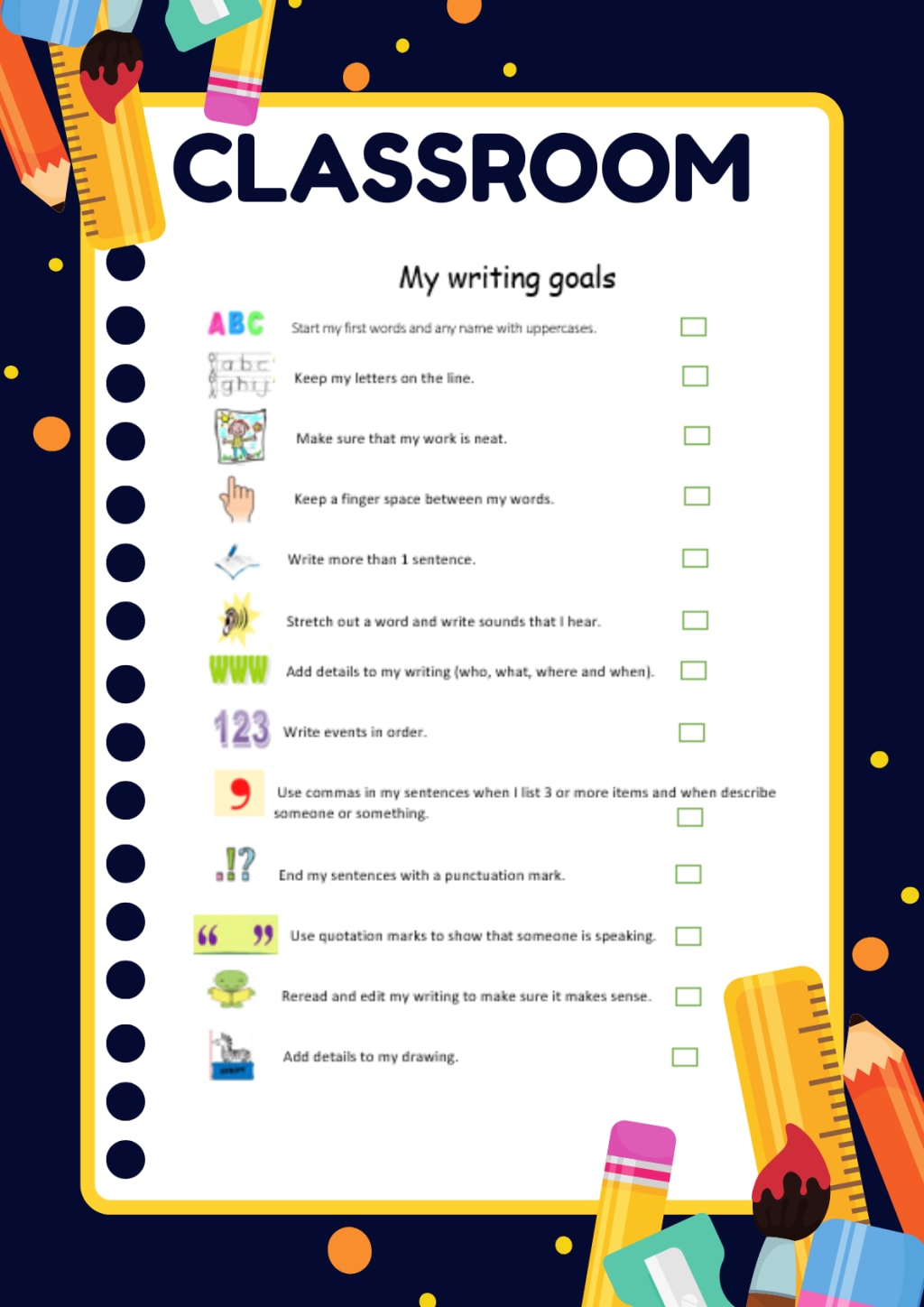
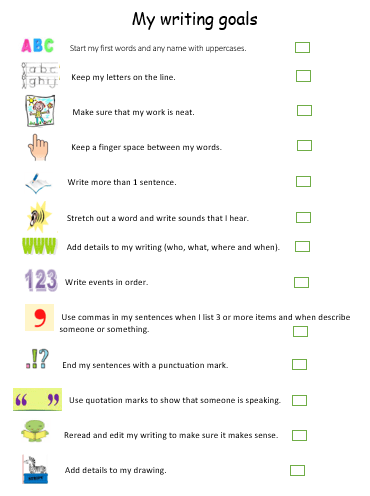
If you haven’t created your own K-2 writing goals sheet, feel free to download mine. I placed it at the back of my students’ writing journals for easy referral.
https://edukidss.com/writing-goals-for-k-2/
About the Creator
Enjoyed the story? Support the Creator.
Subscribe for free to receive all their stories in your feed.
Comments
There are no comments for this story
Be the first to respond and start the conversation.