
Why Would a Contractor Apply Critical Path Activities in Construction?
Contractor Apply Critical Path Activities in Construction
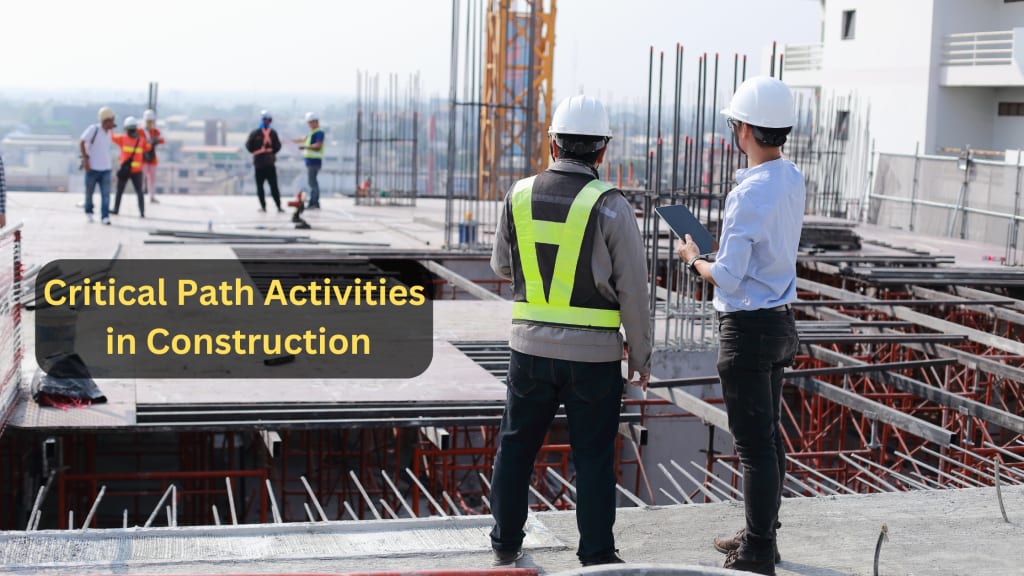
The construction industry is inherently complicated, with many connected activities, close deadlines, and heavy resource management issues. By applying critical path activities in construction, contractors can better ensure that projects run smoothly and on time. Such activities determine the order of the key tasks that would indicate the timeline of a project, therefore aiding the contractor in determining what to do with the available resources and risk mitigation. Partnering with Arizona Construction Estimating Services ensures accurate planning and cost details so that projects can be implemented with efficiency and accuracy.
1. Understanding Critical Path Activities
The Critical Path Method, or CPM, is a project management tool that provides identification of the longest sequence of dependent tasks; therefore, it establishes the shortest possible duration for a particular project. "Critical path" refers to the activities' sequence that cannot be delayed otherwise without delaying the project's general timeline.
These hold zero slack, meaning there will be a delay caused by the entire project if delayed. Key identification tool: Critical path analysis would help contractors identify tasks of comparable worthiness to others, therefore, making appropriate arrangements to optimize the use of resources.
1.1. Effective Execution of the Projects
This concerns the critical path enablement into the division of tough projects; hence, with a critical path, a contractor is aided in an easy task about what contributes positively to the timing and helps make an unmistakable clear plan about its completion without extending time.
This focus will reduce time and resource waste keeping the project running efficiently. For example, in construction, for a commercial building, there are activities like laying the foundation, installing structural beams, and roofing that may fall on the critical path.
1.2 Decision-making Improvement
Construction projects involve uncertainty, including delayed materials and adverse weather conditions. With knowledge of the critical path, it becomes easier for contractors to make better decisions when faced with such disruptions.
One can evaluate which tasks require urgent intervention and how to allocate resources to prevent project delays. By using different estimating tools or outsourcing their services, contractors not only lay out the critical path activities but also the cost implications for those setbacks, thereby making decisions sooner and better.
1.3. Optimal Use of Resources
Any construction project will always have limited labor, equipment, and materials. With critical path activities, a contractor can focus his limited resources on only those critical activities that immediately affect the time scale. Such priority actions reduce inefficiencies from idle labor or underused equipment.
For instance, being aware that framing is one of the critical paths means that enough labor and materials will be available to complete the task without interruption, hence keeping the project on track.
1.4. Risk Minimization
Every construction project exposes the contractors to risks that emanate from external forces such as supply chain disruptions to internal causes such as scheduling conflicts. Critical path planning aids the contractors in identifying potential risks early, and they could develop contingency plans that minimize these risks.
For instance, during an excavation delay, a contractor can adjust the schedule of the non-critical activity so that the delay in doing the critical path task can be offset. In this way, the overall project becomes on schedule.
1.5. Encourage Better Collaboration
Activities in the critical path give a compass to all the stakeholders undertaking a given project. Priorities together with the set timelines are what help the contractors harmonize their efforts, allow for better communication, and develop better collaboration among architects, engineers, and subcontractors involved in that particular project.
2. How Does Critical Path Analysis Work for the Contractors

This is one of the ways of managing construction whereby the most critical activities are selected, their durations calculated, and workflows are thus organized.
2.1. Detailed Scheduling of the Projects
The contractors begin by determining all tasks involved in the projects, their dependencies, and expected durations. Utilizing Gantt charts or project management software, they lay out the tasks to establish the critical path.
For instance, on an activity network for a home construction project, foundation pouring and installing the roof are scheduled together, whereas site clean-up or interior painting can be done independently to avoid interference with critical activity paths.
2.2. Real-time Revisions
Construction projects rarely go precisely as planned. Changes in scope, changes in design, or unforeseen issues can affect timelines. Contractors employ critical path analysis to very quickly determine how changes will affect the schedule and make adjustments if necessary.
For example, if getting permits is a critical task that has experienced a delay, contractors could reallocate resources or hasten subsequent tasks to reclaim lost time.
2.3. Budget Management
Critical activities are linked directly with project cost activities. Delays in these types of activities might enhance the cost along with extended labor lists, and penalties for tardiness, among others. By considering the notion of critical path analysis, contractors might prevent overbudgeting, above schedule that can then keep costs from exceeding.
Integrate Construction Estimating Services which enables the contractors to align budgets with schedules to ensure the financial and operational success of the projects.
3. Advantages of Critical Path Activities
Some Advantages of Critical Path Activities
3.1. Clear Focus
The critical path analysis will help the contractors identify the most important tasks and, therefore, sharpen their focus. The clear focus ensures that the contractor will not waste time and resources on activities that have minimal influence on the success of the project.
3.2. Accountability Increases
A clear critical path indicates what has to be done, and how soon it is needed within the timeframe. With this, individuals are held accountable and work toward delivering deadlines.
3.3. More Flexibility
Observation of the critical path continuously helps contractors respond quickly to change or disruption. It enables them to continue maintaining progress even during difficult situations.
3.4. Toughest Client Relationship
Delivering projects within time and budget is the best way to gain the trust of clients. Critical path activities allow contractors to meet deadlines, giving them a good reputation for reliability and professionalism.
4. Conclusion
Critical path activities are a useful tool for contractors in achieving projects on time, budget, and with minimal disturbance. The identification of tasks that run a project's timeline will enable contractors to allocate resources properly, anticipate risks, and easily adapt to changes.
The critical path method is a powerful scheduling tool for resource allocation, cost control, communication, and coordination among the stakeholders. It also gives flexibility to contractors to adapt to unforeseen challenges, and the project will be kept on track. This means that it is important to make the best use of critical path activities in construction to complete the projects.
About the Creator
Enjoyed the story? Support the Creator.
Subscribe for free to receive all their stories in your feed.
Comments