
Why Mixed-Use Developments Are Becoming the New Launchpads for Small Businesses
by James Kassouf

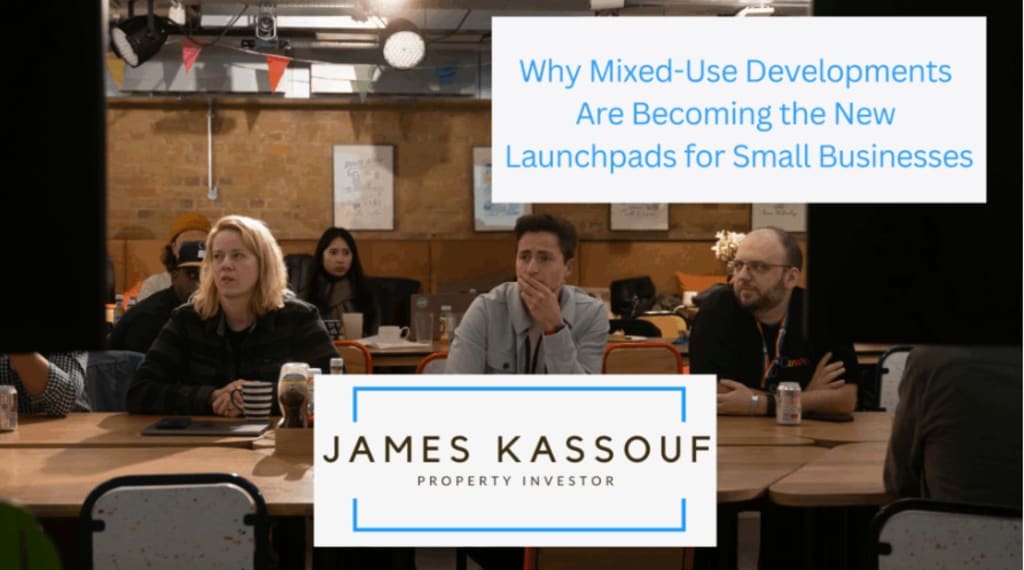
Small businesses have always thrived where people, opportunity, and accessibility intersect. In today’s evolving urban and suburban landscapes, that intersection is increasingly found in mixed-use developments. By combining residential, commercial, retail, office, and lifestyle spaces into a single ecosystem, mixed-use projects are emerging as powerful launchpads for entrepreneurs looking to start, test, and scale their ventures.
As consumer preferences shift toward convenience, walkability, and community-centered experiences, mixed-use developments are becoming more than real estate trends—they are economic engines that support local entrepreneurship and sustainable business growth. For small business owners seeking visibility, flexibility, and access to customers, these integrated environments offer advantages that traditional commercial districts often struggle to match.
Built-In Foot Traffic and Demand
One of the biggest challenges for small businesses is attracting consistent customers. Mixed-use developments solve this problem by design. Residents live upstairs, offices operate nearby, and visitors arrive for dining, fitness, entertainment, and shopping—all within the same footprint. This creates a steady stream of foot traffic without the heavy marketing spend typically required to build awareness.
For cafés, boutiques, service providers, wellness brands, and specialty retailers, this proximity translates into immediate demand. Businesses are not starting from zero; they are entering a community where customers already exist and return daily. Unlike standalone locations that rely heavily on destination traffic, businesses in mixed-use environments benefit from recurring exposure to residents and workers who interact with the space regularly.
This built-in audience significantly lowers the barrier to entry for new ventures and creates opportunities for businesses to build customer relationships more quickly.
Lower Risk Through Smaller, Flexible Spaces
Traditional retail and office leases often require long-term commitments and large square footage, which can be risky for early-stage businesses. Mixed-use developments increasingly offer smaller, modular spaces designed for flexibility. Shorter lease terms, shared amenities, and adaptable layouts allow entrepreneurs to test concepts without overextending financially.
Pop-up retail spaces, co-working studios, shared kitchens, and hybrid storefronts are becoming common features in modern developments. These formats enable founders to validate ideas, refine offerings, and pivot quickly based on customer feedback—an essential advantage in competitive markets.
For entrepreneurs, reducing upfront costs and long-term obligations can make the difference between launching a business and postponing a dream. Flexible commercial spaces create an environment where innovation can flourish without excessive financial pressure.
Live-Work Synergies for Founders
Mixed-use developments are particularly attractive to entrepreneurs who value efficiency. The ability to live, work, and operate a business within the same neighborhood reduces commute time and operational friction. For solo founders and small teams, this integration supports better work-life balance while keeping costs manageable.
Homegrown businesses—such as creative agencies, consulting firms, fitness instructors, design studios, and specialty retailers—benefit from being embedded in the communities they serve. This proximity allows business owners to better understand customer needs and respond quickly to market demands.
Additionally, reduced travel time creates more opportunities to focus on business development, customer service, and strategic planning. For many entrepreneurs, convenience translates directly into productivity and profitability.
Community-Centered Brand Building
Small businesses succeed when they become part of a community, not just a transaction point. Mixed-use developments are intentionally designed to encourage social interaction through shared courtyards, community events, public gathering spaces, farmers markets, and entertainment venues.
These environments create organic opportunities for businesses to connect with customers beyond traditional sales interactions. A local coffee shop may host networking events, a fitness studio might organize wellness workshops, or a retailer could participate in seasonal community celebrations.
Such activities help businesses establish deeper emotional connections with their audiences. Customers are more likely to support businesses they recognize and trust, especially when those brands actively contribute to the local community.
Over time, this visibility strengthens customer loyalty and encourages repeat business, reducing dependence on costly advertising campaigns.
Access to Collaborative Networks
Entrepreneurs in mixed-use environments are surrounded by other business owners, professionals, and creatives. This proximity encourages collaboration, partnerships, and knowledge sharing in ways that traditional commercial settings often cannot.
A café may partner with a nearby co-working space to provide catering services. A wellness studio could collaborate with residential associations to offer exclusive fitness programs. Retailers might join forces for promotional events that attract larger audiences.
These informal networks frequently lead to new revenue streams and shared resources. For small businesses operating with limited budgets, collaboration can replace costly outsourcing and accelerate growth through mutual support.
The result is an entrepreneurial ecosystem where businesses strengthen one another rather than compete in isolation.
Alignment with Modern Consumer Preferences
Today's consumers increasingly value convenience, experience, and local identity. They prefer environments where they can live, work, shop, dine, and socialize without traveling long distances. Mixed-use developments align perfectly with these preferences by offering everything in one accessible location.
Small businesses operating within these hubs benefit from being part of a lifestyle destination rather than a standalone storefront. Customers often visit for multiple reasons, increasing the likelihood of spontaneous purchases and repeat visits.
Moreover, consumers are increasingly drawn to businesses that feel authentic and community-oriented. Mixed-use developments naturally foster these qualities, allowing local brands to differentiate themselves from larger, less personalized competitors.
Creating Long-Term Economic Resilience
Beyond supporting individual entrepreneurs, mixed-use developments contribute to broader economic resilience. By bringing together diverse business types, residential units, and public spaces, these developments create balanced ecosystems that are less vulnerable to economic fluctuations.
When one sector experiences challenges, others can help sustain activity within the development. This diversity supports stable customer traffic and creates a more reliable environment for small businesses.
For entrepreneurs, operating in a resilient ecosystem reduces uncertainty and increases the likelihood of long-term success.
Future-Proofing Small Business Growth
As cities and towns rethink zoning policies, transportation systems, and land-use strategies, mixed-use developments are becoming central to sustainable urban growth. Their emphasis on walkability, convenience, and community aligns with emerging trends in how people live and work.
For small businesses, this represents a significant long-term opportunity. These developments are designed to evolve alongside changing consumer behaviors and economic conditions, ensuring continued relevance in the years ahead.
By launching in mixed-use environments, entrepreneurs position themselves at the heart of future-ready communities—places where commerce, culture, and daily life intersect seamlessly.
Conclusion
Mixed-use developments are more than real estate projects; they are dynamic ecosystems designed to foster connection, convenience, and adaptability. For small businesses, they offer built-in customers, reduced operational risk, collaborative opportunities, and a platform for authentic brand growth.
As entrepreneurs seek smarter and more sustainable ways to launch and scale their ventures, mixed-use developments are proving to be ideal environments for success. By combining accessibility, community engagement, and economic opportunity, these developments create the conditions where small businesses can not only survive but thrive for years to come.
About the Creator
James Kassouf
James Kassouf is a property investor and manager based out of Cleveland, Ohio. James has been in the real estate business for over 50 years and has owned and operated retail centers, office buildings, gas stations and so much more.
Enjoyed the story? Support the Creator.
Subscribe for free to receive all their stories in your feed.
Comments
There are no comments for this story
Be the first to respond and start the conversation.