
Why learning music seems harder than it really is
Learning music may come as hard and even frightening. At the beginning, you will most certainly make mistakes: miss notes, not differentiate chords, lose rhythms, and lack overall musical understanding. This is not a sign of inability, but rather a natural starting point for anyone.
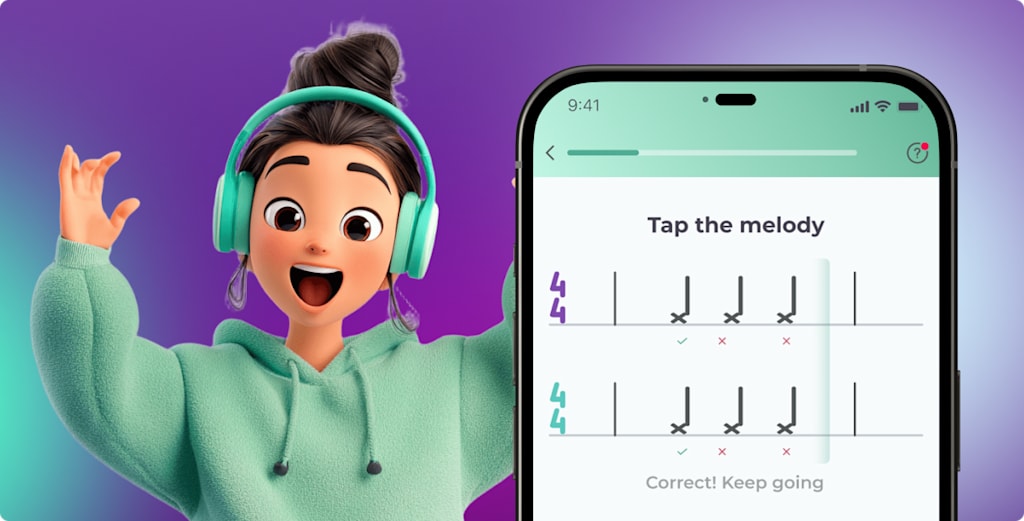
You start practicing music with Talented, but feel like the progress is little or nonexistent, but that doesn’t mean lessons are not working. Music theory can’t be mastered in one sitting. Resistance is a normal part of learning something new. Many expect immediate results, but music is a set of complex skills, it requires time, repetition, and focus. Patience is just as important as practice.
Why are the results not immediately visible?
The main challenge of learning music is delayed gratification. Your brain forms new neural connections. It takes time, and the accumulation of progress often goes unnoticed. You might not see a difference after one session, but every minute of practice builds a foundation.
Usually, the learning curve looks like that:
- Little progress at first.
- Long plateau stage.
- Noticeable jump in progress.
Such plateaus can last for days or even weeks. It’s important not to feel discouraged and power through them to reach the improvement part. Remind yourself that plateaus are a sign that a breakthrough is coming.
Some exercises seem impossible
This happens especially often in Talent Gym.
For example, many users get stuck on intervals and think, "How can I even hear the difference? I just can't hear it." This is completely normal.
Talent Gym is specifically designed for this type of learning. Its goal isn't to force you to answer correctly right away, but to gradually train your perception through repetition:
- Listen.
- Choose an answer.
- Receive feedback.
- Repeat.
At first you may feel like you’re just guessing, but then you’ll start to notice patterns. After a while, your brain will pick up the right answer almost on autopilot. What once was unreachable becomes like second nature. Trust the process, even when it feels random.
Why repetition is important
Skills like musical ear, sense of rhythm, and music reading can’t be mastered just by reading theory. They are formed through multiple repetitions. Each try improves perception and recognition. Over time, the brain shifts from conscious analysis: "I think this is the right answer" to automatic: "I hear the difference."
At this point, music begins to feel significantly easier and more natural. Repetition rewires the brain more effectively than any shortcut.
Some skills would be easier to train than others, and that’s perfectly natural. Some will make faster progress in rhythms, others in mastering chords, or sight reading. Different skills require different amounts of time spent on them, but no matter what you pick, each skill requires practice. Comparing your progress to others is rarely helpful—everyone has unique strengths.
What to do if you're feeling frustrated
If you feel completely stuck, it's helpful to:
- Go back a few steps.
- Review earlier material.
- Slow down the exercise tempo.
- Practice more focused.
Music almost always requires more repetition than you initially expect. This is a normal part of the learning process. Taking a short break can also help reset your ears and mindset.
How much practice do you need to get results?
The important part is frequency, not just hours spent practicing. One-two short lessons a day will give you more results than one hour-long lesson once a week. Even 10–15 minutes of daily practice is enough to keep your brain active and gradually strengthen your musical skills. Consistency beats intensity every time.
Over time, you'll notice that:
- Mistakes are less frequent.
- Exercises become clearer.
- Notes are easier to recognize.
- Music begins to feel more natural.
The most important thing is not to quit before you notice any progress. In music, results often become noticeable only after a large number of repetitions. Keep going—you are probably closer than you think.
About the Creator
Enjoyed the story? Support the Creator.
Subscribe for free to receive all their stories in your feed.
Comments
There are no comments for this story
Be the first to respond and start the conversation.