
Why Every Medical Student Should Train with MedEduQuest Wound Packing Trainers
Hands-on wound care training saves lives. This article explores why MedEduQuest Wound Packing Trainers are essential in nursing, EMS, and military medical education, blending expert insights with a real-life story from clinical practice.
A Lesson I'll Never Forget
During my residency, I once assisted in the emergency room when a young man was rushed in after a motorcycle accident. His thigh wound was bleeding heavily, and though the paramedics had applied pressure, it wasn’t enough. I watched a senior trauma nurse quickly prepare for wound packing, skillfully inserting gauze into the deep cavity, layer by layer, until the bleeding slowed.
That moment stuck with me - not only because of the urgency, but because the nurse's calm confidence clearly came from practice. Later, I learned she had trained extensively with simulation models before ever handling such injuries on patients. It was a powerful reminder: you don't rise to the occasion, you fall back on your training.
Why Wound Packing Matters
Severe bleeding is one of the leading causes of preventable death in trauma, both on the battlefield and in civilian settings. According to trauma care statistics, uncontrolled hemorrhage can lead to death within minutes if not addressed properly. Car crashes, workplace accidents, natural disasters, and even violent injuries all present scenarios where wound packing can mean the difference between life and death.
The technique may look simple, but it requires skill. A responder must:
- Identify the source of bleeding deep within the wound.
- Apply firm, consistent pressure directly onto the vessel.
- Pack gauze tightly without leaving gaps.
- Continue applying pressure until bleeding slows or stops.
Without practice, many students freeze in these situations. Having the chance to rehearse these steps in a controlled, realistic setting makes the difference between hesitation and confident action.
The Role of MedEduQuest in Training
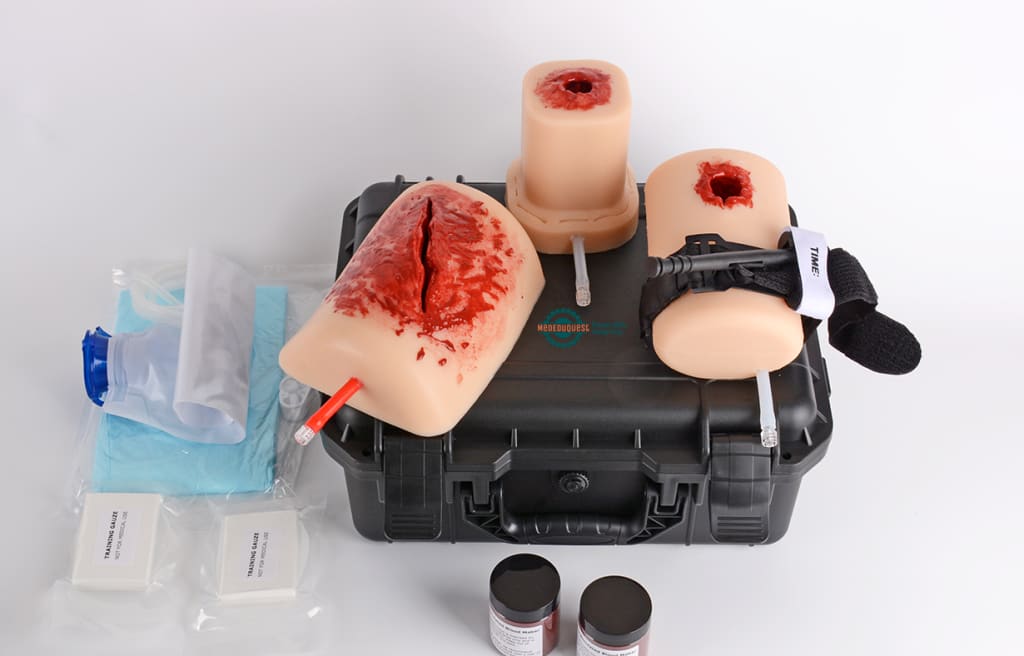
This is where MedEduQuest plays a crucial role. Their wound packing trainer models replicate the depth, resistance, and bleeding response of real traumatic injuries. Unlike static mannequins, these trainers allow learners to experience the tactile feedback of gauze placement and the pressure required to control bleeding.
For medical and nursing students, practicing with such tools bridges the gap between theory and practice. Reading about hemorrhage control in a textbook is one thing; actually performing it in a lifelike simulation is another. MedEduQuest trainers ensure that learners not only understand the steps but also internalize the muscle memory needed to respond effectively under stress.
My Own Training Experience
After witnessing that ER trauma case, I decided to sharpen my wound management skills. I attended a trauma simulation workshop where we practiced on advanced wound trainers. At first, I struggled - my gauze slipped, my pressure wasn't consistent, and I second-guessed every move. But repetition made all the difference.
With every attempt, I became more comfortable. The trainer responded realistically, showing whether my pressure was sufficient or whether I needed to adjust my technique. Over time, I gained a sense of rhythm, and with it came confidence.
Months later, while volunteering at a community event, I faced a smaller but still urgent situation. A man cut his forearm deeply on broken glass. It wasn’t life-threatening, but the bleeding was steady. Thanks to the simulation practice, I instinctively applied direct pressure, used gauze, and controlled the bleeding until paramedics arrived. The patient stabilized quickly, and I realized how training had transformed my response.
That moment reinforced an important truth: practice in safety leads to performance under pressure.
Beyond the Classroom
MedEduQuest trainers are not limited to universities or hospitals. They are also valuable in:
- EMS training centers preparing paramedics for emergencies.
- Military field medic programs where hemorrhage control is a daily reality.
- Community first aid initiatives teaching Stop the Bleed techniques.
- Disaster response drills where volunteers must act under chaotic conditions.
These trainers are versatile enough to serve both professional and civilian training needs, ensuring that more people are prepared to act when severe bleeding occurs.
Final Thoughts
In trauma care, seconds matter. The confidence to respond quickly doesn’t come from reading about techniques; it comes from practicing them until they become second nature. That's why MedEduQuest Wound Packing Trainers are so valuable.
For students, educators, EMS personnel, and even community responders, these trainers offer something irreplaceable: the chance to practice lifesaving techniques in a safe, controlled, and realistic environment. When the unexpected happens, preparation is everything. And with MedEduQuest trainers, preparation is exactly what you get.
About the Creator
Enjoyed the story? Support the Creator.
Subscribe for free to receive all their stories in your feed.
Comments
There are no comments for this story
Be the first to respond and start the conversation.