
Why Continuous Learning Is the Key to Personal Growth and Success
The path leads to success

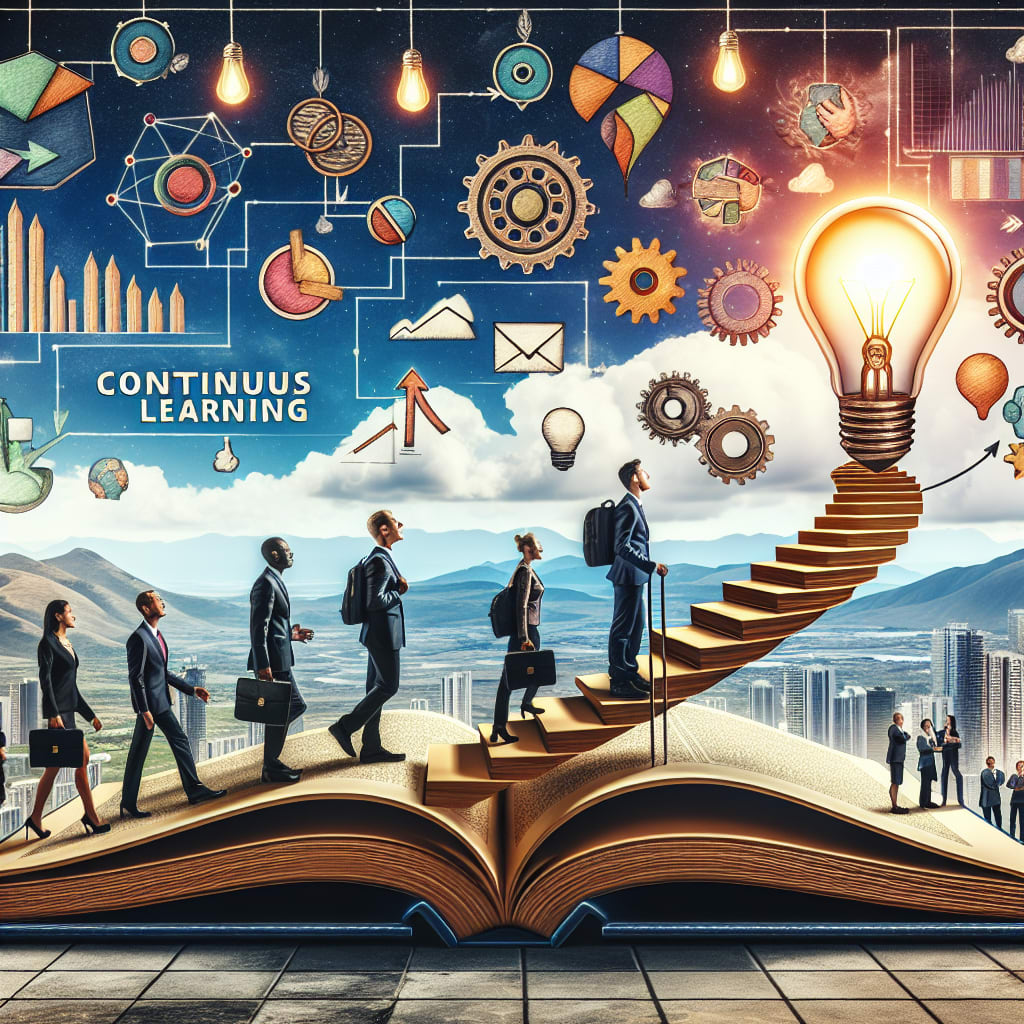
The average worker will need to reskill entirely two to three times over the course of their career, according to the World Economic Forum. That's not a distant forecast — it's already happening. Understanding why continuous learning is the key to personal growth and success is not a motivational slogan — it's a documented pattern visible in the careers of the most resilient, high-performing people across every industry. If you're not actively learning, you're quietly falling behind.
This article breaks down what continuous learning actually means, why it matters more right now than at any previous point in modern history, and exactly how you build it into your life — starting today.
What Continuous Learning Actually Means
Continuous learning is the ongoing, self-directed pursuit of knowledge and skills that extends well beyond formal education. It doesn't require a classroom, a degree programme, or a corporate training budget.
It looks like this in practice:
The podcast you play during your morning commute
The book you finish over two weeks of lunch breaks
The online course you work through on Sunday mornings
The monthly coffee with a mentor who is ten years ahead of you
At its core, continuous learning is a mindset — the operating belief that growth never has a finish line, and that curiosity is a professional asset, not just a personality trait. It's not about being the smartest person in the room. It's about being the one who keeps asking better questions long after everyone else has stopped.
Why Continuous Learning Is the Key to Surviving Modern Career Shifts
The pace of change is not slowing down. The WEF's Future of Jobs Report estimates that 85 million jobs will be displaced by automation and AI by 2025, while 97 million new roles will emerge that require entirely different skill sets. The gap between those two numbers is filled by people who learn.
Here's the thing — this isn't just about keeping up. Lifelong learners don't tread water; they position themselves ahead of the wave.
Consider two concrete examples:
Sara Blakely, founder of Spanx, had no background in fashion or manufacturing. She educated herself obsessively about sales, product design, and business law, eventually building a brand worth over $1 billion. Her unfair advantage wasn't talent — it was her willingness to learn whatever the next stage of growth required.
Elon Musk, before founding SpaceX, had no aerospace engineering credentials. He read textbooks, interviewed experts, and applied first-principles thinking until he understood rocket propulsion well enough to challenge established aerospace contractors on cost and design. Whether you admire him or not, the learning methodology is undeniable.
These aren't outliers. They're what happens when a growth mindset compounds over time.
The mistake most people make here is waiting for their employer, their industry, or their circumstances to prompt the learning. Proactive self-education — the ongoing commitment to acquiring new skills and perspectives — is what separates people who adapt from people who get left behind.
5 Proven Benefits of Lifelong Learning for Personal and Professional Growth
Committing to continuous self-improvement doesn't just make you more knowledgeable — it restructures how you perform across every dimension of life.
1. Accelerated Personal Growth
Every skill you absorb, every perspective you encounter, and every idea you wrestle with expands your cognitive range. Personal growth isn't accidental. It's the direct, compounding result of deliberate, ongoing learning. You become better at thinking, not just better at doing.
2. Career Resilience and Marketability
Professionals who invest consistently in skill development outperform peers who rely on existing knowledge. A LinkedIn Workplace Learning Report found that 94% of employees say they would stay longer at a company that invested in their learning and development. Adaptability — the hallmark of a continuous learner — is now among the most sought-after traits across hiring managers in virtually every sector.
3. Compounding Confidence
There's a specific kind of confidence that comes from knowing you can figure things out — not because you already know the answer, but because you've proven to yourself, repeatedly, that you can learn what you need. Each new skill you master strengthens that belief.
4. Cognitive Health and Mental Sharpness
Sustained intellectual engagement is one of the most well-documented strategies for reducing cognitive decline. Research published in Neurology found that mentally stimulating activities significantly delay the onset of dementia-related symptoms. Learning doesn't just build your career — it protects your brain.
5. Expanded Opportunity Surface
The more you know, the more patterns you recognize across fields, industries, and conversations. Lifelong learners routinely stumble into opportunities that specialists miss, because they're operating with a broader map. Knowledge compounds — and so do the connections it creates.
How to Build a Continuous Learning Habit That Actually Sticks
The biggest misconception about self-directed learning is that it demands large blocks of free time or expensive programmes. What actually works is consistency applied in small, repeatable doses.
Here's a practical system you can implement immediately:
Read 15–20 minutes daily. One book per month equals 12 books per year — more than most adults read in a decade. Priorities books over articles when you want depth.
Convert dead time into learning time. Commutes, gym sessions, and household tasks become high-value input time with podcasts or audiobooks. Platforms like Audible and Spotify Podcasts require zero additional schedule space.
Take targeted micro-courses. Coursera, Udemy, and LinkedIn Learning offer courses on almost any skill — leadership, data analysis, copywriting, negotiation — many for under $20. Treat one course per quarter as a non-negotiable.
Find a mentor or join a peer learning group. Social learning accelerates retention dramatically. A mentor compresses your learning curve by letting you borrow their experience. A mastermind group holds you accountable and exposes you to perspectives you'd never generate alone.
Reflect actively — don't just consume. Write a short journal entry after finishing a chapter or course module. Teach a concept to a colleague. Record a voice note to yourself. Active processing converts information into retained knowledge; passive consumption rarely does.
Set a single weekly learning goal. Not a grand curriculum — one specific, achievable target. "This week I'll finish chapter three" or "I'll complete module two of the copywriting course." Momentum builds from small wins, not sweeping intentions.
Overcoming the Real Barriers to Lifelong Learning
Even committed learners hit resistance. Recognizing these barriers — and having a specific response ready — is what separates people who sustain the habit from those who abandon it.
"I don't have enough time." Time is rarely the real constraint — priorities are. Audit one week of your schedule honestly. Most people find 30–60 minutes per day currently going to low-value screen time. Protect 15 minutes of that for learning as if it were a meeting with your most important client.
"I don't know where to start." Pick the skill that would most immediately improve your life or career right now. Curiosity is a reliable compass. Don't wait for the perfect learning plan — a mediocre start today beats an optimized plan that never launches.
"I lose motivation quickly." Motivation is unreliable. Habit is not. Attach learning to an existing routine — your morning coffee, your lunch break, your post-dinner wind-down. When the behavior is anchored to a trigger that already exists, it requires far less willpower to sustain.
"I forget what I learned." Apply new knowledge as fast as possible. Use a new framework in your next meeting. Write about a concept you just studied. Teach it to someone on your team. Application is the fastest route to retention — your brain keeps what it uses.
Why Continuous Learning Is the Key to Long-Term Success — Not Just Short-Term Gains
Here's a nuance worth naming continuous learning is not a productivity hack or a quarterly strategy. It's a long-term identity shift.
Short-term learning — studying for a certification, cramming for an interview — produces short-term results. What produces sustained personal growth and career success is the compounding effect of learning as a lifestyle. Small daily inputs, sustained over years, create capabilities that feel almost unfair compared to those who stopped learning when they stopped being students.
This is precisely why continuous learning is the key to personal growth and success over the long arc of a career: the return on learning is not linear. It's exponential. And it rewards patience.
The person who reads consistently, reflects deliberately, and applies knowledge actively will, over five to ten years, operate at a level that seems disproportionate to the visible effort invested — because the real investment happened quietly, every day, long before the results became obvious.
About the Creator
Irfan Ali
Dreamer, learner, and believer in growth. Sharing real stories, struggles, and inspirations to spark hope and strength. Let’s grow stronger, one word at a time.
Every story matters. Every voice matters.
Enjoyed the story? Support the Creator.
Subscribe for free to receive all their stories in your feed.
Comments
There are no comments for this story
Be the first to respond and start the conversation.