
What’s a wayfinding strategy and how do we get one?
Learn more..
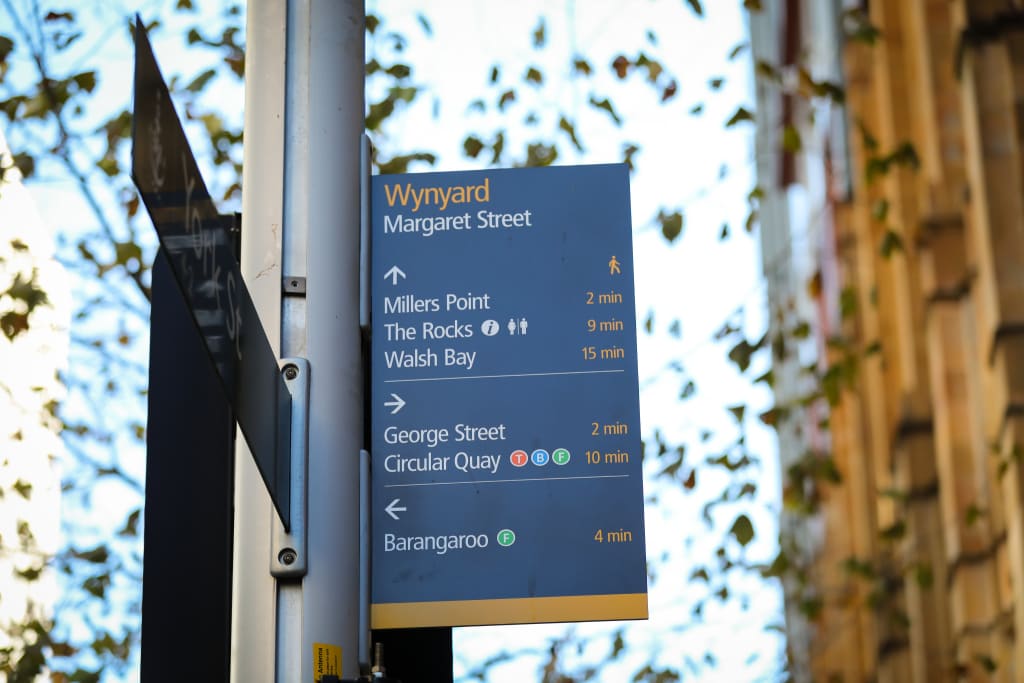
Wayfinding refers to determining one’s location and navigating through an area to arrive at a desired destination. This is particularly useful in public spaces like business districts, town centres, parks, museums, airports, hospitals, and any area where visitors need to easily find their way. In this blog post, we will talk about how to create an effective navigational strategy for your public space.
Creating a Good Strategy
A successful strategy starts with understanding the users, their needs and their journeys. Here are some steps to create an effective plan:
1. Conduct a site evaluation
Conducting a thorough site evaluation is essential to understanding current issues and opportunities. This initial assessment should identify foot traffic patterns, obstacles, site features, and signage inventory.
This information will highlight current problems to address and opportunities to improve your plan through the design of an intuitive navigation system.
2. Define the objectives
Define clear goals for the course-plotting strategy to achieve, including improved navigation, reduced congestion, and reinforced branding. This is important to measure the success of the strategy. Gathering input from stakeholders like contractors, architects, and government agencies is also crucial since they may have objectives that need to be incorporated into the plan. Their insights can help shape the goals to meet the needs of all involved parties.
3. Develop a toolkit
A comprehensive toolkit contains various signage types that effectively guide people through the space. The primary components are identification, directional, informational, and regulatory signs.
The style, format and visual characteristics of all signage – including font, colour, size and material – should be consistent to achieve cohesion. All elements of the toolkit should align with and reinforce the site’s branding for a unified visual identity. In addition, consider creating a hierarchy of wayfinding products to organise signage into a clear structure, from general to specific. To ensure effective navigation, these products can be categorised into three key types:
General-purpose signs: These include welcome signs or key decision points like perimeter monoliths or fingerposts, often placed at the entrance or main junctions to help visitors orient themselves.
Intermediate confirmations: Route markers are used along pathways to reassure people they are on the correct route. These can be placed at key intervals or after directional changes.
Granular details: Directories, maps, and final destination signs (such as room or building signage) provide specific information. They are typically found near entrances, lobbies, or at the end of a journey within the space.
4. Plan the signage placement
Proper signage placement is essential to ensure the signs are visible and effective. They should be located at:
- Entry points and exits so visitors are immediately oriented upon entering the space.
- Junctions and intersections where people need directional guidance to choose their path.
- Decision-making points where people must choose between multiple options. These are often the most confusing locations.
- Locations that tend to confuse or where people frequently ask for directions. These problem areas should be prioritised.
5. Collaborate with stakeholders
Collaborating with all relevant stakeholders is essential to develop an effective and feasible navigational plan. Involving contractors, designers, local authorities and other key parties ensures that your strategy is aligned with the constraints, and overall project goals, and adheres to the standards.
What are the four types of navigational signage?
There are four primary types of signage and each of them serves a distinct purpose:
Identification
Identification helps users understand where they are. Some of its best examples include building names, room numbers, or landmarks within a site. This helps orient users and establishes points of reference which are crucial for an effective navigational system.
Directional
A directional signage helps people find their way from one place to another. This signage can be seen with different symbols like arrows, turn signs, path markers, exit signs etc. The directional signs are usually placed at decision points and junctions and are commonly used in spaces where people need clearer guidance to navigate confusing environments.
Informational
The informational signage gives visitors some details about their location. For example, room numbers, exhibit names, operating hours and other relevant details. These signs help people better understand and make use of the facilities within a site, enriching their overall experience in the area.
Regulatory
Regulatory signage communicates rules, regulations, and safety requirements through signs and notices. They indicate mandatory actions or restrictions that users must follow for their own safety and to avoid disrupting operations. Common examples of regulatory signage include:
- No smoking signs
- Exit signs
- Directional signs
- Handicap parking signs
About the Creator
Enjoyed the story? Support the Creator.
Subscribe for free to receive all their stories in your feed.
Comments
There are no comments for this story
Be the first to respond and start the conversation.