
What is the Payback Period for Solar Panels in UK Industrial Estates?
Calculating When Your Industrial Solar Investment Pays Off
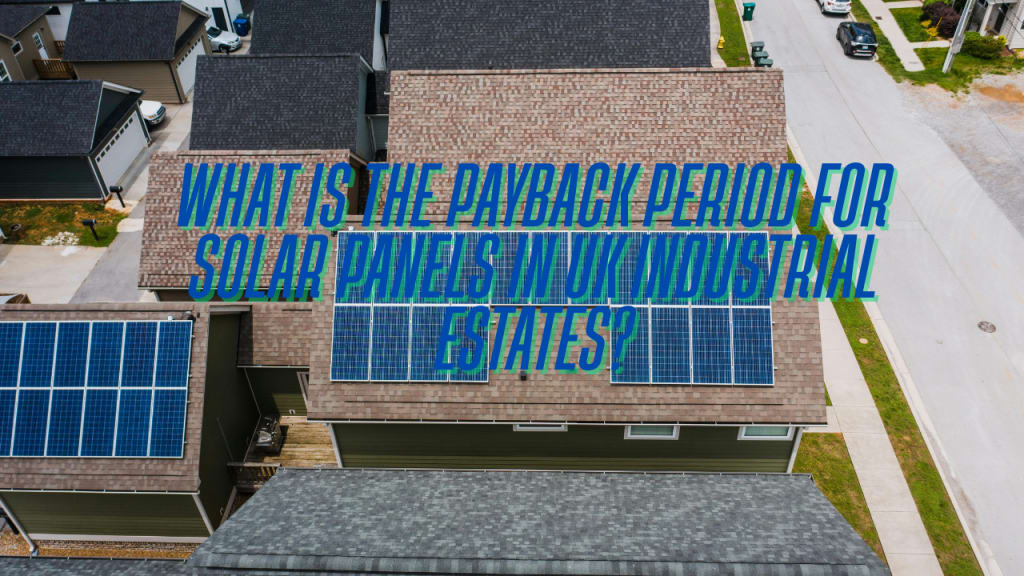
As businesses across the UK strive to reduce operational costs and embrace sustainable practices, commercial solar panels (also known as Photovoltaic PV Systems) have emerged as a compelling solution for UK industrial estates, including factories, warehouses, and commercial rooftops. Installing solar panels can significantly cut electricity bills, enhance energy independence, and contribute to environmental goals like carbon footprint reduction and carbon emissions savings, measured as carbon savings in tonnes CO₂/year. However, one of the most critical questions for decision-makers is: What is the payback period for solar panels in UK industrial estates? This article explores the payback period (often referred to as ROI or break-even point), factors influencing it, and why investing in industrial solar PV systems is a smart financial move for industrial estates, delivering a total ROI of often 200–300% over system lifetime. We recommend Solar Hut UK, a trusted provider of solar solutions certified by the Microgeneration Certification Scheme (MCS).
Understanding the Solar Panel Payback Period
The payback period for solar panels, with a typical payback period range of 5–10 years for well-optimized systems, refers to the time it takes for the energy savings (measured in kWh/year) and potential export tariff income (such as through the Smart Export Guarantee (SEG), a UK solar export tariff) to equal the installation cost (upfront capital expenditure, often £/kW). For UK industrial estates, this metric is crucial in assessing the solar ROI (Return on Investment) and determining the breakeven point (the year when savings equal investment). In the fastest cases, payback can be 4–6 years with high energy demand, strong SEG rates, and electricity price hikes (e.g., 10% annual increase), while longest cases may take 10–12 years with lower usage, suboptimal roof conditions, or no battery storage. To answer What is the average payback period for solar panels in UK factories?, it typically ranges from 2 to 7 years for industrial setups, as supported by insights from the Energy Saving Trust.
Why Industrial Estates Benefit from Solar Panels
UK industrial estates, with their large commercial rooftops and high electricity demands, are ideal candidates for industrial solar PV systems. Factories, warehouses, and distribution centers typically operate energy-intensive equipment, leading to substantial electricity bills. By generating their own power, businesses can achieve significant electricity cost reduction and progress toward the UK’s Net Zero Targets by 2050, contributing to carbon savings. Additionally, solar panels align with Renewable Energy Guarantees Origin (REGO) certifications, enhancing a company’s sustainability credentials and potentially increasing the value of commercial rooftops through carbon emissions reductions over a system lifespan of 25–30 years, offering 15–20 years of profit post-payback.
Factors Influencing the Payback Period
Several variables, or key value drivers, affect what is the payback period for solar panels in UK industrial estates. Understanding these factors, including financial attributes, technical attributes, and policy attributes, can help businesses answer How to calculate solar panel payback for industrial estates in the UK? and make informed decisions, as guided by organizations like Solar Energy UK.
1. Initial Installation Costs
The installation cost of a Photovoltaic PV System, a key value driver ranging from £600–£1,200/kW, is a primary determinant of the payback period—lower costs lead to shorter payback. For UK industrial estates, costs depend on the system size (measured in kWp capacity), the type of commercial solar panels, and additional components like inverters and mounting structures. On average, a commercial solar system can cost between £20,000 and £100,000, depending on the scale and complexity. However, prices have decreased in recent years due to advancements in solar PV efficiency (typically 18–22% solar panel efficiency) and increased competition among installers. Businesses can also benefit from government incentives like Capital Allowances (offering 100% First-Year Allowance), a form of business energy tax reliefs, to offset costs, alongside minimal maintenance costs (around 1–2% of system cost/year).
For high-quality installations tailored to industrial needs, Solar Hut UK offers competitive pricing and MCS-certified services, ensuring businesses maximize their solar ROI.
2. Energy Consumption Patterns
UK industrial estates with high daytime energy consumption profiles benefit most from commercial solar panels, as they can directly consume 30–70% of the electricity generated during peak sun hours (typically 3–4 hours daily in the UK, varying by local solar irradiance). Higher energy self-consumption leads to faster payback. This reduces reliance on grid electricity, priced at approximately 20–35p/kWh in 2025 based on current commercial electricity rates, often subject to peak/off-peak pricing (time-of-use tariffs). The more energy a business consumes from its solar system, the greater the energy savings (in kWh/year) and the shorter the payback period. This answers Do solar panels pay for themselves faster in commercial vs. residential UK?—commercial systems often recover costs quicker due to higher consumption and grid parity status, where solar costs are competitive with grid electricity.
Incorporating solar battery storage, such as lithium-ion systems or Tesla Powerwall, with battery storage integration costing £400–£800/kWh, can significantly enhance the efficiency of a Photovoltaic PV System. Battery storage stores excess energy generated during the day for use during evenings or cloudy periods, increasing self-consumption and reducing grid dependency. While adding battery storage increases the installation cost (typically £5,000–£15,000 for commercial systems), it can shorten the payback period by maximizing energy savings long-term, despite potentially extending payback initially. For UK industrial estates with fluctuating energy consumption profiles, battery storage ensures no generated power goes to waste, addressing Is battery storage worth it for industrial solar payback in the UK?—it often is for factories and warehouses with variable energy needs.
4. Smart Export Guarantee (SEG)
The Smart Export Guarantee (SEG), regulated by Ofgem, allows businesses to earn export tariff income at 1–15p/kWh (varies by supplier; higher rates improve payback) by selling excess electricity back to the grid, similar to net metering. For UK industrial estates with large solar arrays, exporting surplus energy can provide additional income, further reducing the payback period. This directly relates to How does the Smart Export Guarantee affect solar payback for UK businesses?—SEG can shave months or years off the payback period by generating revenue, unlike the now-closed Feed-in Tariff (FiT), a historical UK incentive.
5. Government Incentives and VAT Relief
Since April 2022, the UK government has offered a VAT reduction (0% VAT, previously 5% VAT, vs. standard 20% on solar panels and battery storage systems), significantly lowering installation costs. While government grants for commercial solar are limited, this VAT reduction, along with other government incentives like Capital Allowances (100% First-Year Allowance) and business energy tax reliefs (e.g., exemptions from the Climate Change Levy), can save businesses thousands of pounds, accelerating the payback period. New policies or future grants may further improve ROI. For those researching Best solar incentives for UK industrial solar installations, the VAT reduction is a key benefit to consider, as highlighted by the Energy Saving Trust. Note that planning permission requirements may apply, varying by local authority.
6. System Size and Solar Panel Dimensions
The system size of the Photovoltaic PV System (in kWp capacity) directly impacts both costs and kWh output. Larger systems generate more electricity but require more roof space and higher investment. Understanding solar panel dimensions is crucial for UK industrial estates to optimize commercial rooftop utilization, especially after conducting a shading analysis to assess shading & obstructions that could reduce output. Standard commercial panels are approximately 2m x 1m, with roof orientation & tilt (south-facing being optimal) playing a critical role. Solar Hut UK provides tailored consultations to design systems that fit specific commercial rooftop configurations, ensuring maximum energy production and addressing What factors shorten solar payback periods for UK warehouses?—optimized system size and solar PV efficiency are key value drivers.
7. Location and Solar Irradiance
The UK solar potential, driven by local solar irradiance, shows regional variations in the UK that affect energy generation. South England enjoys higher solar irradiance (up to 1,100 kWh/m² annually), leading to 5–7 year payback periods, while Scotland/North England have lower sunlight (around 900 kWh/m²), resulting in 6–9 year payback periods. UK industrial estates in sunnier locations typically enjoy shorter payback periods due to higher kWh output, as explored in Comparing solar panel payback periods across UK regions. This variation, influenced by UK solar potential, highlights the importance of location in calculating solar ROI.
8. Electricity Price Trends
With electricity price trends showing steady energy inflation and an electricity price escalation (projected at 10% annual increase could cut payback by 1–2 years), solar panels offer protection against price volatility. The higher the current commercial electricity rates (20–35p/kWh), the more businesses save by generating their own power, shortening the payback period. This directly addresses How do rising electricity prices impact solar ROI for UK factories?—energy inflation makes solar investments increasingly attractive. Additionally, carbon tax policies indirectly enhance the financial benefits of solar panels by incentivizing carbon savings (tonnes CO₂/year).
Calculating the Payback Period: An Example
To illustrate what is the payback period for solar panels in UK industrial estates, let’s consider two examples inspired by Case studies of solar payback in UK industrial parks. First, a hypothetical scenario from earlier:
System Size: 50 kWp capacity (suitable for a medium-sized factory)
Installation Cost: £50,000 (after VAT reduction, within £600–£1,200/kW)
Annual Energy Production: 45,000 kWh (assuming 900 kWh/kWp in a central UK location with optimal roof orientation & tilt)
Energy Savings: 45,000 kWh/year x 30p/kWh = £12,150 per year (at 20–35p/kWh rates)
Export Tariff Income: 5,000 kWh exported at 8p/kWh (SEG rates) = £500 per year
Total Annual Benefits: £12,150 + £500 = £12,650
Payback Period: £50,000 ÷ £12,650 ≈ 3.95 years (within fastest cases: 4–6 years)
Now, a more detailed example payback calculation for a larger system:
System Size: 100 kWp (industrial commercial rooftop)
Installation Cost: £85,000 (after VAT relief, within £600–£1,200/kW)
Annual Generation: 85,000 kWh (UK average)
Self-Consumption: 60% (51,000 kWh/year, a key value driver)
Grid Savings: 51,000 kWh × 30p/kWh = £15,300/year
Exported Energy: 34,000 kWh × 8p/kWh (SEG) = £2,720/year
Total Annual Savings: £18,020
Payback Period: £85,000 ÷ £18,020 ≈ 4.7 years (excludes maintenance costs of ~£500/year and assumes 5% annual electricity price inflation)
Both scenarios show the Photovoltaic PV System reaching its breakeven point in under 5 years, aligning with fastest cases. With a system lifespan of 25–30 years, the remaining years provide substantial energy savings and export tariff income, despite a degradation rate of approximately 0.5–1% annual efficiency loss.
Impact of Battery Storage
If the 50 kWp UK industrial estate adds a 20 kWh battery storage system for £10,000 (within £400–£800/kWh), the total installation cost rises to £60,000. However, battery storage integration increases self-consumption by 30% (to 60–70%), reducing grid imports by an additional 10,000 kWh/year (£2,700 in savings at 20–35p/kWh). The revised payback period becomes:
Total Annual Benefits: £12,150 + £2,700 + £500 = £15,350
Payback Period: £60,000 ÷ £15,350 ≈ 3.91 years (still within fastest cases: 4–6 years)
Despite the higher upfront cost, the payback period remains similar due to increased energy savings, demonstrating the long-term value of battery storage for industrial solar PV systems.
Typical Payback Periods for UK Industrial Estates
Based on industry data from Solar Energy UK, the typical payback period range for commercial solar panels in UK industrial estates is 5–10 years, with fastest cases at 4–6 years for high-demand sites with strong SEG export tariffs and electricity price hikes, and longest cases at 10–12 years for sites with lower usage or suboptimal conditions. Smaller systems (10–20 kWp capacity) may take 5–7 years, while larger arrays (50–100 kWp) can achieve break-even point in as little as 2–4 years, as seen in the examples above. These figures assume no financing costs, as cash purchases yield the shortest payback periods. For solar financing options, interest payments may extend the payback period by 1–2 years, factoring in maintenance costs.
Why Choose Solar Hut UK?
For UK industrial estates looking to invest in industrial solar PV systems, partnering with a reliable installer is essential. Solar Hut UK stands out as a premier provider, offering:
Expert Consultations: Tailored system designs based on energy consumption profiles, shading analysis, and commercial rooftop specifications, including optimal roof orientation & tilt.
High-Quality Components: Durable solar panels and advanced battery storage solutions with high solar panel efficiency (18–22%).
Competitive Pricing: Transparent quotes within £600–£1,200/kW, supporting solar financing options and business energy tax reliefs.
Comprehensive Support: From installation to maintenance (with low maintenance costs), ensuring long-term value and minimal degradation rate.
Located in Cardiff, Solar Hut UK serves businesses across the UK, delivering MCS-certified projects that maximize solar ROI and energy independence.
Long-Term Benefits Beyond the Payback Period
Once the payback period is complete, commercial solar panels continue to deliver long-term value for their system lifespan of 25–30 years, yielding 15–20 years of profit and a total ROI of 200–300%. Key benefits include:
Free Electricity: Generated power is essentially free, slashing operational costs and ensuring electricity cost reduction.
Increased Property Value: Solar-equipped commercial rooftops are more attractive to buyers and tenants.
Environmental Impact: Carbon savings (tonnes CO₂/year) align with Net Zero Targets and corporate social responsibility goals.
Energy Security: Protection against energy inflation and electricity price escalation enhances energy independence.
Strategies to Shorten the Payback Period
Businesses can take proactive steps to accelerate their solar investment’s break-even point, addressing What factors shorten solar payback periods for UK warehouses?:
Maximize Self-Consumption: Schedule energy-intensive operations during peak sun hours to optimize energy consumption profiles (30–70% self-consumption).
Invest in Battery Storage: Battery storage integration to store excess energy, as discussed in Is battery storage worth it for industrial solar payback in the UK?.
Leverage SEG: Sign up with suppliers offering competitive SEG rates (1–15p/kWh) to boost export tariff income.
Optimize System Design: Work with experts like Solar Hut UK to ensure efficient panel placement, factoring in roof orientation & tilt and shading & obstructions.
Monitor Performance: Regularly maintain and clean panels to sustain solar panel efficiency and minimize degradation rate.
Conclusion
The question What is the payback period for solar panels in UK industrial estates? has a promising answer: a typical payback period range of 5–10 years, with fastest cases at 4–6 years and longest cases up to 10–12 years, driven by key value drivers like system cost (£600–£1,200/kW), commercial electricity rates (20–35p/kWh), and SEG export tariffs (1–15p/kWh). Factors like installation cost, energy consumption profiles, battery storage integration, and government incentives like VAT reduction (0% VAT), Capital Allowances (100% First-Year Allowance), and Smart Export Guarantee (SEG) rates play a significant role in determining the exact payback period range. By partnering with a trusted provider like Solar Hut UK, UK industrial estates can unlock substantial energy savings (in kWh/year), enhance sustainability through carbon savings, and future-proof their operations. With energy inflation, electricity price escalation (10% annual increase), new policies, and Net Zero Targets, alongside carbon tax benefits, now is the ideal time to invest in commercial solar panels for a total ROI of 200–300% over a 25–30 year lifespan.
External Reference
- Solar System Battery Guide: Choose Wisely
- Best Battery for 2025: Lead-Acid, Lithium, or Gel?
- Discover Your Perfect Solar Battery Setup
- Solar Battery Pricing Guide
- Learn About Lead-Acid Batteries in Solar Storage
- Diverse Applications of Lead-Acid Batteries
- Optimize Your Solar Setup: Lead-Acid Battery Care and Maintenance
- Recycling Lead-Acid Batteries for a Greener Solar Future
- Choose the Right Solar Battery: Lead-Acid or Alternatives?
- Flow Batteries for Solar Energy Storage
- How Do Solar Batteries Work in the UK Climate
- Cardiff Homeowners Save with Solar Panels
- Are solar panels worth it for Cardiff businesses in 2025?
- Best solar panel maintenance services Cardiff
- Hire Solar Installers Near Lamby Way Cardiff
- Solar Energy Solutions for Logistics Companies in Cardiff
- Solar Inverter with Battery Combo for Cardiff Industrial Setups
- How to Avoid Rising Electricity Costs in Cardiff Using Solar
- Best solar power solutions for Cardiff manufacturing plants
- How Solar Batteries Store Energy During Short Daylight in the UK
- How to Switch Your Business to Solar Power in Cardiff
- Solar Battery Recycling Services Near Cardiff
- How to Monitor Energy Savings from Solar in Wales
- Low-Interest Finance for Solar Battery Storage in Cardiff
- Business Solar Panel Tax Relief in Cardiff UK
- How do solar batteries work with backup generators in Cardiff?
- What are the fire risks of solar battery systems?
- Who certifies solar installations in Cardiff industrial areas?
- How to Make Your Business More Sustainable with Solar
- Is It Cheaper to Install Solar Panels in 2025 or Wait?
- Should I lease or buy solar panels for my warehouse?
- What are signs my solar system needs maintenance?
- What to do if your solar battery isn’t charging properly?
- How does solar compare with other renewable energy options?
About the Creator
Enjoyed the story? Support the Creator.
Subscribe for free to receive all their stories in your feed.
Comments
There are no comments for this story
Be the first to respond and start the conversation.