
What is Talented? A learner’s honest take
I spent months confused by music theory — then I found an app that made sense
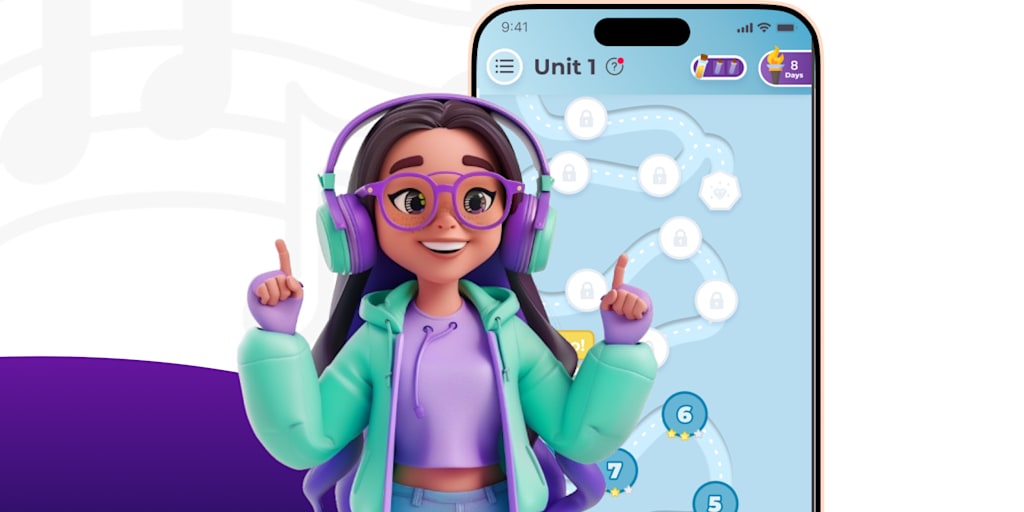
Before I explain what this app does, let me tell you what I was struggling with. I couldn’t read sheet music. I couldn’t tell if a note was out of tune. Rhythm felt random. Every time I tried to learn an instrument, I hit the same wall: I didn’t understand music itself.
Then someone told me about Talented. I downloaded it on my phone — iOS, but it also works on Android — and started clicking around. At first I was skeptical. Another music app? But this one was different.
Who is it for?
The first thing I noticed is that the app adapts to you. When you open it, it asks about your level. I said “absolute beginner.” My friend, who already plays guitar, tried it and chose “experienced.” We got completely different paths. That made sense to me.
It works for children and adults, self-learners and music school students. There’s gamification — points, badges, little competitions — which honestly kept me coming back. There’s also a personalized AI teacher that adjusts the difficulty based on how you answer. I didn’t expect that to work, but it did.
Three areas of music learning
What really clicked for me is how Talented breaks down music into three parts:
Music theory — notes, tones, harmony, how to read and write. This is the grammar of music. You don’t need to master it all at once, but building a basic understanding changed everything for me.
Basic musical abilities — hearing notes and chords, keeping rhythm, reading sheet music faster. Some people are naturally better at this, but the app convinced me these skills can be trained. It takes patience, but once they start improving, your whole experience of music changes.
Instrument proficiency — actually playing a physical instrument. This is where you express emotion and connect with listeners. Talented does not teach this. And I respect that. The app leaves instrument practice to a teacher who can watch your hands, fix your posture, and guide your sound production. No virtual piano can replace that.
What the app actually does
So Talented focuses on the first two areas — theory and basic abilities — through two sections: Learning Path and Talent Gym.
Learning Path gives you short lessons, each 1–3 minutes. That seemed too short at first, but I realized the point is focus. You can practice 10–20 minutes daily, or even just 3 minutes. Consistency beats long, unfocused sessions. I started doing 15 minutes every morning, and after a month I noticed I could hear intervals I never heard before.
Talent Gym is more like drills — ear training, rhythm exercises, sight-reading. It feels like a game, but it’s building real skills.
The plateau problem
Progress in music is never a straight line. You practice for days and feel nothing. Then suddenly something clicks. Talented uses gamification and a virtual teacher to make that plateau less frustrating. You see small wins. You get feedback immediately. And you can learn with friends, which kept me honest.
Why I stick with it
Look, no app will make you a virtuoso overnight. But Talented helped me understand music instead of just memorizing songs. I still practice on a real piano with a teacher. The app just makes those practice sessions less painful — because I actually understand what I’m trying to do.
For me, that’s the point. Not to replace practice, but to make every minute of it count.
Have you ever tried learning music theory without an instrument? What worked for you?
About the Creator
Enjoyed the story? Support the Creator.
Subscribe for free to receive all their stories in your feed.
Comments
There are no comments for this story
Be the first to respond and start the conversation.