
What is a Takeoff in construction?
What is a Takeoff in Construction - Guide 2025

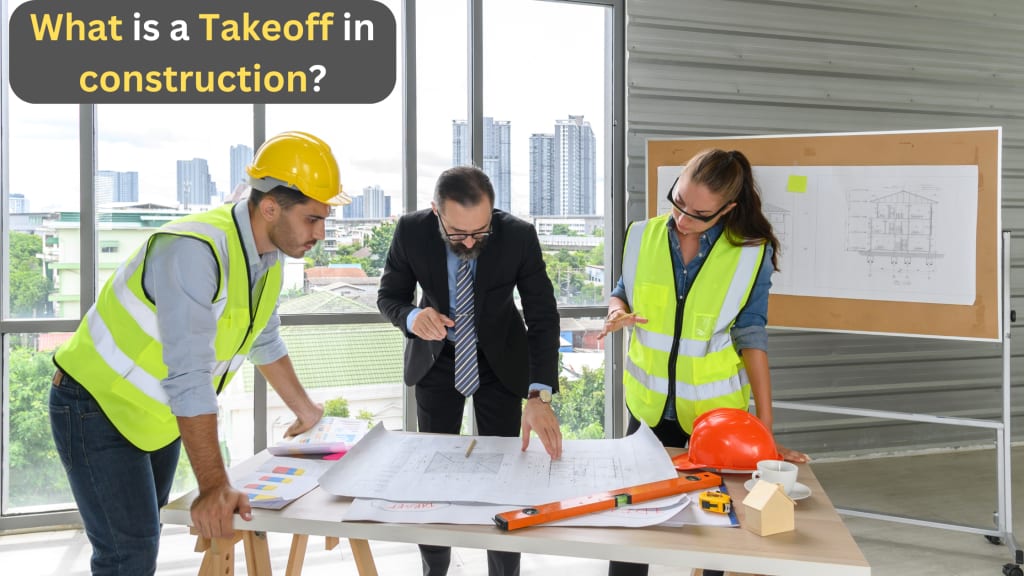
perform the work on the project. In basic words, this refers to being the base for any construction estimation process and remains one of its vital components while establishing the price and duration for the entire work. This is an indispensable process that takes into account every material, labour, and resource used for the project, so it forms a basis of all things from the estimation of cost and resource allocation up to the planning.
The takeoff in construction helps avoid unnecessary costs for the contractors while ensuring accurate project bidding; therefore, it keeps actual work within the lines of the project goals. The more complex a construction project becomes, the more critical its takeoff becomes, and oversights and undersupply scenarios can mar the success of a project. This article will give you information on what a construction takeoff is, the type of takeoffs, how to get started, who performs them, and what construction takeoff software can help save time and money for estimators.
What is included in a construction takeoff?
A takeoff in construction is the process of converting blueprints into a detailed breakdown of material quantities that helps contractors estimate costs, set budgets, and plan timelines appropriately. It is the calculation of essential materials, such as concrete, steel, wood, and wiring, ensuring that everything required for construction is accounted for before work begins.
For contractors working on projects in cities such as Miami, Orlando, and Tampa, accurate estimates are crucial to avoid budget overruns and project delays. They hire Florida Construction Takeoff specialists for better assistance, help minimize errors, improve cost accuracy, and enhance the chances of submitting competitive bids.
The takeoff process involves determining the quantities of materials so that the right amount of supplies, including drywall, bricks, and lumber, is ordered without excess or shortage. Proper measurements prevent costly mistakes by ensuring accurate dimensions, and once all elements are assessed, contractors can develop precise cost estimates, improving their bidding strategies and overall profitability.
How to Prepare a Construction Takeoff?
It is a very systematic process that encompasses several steps before everything can be measured and estimated correctly in doing a construction takeoff. Here are the steps, which include
Review of the Construction Plans and Blueprints

Any takeoff starts by studying the construction drawings and blueprints. This will give a good view of the structural project, including its dimensions, material types, and layout. Each part of the building will be indicated on how it will be constructed from foundation to roof and the specifications regarding materials, finishes, and systems.
After the plans have been reviewed, the estimators or contractor must identify and list the required materials. This step involves carefully quantifying the amounts of materials needed for the project, such as lumber, steel reinforcement, concrete, tiles, or paint. For example, when estimating the amount of drywall, estimators may consider the dimensions of the walls and the thickness of the drywall needed.
Calculating labre and equipements needs
Estimate how many workers for how many hours would be required based on the construction operations. Labour hours would be computed as the activity like framing, roof, or wiring. All types of cranes, scaffolds or even excavators which would be required by the project must be estimated with the rental fees or their values.
Using Estimating Software or Doing it Manually:

Once the material, labour, and equipment have been identified, the estimator will use either manual calculations or construction takeoff software to perform the calculations. Traditional methods involve using measuring tapes, calculators, and spreadsheets to estimate quantities. However, most construction professionals today use construction takeoff software to automate the process, ensuring accuracy and efficiency.
Preparing a Comprehensive Estimate
After takeoff, it is then put into a full cost estimate, which comprises materials, labour, equipment, and other overhead expenses. This information is then used by contractors to calculate the total amount of expenses incurred in a project, which will be helpful in the bidding and pricing of a project.
Types of Construction Takeoff
There are very many types of different types of construction takeoffs that depend on the scope and the needs of the project, these include;
Material Takeoff:
Material takeoff (MTO) is strictly focused on the raw materials that would be needed to complete a construction project. Material takeoffs are usually applied on large-scale projects such as commercial buildings, highways, or infrastructure. It simply means that every piece of material to be used, be it concrete, steel or lumber, is documented correctly. For a house construction project, this will include items like lumber, concrete, bricks, roofing materials, and other structural materials for the building. Commercial buildings might consist of steel beams, glass windows, speciality materials, and even insulation.
Electrical/Mechanical Takeoff:
For MEP system projects, the specialised electrical and mechanical takeoff will particularly focus on materials, labour, and cost concerning electrical systems, for example, it might include quantities of wiring, lighting, fixtures, and electrical panels needed to ensure all electrical components are included.
2D Vs. 3D Takeoff:
2D Takeoff:
This is accomplished in conventional designs or hand sketches. Estimators measure dimensions and quantities manually from these 2D designs. This is mostly the conventional type for small projects.
3D Takeoff:
This technique employs building information modelling, where 3D models of the construction project are analysed. A 3D takeoff allows for more precise measurements, better visualisations, and more accurate quantities, particularly for larger and complex projects. This method integrates dimension, qualities, and material requirements directly into the model, significantly reducing the chances of errors.
Labor Takeoff:
Labour takeoff is the estimation of the number of workers that will be needed for the project concerning the skill levels and total labour hours. It facilitates the workforce allocation for the contractor without overstaffing or understaffing. By accurately assessing your labor needs, productivity is optimized, deadlines are met, and labor costs remain controlled. This process ensures that trades such as electricians, plumbers, and carpenters are available when needed, improving efficiency and project coordination.
Equipment Takeoff:
An equipment takeoff is a list of all machines and tools required in a construction project, ranging from big machinery to small devices. Accurate equipment sizing avoids the risk of project delays and guarantees that machines are, as and when available, to be used. It also helps in budgeting for rentals or purchases, reducing unnecessary expenses. A well-planned equipment takeoff enhances job site efficiency, preventing downtime due to missing or inadequate equipment.
Structural Takeoff:
A structural takeoff calculates the materials and labour associated with a building's frame, such as steel rebar, beams, columns, and foundations. Accurate estimation prevents material shortages or excess, ensuring project stability and cost efficiency. Construction workers use structural takeoffs to utilise materials while adhering to engineering standards
Who can Conduct Takeoff and Estimate?
Based on the scale and scope of the project, several professionals could be involved with the performance of takeoffs.
Estimators:
Estimators are primarily involved in generating takeoffs on construction projects, especially accurate takeoffs. A construction estimator typically has vast experience with construction material costs, labour, and specific project requirements and is often designated as the major person to conduct takeoffs.
General Contractors:
Sometimes, general contractors might take the measurements themselves, but for smaller jobs, this could be acceptable. For larger jobs, they normally hire professional estimators or specific subcontractors to do the task.
Specialised Subcontractors:
Subcontractors specialising in parts of the work, such as electrical, plumbing, or HVAC systems, do their takeoff. They'll be able to take care of all the elements related to the specialised area for which they will work.
Quantity Surveyors:
In larger construction projects, takeoff and cost estimation may be handled by quantity surveyors. The professionals ensure that every detail of the costs of the project is documented and accounted for.
Understand the difference between a Takeoff and an Estimate in Construction.
A construction takeoff is a detailed process of measuring and quantifying materials, labour, and equipment needed in a construction project. It involves extracting data from construction plans or blueprints or from digital models to determine the amount of concrete, steel, and lumber, among other materials, needed to complete the job. The takeoff process is highly focused on accuracy and precision in finding out exactly what is needed.
On the other hand, an estimate is a general financial projection based on the takeoff quantities.
It includes not only the material quantities but also the cost of labour, equipment, overhead, and other associated expenses to complete the project.
Estimates take the raw data from the takeoff and apply pricing information to generate a complete cost forecast. Whereas the takeoff addresses the "what" and "how much" in terms of materials, the estimate is more concerned with the overall "how much it will cost" to carry out the project.
Construction Takeoff Software Saves Your Business Time and Money
Construction takeoff software has modified the estimation process in that automation of material counting, dimension measuring, and cost calculation has erased the human errors associated with estimations and saves much time for estimations instead of manual computation.
Efficiency Increase:
The traditional methods of manually counting and measuring materials from blueprints are time-consuming and prone to errors. The takeoff software automates the process, and estimations can be done speedily with high accuracy.
Inaccurate estimations can lead to material shortages, unexpected costs, and delays. With advanced algorithms, construction takeoff software ensures accurate measurements and reliable cost estimates, enabling a realistic budget that contractors avoid costly mistakes.
Faster Bid Bid Turnaround:
Speed is of the essence when participating in competitive bidding. Construction takeoff software allows the swift generation of estimates, which can enable contractors to participate in bids on time and focus on collecting more projects.
Smooth Integration:
Most takeoff software solutions integrate with estimating programs and project management tools, leading to a smooth flow of data across various stages of the project. It simplifies better coordination and reduces discrepancies as well.
Reduced Manual Labor and Human Error
Takeoff software minimises human error and reduces workload by automating manual tasks. Both efficiency and accuracy improve as a result of the process of estimation.
Construction Takeoff: a Better Solution for Estimators
Construction takeoff software increases efficiency and accuracy, helping estimators work faster on any project of any size.
Reduced Manual Labor and Human Error
Takeoff software minimises the need for manual calculations because it automatically extracts quantities from construction plans, thereby reducing the amount of work and human errors.
Improved Collaboration Through Cloud-Based Systems
Many of the modern takeoff tools are cloud-based, and team members can access and update project data in real time, which improves collaboration and decision-making.
Scalability for any Project Size
Takeoff software is made in such a way that it would work for both small residential and large commercial development projects. Thereby, for all kinds of work, estimates are very correct.
Effective Management of the Project and Resources
Takeoff software combined with other project management software will allow a contractor to manage material quantities on a real-time basis and thus allow proper resource planning and eliminate unnecessary delays.
Material Optimisation Leads to Cost-Saving
Takeoff software gives an accurate material estimation, avoiding over-ordering or under-ordering, which in turn reduces the waste of materials and saves on cost and control, and therefore saves a lot of money.
Conclusion
A construction takeoff is a process that forms the basis of proper cost estimation and project planning. Takeoffs help contractors prepare accurate bids, allocate resources effectively, and manage project budgets by quantifying the required materials, labour, and other components.
This process has become very fast and accurate with the change from manual to digital takeoff methods, which makes it essential in modern construction projects. Accuracy in takeoffs is a requirement for any contractor or estimator to achieve success in their projects.
About the Creator
Florida Takeoff
We provide fast, accurate, and reliable construction estimating services. With 24/7 availability and quotes delivered in just 5 minutes. Trust us to save you time and money with precise estimates, whenever you need them.
Enjoyed the story? Support the Creator.
Subscribe for free to receive all their stories in your feed.
Comments