
What instrument will I learn to play with Talented?
I stopped asking that question — and started learning music differently
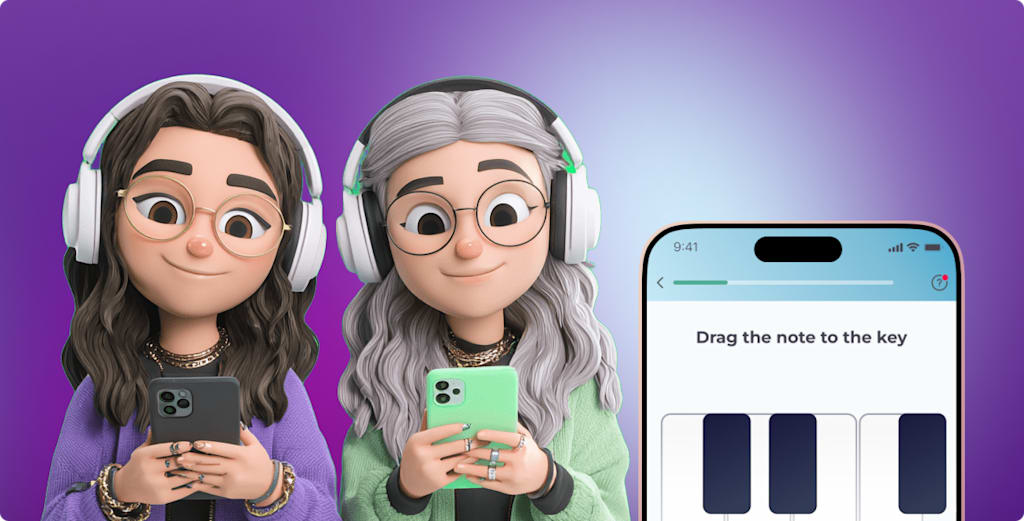
A few months ago, I was stuck. I wanted to learn an instrument, but I couldn’t decide which one. Guitar? Piano? Drums? Every time I picked one, I felt like a beginner all over again. I could memorize a few chords or a simple melody, but the moment I tried something new, I was lost.
Then I realized I had been asking the wrong question. The question isn't "which instrument?" It's "do I understand how music works?"
Learning music vs. learning songs
Most apps and online courses teach you songs. You repeat a popular tune, the screen flashes "good job," and you feel a quick rush of accomplishment. That’s dopamine — and it’s nice. But it doesn’t last. As soon as you try to play a song the app never showed you, you freeze. I’ve been there more times than I want to admit.
That approach never gave me a real foundation. It just gave me the illusion of progress.
So I tried something different. I used an app called Talented. Instead of feeding me songs to memorize, it focused on the core building blocks of music: how notes and rhythm are structured, how chords and intervals relate, what makes a melody work. No shortcuts. Just the fundamentals.
Why fundamentals matter more than an instrument
Here’s what I learned. When you understand music itself — not just where to put your fingers — any instrument becomes easier. The same patterns of intervals, the same rhythm structures, the same harmonic relationships appear everywhere. A chord on a piano is still a chord on a guitar. A rhythm you clap with your hands is the same rhythm you play on a snare drum.
With that knowledge, you’re no longer locked into one path. Piano, violin, bass, even voice — all of them become accessible once you grasp the core principles. You stop memorizing and start understanding.
What about the virtual piano?
The app I used includes a virtual piano. It’s a small on‑screen keyboard that helps you visualize notes, intervals, and chords. I found it useful for practicing theory — a kind of sketchpad where ideas don’t cost anything to try.
But let me be clear: a virtual piano is not a real instrument. Technique, coordination, the physical feeling of sound — those only come from touching real strings or real keys. The app helped me understand what to play, but only a physical instrument taught me how to play it.
When should you start playing a real instrument?
I started practicing on a real keyboard about one month after I began working with Talented. Some people start at the same time. Both approaches work. The key is that the two things — understanding music and physically playing it — feed into each other. The app gave me the map. The instrument gave me the road.
Now I don’t feel trapped by my first choice. I can pick up something new and not feel like I’m starting from zero. The same rules apply. The same patterns appear.
One small piece of advice
If you’re frustrated because you can’t decide which instrument to learn, maybe take a step back. Spend a few weeks learning how music actually works — not songs, not tabs, but the language of sound. You don’t need an expensive teacher. You just need consistency.
I used Talented for about 15 minutes a day. That was enough to start hearing music differently. The mistakes didn’t disappear overnight, but they stopped feeling random. And that made all the difference.
Have you ever tried learning music without choosing an instrument first? I’d love to hear your story.
About the Creator
Enjoyed the story? Support the Creator.
Subscribe for free to receive all their stories in your feed.
Comments
There are no comments for this story
Be the first to respond and start the conversation.