
User Behavior: The Hidden IoT Security Risk - By: Maha Ghunaim
Discover how everyday user habits create major IoT security risks and learn actionable strategies to safeguard your devices.

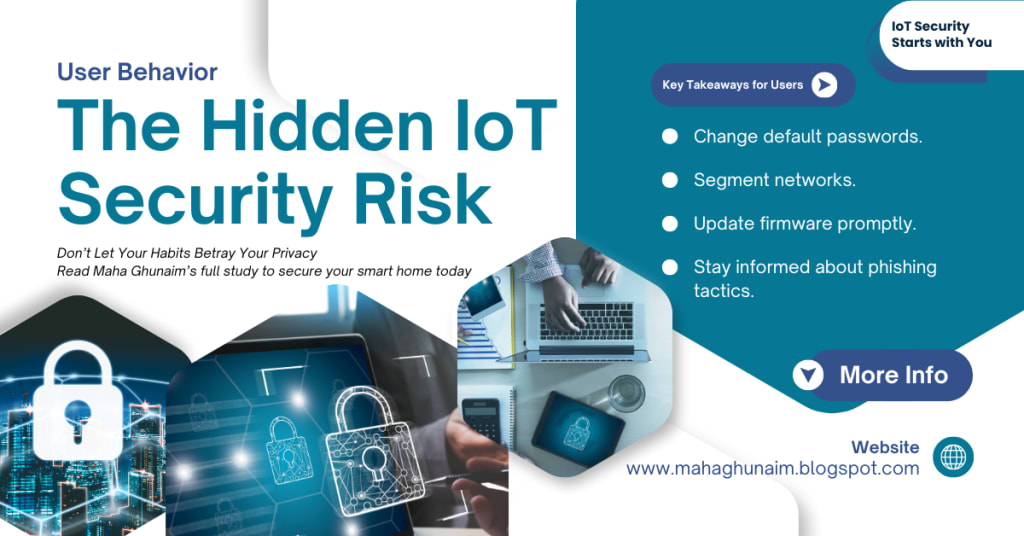
The Internet of Things (IoT) has revolutionized how we live, work, and interact with technology. From smart thermostats to connected medical devices, IoT ecosystems promise convenience, efficiency, and innovation. However, beneath this interconnected landscape lies a critical vulnerability often overlooked: user behavior.
While technical flaws like software bugs or weak encryption dominate security discussions, human actions—or inactions—pose an equally significant threat. This article explores how everyday user habits undermine IoT security and offers actionable strategies to mitigate these risks.
The Rise of IoT and the Human Factor
By 2025, over 75 billion IoT devices are expected to be in use globally. Yet, as adoption surges, so do security breaches. High-profile incidents like the Mirai botnet attack (2016), which hijacked thousands of IoT devices using default passwords, highlight the consequences of poor user practices. While manufacturers bear responsibility for secure design, users often unknowingly create entry points for attackers through simple oversights.
Common Risky User Behaviors
Many IoT devices ship with generic credentials like "admin" or "password." A 2020 survey found that 15% of users never change default passwords, leaving devices vulnerable to brute-force attacks. Hackers exploit this complacency, as seen in Mirai, which targeted cameras and routers with factory settings.
Solution:
- Always replace default passwords with strong, unique alternatives (e.g., 12+ characters with symbols and numbers).
- Use a password manager to track credentials.
IoT devices often connect to home or public Wi-Fi networks lacking encryption or segmentation. A 2021 study revealed that 60% of smart home devices are on the same network as personal computers, allowing attackers to pivot between devices once a breach occurs.
Solution:
- Create a separate Wi-Fi network for IoT devices.
- Enable WPA3 encryption and disable Universal Plug and Play (UPnP) unless necessary.
Manufacturers release patches to fix vulnerabilities, but users frequently delay or ignore updates. Unpatched devices become easy targets—for example, vulnerabilities in outdated smart doorbells have allowed unauthorized access to home networks.
Solution:
- Enable automatic updates where possible.
- Regularly check manufacturer websites for manual updates.
Users often fall for phishing scams or grant excessive permissions to apps. A 2023 report noted that 30% of IoT-related breaches stemmed from credential theft via deceptive emails targeting device owners.
Solution:
- Educate users on recognizing phishing attempts.
- Limit app permissions to essential functions.
Abandoned or improperly disposed devices ("orphaned IoT") retain sensitive data. For instance, resold smartwatches or discarded sensors may expose personal information if not factory-reset.
Solution:
- Perform full resets before disposing of devices.
- Audit and decommission unused gadgets.
Consequences of Poor User Behavior
- Botnet recruitment: Compromised devices launch DDoS attacks or mine cryptocurrency.
- Data breaches: Leaked personal or corporate data.
- Physical safety risks: Hacked medical devices or smart locks endanger lives.
Mitigation Strategies
- Education & Training: Users should understand basic IoT hygiene through workshops or manufacturer-provided guides.
- Multi-Factor Authentication (MFA): Adds a layer of security beyond passwords.
- Network Segmentation: Isolate IoT devices from critical systems.
- Monitoring Tools: Use apps like Fing or Bitdefender to detect suspicious activity.
IoT Security: Addressing Risky User Behavior - Code to Culture: The Maha Ghunaim Podcast
Did you know that your daily habits could be the weakest link in your IoT security chain? 🔗 From smart homes to wearable tech, the Internet of Things is reshaping our world—but human behavior is opening doors to cybercriminals.
In this eye-opening episode, Maha Ghunaim dives deep into the hidden risks of user behavior in IoT ecosystems. Why do 15% of people still use default passwords? How can a single phishing email compromise your entire smart home? And what lessons can we learn from the infamous Mirai botnet attack that hijacked millions of devices?
Join Maha as she unpacks:
- The psychology behind risky IoT habits (spoiler: convenience often trumps security).
- Real-world stories of how user negligence fuels cyberattacks.
- Actionable strategies to turn yourself—and your devices—from vulnerabilities into defenders.
Featuring insights from cybersecurity experts, this episode is a must-listen for tech enthusiasts, IT professionals, and anyone who owns a smart device. Discover how to balance innovation with vigilance—and why securing the IoT starts with you.
Tune in now to rethink your tech habits and fortify your digital life!
Why Listen?
- Relatable scenarios: Learn from mistakes you might already be making.
- Expert-backed solutions: Turn awareness into action.
- Cultural lens: Explore how tech habits reflect broader societal trends.
Don’t Let Your Habits Betray Your Privacy
Conclusion
As IoT becomes ubiquitous, securing it requires a dual focus: manufacturers must prioritize robust design, while users must adopt proactive habits. By addressing the "human firewall," individuals and organizations can significantly reduce risks. The hidden threat of user behavior isn’t inevitable—it’s manageable through awareness, vigilance, and simple yet effective practices.
Key Takeaways for Users:
- Change default passwords.
- Segment networks.
- Update firmware promptly.
- Stay informed about phishing tactics.
In the end, IoT security is a shared responsibility—and user behavior is the linchpin.
Don’t Let Your Habits Betray Your Privacy
Read Maha Ghunaim’s full study to secure your smart home today (Investigating the Impact of User Behavior in the Security of Smart Home IoT Devices): [LINK TO STUDY]
N.B.
This section ( IoT Security Starts with You ) embodies Maha Ghunaim’s commitment to bridging the gap between scientific research and practical application, empowering individuals to adopt smart technology with confidence and security.
Section Description:
In a world where technology is advancing at breakneck speed, researcher Maha Ghunaim offers a profound insight into the relationship between humans and technology through her master’s thesis: "Investigating the Impact of User Behavior on the Security of Smart Home IoT Devices."
About the Creator
Maha Ghunaim - مها غنيم
Unlock the Power of Resilience & Reinvention: Dive into Maha Ghunaim’s Extraordinary Journey
Enjoyed the story? Support the Creator.
Subscribe for free to receive all their stories in your feed.
Comments
There are no comments for this story
Be the first to respond and start the conversation.